Hereditary Induction
Entered civil service after Emperor Zhenzong bestowed bureaucratic appointments upon the sons of deceased general Yang Yanzhao.
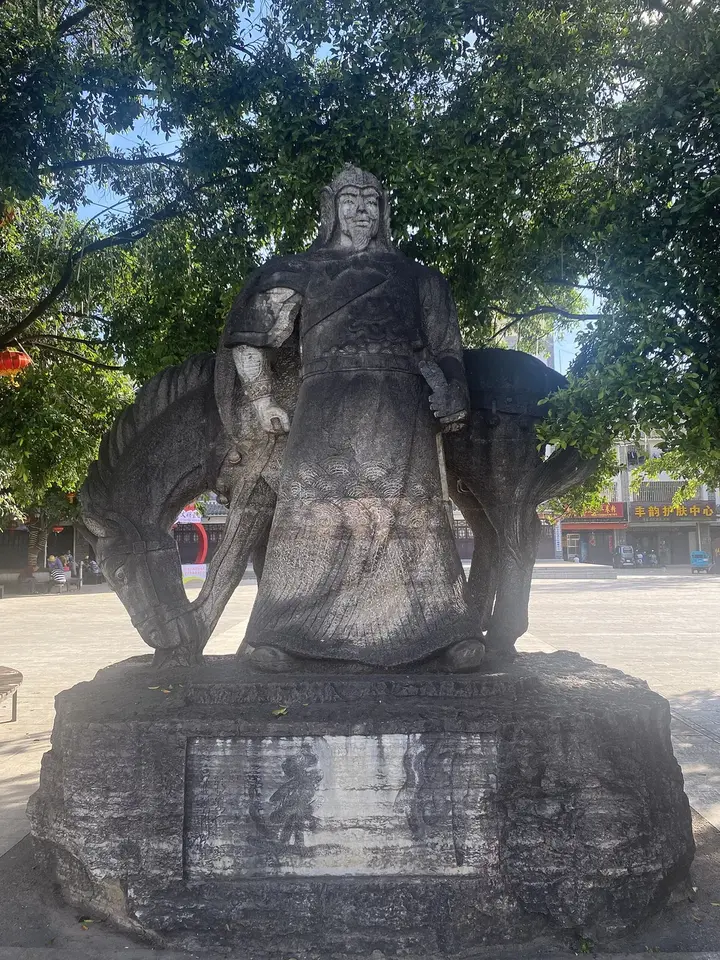
杨文广
Yang Wenguang (died 1074), courtesy name Zhongrong, was a native of Taiyuan, Bingzhou (present-day Taiyuan, Shanxi Province). He was an eminent military general of the Northern Song Dynasty, the grandson of founding hero Yang Ye (celebrated as "Invincible Yang") and the son of high-ranking frontier marshal Yang Yanzhao (known as "Yang the Sixth Son"). As the pivotal third-generation leader of the historical Yang Family…
Yang Wenguang (died 1074), courtesy name Zhongrong, was a native of Taiyuan, Bingzhou (present-day Taiyuan, Shanxi Province). He was an eminent military general of the Northern Song Dynasty, the grandson of founding hero Yang Ye (celebrated as "Invincible Yang") and the son of high-ranking frontier marshal Yang Yanzhao (known as "Yang the Sixth Son"). As the pivotal third-generation leader of the historical Yang Family Generals, Yang Wenguang entered official service under Emperor Zhenzong in 1014 through imperial privilege granted following his father's death. In 1043, he took part in the suppression of Zhang Hai's regional rebellion, receiving promotion to Palace Court Officer. His strategic brilliance was recognized in 1044 by Chancellor Fan Zhongyan, then Pacification Commissioner of Shaanxi, who praised his military genius and brought him into his regional military staff. In 1052, when southern rebel leader Nong Zhigao captured Yongzhou and besieged Guangzhou, Yang Wenguang was transferred from Deshun Army to serve as Military Inspector of Guangxi, operating as a key vanguard commander under Grand Marshal Di Qing. He played an instrumental role in crushing the insurgency, afterward governing Yizhou and Yongzhou to pacify the Lingnan frontiers and receiving appointments as Commissioner of the Left Treasury and Imperial Weapon Bearer. Under Emperor Yingzong, who commended him as "a descendant of renowned generals with distinguished achievements," he was elevated to Defense Commissioner of Xingzhou. In 1068, under the direction of Shaanxi Military Commissioner Han Qi, Yang executed a brilliant feint to construct a vital fortification at Bili overnight, immediately launching a preemptive strike that routed an approaching Western Xia army and earning special imperial gifts from Emperor Shenzong. In his final years, Yang Wenguang governed Jingzhou and Zhenrong Army before assuming command as Vice Commander-in-Chief of Dingzhou Circuit and Inspector of Infantry Palace Guards along the northern frontier against the Khitan Liao. In 1074, when Liao envoys aggressively demanded territorial concessions along the Daizhou border, Yang Wenguang drew up comprehensive tactical battle charts and memorialized the throne with an offensive strategy to recover the Sixteen Prefectures of Yanyun. He succumbed to illness before imperial approval could be returned, receiving posthumous honors as Surveillance Commissioner of Tongzhou. Throughout his lifetime, Yang Wenguang subjugated southern tribal rebels, contained Western Xia in the west, and prepared defenses against Liao in the north, embodying the enduring martial loyalty of the Yang family tradition.
Entered civil service after Emperor Zhenzong bestowed bureaucratic appointments upon the sons of deceased general Yang Yanzhao.
Joined the imperial expedition against the rebellion of Zhang Hai in Shaanxi; promoted to Palace Court Officer for military valor.
Interrogated by Shaanxi Pacification Commissioner Fan Zhongyan on frontier defense; recruited into Fan's headquarters staff.
Transferred from Deshun Army as Military Inspector of Guangxi; served under Di Qing during the southern counter-offensive against Nong Zhigao.
Following the defeat of Nong Zhigao, appointed Administrator of Yizhou and Yongzhou; promoted to Commissioner of the Left Treasury and Imperial Weapon Bearer.
Commended by Emperor Yingzong as an accomplished descendant of famed marshals; promoted to Defense Commissioner of Xingzhou.
Dispatched by Han Qi to fortify Bili; deployed deception tactics to complete the fortress overnight, then routed a Western Xia army in pursuit.
Governed Jingzhou and Zhenrong Army; advanced to Vice Commander-in-Chief of Dingzhou Circuit and Inspector of Infantry Palace Guards.
Submitted military array charts and strategic proposals to reclaim the Sixteen Prefectures; died in office and was granted posthumous honors as Surveillance Commissioner of Tongzhou.
Yang Wenguang was born into the prestigious Yang family of Taiyuan, the most celebrated military lineage of the Northern Song Dynasty. His grandfather Yang Ye, famed across China as "Invincible Yang," had fought heroically against the Khitan Liao before dying a martyr's death at Chenjiagu, receiving posthumous honors as Grand Marshal and Prince of Datong. His father Yang Yanzhao had guarded the northern border passes along the Hebei plain for over two decades, striking terror into Liao raiding forces who called him "Yang the Sixth Son."
In 1014, when Yang Yanzhao passed away while serving as Vice Commander-in-Chief of Gaoyangguan, Emperor Zhenzong issued an imperial edict extending hereditary privilege to his three sons—Yang Chuanyong, Yang Dezheng, and Yang Wenguang—enabling Yang Wenguang to enter the ranks of imperial military officers.
Endowed with a resolute spirit and thoroughly trained in equestrian archery and ancestral military tactics, Yang Wenguang proved his worth during the Qingli era of Emperor Renzong. In 1043, when local soldier Guo Miaoshan and rebel leader Zhang Hai launched insurrections across Shaanxi, Yang participated in the imperial pacification campaign, demonstrating cool-headed leadership in frontline clashes and receiving promotion to Palace Court Officer.
In 1044, prestigious scholar-statesman Fan Zhongyan was appointed Shaanxi Pacification Commissioner to reorganize northwestern defenses against Western Xia. During an inspection tour of garrison units, Fan held an extensive dialogue with young Yang Wenguang concerning frontier terrain, Tangut military psychology, and fortress networks. Profoundly astonished by Yang's comprehensive strategic insights, Fan recognized him as an exceptional talent and recruited him directly into his military council. Under Fan Zhongyan's guidance, Yang Wenguang broadened his strategic vision, maturing into an accomplished operational strategist.
In 1052, Nong Zhigao, a chieftain of Guangyuan Prefecture along the southwestern frontier, led an armed rebellion, proclaiming an independent dynasty. Nong stormed the administrative seat of Yongzhou and drove his forces down the Yu River, sweeping over nine riverine commanderies and besieging Guangzhou for fifty-seven days. The southern provinces fell into turmoil.
In response, Emperor Renzong appointed Vice Commissioner of Military Affairs Di Qing as supreme commander to pacify the south. Yang Wenguang, then serving as Administrator of Deshun Army on the northwest frontier, was transferred to serve as Military Inspector of Guangxi. Under Di Qing's direction, Yang operated at the spearhead of the campaign.
During the critical encounters at Kunlun Pass and Guirenpu, Yang led forward assault columns that executed enveloping cavalry attacks against Nong Zhigao's heavily armed shield-bearers, shattering the rebel core and liberating Yongzhou. Following Nong Zhigao's flight toward Dali, Yang remained in the south as Administrator of Yizhou and subsequently Administrator of Yongzhou. He rebuilt razed fortifications, enforced strict military discipline, reconciled local tribal chieftains, and restored agrarian production. For these achievements, he was promoted to Commissioner of the Left Treasury and awarded the elite palace honor of Imperial Weapon Bearer.
During the Zhiping reign of Emperor Yingzong, the court reviewed the evaluations of veteran commanders across the empire. The emperor remarked in open court: "Yang Wenguang is a descendant of illustrious generals, and possesses great merit in his own right." He was subsequently elevated to Training Commissioner of Chengzhou and Commander of the Longshenwei Palace Guards, later rising to Defense Commissioner of Xingzhou.
In 1068, following persistent border violations by Tangut forces under Western Xia ruler Li Liangzuo, Shaanxi Military Commissioner Han Qi memorialized the throne proposing the construction of a permanent stone fortress at Bili (in present-day Tongxin, Ningxia), a vital transit defile through which Tangut armies penetrated Song defenses. Recognizing the perilous nature of building an outpost deep in contested terrain, Han Qi appointed Yang Wenguang to execute the mission.
Anticipating that Tangut scouts would mobilize massive armies to interdict construction, Yang employed a deceptive feint. He openly proclaimed through camp orders that his division would build a fortress at Penzhucheng, deliberately sending slow supply wagons toward Penzhu to deceive enemy lookouts. While the Tangut high command mobilized toward Penzhu, Yang led his elite infantry, sappers, and cavalry on an overnight forced march to the ruins of Bili.
Working through the night under Yang's personal direction, Song forces completed a fortified stone citadel by daybreak. When tens of thousands of Tangut cavalrymen arrived outside Bili the next morning, they found Song battlements bristling with crossbows and catapults. Realizing that frontal assault was hopeless, the Tangut generals withdrew, leaving behind a letter threatening to return with larger armies to sweep Song forces from the frontier.
While his staff breathed sighs of relief, Yang Wenguang immediately ordered an all-out cavalry pursuit. When officers questioned the maneuver, Yang declared: "The essence of war lies in seizing the initiative! Striking the enemy's vanguard destroys their offensive morale. Bili is a vital lifeline; if we allow them to regroup and seize it, our borders will never know peace!" Spurring his cavalry forward, Yang caught the Tangut rear columns in the open, killing and capturing hundreds of warriors and routing the invasion host. Emperor Shenzong issued a personal imperial commendation, rewarding Yang with ceremonial silk robes, an inscribed jade belt, and an imperial steed.
Following his triumph at Bili, Yang Wenguang served as Administrator of Jingzhou and Zhenrong Army, later advancing to Vice Commander-in-Chief of Dingzhou Circuit and Inspector of Infantry Palace Guards, stationed along the northern defensive line confronting the Khitan Liao Empire.
In 1042, during the Qingli era, Emperor Xingzong of Liao had exploited Song-Xia hostilities to demand territorial concessions south of the Guannan passes, compelling Emperor Renzong to increase annual subsidies by two hundred thousand units of silver and silk to preserve peace. In 1074, Liao dispatched envoy Xiao Xi to Daizhou to aggressively demand border redistributions, massing troops near the passes to intimidate the Song court.
Stationed at Dingzhou, Yang Wenguang was consumed by righteous indignation. As the grandson of Yang Ye, who had fallen in combat against the Khitans at Daizhou, Yang regarded the Liao empire as an enduring adversary. Believing that the reform policies of Emperor Shenzong had strengthened the military and presented the historical moment to reclaim the Sixteen Prefectures of Yanyun, Yang drafted the comprehensive Tactical Battle Array Charts for Pacifying the Barbarians and submitted his Strategy for Reclaiming Yanyun directly to the throne.
In his memorial, Yang analyzed Liao garrison vulnerabilities across the northern plain, mapped offensive corridors through the mountain passes, and outlined supply distribution systems. He strongly urged the emperor to abandon appeasement, mobilize shock cavalry columns, and strike directly toward the ancient capital of Youzhou to restore the territorial integrity of Han and Tang times.
However, before the Bureau of Military Affairs could formally review and implement his strategic memorial, Yang Wenguang succumbed to chronic illness exacerbated by decades of frontier service, dying in camp in 1074. Emperor Shenzong was deeply grieved by the loss, issuing an imperial decree granting him posthumous honors as Surveillance Commissioner of Tongzhou.
During the Guangyuan rebellion in 1052, Yang Wenguang acted as a premier vanguard commander under Grand Marshal Di Qing. He breached enemy lines at the Battle of Guirenpu, spearheaded the relief of Yongzhou, and subsequently governed Yizhou and Yongzhou. His administrative restoration of the southern commanderies stabilized the southwestern borders and integrated diverse tribal populations into the imperial orbit.
At the Battle of Bili in 1068, Yang executed one of the most celebrated tactical feints in Song-Xia warfare. By publicly announcing a false objective at Penzhu while constructing the stone stronghold of Bili overnight, Yang secured an impenetrable strategic position on the frontier. This prevented Western Xia from dominating the northern passes and consolidated Song border security across Shaanxi.
Breaking from passive defensive doctrines, Yang demonstrated operational audacity following the completion of Bili Fortress. Leading a rapid cavalry sortie against the withdrawing Tangut host, he shattered their rear guard and eliminated their offensive threat. This preemptive counter-strike demoralized Western Xia forces, earning him an imperial jade belt and special praise from Emperor Shenzong.
In 1074, confronting Liao territorial extortion at Daizhou, Yang Wenguang demonstrated the unyielding martial spirit of the Yang lineage by submitting detailed battle array charts and an offensive plan to recover the Sixteen Prefectures of Yanyun. His memorial stood as a rare and courageous strategic blueprint by an active frontier commander aimed at shattering the constraints of the Shanyuan Treaty and reclaiming ancestral Chinese territories.
As the documented third-generation leader of the historical Yang Family Generals, Yang Wenguang spent his career defending the empire across Shaanxi, Guangxi, Ningxia, and Hebei. Serving faithfully across three imperial reigns, he validated the legendary status of his family in dynastic history. His authentic military feats formed the historical core from which the enduring Chinese folk tradition of the Yang Family Generals emerged across literature, theater, and cultural memory.
FIGURES ASSOCIATED WITH THIS DYNASTY