纥石烈执中
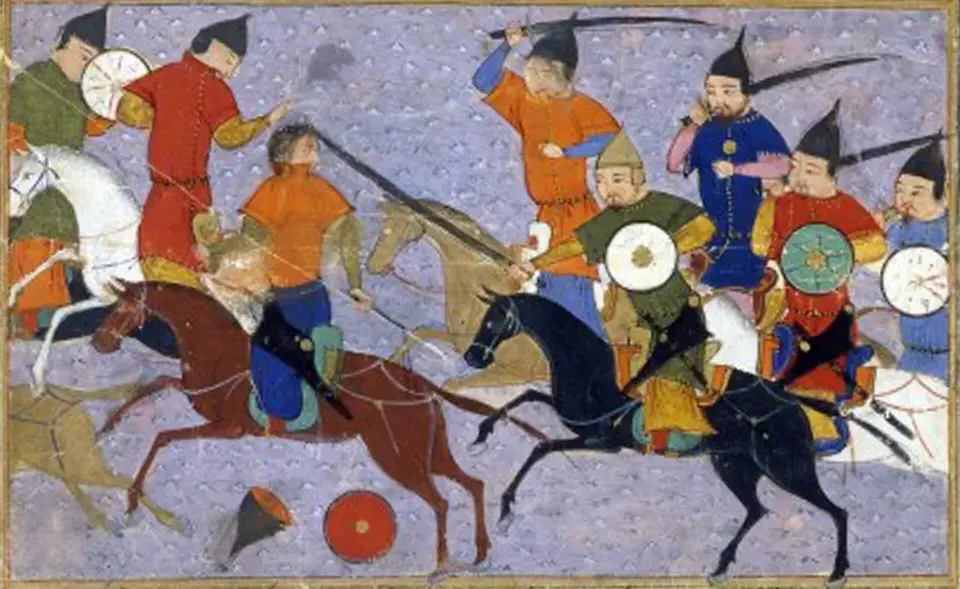
Historical narrative painting (Hushahu)
Image creditsSayf al-Vâhidî. Hérât. Afghanistan · Public domainImage source

Late Jin Military GeneralRegicide Usurperand Rebel Chancellor

Heshelie Zhizhong (纥石烈执中)

纥石烈执中

Heshelie Zhizhong (纥石烈执中, ?–1213), Jurchen name Hushahu, was a descendant of the early Jurchen noble Ashu. He was an infamous military general, regicide traitor, and tyrannical warlord during the late Jin Dynasty. Beginning his career in the imperial bodyguard of the Crown Prince during the Dading era, he served under Emperors Shizong and Zhangzong; known for his violent, avaricious, and insubordinate temperament, he was…

Jin Dynasty

PROFILE

Heshelie Zhizhong (纥石烈执中, ?–1213), Jurchen name Hushahu, was a descendant of the early Jurchen noble Ashu. He was an infamous military general, regicide traitor, and tyrannical warlord during the late Jin Dynasty. Beginning his career in the imperial bodyguard of the Crown Prince during the Dading era, he served under Emperors Shizong and Zhangzong; known for his violent, avaricious, and insubordinate temperament, he was repeatedly censured and demoted for breaching imperial statutes. During the Taihe era, he took part in operations against Southern Song forces, contributing to the capture of Huaiyin and the investment of Chuzhou. Following the ascension of Wanyan Yongji (Prince of Weishao), Hushahu was appointed Western Capital Regent and Associate Administrator of the Bureau of Military Affairs. In 1211 (Daan 3), during the decisive Mongol invasion, Hushahu commanded seven thousand elite troops north of Ding'an but fled before combat had concluded, causing the total rout of his army; during his flight, he plundered provincial treasuries and murdered local magistrates. In 1213 (Zhining 1), Weishaowang recklessly reinstated him as Right Vice Marshal in command of metropolitan forces outside Zhongdu. Facing advancing Mongol armies, Hushahu neglected all defensive preparations in favor of falconry and hunting; in the eighth month, he staged a palace mutiny, seized the imperial palace, and assassinated Emperor Weishaowang. Hushahu subsequently elevated Emperor Xuanzong (Wanyan Xun) to the throne, arrogated supreme civil and military powers as Grand Preceptor, Director of State Affairs, and Grand Marshal, and accepted the Nine Bestowals. In the tenth month of that year, Vice Marshal Zhuhu Gaoqi, terrified of being executed by Hushahu following repeated battlefield defeats against Mongol forces, launched a counter-coup, stormed Hushahu's mansion, and decapitated him. Emperor Xuanzong subsequently stripped Hushahu of all ranks and denounced him as a supreme villain of the realm.

Jurchen Name
Hushahu (胡沙虎)
Dynasty
Jin Dynasty
Date of Death
1213 (Jin Zhenyou 1)
Highest Office
Grand Preceptor (太师), Director of the Department of State Affairs (尚书令), Grand Marshal (都元帅)
Key Offices
Right Vice Marshal (右副元帅), Western Capital Regent (西京留守), Associate Administrator of the Bureau of Military Affairs (签枢密院事), Prefect of Daxing (知大兴府事)
Identity
Late Jin Military General, Regicide Usurper, and Rebel Chancellor

LIFE TIMELINE

Relationship graph

BIOGRAPHY

Chronology

  • 1168 (Jin Dading 8) | Imperial Bodyguard | Entered court service as an imperial bodyguard to the Crown Prince, advancing to Vice Director of the Crown Prince's Stables.
  • 1193 (Jin Mingchang 4) | Severe Disciplinary Action | Demoted to Defense Commissioner of Zhaozhou after brutally beating a local official and neglecting royal guard duties.
  • 1197 (Jin Cheng'an 2) | Insubordination at Court | Appointed Associate Administrator of Military Affairs, but refused to campaign alongside Chancellor Wanyan Xiang, incurring royal rebuke.
  • 1206 (Jin Taihe 6) | Southern Campaigns | Led operations capturing Huaiyin and besieging Chuzhou, earning promotion to Marshal Left Monitor before transferring to the Western Capital.
  • 1211 (Jin Daan 3) | Battlefield Desertion | Abandoned his troops during the Mongol assault, plundered five thousand ounces of state silver in Weizhou, and beat the Laishui magistrate to death.
  • 1213 (Jin Zhining 1, 8th Month) | Regicide Coup | Staged an armed palace coup in Zhongdu, dethroned and poisoned Emperor Weishaowang, and enthroned Emperor Xuanzong.
  • 1213 (Jin Zhenyou 1, 10th Month) | Death and Posthumous Stripping | Threatened Marshal Zhuhu Gaoqi with execution, provoking Gaoqi to storm his estate and kill him; subsequently stripped of all titles.

Biography

Guard Service and Persistent Lawlessness

Heshelie Zhizhong was a descendant of Ashu, an illustrious founding lineage of the early Jurchen state, belonging originally to the Dongping Route Meng'an league. In 1168 (Dading 8), he entered court service on hereditary privilege as an imperial bodyguard to Crown Prince Wanyan Yungong. He subsequently rose through military posts, serving as Vice Director of the Crown Prince's Stables, Chief Falconer, and Guard Commander. Fierce, physically formidable, and arrogant, Zhizhong frequently flouted the law. In 1193 (Mingchang 4), during an inspection tour in Zuju, a local beverage official arrived late to greet him and offered wine that Zhizhong considered inferior; in a rage, Zhizhong beat the officer nearly to death, incurring imperial censure. Shortly thereafter, while serving as Right Vice Inspector, he was demoted to Defense Commissioner of Zhaozhou for insolence and dereliction of guard duties. Over the following decade, he was shifted through various provincial posts, including Military Commissioner of Xingping and Prefect of Daming.

In 1197 (Cheng'an 2), Emperor Zhangzong summoned Zhizhong back to court as Associate Administrator of the Bureau of Military Affairs (Qian Shumiyuan Shi). When northern frontiers fell under threat, Zhangzong ordered him to accompany Right Chancellor Wanyan Xiang on campaign. Cowardly and uncooperative, Zhizhong brazenly memorialized: "I have long held personal grudges with Chancellor Wanyan Xiang; if I accompany him, he will assuredly seek an opportunity to kill me." Enraged by his refusal of an imperial command and his groundless slander against a grand councilor, Zhangzong handed him over to judicial officials, though he was soon pardoned and dispatched to border posts. In 1201 (Taihe 1), Zhizhong was appointed Prefect of Daxing; his corrupt and tyrannical governance prompted Censor-in-Chief Meng Zhu to submit an indictment describing him as "avaricious, tyrannical, contemptuous of laws, and completely unrepentant." In 1206 (Taihe 6), when Southern Song forces launched the Kaixi Northern Expedition, Zhizhong participated in the Jin counter-offensive, capturing Huaiyin and laying siege to Chuzhou, which earned him elevation to Marshal Left Monitor and subsequently Western Capital Regent.

Desertion, Treasury Plunder, and Murder of Officials

Upon ascending the throne in 1209 (Daan 1), Emperor Weishaowang (Wanyan Yongji) treated Heshelie Zhizhong with ill-advised indulgence, granting him a hereditary Meng'an rank and reinstating him as Western Capital Regent, Commissioner of the Bureau of Military Affairs, and Pacification Commissioner in charge of the vital northwestern defenses. In 1211 (Daan 3), Genghis Khan launched a massive Mongol offensive against the Jin Empire, crushing the main Jin armies at Yehuling. In August, Mongol forces swept toward the Western Capital (Datong). Zhizhong commanded a seasoned army of seven thousand troops positioned north of Ding'an to block the advance. However, at dusk before the decisive clash, Zhizhong abandoned his post and fled with his personal retainers, triggering the complete disintegration of his command.

Fleeing through Weizhou, Zhizhong forced open the imperial storehouses, looting five thousand ounces of treasury silver along with stores of silk and clothing, while forcibly requisitioning civilian and postal horses. Upon retreating across Zijing Pass, the magistrate of Laishui County, Wei Tingyu, attempted to inspect his travel documents in accordance with state regulations. Enraged by the administrative inquiry, Zhizhong ordered his guards to beat the magistrate to death with heavy clubs. When Zhizhong arrived back at the capital Zhongdu, the court was scandalized and numerous censors demanded his public execution. Yet Emperor Weishaowang, weak-willed and vacillating, overlooked his battlefield desertion and murder, merely suspending him temporarily before transferring him to Guide Prefecture.

Regicide and Usurpation of Imperial Authority

In the fifth month of 1213 (Zhining 1), Mongol columns bypassed outer mountain fortresses and advanced within sight of the walls of Zhongdu. In a desperate and disastrous decision, Emperor Weishaowang recalled Heshelie Zhizhong and appointed him Right Vice Marshal, placing several thousand elite guards under his command to fortify positions north of the capital. Once entrusted with command, Zhizhong ignored defensive duties entirely, spending his days hunting with raptors and coursing hounds in the countryside. When Weishaowang dispatched court emissaries to reprimand him, Zhizhong responded with insolent threats, revealing his treasonous intentions.

On the morning of the twenty-fifth day of the eighth month, Zhizhong deceived his troops by claiming that the emperor intended to execute them without cause, leading his guard regiment through the northern gates of Zhongdu in an armed mutiny. Seizing control of the palace perimeter, Zhizhong forcibly evicted Emperor Weishaowang from his private quarters, confined him to an external mansion, and coerced the palace eunuchs into surrendering the imperial jade seal. Shortly afterward, Zhizhong dispatched the eunuch Li Si'er to administer poison, murdering Emperor Weishaowang. Zhizhong initially intended to proclaim himself emperor; however, Right Chancellor Tushan Yi warned him that the Jurchen people would never accept a non-Wanyan sovereign. Yielding to pragmatic calculation, Zhizhong sent envoys to Zhangde to escort Wanyan Xun (Emperor Xuanzong) to Zhongdu to take the throne. Xuanzong, powerless in the face of mutinous troops, was compelled to bestow upon Zhizhong the supreme titles of Grand Preceptor, Director of the Department of State Affairs, Grand Marshal, Regent, and the Nine Bestowals.

Military Threats and Death in Mutiny

Having monopolized supreme civil and military authority, Heshelie Zhizhong ruled with unprecedented brutality, purging veteran ministers and promoting incompetent sycophants. Meanwhile, Mongol forces maintained an unrelenting blockade around Zhongdu, and regional relief columns failed to make progress. Marshal Right Monitor Zhuhu Gaoqi was repeatedly ordered by Zhizhong to lead sorties outside the walls, each time suffering severe tactical reverses. Rather than offering reinforcements, Zhizhong publicly berated Gaoqi before the assembly of generals: "You have lost multiple engagements and depleted our cavalry; if you fail again in your next sortie, I will execute you on the spot according to military law!"

Terrified of execution and knowing Zhizhong's merciless reputation, Gaoqi made another sortie and was predictably repulsed. Desperate to save his life, Gaoqi conspired with his trusted officers on their return march. On the fifteenth day of the tenth month of 1213, Gaoqi led his troops to surround Zhizhong's grand chancellor residence in Zhongdu, stormed the compound, and decapitated Zhizhong on the floor of his inner reception hall, presenting his severed head directly to Emperor Xuanzong. Relieved of the despot's oppressive grip, Xuanzong immediately pardoned Gaoqi and appointed him Left Vice Marshal. Following petitions from ministers such as Prefect of Daxing Zhang Xingxin, Xuanzong formally issued an imperial edict stripping Hushahu of all ranks and offices, declaring him an arch-traitor to the dynasty, and confiscating all his familial estates.
Major Achievements

The Battle of Huaiyin and Southern Expeditions

During the military conflicts between the Jin and Southern Song during the Taihe era, Heshelie Zhizhong demonstrated practical tactical capability. He commanded frontline units to break through the strategic defenses of Huaiyin and exerted severe operational pressure during the investment of Chuzhou. This campaign contained Southern Song offensives along the Huai River corridor and provided essential leverage for the Jin dynasty during subsequent diplomatic peace negotiations.

The Coup of Zhongdu and Overthrow of Weishaowang

In the autumn of 1213, as Mongol armies threatened the capital during an existential national crisis, Heshelie Zhizhong leveraged his command over elite metropolitan garrisons to launch the Zhongdu coup. By assassinating Emperor Weishaowang and usurping the imperial seals, he dealt a catastrophic blow to the dynastic legitimacy, central command cohesion, and moral authority of the late Jin state. His treacherous actions catalyzed bloody internal strife within the Jurchen ruling elite, accelerating the collapse of the dynasty.

Personal Relationships

  • Victim and Political Foe: Emperor Weishaowang (Wanyan Yongji), seventh emperor of the Jin Dynasty, deposed, imprisoned, and poisoned by Zhizhong's order.
  • Imperial Puppet: Emperor Xuanzong of Jin (Wanyan Xun), eighth emperor of the Jin Dynasty, enthroned under Zhizhong's coercion; later stripped him of all honors.
  • Nemesis and Assassin: Zhuhu Gaoqi, Jin military commander who launched a counter-coup and decapitated Zhizhong after being threatened with execution.
  • Imperial Minister: Wanyan Xiang, prominent chancellor during the Cheng'an era, against whom Zhizhong held bitter personal animosity.
  • Imperial Minister: Tushan Yi, Right Chancellor of State Affairs, who successfully dissuaded Zhizhong from proclaiming himself emperor.
  • Court Critic: Meng Zhu, Censor-in-Chief who repeatedly submitted memorials denouncing Zhizhong's tyrannical abuses.

Historical Evaluations

  • History of Jin (Jin Shi, Volume 132, Biography 70, Treacherous Ministers): Hushahu began with minor offenses, which Emperor Shizong treated with leniency to encourage reform. Emperor Zhangzong dismissed him repeatedly for insubordination, yet valued his military talents and elevated him again. Emperor Weishaowang indulged him further, only to meet death at his hands. Only after Emperor Xuanzong took the throne were his crimes fully published and his honors revoked.
  • Meng Zhu: He is greedy, cruel, arrogant, and contemptuous of royal law. Even after receiving imperial pardons, he repeats offenses without remorse, transforming court generosity into unbridled defiance.
  • Zhang Xingxin: Hushahu was a monstrous villain of our realm, universally detested by the people. Though he is dead, his crimes have not been formally recorded; his offenses should be openly proclaimed, his names and peerages stripped, and his household punished.
  • Tuotuo (History of Jin): Among the nine monarchs of Jin, three suffered regicide... In the assassination of Emperor Weishaowang, the principal culprit was Hushahu, who instead was rewarded with honors, received the Nine Bestowals, and acted as emperor. Alas, never should the levers of imperial power be lent to others in such a manner!

Related Entries

  • Wanyan Yongji
  • Wanyan Xun
  • Zhuhu Gaoqi

FIGURES ASSOCIATED WITH THIS DYNASTY

Bibliography

  • History of Jin (Jin Shi), Volume 13, Imperial Annals 13, Emperor Weishaowang
  • History of Jin (Jin Shi), Volume 14, Imperial Annals 14, Emperor Xuanzong I
  • History of Jin (Jin Shi), Volume 132, Biography 70, Treacherous Ministers
  • Chronicles of the Great Jin Dynasty (Da Jin Guo Zhi), Volume 23, Prince of Weishao Wanyan Yongji