Born in Huangpi
Born on the fifteenth day of the eighth lunar month in Caomiao Lane, Huangpi County, exhibiting intellectual precocity and devotion to ancient classics from early childhood.
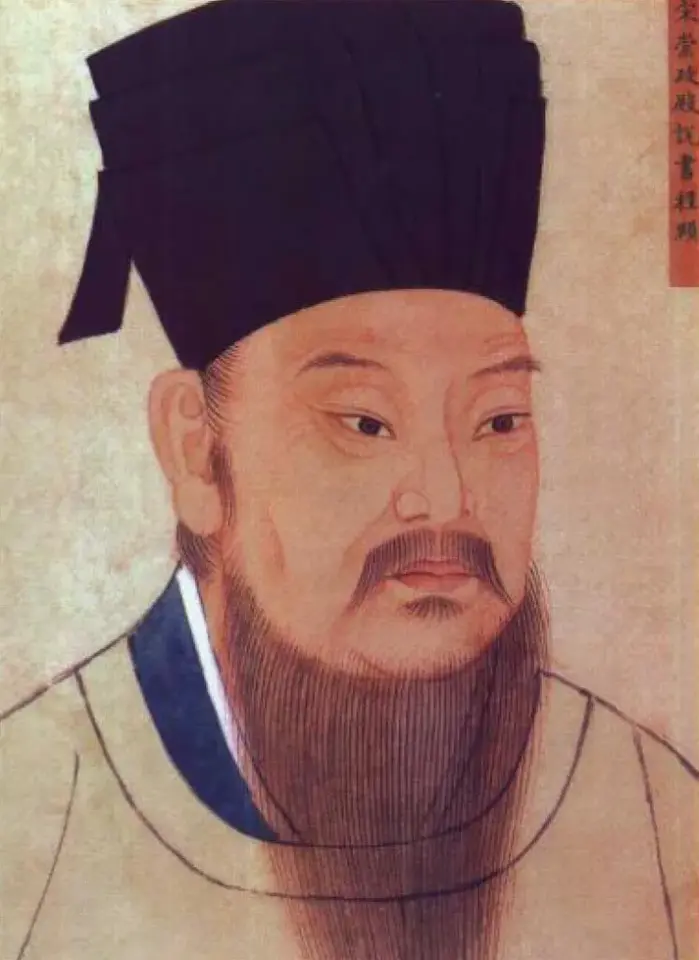
程颐
Cheng Yi (程颐, 1033–1107), courtesy name Zhengshu (正叔) and widely honored as Master Yichuan (伊川先生), was a native of Luoyang County, Henan Prefecture, and one of the preeminent philosophers, thinkers, and co-founders of Song Neo-Confucianism. Together with his elder brother Cheng Hao, they are revered historically as the Cheng brothers, and are counted among the Five Masters of the Northern Song alongside Zhou…
Cheng Yi (程颐, 1033–1107), courtesy name Zhengshu (正叔) and widely honored as Master Yichuan (伊川先生), was a native of Luoyang County, Henan Prefecture, and one of the preeminent philosophers, thinkers, and co-founders of Song Neo-Confucianism. Together with his elder brother Cheng Hao, they are revered historically as the Cheng brothers, and are counted among the Five Masters of the Northern Song alongside Zhou Dunyi, Zhang Zai, and Shao Yong. In his youth, he studied under Zhou Dunyi, the pioneer of Neo-Confucian metaphysics, and later won the deep admiration of educator Hu Yuan at the Imperial Academy in Kaifeng for his philosophical treatise. Throughout his life, Cheng Yi largely chose private educational withdrawal over bureaucratic promotion, lecturing in civil academies and founding the influential Luo School. During the Yuanyou era of Emperor Zhezong, he was recommended to court by prime ministers Sima Guang and Lv Gongzhu to serve as Lecturer in the Hall of Esteemed Governance. In this role as an imperial tutor, he dedicated himself to rectifying the monarch's moral character and upholding classical ritual protocols with unbending rectitude. In the subsequent bitter factional strife of the late Northern Song, he was repeatedly censured and ultimately banished under local surveillance to Fuzhou in modern Sichuan. In adversity, he devoted himself to philosophical writing and completed his monumental exegetical masterpiece, Cheng's Commentary on the Book of Changes. In philosophy, Cheng Yi established an ontological framework centered upon Heavenly Principle (tianli), formulating the celebrated doctrines that "substance and function have a single source, and there is no gap between the manifest and the subtle", along with the cultivation method of "investigating things and exhausting principle". His thought provided the foundational metaphysical system for subsequent Song explorations of human nature and moral cultivation. Further synthesized and propagated by Zhu Xi in the Southern Song, the Cheng-Zhu School became the orthodoxy that guided intellectual, political, and cultural life in late imperial China and East Asia for centuries.
Born on the fifteenth day of the eighth lunar month in Caomiao Lane, Huangpi County, exhibiting intellectual precocity and devotion to ancient classics from early childhood.
Traveled with his brother Cheng Hao to Nan'an to study under Zhou Dunyi, exploring the joyful spiritual realm of Confucius and Yan Hui and grasping the core of Neo-Confucian ethics.
Entered the Imperial Academy in the capital and composed Treatise on What Learning Confucius's Disciple Yan Favored, earning high acclaim from Director Hu Yuan and appointment as an Academy Scholar.
Failed the imperial court examination and recognized that examination curricula could not elucidate moral truth, resolutely abandoning the civil exam track to devote himself to teaching.
Lectured alongside his brother Cheng Hao at Songyang Academy, attracting scholars from across the empire and establishing the rising prominence of the Luo School.
Assisted his brother in Fugou County to establish local schools, gathering town youths for moral instruction and elevating regional cultural customs.
Honored by Grand Commander Wen Yanbo, who purchased an estate in Minggao Town for him, where Cheng Yi lived in scholarly seclusion to write.
Strongly recommended by Sima Guang and Lv Gongzhu, he was appointed Lecturer in the Hall of Esteemed Governance to instruct the young emperor in Confucian classics.
His strict enforcement of ritual etiquette provoked fierce opposition from Su Shi and censorial officials, prompting him to petition repeatedly for dismissal on grounds of illness.
When the New Policy faction led by Zhang Dun targeted Yuanyou conservatives, Cheng Yi was stripped of office and exiled under surveillance to Fuzhou, accompanied by disciple Qiao Ding.
Pardoned upon Emperor Huizong's accession and relocated to Xiazhou before returning to Luoyang, where he finalized Cheng's Commentary on the Book of Changes.
Grand Councilor Cai Jing erected the Yuanyou Partisan Stele; Cheng Yi was stripped of all titles, his writings were banned, and disciples were intimidated into avoiding contact.
Passed away peacefully at his residence in Yichuan, Luoyang, on September 17 at age seventy-five, with only four disciples, including Zhang Yi and Yin Tun, daring to perform funeral rites.
Cheng Yi's ancestors hailed from Boye in Zhongshan. His high great-grandfather, Cheng Yu, served as Commissioner of the State Finance Commission under Emperor Taizong of Song, receiving posthumous honors as Junior Preceptor of the Heir Apparent and an imperial residence in Kaifeng. His great-grandfather Cheng Xizhen served as Vice Director of the Forestry and Crafts Bureau and relocated the family to Luoyang. His grandfather Cheng Yu rose to Minister of Personnel and settled in Yichuan County. His father Cheng Xiang entered officialdom via hereditary privilege for descendants of distinguished early Song ministers, serving as magistrate in Huangpi and Xingguo and prefect of Gongzhou, Fengzhou, Cizhou, and Hanzhou, ultimately attaining the rank of Supreme Pillar of State.
On August 15, 1033 (2nd year of Mingdao), Cheng Yi was born in Caomiao Lane, Huangpi County, Huangzhou. The Cheng family resided in Huangpi for three generations, where the Shuangfeng Pavilion was later erected by locals to commemorate the brothers' birth. From an early age, Cheng Yi exhibited profound intellectual seriousness and dignified deportment, adhering strictly to classical decorum. At fourteen, he resolved to pursue the learning of ancient sages alongside his elder brother Cheng Hao, with whom he shared an unbreakable intellectual bond.
In 1047 (7th year of Qingli), Cheng Yi accompanied his father to Nan'an, where Cheng Xiang recognized the extraordinary virtue of military administrator Zhou Dunyi and directed his two sons to study under him. Zhou Dunyi instructed them to seek the moral joy experienced by Confucius and Yan Hui and to apprehend Heavenly Principle, steering them away from mere textual commentary and ornamental prose. This transformative mentorship led both brothers to dedicate their lives to reviving the ancient lineage of Confucian ethical transmission.
During the Huangyou era, Cheng Yi accompanied his father to Kaifeng. In 1056 (1st year of Jiayou), twenty-four-year-old Cheng Yi enrolled in the Imperial Academy. The distinguished educator Hu Yuan examined the scholars with the topic Treatise on What Learning Confucius's Disciple Yan Favored. Cheng Yi wrote with compelling insight, demonstrating that sagehood could be attained through learning and that subduing self-centered desires to restore universal ritual order was the essence of education. Astonished by the depth of the young scholar's thesis, Hu Yuan invited him for an extended dialogue and immediately granted him the status of Academy Scholar, establishing his reputation throughout the capital.
In 1059 (4th year of Jiayou), Cheng Yi sat for the palace examinations but did not pass. Appraising the examination system as overly obsessed with poetic embellishment and mechanical memorization rather than moral governance and practical statecraft, Cheng Yi resolved never to seek examination degrees again. He retired into private scholarly life, immersing himself in canonical texts to illuminate sage wisdom and dedicate himself to educating future generations.
During the early Xining era of Emperor Shenzong, Wang Anshi launched the New Policies, causing fierce political debates across the empire. While Cheng Hao cautioned the throne against rapid fiscal overhauls, Cheng Yi remained aloof from court appointments. In 1072 (5th year of Xining), Cheng Yi joined his brother at Songyang Academy to deliver public lectures. Ambitious scholars traveled from far and wide to study under them. Emphasizing canonical exegesis and moral cultivation, the brothers formed a burgeoning intellectual circle centered in Luoyang, recognized by contemporaries as the Luo School.
In 1078 (1st year of Yuanfeng), when Cheng Hao served as magistrate of Fugou County, he established local academies to educate town youths, and Cheng Yi assisted him in curriculum design. Cheng Yi emphasized that learning must begin with fundamental moral foundations, guiding students through the Four Books—the Great Learning, Analects, Mencius, and Doctrine of the Mean—before undertaking the deep study of the Six Classics. His pedagogical demeanor was rigorous and austere, emphasizing daily ritual decorum, which inspired immense reverence among his disciples.
During his lectures in Fugou, Cheng Yi engaged local scholars in discussions on governance and personal ethics. He maintained that local administrators should prioritize moral education over harsh penal enforcement, arguing that only when commoners comprehended proper family and civic hierarchies could social harmony prevail. His integration of self-cultivation with practical administration resonated deeply with educated elites throughout the region.
Grand Commander Wen Yanbo, a senior statesman living in retirement in Luoyang, held Cheng Yi's ethical scholarship in highest esteem. In 1082 (5th year of Yuanfeng), Wen Yanbo partnered with local gentry to purchase an estate in Minggao Town, Yichuan County, and presented it to Cheng Yi as an academy and residence. Cheng Yi settled there in seclusion, leading contemporaries to honor him as Master Yichuan. During this period of quiet retreat, he formulated the core conceptual framework of the Luo School.
In 1085 (8th year of Yuanfeng), Emperor Shenzong passed away, and the young Emperor Zhezong ascended the throne under the regency of Grand Empress Dowager Gao. Conservative ministers including Sima Guang and Lv Gongzhu took power, repealing the New Policies in the Yuanyou Reform. Sima Guang and Lv Gongzhu jointly memorialized the throne to recommend Cheng Yi, praising him as a pure and unblemished sage who could guide the monarch's heart and elevate imperial morality.
In the spring of 1086 (1st year of Yuanyou), the imperial court appointed Cheng Yi as Professor in the Directorate of Education for Ruzhou and Xijing. Cheng Yi declined the post, whereupon the court elevated him directly to Lecturer in the Hall of Esteemed Governance. This prestigious post entrusted him with delivering canonical lectures to the young Emperor Zhezong. Believing that a genuine opportunity had arrived to implement Confucian moral principles, Cheng Yi accepted the call and entered the capital.
Upon entering service, Cheng Yi treated his duty as imperial tutor with uncompromising gravity. He submitted a memorial outlining protocols for imperial lectures, urging that the emperor treat lecturers with the deference due to a teacher rather than treating them as ordinary court clerks. He insisted that the young ruler sit upright in formal posture during lectures to nurture moral reverence. On one occasion during an intermission, the youthful emperor playfully broke off a fresh willow branch in the palace courtyard. Cheng Yi stepped forward and gravely admonished him, stating that in spring, all living things sprout in accordance with heaven's creative virtue, and a sovereign must never extinguish life without cause. The young monarch felt deeply chagrined and silently dropped the branch.
In his lectures, Cheng Yi continually intertwined Confucian moral benevolence with practical statecraft, reiterating that a ruler must prioritize inner reverence and that national order depends entirely upon the sovereign's mind. However, his unbending austerity and uncompromising adherence to ancient ritual alienated palace eunuchs and several prominent court officials, who viewed him as pedantic, inflexible, and haughty.
Simultaneously, conservative officials divided into competing regional factions: the Luo faction led by Cheng Yi, the Shu faction led by Su Shi and Su Zhe, and the Shuo faction of northern bureaucrats. When Sima Guang passed away in 1086, his funeral coincided with the completion of the imperial Mingtang sacrifice. Su Shi proposed that court officials proceed directly to mourn in banquet robes. Cheng Yi objected vehemently, citing Confucius's dictum in the Analects that one does not sing on a day one has wept, insisting that mourning attire and joyful robes must never be conflated. The two luminaries engaged in a bitter public altercation, which dramatically exacerbated factional hostilities at court.
Following the funeral dispute, scholars and censors aligned with the Shu faction launched a relentless wave of memorials against Cheng Yi. They accused him of arrogance during imperial lectures and fabricated charges that he formed private cabals and manipulated ministerial affairs. Sources such as the Record of the Transmission of the Way recorded attacks alleging that he overstepped his station and meddled in administrative appointments, demanding that the court dismiss him to the provinces to restore administrative discipline.
Confronting these virulent attacks, Cheng Yi submitted memorials defending his adherence to canonical decorum and his conscientious service as imperial tutor, while censuring the shallow literary vanity and moral laxity among contemporary officials. He argued that the moral climate of the realm depended upon the sovereign's discernment, warning that prioritizing rhetorical flair over ethical virtue would invite national ruin.
With factional disputes intensifying and finding the young ruler increasingly distant, Cheng Yi resolved to withdraw. In the autumn of 1087 (2nd year of Yuanyou), he submitted petitions pleading ill health and requesting permission to resign his lectureship. The court accepted his resignation and appointed him to manage the Directorate of Education in the Western Capital (Luoyang), permitting his return home.
In 1088 (3rd year of Yuanyou), Cheng Yi returned to Luoyang, fully disentangled from court politics. He reopened his academy in Minggao, resuming daily philosophical instruction. Disciples from surrounding prefectures flocked to his gate, steadily expanding the Luo School. Cheng Yi reflected deeply on his court experience, affirming that scholars should seek internal moral realization rather than chase fleeting bureaucratic glory.
The tranquility in Luoyang proved short-lived. In 1093 (8th year of Yuanyou), Grand Empress Dowager Gao passed away, and Emperor Zhezong took direct personal rule. In 1094 (1st year of Shaosheng), New Policy stalwarts led by Zhang Dun and Cai Bian regained power, reinstating Shenzong's policies and retaliating viciously against Yuanyou officials. As a prominent tutor of the Yuanyou era and leader of the Luo faction, Cheng Yi was swept into the tempest of partisan purges.
In 1096 (3rd year of Shaosheng), the court punished Yuanyou partisans, dismissing Cheng Yi from his post in the Directorate of Education and revoking his official status. In 1097 (4th year of Shaosheng), the court intensified its penalties, exiling Cheng Yi to Fuzhou (present-day Fuling, Chongqing) under strict surveillance by local authorities, with orders prohibiting public lecturing or political commentary.
Confronted with harsh exile, Cheng Yi displayed remarkable serenity, showing neither resentment nor sorrow. Carrying a modest collection of books and basic attire, he made the arduous journey into the remote gorges of Sichuan. Qiao Ding, a native scholar of Fuzhou who revered Cheng Yi's ethical learning, accompanied his master to attend to his daily needs and facilitate his stay. Aided by sympathetic locals, Cheng Yi took up residence at the Sanwei Studio on the northern bank of the Yangtze River.
Huang Tingjian, who was then exiled to Qianzhou, passed through Fuzhou and climbed the northern bluffs to visit Cheng Yi. The two celebrated figures spent days discussing Confucian exegesis and metaphysics, discovering deep philosophical affinities. Greatly inspired, Huang Tingjian inscribed the name "Goushen Hall" for Cheng Yi's study, drawing from the Book of Changes phrase "inquiring deeply to reach the distant." During his years of isolation in Fuzhou, Cheng Yi channeled all his intellect into completing his commentary on the Book of Changes.
Through years of concentrated contemplation, Cheng Yi articulated the harmony between heavenly principle and human affairs across every hexagram and line statement, completing his life's masterwork, Cheng's Commentary on the Book of Changes. The work swept away centuries of superstitious numerology, apocryphal lore, and mystical hexagram manipulation that had dominated Han and Tang exegesis, establishing the Changes as a moral and philosophical manual for ethical cultivation and righteous statecraft.
During his exile, Cheng Yi's virtuous composure transformed regional customs. Initially wary of a banished imperial offender, local residents quickly grew to admire his frugal lifestyle, courteous manners, and accessible wisdom. Young students frequently climbed the northern cliffs to seek his guidance, and his tailored instruction invigorated the intellectual life of this remote southwestern outpost.
In the first month of 1100 (3rd year of Yuanfu), Emperor Zhezong died, and Emperor Huizong ascended the throne under the regency of Empress Dowager Xiang, who issued an amnesty pardoning exiled Yuanyou officials. Cheng Yi was transferred to Xiazhou and had his Court Gentleman for Trustworthy Service rank restored, concluding his southwestern exile and enabling his return to Luoyang. There he resumed leadership of the Luo School, gathering his devoted students once again.
However, political instability recurred rapidly. In 1102 (1st year of Chongning), Cai Jing assumed the grand councilorship and launched another sweeping political purge. To permanently suppress political rivals, Cai Jing branded hundreds of conservative statesmen—including Sima Guang, Wen Yanbo, Su Shi, and Cheng Yi—as the "Yuanyou Partisan Cabal" and had the notorious Yuanyou Partisan Stele erected throughout the empire. Cheng Yi was stripped of all offices, his writings were banned as "false learning" and targeted for destruction, and the assembly of his disciples was outlawed.
Under intense political intimidation, old acquaintances and officials in Luoyang shunned him, and many former disciples severed communication out of fear of retribution. Cheng Yi remained undisturbed, maintaining his daily regimen of upright meditation and philosophical reflection without a word of complaint. When disciples advised him to conceal his identity to evade danger, Cheng Yi calmly remarked that a gentleman accepts his proper fate, and where moral truth resides, one must follow it in life or death without evasion.
In 1104 (3rd year of Chongning), the court ordered the empire-wide confiscation and burning of Yuanyou partisan writings, endangering Cheng Yi's manuscripts. Fortunately, loyal disciples hid his drafts in secret, preserving Cheng's Commentary on the Book of Changes and his philosophical dialogues for posterity. Cheng Yi spent his final years in Spartan simplicity on the outskirts of Luoyang, undeterred by loneliness and hardship.
On September 17, 1107 (1st year of Daguan), Cheng Yi passed away peacefully at his Yichuan residence at the age of seventy-five. Because the imperial ban against his teachings remained fierce, former friends and students refrained from attending his funeral out of fear. Only four courageous disciples—Zhang Yi, Fan Yu, Meng Hou, and Yin Tun—defied official intimidation to attend his wake, donning mourning robes and burying their master along the Yi River near Longmen in accordance with Confucian rites.
Together with his brother Cheng Hao, Cheng Yi co-founded the influential Luo School, establishing "Heavenly Principle" (tianli) as the supreme ontological category of Chinese philosophy. Cheng Yi posited that everything in the cosmos is constituted by Principle (li) and Material Force (qi). Principle represents the transcendent, eternal, absolute, and supremely good origin of all being, whereas Material Force constitutes the dynamic physical medium that condenses into tangible forms.
Regarding the relationship between ontology and phenomena, Cheng Yi formulated the celebrated thesis that "substance and function have a single source, and there is no gap between the manifest and the subtle." He argued that the ultimate metaphysical Principle (substance) and concrete everyday affairs (function) are seamlessly unified. Heavenly Principle governs not only natural cosmic operations, but also manifests directly as human moral virtues: benevolence, righteousness, propriety, wisdom, and fidelity are the concrete expressions of universal Principle within human society, providing an immutable foundation for social order.
Cheng Yi made a sharp distinction between "nature endowed by heavenly mandate" (tianming zhi xing) and "nature conditioned by physical endowment" (qibing zhi xing). He argued that the original human nature bestowed by Heaven is purely good, but during physical embodiment, differences in the clarity, turbidness, thickness, or thinness of material force introduce moral variance and flaws. The ultimate aim of moral cultivation is to transform one's physical temperament through disciplined learning, casting off the obscurations of selfish human desire to allow the radiant Heavenly Principle within to shine forth.
Regarding the priority of Principle and Material Force, Cheng Yi stressed that Principle logically precedes Material Force: all things under heaven are illuminated by Principle, and wherever there is a thing, there is its governing norm. This ontological stance resolved the lack of transcendent moral norms in earlier materialist theories while rejecting Buddhist doctrines of emptiness, establishing the grand metaphysical blueprint for Song Neo-Confucianism.
The Luo School revolutionized Northern Song thought, replacing the traditional emphasis on philological commentary and rhetorical verse with profound inquiries into cosmological principles and human nature. Cheng Yi's framework was later synthesized by Zhu Xi, ultimately becoming the dominant orthodoxy of late imperial China.
In epistemology and ethical methodology, Cheng Yi formulated the systematic doctrine of "investigating things and exhausting principle" (gewu qiongli) and "maintaining inner reverence" (jujing), which became the operational cornerstone of the Cheng-Zhu tradition. Interpreting the term gewu from the Great Learning as "exhausting principle" (qiongli), Cheng Yi maintained that every object and affair possesses its inherent rational norm, and that scholars must engage with external affairs, study classical texts, and practice introspective reflection to apprehend universal truth.
Cheng Yi stressed that investigating things requires cumulative, incremental effort. He noted: "Today investigate one thing, tomorrow investigate another; when accumulation becomes extensive, a spontaneous breakthrough into comprehensive understanding will occur." Exhausting principle was neither mystical meditation nor trivial empirical collection; rather, it began with daily ethical human relationships, ascending from ordinary affairs to comprehend the overarching cosmic harmony. He famously observed that even a single blade of grass or tree possesses its own principle worthy of careful contemplation.
To ensure the purity and depth of inquiry, Cheng Yi proposed the dual discipline of "moral nurture requires reverence, while advancement in learning depends on extending knowledge". Reverence signified an inner state of focused concentration, solemnity, and moral alertness. He demanded that scholars maintain solemn composure in speech, demeanor, and action, guarding constantly against selfish desires so that all senses and actions strictly conformed to ethical propriety.
On the relationship between knowledge and action, Cheng Yi held that knowledge precedes action. Without genuine moral insight, action becomes blind and erratic; conversely, clearer knowledge fosters firmer moral execution. Scholars had to attain deep comprehension of classical virtues before translating them into daily conduct, an emphasis that profoundly influenced the scholastic ethos of subsequent generations.
Cheng Yi's epistemology shaped the intellectual habitus of Song literati. By fusing intellectual inquiry with moral character formation, he opposed both esoteric Chan Buddhist escapism and pedantic philological trivia, establishing a unified praxis of internal reflection and external engagement.
Cheng Yi's most enduring scholarly monument was his four-volume Cheng's Commentary on the Book of Changes. Since the Han dynasty, Changes scholarship had been dominated by complex numerological schemas, astrological correspondences, and apocryphal divination techniques. Although Wang Bi in the Wei-Jin era discarded numerology in favor of Daoist metaphysical abstraction, his approach frequently drifted into speculative nihilism. Cheng Yi spent decades crafting a transformative rational interpretation during his exile in Fuzhou.
Cheng's Commentary pioneered the philosophical approach of "harmonizing Heavenly Principle with human affairs." In his preface, Cheng Yi proclaimed: "The Changes signifies change, changing at all times to accord with the Dao." He argued that the sixty-four hexagrams and 384 line statements were not mystical tools for fortune-telling, but profound representations of cosmic yin-yang alternations and the ethical imperatives governing human affairs.
In interpreting individual hexagrams, Cheng Yi methodically stated the overarching thematic principle of the hexagram, analyzed the judgments and line statements, and applied the insights to personal self-cultivation and statecraft. He woven core Confucian virtues of loyalty, filial piety, and benevolence into the structural dynamics of hexagram positions, converting the ancient divination classic into a practical guide for moral conduct and responsible administration.
In his exposition of the Qian and Kun hexagrams, Cheng Yi emphasized the vigorous moral creative strength required of the sovereign and the devoted rectitude expected of ministers, articulating a well-ordered hierarchical social cosmos. He demonstrated that amid constant change resides an immutable moral order, asserting that acting in accord with principle brings fortune while contravening it brings calamity, establishing moral agency as the ultimate determinant of human destiny.
Upon publication, Cheng's Commentary was acclaimed as the supreme achievement of philosophical Changes scholarship. Zhu Xi praised it extravagantly when composing his own Original Meaning of the Book of Changes, often adopting Cheng Yi's explanations. The text later served as a mandatory standard commentary for imperial civil service examinations, securing an exalted status in Chinese intellectual history.
In his teaching career, Cheng Yi placed paramount emphasis on teacher-student reverence and moral discipline, establishing pedagogical standards unique in Confucian history. During the Yuanfeng era, prominent Fujian scholar Yang Shi and his associate You Zuo learned of the towering reputation of the Cheng brothers in Luoyang and traveled hundreds of leagues to become their disciples.
During the reign of Emperor Zhezong, after Cheng Hao had passed away, Yang Shi and You Zuo traveled to Luoyang again to pay homage to Cheng Yi. Upon arriving at the master's study, they found Cheng Yi sitting in quiet meditation with eyes closed. Reluctant to disturb their teacher's concentration, the two scholars refrained from announcing their presence and stood quietly in respectful attendance on the portico steps.
A blizzard was raging outside, blowing bitter winds across the courtyard. The two scholars remained motionless in deferential posture for an extended time as the snow steadily accumulated around them. When Cheng Yi finally opened his eyes and noticed them, the snow in the courtyard was already a foot deep. Cheng Yi was deeply moved by their earnest devotion to moral learning and imparted his deepest philosophical insights to them. The episode became immortalized as the celebrated proverb "standing in the snow at Cheng's gate", an enduring emblem of filial respect for teachers.
Cheng Yi adjusted his teaching methods to suit individual temperaments: cautioning the overly quick against superficiality while encouraging deliberate thinkers toward deeper inquiry. He required students to record their daily moral progress and maintain vigilance in ordinary interactions, teaching that "scholars must first recognize benevolence, for the benevolent person is harmoniously one with all things."
Despite political persecution and proscription in his later years, Cheng Yi's intellectual lineage endured. Yang Shi carried the Luo School doctrines south to Fujian, where they passed through Luo Congyan and Li Tong to Zhu Xi; Xie Liangzuo established the Shangcai School; Yin Tun preserved the Luoyang tradition; and Lv Dalin integrated the Guan and Luo traditions. Through his exacting instruction, Cheng Yi trained the intellectual vanguard that sustained Confucian culture for generations.
During the Yuanyou era, Cheng Yi's tenure as Lecturer in the Hall of Esteemed Governance exemplified the grand ambition of Neo-Confucian scholars to educate the sovereign and reform the realm. He refused to view imperial lecturers as decorative literary courtiers, arguing that the lecture hall was the ultimate pivot of political order, where tutors bore the solemn duty of cultivating the monarch's moral virtue.
Upon assuming office, Cheng Yi submitted his Memorial on the Imperial Lectures, warning that instruction must not devolve into empty ceremony. He recommended that virtuous elders accompany the young Emperor Zhezong throughout the day to guide his daily habits, speech, and conduct toward benevolence. He insisted that the emperor honor his ministers with proper ceremonial etiquette, a stance that demonstrated the moral autonomy of Confucian scholars in the presence of imperial power.
When lecturing on the Analects and Classic of History, Cheng Yi never confined himself to literal glosses, instead analyzing historical lessons of dynastic rise and fall in light of Song dynastic policies. Whenever the young emperor showed weariness or neglected ritual decorum, Cheng Yi admonished him with forthright candor. Though his uncompromising demeanor provoked factional antagonism, he remained steadfast in his identity as a righteous Confucian minister.
Cheng Yi also memorialized the throne on administrative reforms and popular welfare, advocating modest governance, the reduction of corvée labor, relief for destitute commoners, and severe penalties for bureaucratic corruption. In writings such as his Memorial to Emperor Renzong, he articulated comprehensive proposals for reforming institutions and elevating moral customs, embodying the deep public concern of Northern Song literati.
FIGURES ASSOCIATED WITH THIS DYNASTY