Imperial Birth
Born into the southern Chen imperial house as the seventeenth son of Emperor Xuan; gifted in poetry from childhood.
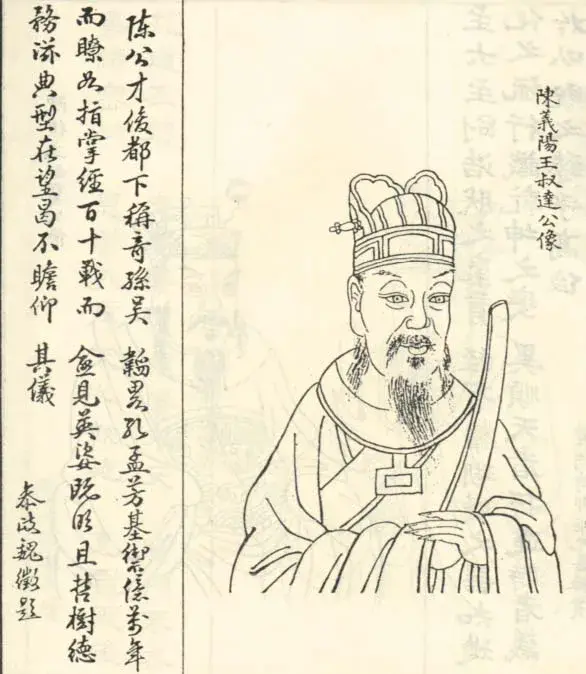
陈叔达
Chen Shuda (572–635), courtesy name Zicong, was a native of Changcheng County, Wuxing Commandery (modern Changxing County, Zhejiang Province). He was the seventeenth son of Emperor Xuan of the southern Chen Dynasty and a younger brother of Chen Shubao (the Last Ruler of Chen). He was an illustrious founding chancellor, prominent statesman, and celebrated man of letters of the Tang Dynasty, commemorated alongside Yan Shigu and…
Chen Shuda (572–635), courtesy name Zicong, was a native of Changcheng County, Wuxing Commandery (modern Changxing County, Zhejiang Province). He was the seventeenth son of Emperor Xuan of the southern Chen Dynasty and a younger brother of Chen Shubao (the Last Ruler of Chen). He was an illustrious founding chancellor, prominent statesman, and celebrated man of letters of the Tang Dynasty, commemorated alongside Yan Shigu and Su Ting as one of the supreme "Master Stylists" of early imperial literature. Demonstrating precocious literary eloquence, Chen Shuda was capable of composing sophisticated poetry upon request by age ten. In the Chen Dynasty, he was created Prince of Yiyang, serving as Shizhong and Minister of Justice. Following the Sui conquest of Chen in 589, he relocated to Chang'an, eventually serving as Secretariat Drafter and Administrator of Jiangjun Commandery during the Daye era. In 617, when Li Yuan (Duke of Tang) raised righteous troops in Taiyuan and marched west to invest Jiangjun, Chen Shuda astutely surrendered his commandery. Upon occupying Chang'an and assuming the office of Prime Minister, Li Yuan appointed Chen Shuda as Registrar of his headquarters, ennobled him as Duke of Handong, and entrusted him alongside Wen Daya to draft vital military dispatches, imperial amnesties, and the monumental abdication decrees. Following the proclamation of the Tang Dynasty, Chen Shuda served successively as Vice Director of the Chancellery, Acting Nayan, and Shizhong, attaining the rank of chancellor and being elevated to Duke of Jiang. Noted for his lucid arguments and impeccable composure, he recommended numerous southern literati to the central court. During the escalating succession struggle between Crown Prince Li Jiancheng and Prince of Qin Li Shimin, Chen Shuda repeatedly remonstrated with Emperor Gaozu against demoting Li Shimin. During the Xuanwu Gate Incident in 626, when General Yuchi Gong entered the inner palaces, Chen Shuda resolutely urged the shocked Gaozu to immediately establish Li Shimin as crown prince, ensuring a peaceful transition of power. Elevated to Minister of Rites in 632 by Emperor Taizong, he affirmed that his remonstrances had been dedicated purely to the state rather than personal favor. He passed away in 635 at the age of sixty-four, receiving the posthumous title Zhong.
Born into the southern Chen imperial house as the seventeenth son of Emperor Xuan; gifted in poetry from childhood.
Ennobled as Prince of Yiyang upon Chen Shubao's accession; served as Shizhong, Mayor of Danyang, and Minister of Justice.
Surrendered following the fall of Chen; dwelled in Chang'an before serving as Secretariat Drafter and Jiangjun Administrator.
Opened the gates of Jiangjun to Li Yuan; appointed Registrar of the Prime Minister, drafting core dynastic decrees.
Following the founding of Tang, appointed Vice Director of Chancellery and Acting Nayan to organize central statutes.
Promoted to Shizhong and Duke of Jiang; promoted talented southern scholars and handled state memorials with clarity.
Strongly defended Li Shimin against slanders; urged Gaozu to appoint him crown prince after the Xuanwu Gate Incident.
Conferred Grand Master of Splendid Happiness; dismissed from chancellor office after an emotional court argument with Xiao Yu.
Recalled by Taizong to reward his past loyalty; maintained selfless devotion to the realm without claiming personal merit.
Passed away in Chang'an at sixty-four; posthumously honored as Minister of Revenue with the posthumous title Zhong.
Chen Shuda was born into the sovereign lineage of the southern Chen Dynasty, being the seventeenth son of Emperor Xuan (Chen Xu) and Consort Yuan. From early youth, he exhibited remarkable literary brilliance coupled with stately aristocratic elegance. Possessing an agile intellect, he mastered historical canons such as the Zuo Zhuan and Shiji by his early teens, frequently composing verse during imperial court gatherings with spontaneous eloquence and rich imagery.
In 582, Emperor Xuan passed away, and Chen Shubao ascended the throne as the Last Ruler of Chen. Holding his talented half-brother in high esteem, the new monarch ennobled Chen Shuda as Prince of Yiyang. Over the ensuing decade, Chen Shuda held distinguished ministerial portfolios within the Chen administration, including Shizhong (Palace Attendant), Governor of Danyang, and Minister of Justice, overseeing court etiquette and capital security with impartiality and earning renown among southern scholar-officials.
In 589, Emperor Wen of Sui launched a massive amphibious campaign that overthrew the Chen Dynasty. The seventeen-year-old Chen Shuda accompanied the Chen imperial house into captivity, being relocated to the northern capital Chang'an. Under Emperor Wen's suspicious rule, former southern princes lived under close surveillance. Chen Shuda maintained a modest, reclusive lifestyle, immersing himself in northern administrative traditions and classical philosophy for over a decade.
During the Daye era of Emperor Yang, the Sui court finally acknowledged his literary prowess, appointing him Secretariat Drafter to handle confidential palace proclamations. Discerning Emperor Yang's capricious nature, Chen Shuda performed his duties with extreme vigilance and was subsequently appointed Commandery Administrator of Jiangjun (modern Xinjiang, Shanxi), governing regional civil and military affairs with benevolence and winning local acclaim.
In 617, as the Sui Dynasty collapsed into civil war, Li Yuan, Duke of Tang, raised troops in Taiyuan and advanced west toward Chang'an, laying siege to Jiangjun. Recognizing that the mandate of Sui had expired and perceiving Li Yuan's regal magnanimity, Chen Shuda made the decisive choice to open the city gates and surrender. Delighted that an imperial scion had submitted with an entire strategic commandery, Li Yuan treated him with extraordinary honor, incorporating him into his inner strategic council.
Upon capturing Chang'an, Li Yuan enthroned Yang You as a figurehead emperor and established the Grand Prime Minister Headquarters. Chen Shuda was appointed Registrar of the headquarters, ennobled as Founding Commandery Duke of Handong, and tasked alongside Recording Secretary Wen Daya with managing confidential state communications. The vast majority of strategic proclamations to regional warlords, pacification amnesties, the grant of Nine Bestowals from the Sui sovereign, and the formal abdication declarations establishing the Tang Dynasty were drafted by Chen Shuda and Wen Daya, establishing the institutional and moral legitimacy of the Tang house.
In the fifth month of 618, Li Yuan assumed the imperial throne as Emperor Gaozu. In the sixth month, Gaozu rewarded his core counselors, promoting Chen Shuda to Vice Director of the Chancellery and concurrent Acting Nayan, exercising chancellor authority. In 619, he became full Nayan, and in 621, following the restoration of ancient official nomenclatures, his title was changed to Shizhong, ranking him as premier leader of the chancellery.
Chen Shuda directed imperial governance for years, presenting administrative policies with impeccable logic and crystalline fluency that captivated the assembly during court audiences. Broad-minded and generous, whenever talented southern scholars arrived in Chang'an, Chen Shuda actively recommended them to Emperor Gaozu. Renowned luminaries such as Yu Shinan and Chu Liang attained prominent offices through his sponsorship, ensuring that southern literati firmly rallied behind the fledgling Tang regime.
During the middle and late Wude era, as Li Shimin (Prince of Qin) achieved monumental battlefield victories across China, Crown Prince Li Jiancheng and Prince of Qi Li Yuanji grew intensely threatened. Forming an alliance, they repeatedly slandered Li Shimin before Emperor Gaozu, fabricating charges that he harbored rebellious intentions. Misled by these accusations, Emperor Gaozu repeatedly considered stripping Li Shimin of his command and subjecting him to harsh discipline.
During these critical junctures, Chancellor Chen Shuda stepped forward to offer fearless counsel. He warned Gaozu that the Prince of Qin had performed peerless service in unifying the realm and should never be dismissed lightly. He emphasized that Li Shimin possessed an unbending spirit, warning that arbitrary humiliation might plunge him into profound distress and trigger incurable illness, leaving His Majesty with eternal regret. Moved by Chen Shuda's earnest appeals, Emperor Gaozu repeatedly abandoned punitive measures against Li Shimin.
At dawn on the fourth day of the sixth month of 626, Li Shimin launched the Xuanwu Gate Incident, slaying Li Jiancheng and Li Yuanji. General Yuchi Gong strode into the imperial palace fully armored, carrying a spear to Emperor Gaozu's boat and announcing that the crown prince and Prince of Qi had rebelled and were executed, claiming he had come to guard the sovereign. Facing a trembling and bewildered Gaozu, Chen Shuda spoke out with decisive clarity, explaining that Jiancheng and Yuanji had contributed nothing to the founding of the dynasty, driven purely by envy. He stressed that Li Shimin's merit encompassed all under heaven and that transferring state authority to him as crown prince would ensure lasting peace for the empire. Gaozu adopted his advice immediately, appointing Li Shimin crown prince and abdicating two months later in favor of Emperor Taizong.
Following Emperor Taizong's accession, Chen Shuda was granted the high honorary rank of Grand Master of Splendid Happiness in 627. However, possessive of an outspoken disposition, Chen Shuda engaged in a furious public debate with Vice Director of the Left Xiao Yu during an imperial policy conference, breaching palace protocol with excessive vehemence. Taizong strictly enforced court decorum, relieving both ministers of their chancellor portfolios.
Shortly after his dismissal, Chen Shuda retired to observe mourning for his mother, Lady Yuan, enduring profound physical emaciation out of filial sorrow. Upon completing mourning, Taizong designated him Area Commander of Suizhou, but severe illness prevented him from traveling. In 632, reflecting upon his pivotal role during the Wude era, Emperor Taizong reappointed Chen Shuda as Minister of Rites, remarking warmly during an audience that during the perils of 626, Chen Shuda had spoken up boldly to resolve factional crises, and that this high office was granted to repay his merit. Chen Shuda replied with dignified humility that his counsel had been offered solely for the security of the ancestral shrines rather than to seek private favor from His Majesty.
In his final years, Chen Shuda became entangled in family property disputes that drew censorate impeachment. Refusing to magnify his private shortcomings, Taizong permitted him to retire honorably at home. In 635, Chen Shuda passed away peacefully in Chang'an at the age of sixty-four. Although court officials initially proposed the posthumous title Miu, Emperor Taizong remembered his founding contributions and issued a special decree changing his posthumous name to Zhong, conferring the posthumous rank of Minister of Revenue with full state honors.
Following his surrender in 617, Chen Shuda played an indispensable role in establishing the institutional infrastructure of the Tang Dynasty. As Registrar of the Prime Minister Headquarters, he collaborated with Wen Daya to craft vital military missives, dynastic pacification amnesties, and the formal abdication declarations that facilitated the transfer of the mandate of heaven. Following his elevation to chancellor, he helped establish the Three Departments and Six Ministries system, serving as a primary administrative architect of the early empire.
At the fateful climax of the Xuanwu Gate Incident in 626, when Yuchi Gong confronted the imperial court and Emperor Gaozu was paralyzed with panic, Chen Shuda acted with breathtaking political clarity. By forcefully contrasting Jiancheng's lack of merit with Li Shimin's towering contributions, he persuaded Gaozu to appoint Li Shimin crown prince. His decisive intervention prevented potential bloodshed within the palace and secured an orderly transition of imperial authority.
During the bitter factional conflicts of the Wude era, Chen Shuda repeatedly placed his career at risk to shield Li Shimin against slanders. By appealing to Gaozu's paternal instincts and highlighting Li Shimin's indispensable role in securing the empire, he prevented the prince's demotion, safeguarding the military leadership that would subsequently inaugurate the prosperous Zhenguan era.
Chen Shuda was celebrated for pure filial piety and ministerial generosity. When served rare grapes at an imperial banquet, he preserved them on his plate to bring home to his ailing mother, moving Emperor Gaozu to tears. Throughout his tenure as chancellor, he systematically patronized displaced southern scholars without regional bias, integrating talented Wu and Yue intellectuals into the imperial bureaucracy and broadening the sociopolitical foundation of the High Tang dynasty.
FIGURES ASSOCIATED WITH THIS DYNASTY