Imperial Birth
Born on the first day of the tenth month in the Forbidden City as the thirteenth son of the Kangxi Emperor.
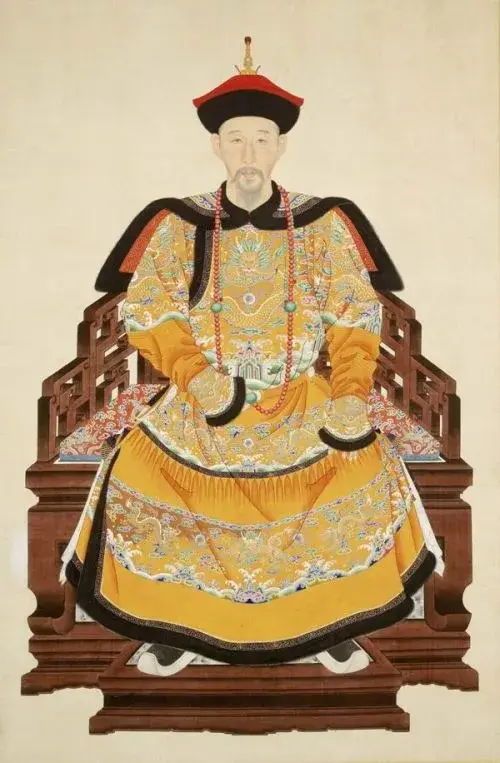
允祥
Yunxiang (允祥, 1686–1730), originally named Yinxiang (胤祥), belonging to the imperial Aisin Gioro clan, was the thirteenth son of the Kangxi Emperor and the closest brother and chief counsellor of the Yongzheng Emperor. His biological mother was Imperial Noble Consort Jingmin of the Janggiya clan. Intellectually gifted, highly cultured, and skilled in martial arts from youth, Yunxiang enjoyed deep personal affection from the…
Yunxiang (允祥, 1686–1730), originally named Yinxiang (胤祥), belonging to the imperial Aisin Gioro clan, was the thirteenth son of the Kangxi Emperor and the closest brother and chief counsellor of the Yongzheng Emperor. His biological mother was Imperial Noble Consort Jingmin of the Janggiya clan. Intellectually gifted, highly cultured, and skilled in martial arts from youth, Yunxiang enjoyed deep personal affection from the Kangxi Emperor, accompanying the monarch on virtually every imperial progress across the northern borders and southern provinces between 1698 and 1708. Following the dramatic deposition of Crown Prince Yinreng in 1708, Yunxiang fell under political suspicion during the bitter succession struggle, remaining in political eclipse for over a decade while suffering from a chronic bone ailment known as crane-knee wind. Throughout this period of adversity, he cultivated a profound bond of mutual trust with his fourth elder brother, Yinzhen (the future Yongzheng Emperor). Upon ascending the throne in December 1722 (Kangxi 61), the Yongzheng Emperor immediately elevated Yunxiang to Prince Yi of the First Rank and appointed him leader of the four Prime Ministers of State Affairs. Assuming leadership during a critical dynastic juncture, Yunxiang functioned as the paramount pillar of the new administration. As Superintendent of the Ministry of Revenue, he enforced aggressive nationwide audits to recover millions of taels in embezzled treasury funds, reformed salt monopolies, and regulated copper currency. In 1725, he assumed command of the Zhili agricultural water conservancy project, surveying the Yongding and Chaobai rivers and converting over three hundred thousand mu of alkaline marshes into fertile rice paddies. In 1729, to support the northwestern campaign against the Dzungar Khanate, Yunxiang founded and directed the Military Supplies Chamber (the institutional forerunner of the Grand Council), coordinating logistics across thousands of li. Throughout his career, Yunxiang was celebrated for selfless devotion to the state, rigorous personal integrity, and modesty toward colleagues, earning praise from the Yongzheng Emperor as an incomparable, loyal prince and pillar of the empire. On June 18, 1730 (the fifth month of Yongzheng 8), Yunxiang passed away from chronic exhaustion at the age of forty-five. Grieving deeply, the Yongzheng Emperor suspended court audiences for three days, ordered that his original birth name Yinxiang be restored without imperial taboo, granted his Prince Yi title perpetual hereditary succession as an "iron-cap" prince, conferred the posthumous name Xian, and ordered his enshrinement in the Imperial Ancestral Temple.
Born on the first day of the tenth month in the Forbidden City as the thirteenth son of the Kangxi Emperor.
At age twelve, accompanied the Kangxi Emperor to Shengjing to pay homage at ancestral tombs, initiating a decade of constant travel.
Accompanied the southern inspection tour, displaying calligraphy alongside fourth brother Yinzhen to the admiration of the court.
Implicated in the first deposition of Crown Prince Yinreng; spent over a decade in political obscurity while afflicted with bone illness.
Following Emperor Yongzheng's accession, elevated to Prince Yi of the First Rank and appointed chief of the Prime Ministers of State.
Appointed Superintendent of the Ministry of Revenue, initiating comprehensive audits of provincial treasuries and currency reform.
Commissioned as Director of Zhili Agricultural Water Conservancy, personally surveying northern waterways and reclaiming vast marshlands.
Directed the newly established Military Supplies Chamber, overseeing national logistics and arms production for the Dzungar expedition.
Died of illness on the fourth day of the fifth month; Yongzheng restored his birth name Yinxiang, granting perpetual hereditary nobility.
Yunxiang was born on November 16, 1686 (the first day of the tenth month of Kangxi 25) in the Forbidden City, Beijing, ranking as the thirteenth son of the Kangxi Emperor. His biological mother was Imperial Noble Consort Jingmin of the Janggiya clan, daughter of Haikuan, a company commander of the Plain Yellow Banner. Consort Jingmin bore one son and two daughters and was celebrated for her serene virtue. From early childhood, Yunxiang exhibited precocious intelligence, physical stature, and scholarly dedication. Tutored by renowned Confucian scholars, he mastered the classical canons, excelled in poetry, painting, and calligraphy, and demonstrated extraordinary proficiency in archery. Imperial chronicles record that he never missed a target on horseback, embodying the martial discipline and civil virtues of early Qing imperial princes.
Beginning in July 1698 (Kangxi 37), when he was twelve years old, Yunxiang accompanied the Kangxi Emperor on his pilgrimage to Shengjing (modern Shenyang) to venerate the imperial ancestral tombs. Over the subsequent decade, whenever Kangxi departed Beijing for the autumn hunts at Mulan, tours of the Mongol banners, inspection of southern water systems, or pilgrimages to Mount Wutai, Yunxiang was consistently selected to accompany him. During imperial hunts, Yunxiang frequently rode ahead to shoot ferocious quarry with bow and arrow, earning high praise from his father in the presence of Mongol princes. In 1702 (Kangxi 41), during a southern tour at the Dezhou travel lodge, Kangxi summoned fourth prince Yinzhen and thirteenth prince Yunxiang to demonstrate their calligraphy before the court; their balanced, forceful brushwork won universal acclaim from assembled ministers, illustrating Kangxi's exceptional affection for the young prince.
These extensive travels exposed Yunxiang to the geographic realities, military defiles, and socio-economic conditions of the empire, while honing his administrative tact and diplomacy among the imperial clan. During these years, Yunxiang formed a deep personal connection with his fourth brother Yinzhen, eight years his senior. Yinzhen treated Yunxiang with fraternal care, while Yunxiang showed unwavering loyalty. They composed poetry together, studied Buddhist philosophy, and practiced calligraphy, establishing an indestructible bond that would survive the fierce factional turmoil of the court.
During the mid-to-late Kangxi era, the imperial court was convulsed by the fierce "Nine Princes' Succession Struggle" surrounding the Crown Prince Yinreng. In September 1708 (Kangxi 47), during the imperial progress to Rehe, Kangxi abruptly deposed Yinreng, precipitating intense factional maneuvering among the princes. In this political storm, Yunxiang was implicated and subjected to stern imperial reprimands. According to imperial clan records, Yunxiang was temporarily detained alongside eldest prince Yinzhi and the deposed crown prince; although soon released, his political prospects were severely compromised.
When the crown prince was briefly restored the following year, Yunxiang remained excluded from imperial promotions. In 1709 (Kangxi 48), when Kangxi created his elder sons princes of the first and second rank, Yunxiang received no title. Compounding his distress, the physical rigors of frontier travel combined with emotional strain brought on a severe bone ailment known as "crane-knee wind." His knees swelled painfully with suppurating sores, severely impairing his mobility and requiring prolonged medical treatment. Kangxi frequently expressed paternal concern in rescripts to third prince Yinzhi, inquiring anxiously about Yunxiang's ulcerations.
Throughout the final twelve years of the Kangxi reign, Yunxiang withdrew entirely from politics. Concluding that factional maneuvering was destructive, he lived in seclusion, studying history, practicing medicine, and composing verse preserved in his collection Drafts from the Jiaohui Garden. Despite persistent overtures from the eighth prince Yinsi and fourteenth prince Yinti, Yunxiang remained aloof, privately offering his steadfast loyalty to Yinzhen. This prolonged period of obscurity refined his temperament, transforming him into a mature, calculating statesman.
On December 20, 1722 (the thirteenth day of the eleventh month of Kangxi 61), the Kangxi Emperor passed away at Changchun Garden, and fourth prince Yinzhen ascended the throne as the Yongzheng Emperor. The sudden transition unfolded in an atmosphere of intense tension, with the faction of eighth prince Yinsi entrenched across the bureaucracy and fourteenth prince Yinti commanding field armies in the northwest. In this volatile environment, Yongzheng immediately elevated his trusted brother Yunxiang to Prince Yi of the First Rank and appointed him leader of the four Prime Ministers of State Affairs alongside Yinsi, Grand Secretary Maci, and General Longkodo.
Ignoring his chronic bone ailment, Yunxiang threw his full energy into securing the transition. He assumed operational control over the capital defenses and imperial palace guards, positioning trustworthy officers to seal the Forbidden City and deter coup attempts. Simultaneously, he supervised the grand funeral ceremonies for the late emperor, coordinating complex ancestral rites with efficiency. Recognizing his absolute dependability, Yongzheng entrusted Yunxiang with command of the Eight Banners guards protecting the Yuanmingyuan palace, entrusting his personal security to his younger brother.
Navigating the factional suspicions of the early Yongzheng reign, Yunxiang served as an essential mediator. While resolutely executing Yongzheng's reforms, he advocated measured administrative procedures to preserve imperial clan dignity. When dealing with obstruction from Yinsi's faction, Yunxiang gathered documentary evidence to neutralize their opposition. He also introduced transparency to the Imperial Household Department and court artisan manufactories. Deeply moved by Yunxiang's service, Yongzheng proclaimed in open edicts that the peace of his reign rested substantially upon the prince's singular dedication.
In early 1723 (Yongzheng 1), the emperor appointed Prince Yi to superintend the Ministry of Revenue. At that time, imperial finances faced an unprecedented crisis inherited from the late Kangxi era. Decades of administrative leniency had allowed provincial governors and revenue officials to embezzle vast sums; nationwide treasury deficits exceeded tens of millions of taels, and central reserves contained barely seven million taels. Yunxiang initiated an unsparing nationwide campaign to eliminate treasury deficits.
Yunxiang created an independent supervisory organ, the Board of Audits (Huikao Fu), conducting rigorous examinations of central ledgers and provincial treasury reserves. Shattering the bureaucratic shield of mutual protection, he enforced strict deadlines, asset seizures, and dismissals. Regardless of high noble status, corrupt officials were held personally liable. Imperial princes such as Yintao and Yinte were compelled to reimburse their deficits, with Yintao selling household valuables to clear his debt. Under Yunxiang's relentless supervision, longstanding arrears were fully repaid within a few years, and central revenue reserves surged from seven million to over fifty million taels, restoring the dynasty's financial vitality.
In addition to auditing deficits, Yunxiang overhauled currency and salt administration. To suppress debased coinage and fluctuating silver-copper exchange rates that harmed commoners, he expanded the central Baoyuan and Baoquan mints, strictly standardizing coin weights and metallic purity, while developing copper mines across Guangdong, Guangxi, and Yunnan. In the salt sector, he dismantled entrenched merchant cartels at Lianghuai and Changlu, closing loopholes and dramatically increasing salt tax yields, establishing a sound fiscal foundation for the mid-Qing state.
In 1725 (Yongzheng 3), catastrophic floods inundated the metropolitan province of Zhili, as the Yongding, Chaobai, and Ziya rivers overflowed, turning vast agricultural plains into marshes. Flood control in Zhili had frustrated imperial administrators for generations. The Yongzheng Emperor commissioned Prince Yi as Director of Zhili Agricultural Water Conservancy, granting him full authority to execute flood control and agricultural engineering across the region.
Disregarding summer heat and winter frost, Yunxiang traveled through the flooded river systems on horseback and boat despite his bone ailment. He inspected the headwaters and coastal outlets of the northern rivers, formulating a comprehensive strategy of combining flood drainage with agricultural irrigation. His plan called for dredging old silted channels, excavating new relief waterways, and constructing stone sluices and diversion dikes to guide excess water safely to the sea, while channeling surplus currents onto saline wasteland to cultivate wetland rice.
In 1726 (Yongzheng 4), Yunxiang established the Zhili Agricultural Water Conservancy Yamen, organizing four regional conservancy circuits directed by engineering specialists He Guozong and Chen Yi. He recruited skilled southern farmers to instruct northern cultivators in wet-rice techniques and provided free draft oxen and seed grain to displaced households. Under his direct oversight, laborers built hundreds of stone dikes, bridges, and floodgates, excavating thousands of li of irrigation canals and converting over three hundred thousand mu of barren marshland into productive rice paddies. Moreover, Yunxiang enforced fair market compensation for all appropriated lands, winning profound popular gratitude and sparing Zhili major floods for decades.
In 1729 (Yongzheng 7), the Dzungar Khanate under Galdan Tseren launched aggressive raids across the Khalkha Mongol borderlands and Turpan, precipitating major warfare on the northwestern frontier. To support expeditionary forces exceeding one hundred thousand men under Generals Furdan and Yue Zhongqi, Yongzheng created a confidential wartime committee near the Longzong Gate—the Military Supplies Chamber (Junxufang), which soon evolved into the Grand Council (Junjichu)—placing Prince Yi in exclusive charge.
Demonstrating extraordinary organizational talent, Yunxiang mobilized the imperial apparatus into a streamlined wartime footing. He oversaw grain procurement, pack animal mobilization, weapons production, and courier networks across thousands of li. To ensure uninterrupted logistics through the Gobi Desert, he calculated daily rations per soldier and camel, introducing phased transport stations that safely conveyed tens of millions of taels in supplies to the Central Asian front without logistical failure.
In weapons procurement, Yunxiang took personal charge, testing newly cast artillery at Lugou Bridge and redesigning heavy cannons for desert transport. Collaborating with weapons expert Haiwang, he developed lightweight bamboo camp mortars and improved Weiyuan cannons. Working from dawn until night, Yunxiang drafted confidential imperial edicts alongside the emperor. The establishment of this confidential body eliminated the leaks and inefficiencies of the Grand Secretariat, creating an agile command structure that became the definitive center of Qing governance.
Years of unrelenting administrative strain, combined with the worsening of his chronic bone ailment, took a catastrophic toll on Yunxiang's health. By late 1729, he suffered from severe hemorrhaging and exhaustion. Nevertheless, he continued reviewing state memorials and receiving military dispatches from his sickbed. Yongzheng visited his mansion repeatedly, wept at his bedside, and summoned renowned physicians nationwide to treat him. In early 1730, despite being gravely ill, Yunxiang insisted on traveling to Qinglongwan on the North Canal to inspect spring flood barriers, collapsing upon his return to the capital.
On June 18, 1730 (the fourth day of the fifth month of Yongzheng 8), Prince Yi passed away in his residence at the age of forty-five. Devastated by the loss, the Yongzheng Emperor suspended court audiences for three days and personally attended the encoffining ceremony in tears. In an emotional edict, Yongzheng declared that the prince was a peerless statesman whose eight years of selfless dedication had secured the empire's peace. In recognition of his extraordinary service, Yongzheng decreed that Yunxiang's original birth character "Yin" be restored to his name, making him the only brother exempt from the imperial naming taboo in Qing history.
Yongzheng conferred the posthumous name Xian and granted the Prince Yi title perpetual hereditary succession ("iron-cap" status). Yunxiang's seventh son Hongxiao inherited the princely title, while his fourth son Hongjiao was granted the title Prince Ningliang of the Second Rank, bestowing dual princely dignities upon his household. His spirit tablet was placed in the Imperial Ancestral Temple, and he was interred with supreme honors in Laishui, Zhili. In 1734, the emperor ordered the construction of the Xianliang Temple in Beijing to commemorate his virtues. Yunxiang's legacy stands as a rare historical model of profound fraternal devotion combined with transcendent statesmanship.
The financial rehabilitation directed by Yunxiang during the early Yongzheng reign rescued the Qing state from impending bankruptcy. Taking charge of the Ministry of Revenue, he broke bureaucratic patronage by establishing the Board of Audits. Enforcing an unbending standard that prioritized public welfare over noble privilege, he recovered embezzled funds through property seizures, reversing decades of administrative delinquency. Under his stewardship, imperial treasury reserves surged from seven million to over fifty million taels, eliminating systemic deficits and providing the financial stability necessary to implement agrarian tax remissions.
Furthermore, Yunxiang established modern institutional accounting standards. He formulated rigorous treasury inspection protocols, eliminated predatory surcharges on silver melting, and coordinated nationwide implementation of the "merging melts into the public treasury" and "integrity allowances" policies. In southern provinces, his commissioners rectified longstanding fraudulent land concealment among gentry households, transforming the Ministry of Revenue into an efficient financial organ that powered Yongzheng's structural reforms.
Yunxiang's water conservancy campaign in Zhili represented the most successful comprehensive ecological and hydraulic achievement in northern China during the high Qing. Rejecting temporary dike-building, he pursued a holistic doctrine of integrating drainage with irrigation and marsh reclamation. Personally surveying northern waterways despite severe illness, he erected a massive engineering network of hundreds of stone dams, sluices, and canals, transforming over three hundred thousand mu of alkali marshes into productive rice paddies. This historic project eliminated chronic flooding across dozens of counties and established a self-sufficient rice production base in the metropolitan province, diversifying northern agriculture and safeguarding imperial food security.
To ensure long-term maintenance, Yunxiang established specialized administrative jurisdictions, including the Tongyong and Bachang circuits, assigning dedicated conservancy magistrates and incorporating hydraulic maintenance into official merit evaluations. By employing flood victims on construction projects, he provided livelihoods for tens of thousands of displaced commoners, turning a potential social crisis into lasting public infrastructure.
During the 1729 northwestern campaign against the Dzungars, Yunxiang founded and directed the Military Supplies Chamber, establishing the institutional foundation of the Grand Council. Managing logistics across desert routes spanning thousands of li, he introduced precise accounting and relay networks to supply frontline armies without civilian extortion. His streamlining of imperial decision-making concentrated executive power directly in the monarch's hands, creating the paramount administrative organ of the late imperial state.
Throughout this wartime mobilization, Yunxiang balanced military requirements against civilian burdens. He prohibited field generals from levying arbitrary exactions in grain-producing regions, purchasing supplies at market prices and providing wages to transport laborers. By establishing fortified supply depots and redundant routes, he ensured that imperial armies were never isolated by enemy cavalry, demonstrating logistical leadership that won the enduring respect of civilian and military officials alike.
Amid the intense political fallout of the succession struggle, Yunxiang functioned as the Yongzheng Emperor's indispensable political bulwark. Leveraging his moral authority and diplomatic tact, he executed security measures while restraining vindictive excess within the imperial clan. He coordinated the Court of the Imperial Clan, the Lifan Yuan, and the Imperial Household Department to centralize Eight Banners military commands under direct monarchical control, removing noble opposition to crucial reforms such as the abolition of hereditary chieftainships (Gaitu Guiliu) and the incorporation of poll taxes into land taxes (Tanding Rumu).
In bridge-building between Manchu aristocrats and Han scholar-officials, Yunxiang played an equally vital role. Aware that Yongzheng's forceful methods could provoke resentment among traditional literati, he acted as a conciliatory advisor. Listening patiently to bureaucratic memorials, he shielded principled scholars from imperial wrath, fostering broad administrative cooperation under the banner of the Yongzheng reforms.
Beyond statecraft, Yunxiang exemplified the highest intellectual and artistic standards of the Manchu nobility. His poetic collection Drafts from the Jiaohui Garden displays classical elegance and philosophical depth, and his calligraphy mirrored the refined brushwork of Dong Qichang and Zhao Mengfu. In his private life, he practiced frugal simplicity, enjoying theological and literary discussions with eminent scholars and Buddhist monks. He extended generous patronages to distinguished scholars such as Shen Deqian and Zhang Zhao, bridging Manchu martial tradition with Chinese Confucian literati culture.
FIGURES ASSOCIATED WITH THIS DYNASTY