Imperial Tragedy and Retreat to Tokharistan
Father Yazdegerd III murdered in Merv; Peroz led royal survivors into Tokharistan seeking sanctuary.
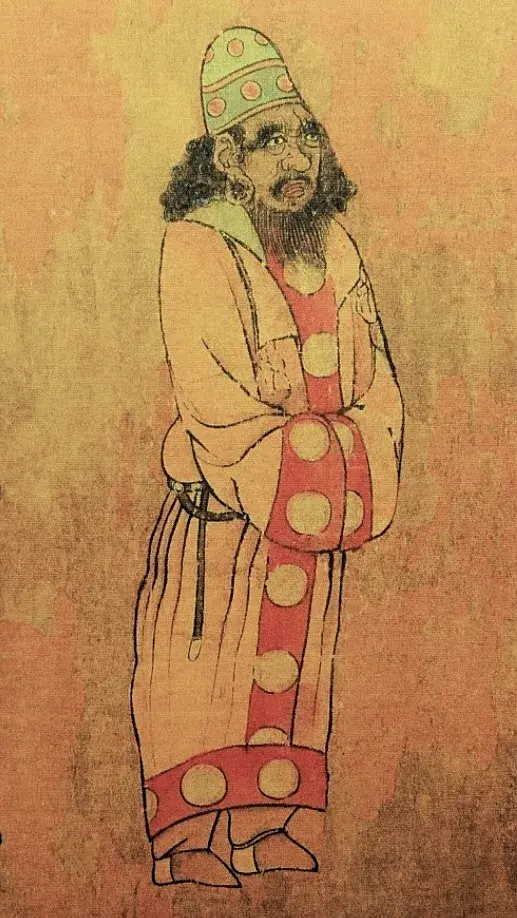
卑路斯
Peroz III (卑路斯, c. 636–c. 678), commonly rendered in Persian as Peroz III and transcribed in classical Chinese histories as Beiluosi or Beiluzi, was the son of Yazdegerd III, the last emperor of the Sasanian Empire. Following the downfall of the ancient Persian empire, he became a celebrated naturalized Tang general and leader of the exiled Persian royal house in the East, officially invested by the Tang imperial court as…
Peroz III (卑路斯, c. 636–c. 678), commonly rendered in Persian as Peroz III and transcribed in classical Chinese histories as Beiluosi or Beiluzi, was the son of Yazdegerd III, the last emperor of the Sasanian Empire. Following the downfall of the ancient Persian empire, he became a celebrated naturalized Tang general and leader of the exiled Persian royal house in the East, officially invested by the Tang imperial court as Area Commander of Persia and King of Persia, ultimately rising to General of the Right Martial Guard in China. In the mid-7th century, expanding Arab armies overran the Sasanian Empire, and his father Yazdegerd III was murdered at Merv in Central Asia in 651. The young Peroz and loyal royal remnants retreated eastward along the Silk Road into Tokharistan (modern northern Afghanistan), securing refuge among regional chieftains to wage resistance. Peroz repeatedly dispatched embassies across the Pamir Mountains pleading for Chinese military assistance. In 661, assessing the geopolitical balance following the pacification of the Western Turks, Emperor Gaozong of Tang established the Persian Area Command at Jiling (Zaranj, southwestern Afghanistan), appointing Peroz Area Commander; in 662, the Tang throne formally invested him as King of Persia, establishing a western buffer along the imperial frontier. Confronting relentless Arab pressure and the erosion of Central Asian alliances, Peroz recognized the impossibility of direct reconquest, leading the remaining Persian royal family and retainers across the Pamirs into China in 675, settling in the imperial capitals of Luoyang and Chang'an. Emperor Gaozong received the exiled prince with extraordinary imperial honors, appointing him General of the Right Martial Guard with the supreme military rank of Grand General. The court allocated land in the Xiushan and Lide wards of Luoyang to establish Persian residential quarters and authorized the construction of Persian temples for Zoroastrian and Nestorian rites. Peroz passed away in Chang'an and was interred in the Persian royal cemetery in Luoyang. His life-sized stone statue stands prominently among the celebrated Sixty-One Foreign Envoys guarding Emperor Gaozong's Qianling Mausoleum, serving as an immortal monument to Sino-Persian civilizational exchange along the ancient Silk Road.
Father Yazdegerd III murdered in Merv; Peroz led royal survivors into Tokharistan seeking sanctuary.
Dispatched envoys across the Pamir Mountains seeking military intervention; Emperor Gaozong declined due to distance.
Following the collapse of the Western Turks, Tang established the Persian Area Command at Zaranj, appointing Peroz Area Commander.
Emperor Gaozong issued an imperial edict formally investing Peroz as King of Persia, validating Sasanian dynastic legitimacy.
Allied with Tokharian warriors to wage border defense along the fringes of Khorasan; gradually forced east by superior forces.
Led surviving royal princes, scholars, and soldiers across the Pamirs into Luoyang, warmly received by Emperor Gaozong.
Appointed General of the Right Martial Guard; established the Persian Temple in the Xiushan ward of Luoyang.
Died of illness in his official residence in Chang'an; buried in Luoyang with imperial honors, succeeded by son Narsieh.
Emperor Zhongzong erected a monumental stone statue of Peroz at the Qianling Mausoleum, commemorating his loyalty.
Peroz was born into the imperial palace of the Sasanian Empire, whose dynasty had ruled the Iranian plateau and Mesopotamia for over four centuries as one of the great superpowers of antiquity. In the early 7th century, the rapid expansion of the Arab Caliphate unleashed a storm across western Asia. Following crushing defeats at the battles of al-Qadisiyyah in 637 and Nihawand in 642, the imperial capital of Ctesiphon fell, plunging the Sasanian civilization into mortal crisis.
His father, Yazdegerd III, fled northeast toward Khorasan and the Oxus River basin, repeatedly sending urgent envoys to Chang'an to implore Emperor Taizong of Tang for military intervention. Preoccupied with pacifying northern nomadic steppes and securing the Tarim Basin, the Tang court regarded the regions west of the Pamirs as too distant for direct military intervention.
In 651, Yazdegerd III was betrayed by regional subordinates and murdered by a miller in Merv (modern Mary, Turkmenistan). The young prince Peroz, protected by loyal grandees including Prince Aluohan and surviving palace guards, carried the imperial seals and royal regalia eastward along the Silk Road into Tokharistan in modern northern Afghanistan. The chieftains of Tokharistan, long admiring Persian culture and remembering past alliance ties, welcomed the exiled prince, granting the Sasanian remnants a vital base in the mountain valleys.
During his exile in Tokharistan, Peroz remained consumed by the dream of reclaiming his homeland. In 654, he sent an embassy across the Pamirs to Chang'an, detailing the devastation of his realm and imploring the Tang court to dispatch imperial armies. Emperor Gaozong received the envoys with gifts of silk, but refrained from immediate military deployment while Tang forces were engaged in crushing the Western Turkic Khaganate under Ashina Helu.
In 657, renowned Tang general Su Dingfang swept across the Western Regions, capturing Ashina Helu and annihilating the Western Turkic Khaganate. Tang imperial prestige surged across the Oxus and Jaxartes rivers, prompting the court to establish administrative protectorates across Central Asia under the Anxi Grand Protectorate.
In 661, Emperor Gaozong dispatched Commissioner Wang Mingyuan to Central Asia to proclaim imperial authority, officially establishing the Persian Area Command at the fortress city of Zaranj (in modern southwestern Afghanistan), appointing Peroz Area Commander. In 662, Emperor Gaozong issued an imperial edict formally investing Peroz as King of Persia, granting him golden imperial seals and official robes, recognizing him as the sole legitimate sovereign of the Sasanian dynasty. Leveraging the prestige of the Tang court and Tokharian cavalry, Peroz launched counteroffensives into Khorasan, waging years of guerrilla warfare against Arab frontier forces.
The expansion of the Umayyad Caliphate proved relentless. By the late 660s, Arab forces secured solid footholds in Khorasan, launching coordinated thrusts into Tokharistan. Encircled and outmatched, regional Central Asian chieftains sought separate terms, and Zaranj fell, extinguishing the Persian Area Command.
Facing absolute encirclement, Peroz recognized that only the prosperous Tang Empire offered true sanctuary. In the early Shangyuan era, Peroz and Prince Aluohan led surviving royal family members, courtiers, scholars, artists, and elite soldiers on an arduous journey across the Pamirs and the Taklamakan Desert, reaching the eastern capital of Luoyang in 675.
Emperor Gaozong and Empress Wu Zetian welcomed the exiled Persian monarch with imperial magnanimity. A grand reception was held in the imperial palace, during which Emperor Gaozong exempted the Persian community from tribute and appointed Peroz to the senior third-rank military post of General of the Right Martial Guard, incorporating him into the palace guard.
Settling in the Central Plains, Peroz embraced the cosmopolitan atmosphere of the Tang empire. To accommodate the thousands of Persian exiles and clergy who had accompanied him, Peroz petitioned the throne in 676 for permission to construct religious sanctuaries where his followers could practice their ancestral faiths and preserve cultural memory.
Emperor Gaozong approved the petition, allocating prime urban land in the Xiushan and Lide wards of Luoyang to establish a Persian temple for Zoroastrian and Nestorian worship, designating these districts as official Persian residential quarters. Luoyang and Chang'an became safe havens for Iranian refugees. During his remaining years, Peroz assisted the Tang court in fostering Silk Road trade, introducing Persian gold and silver craftwork, medicine, and astronomical lore to the imperial court.
During the Yifeng era around 678, exhausted by decades of hardship, Peroz died in his official residence in Chang'an in his early forties. Emperor Gaozong mourned his death, conferring posthumous honors and ordering his burial in the Persian royal cemetery south of Luoyang. His son Narsieh was invested as the next King of Persia. In 706, during the construction of the Qianling Mausoleum for Emperor Gaozong and Wu Zetian, the court commissioned sculptors to carve a life-sized stone statue of Peroz. Standing beside the Phoenix Gate among the Sixty-One Foreign Princes, the statue bears the clear Chinese inscription "King Peroz of Persia," eternally commemorating the unbreakable bond between Sasanian Persia and the Tang Dynasty.
The Sasanian Empire represented the cultural zenith of pre-Islamic Iranian civilization. Amid the devastating Arab conquests that engulfed the Middle East, Peroz demonstrated extraordinary fortitude.
Following his father's assassination, he shouldered the burden of dynastic survival, leading royal survivors and artisans from Iran through Afghanistan and Central Asia across thousands of miles. Through two decades of conflict and migration, he preserved the imperial bloodline and priceless cultural heritage, bringing them safely to the Tang capital, writing an epic chapter in medieval Eurasian history.
In 661, Emperor Gaozong established the Persian Area Command at Zaranj, appointing Peroz Area Commander and King of Persia. This strategic move extended Tang nominal suzerainty to the borders of modern Iran.
As an officially commissioned Tang frontier viceroy and allied king, Peroz preserved legitimate Sasanian claims to their ancestral realm while serving as a strategic buffer defending Central Asian oasis kingdoms against westward expansion, marking a significant milestone in Tang diplomatic history.
Following his relocation to Luoyang and Chang'an, Peroz established Persian temples and residential communities in the Xiushan ward, founding a formal settlement model for Western Asian exiles.
Under his leadership, Persian merchants, Zoroastrian priests, and scholars introduced advanced metalwork, glass production, astronomical calendars, and spice commerce into China, enriching the cosmopolitan culture of the High Tang and establishing an enduring model of civilizational coexistence.
As a supreme symbol of Tang universalism, Peroz served as General of the Right Martial Guard protecting the imperial palace. After his passing, the court erected a monumental stone statue of him at the Qianling Mausoleum.
Surviving through fifteen centuries, the statue's base retains its legible Chinese inscription: "King Peroz of Persia." It stands as an enduring monument testifying to an ancient Eurasian empire's final entrustment of its destiny to the Tang civilization.
FIGURES ASSOCIATED WITH THIS DYNASTY