Birth in Qi County
Born into the distinguished Taiyuan Wen lineage; studied Confucian classics alongside his brothers Daya and Dayou.
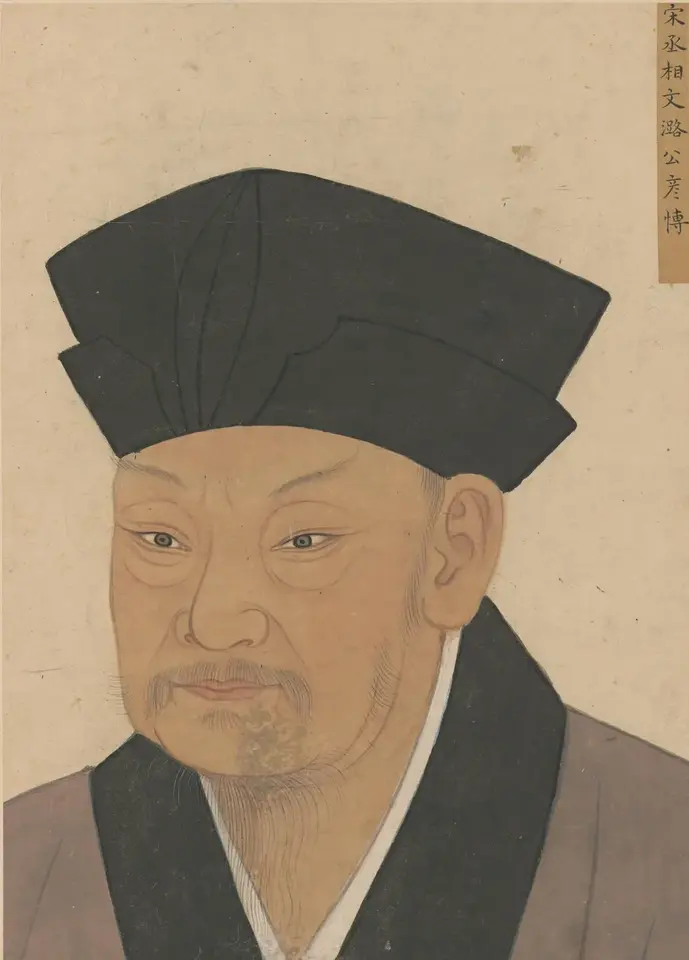
温彦博
Wen Yanbo (温彦博, 575 – June 24, 637), courtesy name Dalin (大临), posthumously honored as Gong (恭), was a native of Qi County, Bingzhou (modern Qi County, Jinzhong, Shanxi Province). He was an illustrious statesman, founding chancellor, and diplomat of the early Tang dynasty, celebrated alongside his elder brother Wen Daya (Minister of Rites) and younger brother Wen Dayou (Vice Minister of Works) as the "Three Wens of…
Wen Yanbo (温彦博, 575 – June 24, 637), courtesy name Dalin (大临), posthumously honored as Gong (恭), was a native of Qi County, Bingzhou (modern Qi County, Jinzhong, Shanxi Province). He was an illustrious statesman, founding chancellor, and diplomat of the early Tang dynasty, celebrated alongside his elder brother Wen Daya (Minister of Rites) and younger brother Wen Dayou (Vice Minister of Works) as the "Three Wens of Taiyuan." Serving as Censor-in-Chief, Director of the Secretariat (Zhongshu Ling), and Right Vice Director of the Department of State Affairs (Shangshu You Puye) under Emperor Taizong, he was ennobled as the Duke of Yu and awarded the posthumous name Gong. Hailing from the prestigious Taiyuan Wen lineage, Wen displayed keen intellect, eloquence, and deep classical erudition from youth. Entering public service in the late Kaihuang era of Sui, he was recommended by Prince of Qin Yang Jun to serve as supernumerary drafter in the Palace Secretariat. In 616 (the 12th year of the Daye era), as the Sui dynasty disintegrated, regional commander Luo Yi seized Youzhou, appointing Wen as his chief military advisor. In 619 (the 2nd year of the Wude era), Wen persuaded Luo Yi to surrender Youzhou to the newly established Tang dynasty, earning the gratitude of Emperor Gaozu, who appointed him Secretariat Drafter and Vice Minister of the Secretariat. In 625, when Illig Qaghan of the Eastern Turks invaded Taiyuan with one hundred thousand cavalry, Wen was captured while directing defensive operations. Subjected to harsh interrogations and enticing bribes in the frozen steppes of Mount Yin, Wen remained unflinching, steadfastly concealing imperial military intelligence during five years of grueling captivity. In 630 (the 4th year of the Zhenguan era), General Li Jing crushed the Eastern Turks and captured Illig Qaghan, liberating Wen. Deeply moved by his unyielding loyalty, Emperor Taizong appointed him Censor-in-Chief and subsequently elevated him to Director of the Secretariat (Chancellor). In the historic court debate regarding the settlement of over one hundred thousand surrendered Eastern Turks, Wen championed the far-sighted policy of "preserving their tribal customs and settling them along the northern frontier under loose-rein prefectures" (jimi fuzhou). This policy secured the allegiance of nomadic leaders and laid the institutional foundation for Emperor Taizong's elevation as "Heavenly Qaghan." In 636, Wen was appointed Right Vice Director of State Affairs. He passed away in office on June 24, 637, at sixty-three. Emperor Taizong suspended court sessions, posthumously granted him Senior Official of Superior Status and Area Commander of Youzhou, honored him as Gong, and granted him burial in the Zhao Mausoleum.
Born into the distinguished Taiyuan Wen lineage; studied Confucian classics alongside his brothers Daya and Dayou.
Recommended by Prince of Qin Yang Jun; appointed drafter in the Palace Secretariat for literary refinement.
Appointed military advisor to regional warlord Luo Yi at Youzhou amidst widespread late Sui civil warfare.
Convinced Luo Yi to surrender Youzhou to Emperor Gaozu; summoned to Chang'an as Secretariat Drafter.
Captured during a Turkic siege at Taiyuan; refused to betray Tang intelligence and was imprisoned in Mount Yin for five years.
Repatriated following Li Jing's victory; appointed Censor-in-Chief and promoted to Director of the Secretariat.
Won the imperial debate on settling Turkic tribes, establishing loose-rein border prefectures that won nomads' allegiance.
Elevated to Right Vice Director of State Affairs (Shangshu You Puye) and created Duke of Yu.
Passed away on June 24 at sixty-three; posthumously granted Area Commander of Youzhou, honored as Gong, buried in Zhao Mausoleum.
Wen Yanbo was born into the prestigious Taiyuan Wen lineage in Qi County, Bingzhou. His family maintained a distinguished tradition of civil and military service. His father, Wen Junyou, served as military supervisor of Sizhou during the Sui dynasty. Wen was the second of three brothers: the eldest, Wen Daya, was renowned for literary scholarship, while the youngest, Wen Dayou, was a daring strategist. The three brothers studied classical texts together, prompting contemporary minister Xue Daoheng to exclaim: "All three brothers of the Wen family possess peerless talent, truly the mythical birds of Taiyuan!"
In 604 (the 24th year of the Kaihuang era), Prince of Qin Yang Jun served as regional commander of Bingzhou. Recognizing Wen's literary talent, he recommended him to the Sui imperial court, where Wen was appointed supernumerary drafter in the Palace Secretariat. The Palace Secretariat was responsible for confidential imperial rescripts. Wen's concise literary style and procedural efficiency earned the praise of Emperor Wen and vice-minister Xue Daoheng, leading to his promotion as court usher.
In 616 (the 12th year of the Daye era), Emperor Yang's reckless misrule plunged the realm into civil war. In Youzhou (modern Beijing), military commander Luo Yi executed the Sui prefect and seized autonomous command over the Yan-Ji region. Long aware of Wen's statesmanship, Luo Yi invited him to serve as his chief military supervisor.
When Li Yuan (Emperor Gaozu) rebelled at Taiyuan and captured Chang'an to found the Tang dynasty, warlords Dou Jiande in Hebei and Gao Kaidao in Yuyang repeatedly sent envoys to pressure Luo Yi to join their insurgencies.
At this historical crossroads, Wen analyzed the geopolitical landscape and urged Luo Yi: "Li Yuan controls the fertile passes of Guanzhong and commands imperial destiny; Dou Jiande and the others are undisciplined bands. If Your Excellency submits Youzhou to the Tang, you will secure enduring fame!" Luo Yi embraced Wen's counsel, dispatching an embassy in 619 (the 2nd year of the Wude era) to surrender Youzhou to the Tang. Delighted, Emperor Gaozu ennobled Luo Yi with the imperial surname Li and created him Prince of Yan, while promoting Wen to chief administrator of Youzhou.
Soon summoned to Chang'an, Wen was appointed Secretariat Drafter and advanced to Vice Minister of the Secretariat. Directing the drafting of state decrees, Wen responded to urgent frontier memorials with immediate, unhesitating clarity.
In the autumn of 625 (the 8th year of the Wude era), Illig Qaghan of the Eastern Turks launched a massive invasion of Taiyuan with over one hundred thousand steppe cavalry. Emperor Gaozu appointed Zhang Gongjin as commander of Bingzhou, with Wen serving as army supervisor. Overwhelmed by superior numbers north of Taiyuan, Wen's divisions were encircled. Fighting heroically on the front lines, Wen was captured. Aware of Wen's high ministerial standing, Illig hosted banquets to induce his surrender and interrogated him regarding Tang frontier dispositions and capital defenses. Wen remained serene and stern, fiercely rebuking the Turks for violating treaties and refusing to reveal imperial secrets. Enraged, Illig stripped Wen of his robes and banished him to a yurt in the freezing wasteland of Mount Yin. Over five years of harsh imprisonment, Wen endured bitter cold and meager rations, yet his loyalty to the Tang never wavered.
In early 630 (the 4th year of the Zhenguan era), Emperor Taizong dispatched General Li Jing on an expedition against the Eastern Turks. Li Jing executed a daring winter cavalry assault against Dingxiang, breaking the nomad lines and capturing Illig Qaghan, totally destroying the Eastern Turkic Khaganate. Amidst the chaos, Wen was liberated and escorted back to Chang'an.
Emperor Taizong received Wen in audience, weeping as he observed his gaunt but noble countenance: "In ancient times, Su Wu remained among the Xiongnu for nineteen years without disgracing the Han; you were trapped in northern wastelands for five years and preserved your integrity, a true and faithful minister of our dynasty!" Taizong immediately appointed Wen Censor-in-Chief, advancing him months later to Director of the Secretariat (Zhongshu Ling), placing him at the head of the imperial chancellery.
Following the collapse of the Eastern Turks, an intense court debate arose regarding the disposition of over one hundred thousand surrendered nomadic subjects. Senior ministers Yan Shigu and Wei Zheng argued that the Turks should be deported beyond the frontiers or forcibly dispersed among Chinese commanderies to prevent future rebellions.
Wen alone advocated a transcendent imperial vision. He addressed Emperor Taizong: "A true sovereign embraces the world as heaven and earth cover all things. Now that the Turks submit in destitution, casting them out would contradict imperial benevolence. We should preserve their tribal organizations, respect their native customs, and settle them within the northern frontier circuits between Youzhou and Lingzhou. Establishing loose-rein prefectures (jimi fuzhou) under their own chieftains as imperial prefects, we will transform them into our northern shield. Thus moved by imperial virtue, they will become loyal sons of China within generations!"
Emperor Taizong adopted Wen's counsel in full, establishing dozens of loose-rein border commanderies and appointing nomadic chieftains as Tang imperial generals. This far-sighted policy neutralized the northern frontier and inspired the nomadic leaders to travel to Chang'an to acclaim Emperor Taizong with the unprecedented title "Heavenly Qaghan."
In 636 (the 10th year of the Zhenguan era), Wen was appointed Right Vice Director of the Department of State Affairs (Shangshu You Puye) and created Duke of Yu, assuming responsibility for executive administration. Wen was celebrated for his modest benevolence and courteous treatment of junior officials. Working alongside Fang Xuanling and Du Ruhui, he streamlined the civil bureaucracy, living frugally and amassing no personal fortune.
In 637, aggravated by joint ailments contracted during his five years of steppe captivity, Wen fell critically ill. Emperor Taizong visited him repeatedly and dispatched imperial physicians to care for him. On June 24, 637 (the 26th day of the 5th lunar month, 11th year of the Zhenguan era), Wen passed away peacefully at his official residence at sixty-three.
Emperor Taizong was overcome with grief, suspending court sessions and lamenting: "Ever since Wen Yanbo served me, he was pure, respectful, and observant of ritual canons, committing not a single fault. His passing deprives me of an indispensable counselor!" The emperor posthumously granted him Senior Official of Superior Status and Area Commander of Youzhou, awarded the posthumous name Gong, and granted him burial in the Zhao Mausoleum. His eldest son, Wen Zhen, inherited the dukedom, and the Taiyuan Wen lineage flourished throughout the Tang dynasty.
In 619, Wen's strategic discernment persuaded regional warlord Luo Yi to submit the strategic gateway of Youzhou to the Tang court, securing northern borders and elite cavalry without bloodshed.
Captured at Taiyuan in 625, Wen endured five years of harsh imprisonment in Mount Yin, steadfastly refusing to collaborate or disclose imperial defense secrets, personifying the highest standard of diplomatic fidelity.
During the 630 debate on surrendered Eastern Turks, Wen championed the preservation of tribal customs within loose-rein border prefectures, forging the inclusive ethnic policy that led nomadic leaders to crown Emperor Taizong as "Heavenly Qaghan."
Serving as Director of the Secretariat and Right Vice Director of State Affairs, Wen directed legislative drafting and executive administration with swift efficiency, playing a foundational role in the institutional success of the Rule of Zhenguan.
FIGURES ASSOCIATED WITH THIS DYNASTY