Birth and Heritage
Born into an illustrious scholar-official lineage in Anqing, mastering dramatic poetics and classical literature.
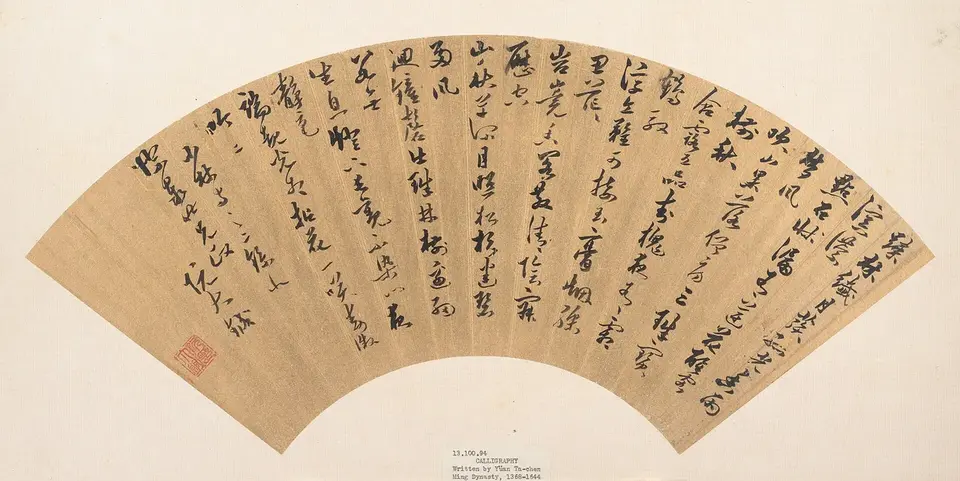
阮大铖
Ruan Dacheng (阮大铖, 1586–1646), courtesy name Jizhi (集之) and pseudonyms Yuanhai (圆海) and Shichao (石巢), was a renowned playwright, classical poet, and controversial statesman of the late Ming and early Qing periods. Passing the imperial metropolitan examinations as a jinshi in 1616, he originally associated with the Donglin faction under the mentorship of Gao Panlong and formed an intimate alliance with his…
Ruan Dacheng (阮大铖, 1586–1646), courtesy name Jizhi (集之) and pseudonyms Yuanhai (圆海) and Shichao (石巢), was a renowned playwright, classical poet, and controversial statesman of the late Ming and early Qing periods. Passing the imperial metropolitan examinations as a jinshi in 1616, he originally associated with the Donglin faction under the mentorship of Gao Panlong and formed an intimate alliance with his fellow townsman Zuo Guangdou. However, in 1624, after being denied promotion to the senior post of Chief Supervising Secretary for Personnel by Donglin leader Zhao Nanxing, Ruan defected to the eunuch faction headed by Wei Zhongxian. Following Emperor Chongzhen's accession and the comprehensive purge of the eunuch clique, Ruan was categorized in the Treason Case of 1629, suffering permanent dismissal and prohibition from public office. He subsequently resided in Nanjing, where he composed widely admired classical dramas and formed literary societies while harboring deep resentment toward scholar-officials. In 1638, more than one hundred scholars of the Fu Society published the famous Manifesto against Chaos in the Reserve Capital, publicly expelling him from elite society. Following the fall of Beijing in 1644, Ruan was recruited by Grand Secretary Ma Shiying into the Southern Ming Hongguang administration, rising to Minister of War and Grand Secretary. He weaponized his office to retaliate brutally against Donglin and Fu Society scholars, compiling the Record of Locusts and Cicadas and precipitating civil strife that weakened the southern frontiers. When Qing armies seized Nanjing in 1645, Ruan surrendered, adopted Manchu hairstyle, and served in the Qing expeditionary staff. In 1646, while accompanying Qing forces across the Wutong Ridge in Fujian, he collapsed and died on a roadside boulder at the age of sixty-one. Despite his widely condemned political conduct, he remains celebrated in literary history as one of the finest dramatists and poets of the late Ming era.
Born into an illustrious scholar-official lineage in Anqing, mastering dramatic poetics and classical literature.
Passed the metropolitan civil examinations as a jinshi, assigned to the Ministry of Revenue before returning for mourning.
Alienated by Zhao Nanxing during the selection for Supervising Secretary; defected to Wei Zhongxian, resigning shortly thereafter.
Blacklisted in the fourth tier of the Treason Case under Emperor Chongzhen, permanently stripped of bureaucratic eligibility.
Residing in Nanjing as a dramatic patron; publicly denounced and expelled by scholars in the Manifesto against Chaos in the Reserve Capital.
Appointed Vice Minister and subsequently Minister of War under the Hongguang court via the patronage of Ma Shiying.
Compiled the Record of Locusts and Cicadas, orchestrating large-scale arrests and executions of Donglin and Fu Society leaders.
Surrendered to Prince Dodo at Mount Fang following the collapse of Nanjing, shaving his hair and offering invasion strategies.
Accompanied Qing forces to conquer Fujian; collapsed from physical exhaustion while climbing Wutong Ridge and died on a boulder.
Ruan Dacheng was born into an established gentry house in Anqing Prefecture in Southern Zhili. Endowed with extraordinary literary talents, he excelled in classical examination essays, five-character ancient verse, and theatrical composition from an early age. In 1616, he successfully attained the prestigious jinshi degree. In the initial phase of his official career, Ruan Dacheng aligned himself with the reformist Donglin academy movement, formally studying under Donglin patriarch Gao Panlong and cultivating an intimate political brotherhood with his fellow regional townsman Zuo Guangdou. During the early Tianqi era, Ruan participated actively in the Donglin agitation against conservative grand secretaries Fang Congzhe and Shen Que, earning a prominent reputation as a fearless young reformer and being listed among the core vanguard in the Donglin roster known as the General's Roll.
In the spring of 1624, the crucial metropolitan censorate post of Chief Supervising Secretary of the Office of Scrutiny for Personnel became vacant. As the paramount position among the Six Offices of Scrutiny, this post wielded supreme authority over the evaluation, promotion, and censure of imperial officials. Zuo Guangdou immediately dispatched urgent messages summoning Ruan Dacheng to Beijing to assume the vacancy based on established seniority. However, Minister of Personnel Zhao Nanxing, the preeminent Donglin decision-maker, intervened to block Ruan's appointment. Citing upcoming triennial administrative evaluations and labeling Ruan overly ambitious, Zhao bypassed him in favor of Wei Dazhong, another disciple of Gao Panlong, while relegating Ruan to the junior post of Supervising Secretary for Works. Convinced that he had been deliberately humiliated and betrayed by his factional patrons despite superior seniority, Ruan was consumed by bitter indignation.
At that exact juncture, Chief Supervising Eunuch Wei Zhongxian was consolidating authoritarian control over the court, actively seeking articulate scholar-officials to counter Donglin dominance in the censorate. Exploiting the mutual enmity, Ruan Dacheng established clandestine communications with eunuch partisans such as Huo Weihua, offering his allegiance to Wei Zhongxian. Backed by the eunuch apparatus, Ruan was successfully installed as Chief Supervising Secretary for Personnel. However, the appointment triggered an overwhelming storm of moral condemnation and impeachment memorials from Donglin scholar-officials across the capital. Realizing that he was despised by the moral establishment while having failed to cement absolute security within the eunuch faction, Ruan panicked and submitted his resignation after less than a month in office, fleeing to his ancestral home in Huaining. This sudden defection permanently severed his ties with the Donglin school, branding him as an infamous political apostate.
In the late Tianqi reign, during the zenith of Wei Zhongxian's dictatorial regency, Ruan Dacheng was briefly recalled to Beijing as Minister of the Court of Imperial Sacrifices. Aware of his precarious standing between two mutually hostile factions, he acted with extreme circumspection, soon contriving medical excuses to retire once more to his estate to observe political developments from afar. Following the sudden death of Emperor Xizong and the enthronement of Emperor Chongzhen in 1628, the imperial court eradicated the eunuch faction, dismantled the shrine cults dedicated to Wei Zhongxian, and initiated the formal rehabilitation of Donglin martyrs. Hoping to curry favor with the new monarch while protecting himself, Ruan submitted two conflicting memorials to his associate Yang Weiyuan. One memorial harshly impeached Wei Zhongxian and Cui Chengxiu, while the second argued that prior to 1624 the Donglin faction had engaged in tyrannical abuses comparable to the eunuchs. Yang Weiyuan, who despised the Donglin party, presented only the second memorial before the throne.
In 1629, Emperor Chongzhen ratified the definitive register of the Treason Case. Identifying Ruan Dacheng as an unprincipled political opportunist who had actively collaborated with Wei Zhongxian, the imperial tribunal placed his name in the fourth tier of the registry, stripping him of all official rank and decreeing his perpetual banishment from government service. With all legitimate avenues of administrative advancement permanently extinguished under the Chongzhen regime, Ruan took up residence in Nanjing, establishing an opulent salon at Kusifang. There, he surrounded himself with martial swordsmen, unheralded poets, and professional dramatic troupes. He spent vast sums constructing private theatrical stages and training courtesans to perform complex operatic works, presenting himself as a literary grandee while privately seeking political rehabilitation.
Throughout his prolonged exclusion, Ruan attempted repeatedly to mend relations with elite literati circles. Learning that prominent Fu Society figures such as Zhou Biao and Hou Fangyu were campaigning to restore Zhou Yanru to the grand secretariat, Ruan contributed thousands of silver taels to finance their political operations, hoping in exchange that Zhou Yanru would rescind his treason indictment. However, the young scholars accepted his funds while refusing to compromise their moral boundaries. In 1638, over one hundred members of the Fu Society, led by Wu Yingji, Chen Zhenhui, and Shen Shoumin, gathered at the Confucius Temple in Nanjing and promulgated the Manifesto against Chaos in the Reserve Capital. This public declaration excoriated Ruan Dacheng as a traitorous lackey who maintained treasonous communications and corrupted local youth, calling on all righteous citizens to drive him out of Nanjing. Disgraced and terrified, Ruan fled into hiding near Mount Niushou, harboring venomous hatred against the Fu Society leadership.
In the third month of 1644, peasant rebel forces captured Beijing, and Emperor Chongzhen committed suicide. Two months later, Prince of Fu Zhu Yousong established the Southern Ming Hongguang regime in Nanjing. Ruan Dacheng's long-time ally and sworn associate, Ma Shiying, assumed the supreme position of Senior Grand Secretary and Minister of War. Facing intense hostility from Donglin courtiers and defiant regional warlords along the Yangtze, Ma Shiying urgently required experienced and ruthless political enforcers. Overriding fierce ministerial opposition, Ma Shiying secured the imperial appointment of Ruan Dacheng as Vice Minister of War, rapidly elevating him to Minister of War, Grand Secretary of the Eastern Hall, and Grand Tutor to the Crown Prince.
Upon reassuming executive authority, Ruan Dacheng abandoned all pretenses of civil decorum, dedicating the entire state machinery to settling historical vendettas against his literary persecutors. Emulating the defamatory catalogs of the Tianqi eunuch era, he personally compiled the Record of Locusts and Cicadas, transcribing the names of all scholars who had signed the 1638 manifesto and indicting them as conspiratorial vermin allied with northern rebels. Leveraging the Embroidered Uniform Guard and judicial prisons, he arrested and executed dozens of prominent statesmen and literati, including former Minister of War Zhang Guowei, Court Minister Zhou Biao, and Censor Lei Yanzuo.
Ruan Dacheng's ruthless tyranny shattered whatever political solidarity remained within the fledgling southern state. In Wuchang, senior military commander Zuo Liangyu, Marquis of Ningnan, issued a manifesto declaring an armed march downstream under the banner of Purging Treacherous Ministers and Slaying Ma and Ruan. Confronted by Zuo Liangyu's eastward advance along the Yangtze and the simultaneous southward offensive of the Qing armies under Prince Dodo, Ma Shiying and Ruan Dacheng committed a catastrophic strategic blunder. They stripped the northern river defense of all elite garrisons, redeploying hundreds of thousands of troops westward to confront Zuo Liangyu. Consequently, the northern defenses collapsed, allowing the Qing cavalry to cross the Yangtze River uncontested, seize Zhenjiang, and encircle Nanjing, sealing the immediate extinction of the Hongguang court.
In the fifth month of 1645, Nanjing fell to the Qing expeditionary forces, and the fleeing Hongguang Emperor was captured at Wuhu. Recognizing that the Southern Ming cause was lost, Ruan Dacheng and Ma Shiying surrendered to Prince Dodo at Mount Fang. Demonstrating complete servility, Ruan was among the first to shave his hair, adopt the Manchu queue, and don Qing bureaucratic robes. He actively presented comprehensive operational strategies to the Qing command for subduing Fujian and Guangdong, securing an imperial appointment as a pacification commissioner attached to the Qing military staff under Prince Bolo.
In the autumn of 1646, Ruan Dacheng accompanied the Qing southern army marching into the mountainous interior of Fujian to extinguish the Longwu regime. As the army approached the steep pass of Wutong Ridge in Xianyou County, the sixty-one-year-old Ruan, whose health had deteriorated into severe edema and obesity, broke out into profuse sweats and displayed severe physical exhaustion. Observing his critical state, Commander Bolo advised him to remain behind in the base camp to recuperate. Terrified that the Qing generals suspected his loyalty or intended to discard him, Ruan reacted with defensive panic, loudly protesting: "What illness do I possess? Though I am over sixty, I can ride wild horses and draw a heavy bow; I am an iron-willed warrior! I have countless enemies; do not heed the malicious slanders of traitors!"
Determined to project youthful vigor to the Manchu high command, Ruan stubbornly dismounted his horse while the other officers rode slowly up the mountain. Grasping the reins in his left hand and pointing at the mounted officers with his right, he boasted loudly: "My energy surpasses that of young lads a hundredfold!" He then forced himself to ascend the steep incline on foot. After advancing less than two leagues, his physical reserves collapsed entirely. Gasped for breath, he slumped against a massive roadside boulder and died instantly. Because the mountain heat was intense and the corpse decomposed rapidly, Qing soldiers hastily dug a ditch beside the trail and buried him without ceremony, leaving an unmarked grave in the wilderness. Thus ended the turbulent and contradictory life of a celebrated literary virtuoso whose character had been thoroughly corrupted by unbridled ambition and vengeance.
Regardless of his moral deficiencies in politics, Ruan Dacheng occupies an indisputable and preeminent position in the history of late Ming dramatic literature and poetry. Deeply learned in classical prosody, musical modes, and performance aesthetics, he composed verse marked by antique elegance, synthesizing the landscape tranquility of Wang Wei and Meng Haoran with the syntactic refinement of Xie Lingyun, as collected in his Yonghuai Tang Quanji. Renowned twentieth-century scholars Wang Guowei and Chen Yinke both recognized him as one of the finest poets of the Ming Dynasty.
In theater, Ruan was a consummate master of the chuanqi dramatic form. His four preserved plays, collectively published as Four Dramatic Works of Shichao (including The Spring Lantern Riddle, The Swallow Letter, The Double Gold Plaque, and The Pearl of Mani), combined dazzling lyrical beauty, rigorous musical harmonization, and sophisticated theatrical blocking. His masterpiece, The Swallow Letter, remained a perennial standard in Kunqu opera repertories throughout the Qing Dynasty, marking an artistic pinnacle in late Ming literati dramatic composition.
Ruan Dacheng's defection to Wei Zhongxian during the 1624 dispute over the Office of Scrutiny for Personnel represented a defining moment in late Ming factional history. Rather than adhering to the moral solidarity expected of Confucian scholar-officials, Ruan exploited eunuch despotism to achieve bureaucratic elevation.
This opportunism permanently compromised his political integrity, ensuring his inclusion in the Treason Case under Emperor Chongzhen and permanently alienating him from mainstream literati society. His defection intensified the life-and-death struggle between court eunuchs and Donglin reformists, exemplifying the moral decay that crippled imperial administration during the late Ming crisis.
During his tenure as Minister of War under the Hongguang court, Ruan subordinated imperial survival to personal retaliation. Confronted with the mortal threat of Qing conquest, he weaponized the military and secret police against political critics rather than organizing effective frontier defense.
By authoring the Record of Locusts and Cicadas and executing dozens of Fu Society scholars, he precipitated the armed revolt of Zuo Liangyu, which forced the diversion of imperial forces from the Yangtze River defenses. His actions left the northern frontier undefended before the Qing cavalry, accelerating the catastrophic collapse of the Southern Ming state in Jiangnan.
FIGURES ASSOCIATED WITH THIS DYNASTY