Borderland Birth
Born as An Jingsi in Feihu, Daizhou, into a northern frontier family of Sogdian-Shatuo heritage.
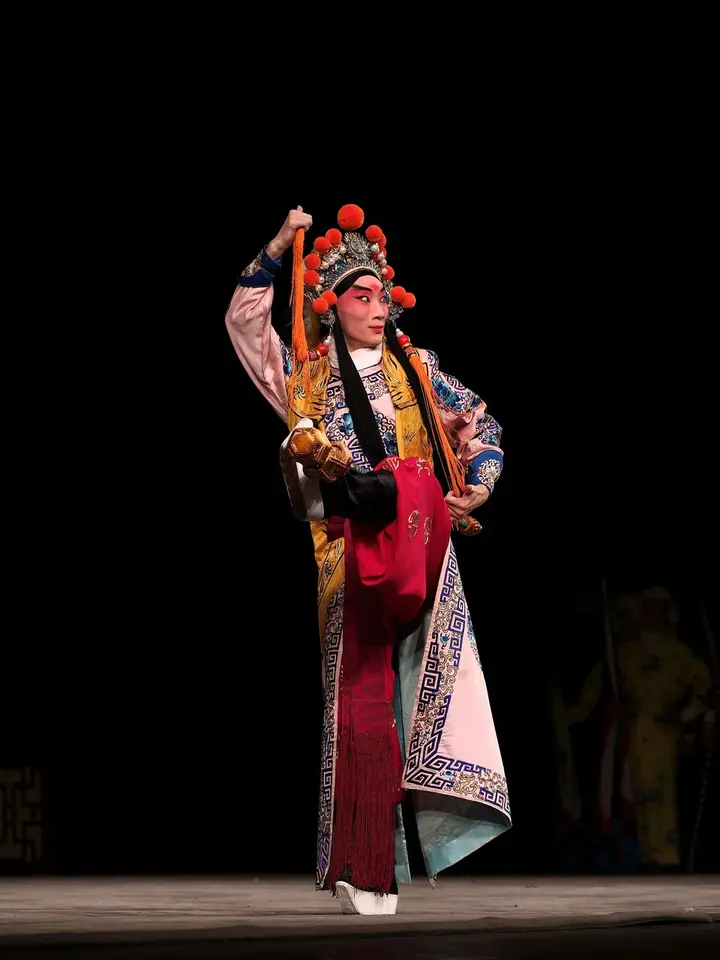
李存孝
Li Cunxiao (858–894), originally named An Jingsi, was a native of Feihu, Daizhou (present-day Lingqiu County, Shanxi Province). He was an invincible military general of the late Tang and Five Dynasties period, an adoptive son of Li Keyong (Emperor Taizu of Later Tang), and the foremost vanguard champion among the famed "Thirteen Princes" (Shisan Taibao), earning the folk sobriquet "Flying Tiger General." Captured in his youth…
Li Cunxiao (858–894), originally named An Jingsi, was a native of Feihu, Daizhou (present-day Lingqiu County, Shanxi Province). He was an invincible military general of the late Tang and Five Dynasties period, an adoptive son of Li Keyong (Emperor Taizu of Later Tang), and the foremost vanguard champion among the famed "Thirteen Princes" (Shisan Taibao), earning the folk sobriquet "Flying Tiger General." Captured in his youth during the northern border conflicts in Daibei, he served in Li Keyong's personal headquarters before being adopted as a son and bestowed the imperial surname Li. Endowed with extraordinary physical strength, unmatched equestrian archery skills, and tactical ferocity, he served as the premier shock cavalry commander of the Shatuo military confederation, never once tasting defeat on the battlefield. Throughout the chaotic wars of the late Tang Dynasty, Li Cunxiao spearheaded campaigns relieving the sieges of Chenzhou and Xuzhou, relentlessly pursued the Huang Chao peasant rebel army, and played a heroic role in saving Li Keyong's life during the treacherous ambush at Shangyuan Posthouse in Bianzhou. In subsequent struggles against rival warlord Zhu Wen, Li achieved legendary martial feats, including capturing court-appointed Zhaoyi Military Commissioner Sun Kui in a daring mountain ambush with only three hundred horsemen, and personally taking prisoner Zhu Wen's champion Deng Jijun in single combat outside Zezhou while slaying tens of thousands of enemy troops. In 891, he crushed the rebellion of An Zhijian and pacified Xingzhou, Mingzhou, and Cizhou, being rewarded with the military commissionership of Xingming. However, his unrivaled military glory engendered bitter jealousy among his peers, particularly his adoptive brother Li Cunxin. Subjected to persistent slanders and fearing imminent execution, Li severed ties with Li Keyong in 892, allying with Wang Rong of Zhenzhou and Zhu Wen while offering submission to the Tang imperial court. In 893, Li Keyong personally laid siege to Xingzhou. Misjudging the tactical threat, Li allowed the besieging army to construct an impenetrable perimeter of trenches and palisades, resulting in a catastrophic famine within the walls. In March 894, Li surrendered and was transported to Taiyuan, where he was condemned to execution by dismemberment (chariot dismemberment). His death, coupled with the refusal of jealous fellow generals to intercede on his behalf, dealt a devastating blow to the Shatuo military supremacy. In Chinese martial tradition, he is immortalized alongside Xiang Yu under the proverb: "No king surpasses the Hegemon; no general surpasses Li."
Born as An Jingsi in Feihu, Daizhou, into a northern frontier family of Sogdian-Shatuo heritage.
Captured by Shatuo cavalry during Li Keyong's campaigns in Daibei; served as tent page and was adopted as the thirteenth son.
Spearheaded Shatuo shock cavalry into the Central Plains, lifting the sieges of Chenzhou and Xuzhou and routing the rebel host.
Defended Li Keyong against Zhu Wen's nocturnal fire ambush at Shangyuan Posthouse, securing his master's escape over city walls.
Deployed south with Kang Junli to assist Li Hanzhi against Henan Governor Zhang Quanyi; engaged Bian troops in fierce combat at Wenxian.
Infiltrated Changzi with three hundred horsemen to capture Sun Kui; personally captured Deng Jijun outside Zezhou and routed Zhu Wen's army at Mount Malao.
Extinguished the rebellion of An Zhijian across Xingzhou, Mingzhou, and Cizhou; elevated to Military Commissioner of Xingming.
Framed for treason by adoptive brother Li Cunxin during the Changshan campaign; terrified of execution, forged alliances with Wang Rong and Zhu Wen and surrendered to the court.
Besieged by Li Keyong at Xingzhou; permitted the besiegers to finish deep encircling trenches, trapping his forces in total starvation.
Surrendered outside Xingzhou; transported to Taiyuan and executed by dismemberment after jealous fellow commanders refused to appeal for clemency.
Li Cunxiao was originally named An Jingsi, native to Feihu County in Daizhou. During the late Tang era, the northern borderlands were characterized by ethnic mixing and constant warfare, where communities of Sogdian descent intermingled with Shatuo nomadic tribes. In the Qianfu reign, Li Guochang and his son Li Keyong rebelled against the Tang court in Daibei, raiding across Yunzhou, Shuozhou, and Daizhou. During one of these incursions, young An Jingsi was captured by Shatuo horsemen and incorporated into the camp followers.
Inspecting the war captives, Li Keyong noticed that although young An Jingsi was clad in tattered garments, his physique was exceptionally sturdy, his gaze penetrating, and his stride remarkably nimble. Delighted by the boy's fearless bearing, Li Keyong kept him in his command tent as a personal attendant. In Shatuo military tradition, chieftains routinely recruited promising warriors into adoptive kin networks to secure absolute martial loyalty. As An Jingsi grew into youth, his mastery of horsemanship and archery surpassed all peers. Li Keyong formally adopted him as a foster son, conferring upon him the imperial surname Li and the given name Cunxiao. Ranked thirteenth among the adoptive brothers, he became famously known throughout the realm as the foremost of the "Thirteen Princes."
Upon reaching manhood, Li Cunxiao possessed extraordinary physical prowess. In combat, he wore double-layered cold-forged heavy armor, strapped a longbow to his waist, planted a heavy lance in his stirrup, and wielded an enormous iron mace in both hands. Uniquely, he always entered battle accompanied by two trusted squires leading reserve chargers. Amidst the chaos of melee combat, whenever his primary warhorse showed signs of exhaustion, Li would leap effortlessly between running steeds without pausing, striking down opposing infantry and cavalry with devastating momentum.
Between 883 and 884, with the peasant insurgent regime of Huang Chao occupying the imperial capital Chang'an and Emperor Xizong fleeing to Sichuan, the Tang court issued desperate appeals to the Shatuo cavalry for aid. Li Keyong led tens of thousands of elite Yanmen horsemen south, with Li Cunxiao serving at the vanguard. During the grueling campaigns that relieved the sieges of Chenzhou and Xuzhou, Li repeatedly charged enemy battle formations alone, cutting down rebel champions and seizing unit standards.
In the pursuit of Huang Chao's retreating forces toward Fengqiu and Zhongmu, Li Cunxiao routed rebel columns and captured numerous enemy generals, breaking the back of the rebellion. In May 884, having restored the imperial fortunes, Li Keyong stopped at Bianzhou on his return march. Zhu Wen, Military Commissioner of Xuanwu, hosted a lavish banquet at the Shangyuan Posthouse within the city. During the revelry, an intoxicated Li Keyong openly mocked Zhu Wen's past as a former rebel subordinate, provoking Zhu's deadly fury.
Around the third watch of the night, thousands of Xuanwu soldiers surrounded the posthouse, unleashing volleys of arrows and setting the timber structures ablaze. While Li Keyong remained in a drunken slumber, Li Cunxiao and a dozen elite guards mounted a desperate defense. Brandishing heavy weapons at the narrow doorway, Li Cunxiao killed dozens of surging enemy soldiers while arrows bounced harmlessly off his iron armor. When a torrential thunderstorm extinguished the flames, Li Cunxiao and his comrades carried Li Keyong through the smoke, scaled the city wall under lightning flashes, and escaped back to Taiyuan. This heroic rescue cemented Li Cunxiao's status as Li Keyong's most cherished warrior.
In February 888, Henan Governor Zhang Quanyi launched a surprise assault on Heyang, expelling Li Keyong's regional ally, Military Commissioner Li Hanzhi. Fleeing north to Taiyuan, Li Hanzhi appealed to Li Keyong for assistance. To check Zhu Wen's rapid expansion, Li Keyong stationed Li Hanzhi at Zezhou and in March appointed senior commander Kang Junli as Southern Field Commander. He dispatched five top generals—Li Cunxiao, Xue Atan, Shi Yan, An Quanjun, and An Xiuxiu—commanding seven thousand Shatuo shock cavalry to aid Li Hanzhi in reclaiming Heyang.
Seeing the formidable Shatuo host approach, Zhang Quanyi retreated inside Heyang's fortifications. As the siege dragged on and food ran out, Zhang delivered his family to Bianzhou as hostages in exchange for emergency relief from Zhu Wen. Zhu dispatched generals Ding Hui and Niu Cunjie to relieve the fortress. The Xuanwu forces occupied defensive defiles along the Taihang mountain passes near Wenxian. Eager for decisive victory, Li Cunxiao clashed with the relief columns.
At the Battle of Wenxian, the Bian forces exploited steep defiles and coordinated repeating crossbows to check the cavalry charge. Although Li Cunxiao charged through enemy lines repeatedly, the cramped mountain terrain prevented the Shatuo cavalry from deploying its full flanking momentum. The allied units were ambushed, and general An Xiuxiu was captured by enemy troops. This engagement marked a rare tactical setback in Li Cunxiao's military career. Recognizing the terrain disadvantage, Li skillfully extracted his remaining units and fell back to Zezhou to consolidate lines with Li Hanzhi.
In 890, Grand Chancellor Zhang Jun, seeking to reassert imperial authority over independent warlords, persuaded Emperor Zhaozong to strip Li Keyong of all noble offices and launched a massive joint expedition against Taiyuan. The court appointed Sun Kui, Governor of the Capital, as Zhaoyi Military Commissioner and Deputy Field Commander, marshaling ten thousand imperial troops accompanied by three thousand elite household guards supplied by Zhu Wen. The imperial host marched over the Daohuang Ridge toward the strategic city of Luzhou.
At this critical juncture, internal mutiny erupted within Luzhou as turncoat officers declared allegiance to Zhu Wen. Facing a two-front crisis, Li Cunxiao selected just three hundred elite cavalrymen and stealthily established an ambush within the rocky ravines and dense woods west of Changzi County.
Preoccupied with his ministerial status, Sun Kui traveled in an ornate carriage flanked by ceremonial standards and feathered flabella, allowing his columns to stretch out over miles of narrow mountain paths. As the imperial headquarters entered the gorge, Li Cunxiao launched a downhill charge. The three hundred Shatuo horsemen severed the column, threw the guard units into panic, and enabled Li to ride directly to the carriage. Li seized Sun Kui alive, captured Xuanwu administrative envoy Han Guifan, took five hundred prisoners, and seized all imperial seals and wagons. Transported to Taiyuan, Sun Kui refused to submit and was executed. Li Cunxiao's capture of a vice field commander with merely three hundred riders sent shockwaves through all regional warlords.
Despite the capture of Sun Kui, the crisis worsened as Zhu Wen's top general Ge Congzhou captured Luzhou and marshals Li Dang, Li Chongyin, and Deng Jijun laid siege to Zezhou. Facing imminent collapse, Li Hanzhi sent urgent pleas to Taiyuan, prompting Li Keyong to dispatch Li Cunxiao with five thousand cavalry.
Arriving outside Zezhou, Li observed enemy commanders boasting before the city walls that the Shatuo nomads would soon be eradicated. Infuriated, Li selected five hundred armored horsemen and galloped around the enemy ramparts, shouting: "I am Li Cunxiao the Flying Tiger! I have come to take your heads to feed my men! Let your fattest champions step forth and duel!"
Deng Jijun, widely considered the most formidable warrior in the Xuanwu army, galloped out of the stockade with spear leveled. As the horses closed, Li Cunxiao parried the blow with lightning speed and dragged Deng from his saddle with his bare hands.
With their champion captured, the Xuanwu troops collapsed in terror, leaving one thousand warhorses behind. That night, commanding general Li Dang burned his camp and fled in headlong retreat. Li Cunxiao pursued the fleeing army to Mount Malao, trapping the Xuanwu columns in the defiles and slaughtering or capturing tens of thousands of enemy soldiers. Ge Congzhou abandoned Luzhou under cover of darkness, enabling Li to recover the entire commandery without further bloodshed.
Following the relief of Luzhou, Li Keyong recommended veteran commander Kang Junli as Zhaoyi Military Commissioner, naming Li Cunxiao merely as vice commissioner. Having captured Sun Kui, seized Deng Jijun, and routed Zhu Wen's armies, Li believed he deserved the supreme commandery seal. Deeply resentful, he refused food for several days, voicing bitter complaints that created lasting friction within the Shatuo high command.
Nevertheless, Li continued to demonstrate brilliant generalship. In October 890, he surrounded imperial marshal Zhang Jun at Pingyang. When Huazhou commissioner Han Jian dispatched three hundred elite commandos on a night raid against the Shatuo encampment, Li anticipated the ploy and ambushed the infiltrators, exterminating every man.
At daybreak, Li deployed his iron cavalry outside the west gate of Jinzhou, capturing over three thousand defenders and forcing the garrison into helpless seclusion. He then advanced against Jiangzhou, where Prefect Zhang Xinggong abandoned the fortress, compelling Zhang Jun and Han Jian to flee through mountain defiles back to Guanzhong. Li's singular campaign shattered the imperial expedition and restored Jinzhou and Jiangzhou to Taiyuan's orbit, earning him promotion to Prefect of Fenzhou.
In March 891, An Zhijian, Military Commissioner of Xingzhou, revolted and defected to Zhu Wen. Li Keyong ordered Li Cunxiao to march east across the Taihang Mountains. Li breached rebel defenses in rapid succession, pacifying Xingzhou, Mingzhou, and Cizhou, and was formally appointed Military Commissioner of Xingming, establishing himself as a frontier governor.
Li Cunxiao's meteoric ascension aroused the profound jealousy of fellow generals, particularly his adoptive brother Li Cunxin. While Li Cunxin held seniority, his military record was mediocre. The two clashed constantly over grand strategy.
In January 892, Li Kuangwei of Youzhou and Wang Rong of Zhenzhou jointly attacked Wang Chuoxun of Dingzhou. Answering Dingzhou's appeals for aid, Li Keyong ordered Li Cunxiao to advance from Xingzhou to harass Zhenzhou's southern borders, while Li Cunxin and Li Cunshen marched from Jingxing to rendezvous at Changshan.
When Youzhou reinforcements arrived, the allied forces hesitated. Li Cunxin, seeking an excuse for retreat, sent urgent slanders to Li Keyong, claiming: "Cunxiao hesitates before the enemy and maintains secret communications with Wang Rong; he clearly intends to hoard his forces and betray Taiyuan!"
Li Keyong, prone to volcanic anger, accepted the accusation and severely rebuked Li. Fearing that his military glory would mark him for liquidation, Li panicked. In desperation, he sent envoys to ally with Wang Rong and Zhu Wen, and submitted formal memorials to Emperor Zhaozong offering Xingzhou, Mingzhou, and Cizhou to the court. The delighted emperor appointed him Acting Minister of Works and Chancellor, bringing his estrangement from Li Keyong to a point of no return.
In early 893, Li Keyong defeated Wang Rong at Jingxing, isolating Li Cunxiao. By autumn, Li Keyong led the main Shatuo host to surround Xingzhou. Li Cunxiao made numerous sorties, charging into the besieging ranks and scattering all opposing units.
Recognizing that frontal assault was suicidal, Li Keyong ordered his troops to dig a vast moat around Xingzhou. Li Cunxiao observed the initial excavations from the battlements and laughed dismissively: "Even if they complete their ditch, my Flying Tigers can leap over it in an instant!" He forbade his troops from harassing the laborers.
Within ten days, however, tens of thousands of corvee laborers completed an impassable system of ditches and palisades that blocked all egress. Xingzhou was transformed into a death trap. As the months passed, food supplies disappeared entirely, forcing the inhabitants to boil hides and engage in cannibalism.
In March 894, with starvation decimating the garrison, Li climbed the battlements and wept before Li Keyong: "I received overwhelming favor from the Prince, attaining high noble rank. How could I willingly sever filial bonds? This disaster was entirely orchestrated by Li Cunxin's slanders! If I may only look upon the Prince's face once more, I will die without grievance!"
Moved to pity, Li Keyong sent his consort, Lady Dowager Liu, into the city to escort Li out. Li crawled on his knees before Li Keyong, prostrating his dirt-smeared head in supplication. Li Keyong roared in grief and fury: "In your letters to Wang Rong and Zhu Wen, you listed thousands of crimes against me! Did Li Cunxin dictate those words as well?"
Li Keyong ordered Li bound and transported to Taiyuan. Deep in his heart, Li Keyong cherished his adopted son's peerless valor and secretly expected that his veteran commanders would plead for clemency on the execution ground, allowing him to commute the sentence. Yet on that fateful day, envious of Li Cunxiao's genius, not a single officer uttered a word in his defense.
Faced with the rigid silence of his court, Li Keyong could not retract the death sentence. Li Cunxiao was bound to five chariots in the Taiyuan marketplace and torn apart, dying at the age of thirty-six. Following the execution, general Xue Atan, whose bravery rivaled Li's and who had secretly maintained friendly ties with him, committed suicide out of terror. Li Keyong mourned in seclusion for over ten days, neglecting state administration and nursing deep resentment against his commanders. Following Li Cunxiao's demise, the Shatuo army lost its offensive spearhead, paving the way for the eventual ascendancy of Zhu Wen's Later Liang.
The ambush at Changzi in 890 crippled the last coordinated attempt by the Tang court to suppress regional warlords. With merely three hundred cavalrymen, Li infiltrated difficult terrain, severed the imperial column, and captured Deputy Field Commander Sun Kui and key envoys. This brilliant tactical strike shattered the morale of the central government forces and altered the geopolitical balance in northern China.
Li's relief of Zezhou was a masterclass in psychological and heavy cavalry warfare. By provoking and capturing Deng Jijun in single combat before the massed armies, Li broke the will of Zhu Wen's veteran commanders. His relentless pursuit to Mount Malao resulted in the slaughter and capture of tens of thousands of Xuanwu soldiers, saving Hedong from encirclement and securing Shanxi's southern frontier.
Through his lightning offensive against An Zhijian in 891, Li unified the three critical commanderies of Xingzhou, Mingzhou, and Cizhou. This triumph eradicated the threat of rear encirclement and provided the Shatuo confederation with its eastern bastion across the Taihang Mountains, establishing the strategic foundation for the eventual founding of the Later Tang Dynasty.
Li revolutionized medieval cavalry warfare through his "dual-mount rotation" system. By utilizing two chargers during continuous charges, he solved the perennial vulnerability of heavy cavalry—exhaustion of mounts under massive barded armor. His agility in leaping between warhorses in mid-melee while wielding heavy lances and maces set an enduring operational benchmark for shock cavalry in the Five Dynasties era.
During the nocturnal firestorm at Shangyuan Posthouse in 884, Li stood as an immovable shield against thousands of Xuanwu shock troops. His defense of the narrow entryway preserved Li Keyong's life and ensured the survival of the Shatuo leadership, without which the Later Tang, Later Jin, and Later Han dynasties would never have emerged in Chinese history.
Li's unmatched battlefield valor evolved into an enduring cultural archetype of Chinese martial heroism. Celebrated in Yuan Dynasty plays and Ming-Qing vernacular novels such as Romance of the Five Dynasties, his legendary exploits—dueling tigers as a youth and wielding the sacred Yuwang Mace—earned him co-equal status with Xiang Yu under the adage: "No king surpasses the Hegemon; no general surpasses Li." Regional shrines, mountain spirit temples in Taiyuan, and traditional paper-cutting folk arts continue to preserve his memory.
FIGURES ASSOCIATED WITH THIS DYNASTY