Birth in the North
Born into an elite Xianbei military chieftain lineage in Yunzhong, displaying exceptional chivalric grace and military discipline in early youth.
独孤信
Dugu Xin (503–557), original name Dugu Ruyuan, courtesy name Qimitou, was a native of Yunzhong Commandery, one of the foundational Eight Pillar Generals of Western Wei, and a celebrated military commander during the Northern Zhou era. Renowned from his youth for striking beauty, martial prowess, and archery, he fought in northern border campaigns under Erzhu Rong and Heba Sheng, being acclaimed by contemporaries as the…
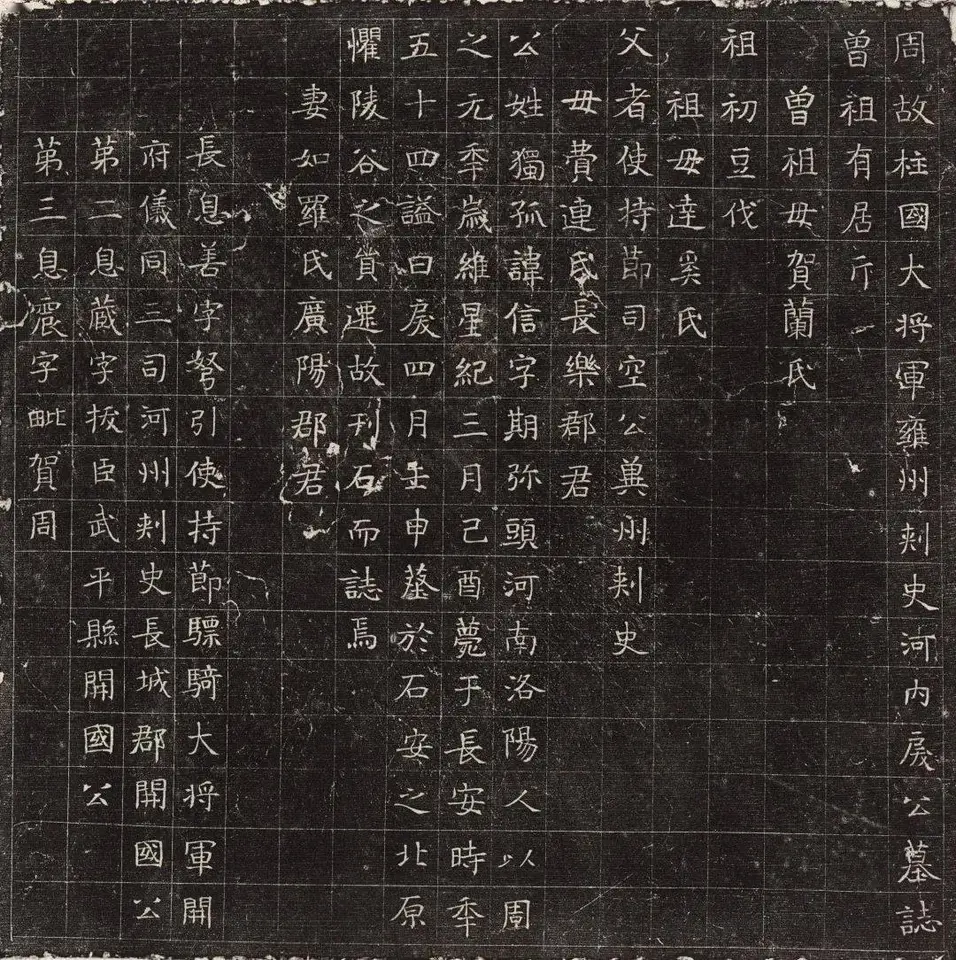
Dugu Xin (503–557), original name Dugu Ruyuan, courtesy name Qimitou, was a native of Yunzhong Commandery, one of the foundational Eight Pillar Generals of Western Wei, and a celebrated military commander during the Northern Zhou era. Renowned from his youth for striking beauty, martial prowess, and archery, he fought in northern border campaigns under Erzhu Rong and Heba Sheng, being acclaimed by contemporaries as the "Handsome Lord Dugu." In 534, when Emperor Xiaowu of Northern Wei fled westward to Guanzhong, Dugu Xin abandoned his family and possessions to ride alone across enemy lines to join the monarch, earning the profound admiration of the regent Yuwen Tai, who bestowed upon him the name "Xin" (meaning Trustworthy). In Western Wei's territorial expansion, Dugu Xin commanded the vital central Yangzi region and the northwestern territories, serving as governor of Qinzhou for nearly a decade. His benevolent and just administration won widespread civilian affection and martial renown across the frontier. Following the founding of the Northern Zhou in 557, he was elevated to Minister of War (Grand Sima) and Duke of Wei. However, when fellow pillar general Zhao Gui's plot against the despotic regent Yuwen Hu was exposed, Dugu was implicated and compelled to commit suicide at home at age fifty-five. Posthumously honored during the Sui dynasty as Grand Preceptor and Duke of Zhao with the title "Jing," he achieved enduring historical fame as the father of three empresses whose lineages spanned Northern Zhou, Sui, and Tang.
Born into an elite Xianbei military chieftain lineage in Yunzhong, displaying exceptional chivalric grace and military discipline in early youth.
Joined border forces and ambushed the northern rebel general Wei Kegu, achieving early martial distinction and appointment as commander.
Accompanied Emperor Xiaowu's westward flight to Guanzhong alone, prompting Yuwen Tai to rename him Xin in tribute to his absolute loyalty.
Appointed General of the Guard and Governor of Jingzhou, capturing Jiangling and securing alliances before seeking transit through Southern Liang.
Returned from Southern Liang to Chang'an, participating alongside Yuwen Tai in the decisive clashes at Shayuan and Heqiao.
Commissioned as Grand Commander of Ten Prefectures and Governor of Qinzhou, governing the western frontier with celebrated benevolence.
Appointed Pillar of State General, emerging as one of the Eight Pillar Generals commanding the divisional Fubing army apparatus.
Elevated to Minister of War (Grand Sima); implicated in Zhao Gui's failed conspiracy against regent Yuwen Hu, forced to take his own life at fifty-five.
Dugu Xin was born in 503 into an eminent Xianbei military clan in Yunzhong. Endowed with striking physical grace, refined deportment, and formidable horsemanship, he enrolled in northern border garrisons during the Six Garrisons rebellions under General Heba Sheng. Amid the civil fragmentation of the late Northern Wei, Dugu earned acclaim for leading cavalry assaults from the front, receiving the widespread moniker "Handsome Lord Dugu." In 534, when warlord Gao Huan advanced upon Luoyang, Emperor Xiaowu fled westward to seek the protection of Yuwen Tai in Guanzhong. Although Dugu Xin's entire family remained within Gao Huan's territory at Ye, Dugu mounted his steed and rode hundreds of miles alone, catching up with the imperial convoy at Tongguan. Deeply moved, Emperor Xiaowu lauded his unshakeable fidelity. Yuwen Tai similarly marveled at his extraordinary constancy, memorializing the throne to rename him "Xin" (Faithful) and enfeoffing him as Duke of Fuyang.
In 535, with the inauguration of the Western Wei, Yuwen Tai appointed Dugu Xin as Governor of Jingzhou to project power along the middle Yangzi. Dugu deployed light cavalry to seize Jiangling, securing the submission of nine commanderies. When vast Eastern Wei forces counterattacked in overwhelming numbers, Dugu found himself isolated and retreated into the territory of the Southern Liang dynasty, where Emperor Wu of Liang received him with magnificent honors. In 537, Dugu made his way back to Chang'an, where Yuwen Tai restored his offices and enlisted his valor in the epic battles of Shayuan and Heqiao. In 540, regional rebellions broke out across the western frontier. Yuwen Tai assigned Dugu as Grand Commander to govern Qinzhou (modern Tianshui). Over nearly a decade, Dugu pacified nomadic tribes, lowered corvee exactions, reclaimed farmlands, and established prefectural academies. His moral authority was such that when he once returned from hunting at dusk with his cap tilted slightly askew, soldiers and citizens across Qinzhou eagerly mimicked his tilted cap the following morning.
In 548, as Yuwen Tai reorganized the imperial military into the Fubing militia system, Dugu Xin was elevated to Pillar of State General, joining Yuwen Tai, Li Hu, Li Bi, Zhao Gui, Yu Jin, Houmochen Chong, and Yuan Xin as the supreme "Eight Pillar Generals of Western Wei." When Yuwen Tai died in the winter of 556, he entrusted his young heirs to his nephew, Grand Preceptor Yuwen Hu. Yuwen Hu governed with dictatorial ruthlessness, deposing the last Western Wei monarch in 557 to crown Yuwen Jue as sovereign of Northern Zhou. Dugu Xin was appointed Minister of War (Grand Sima) and Duke of Wei. Resenting Yuwen Hu's tyrannical grip, Pillar General Zhao Gui secretly plotted to assassinate the dictator and approached Dugu Xin for assistance. Dugu, fearing national catastrophe, vehemently dissuaded Zhao from reckless violence. However, General Yuwen Sheng betrayed the conspiracy. Yuwen Hu executed Zhao Gui immediately. Fearing Dugu Xin's towering military stature and popular veneration, Yuwen Hu refrained from a public trial, instead stripping him of office and coercing him to commit suicide in the third month of 557 at age fifty-five.
Dugu Xin's decadelong governance of Qinzhou represented the zenith of his administrative and military career. Confronted by devastated infrastructure and complex inter-ethnic conflicts between Han, Qiang, and Di peoples, he instituted equitable justice, remitted burdensome tributes, and settled thousands of displaced families upon fertile garrison fields. His enlightened and charismatic governance transformed the turbulent northwestern borderlands into the most resilient logistical base of the Western Wei state.
Dugu Xin holds a singular position in Chinese aristocratic history through his unprecedented matrimonial ties across three consecutive imperial regimes. His eldest daughter became Empress Mingjing, consort of Emperor Ming of Northern Zhou; his fourth daughter was posthumously consecrated as Empress Yuanzhen, the mother of Emperor Gaozu of Tang (Li Yuan); and his seventh daughter, Dugu Qieluo, married Emperor Wen of Sui (Yang Jian), serving as Empress Wenxian throughout the founding of the Sui dynasty. Dugu Xin thus stood as the biological or ancestral father of three imperial empresses across Northern Zhou, Sui, and Tang, a dynastic phenomenon unparalleled in medieval Chinese history.
FIGURES ASSOCIATED WITH THIS DYNASTY