Birth in Feixi
Born on September 7 into a peasant household at the foot of Mount Daqian in Hefei, Anhui; demonstrated martial spirit from early youth.
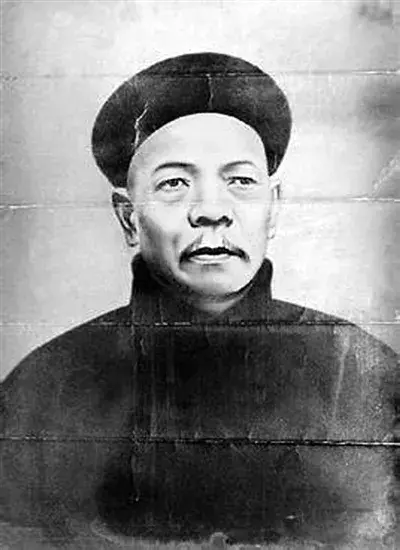
刘铭传
Liu Mingchuan (刘铭传, September 7, 1836 – January 12, 1896), courtesy name Shengsan (省三), art name Master Daqianshan (大潜山人), posthumously honored as Zhuansu (壮肃), was a native of West Township, Hefei, Anhui (modern Mount Daqian, Feixi County, Hefei). He was an outstanding military commander, statesman, Self-Strengthening pioneer, and national hero of the late Qing dynasty, serving as the paramount general of the Huai Army…
Liu Mingchuan (刘铭传, September 7, 1836 – January 12, 1896), courtesy name Shengsan (省三), art name Master Daqianshan (大潜山人), posthumously honored as Zhuansu (壮肃), was a native of West Township, Hefei, Anhui (modern Mount Daqian, Feixi County, Hefei). He was an outstanding military commander, statesman, Self-Strengthening pioneer, and national hero of the late Qing dynasty, serving as the paramount general of the Huai Army (commander of the Ming Army) and the inaugural Governor of Fujian-Taiwan. Born into an impoverished peasant family, Liu exhibited martial ambition, physical strength, and adventurous chivalry from his youth. In 1854 (the 4th year of the Xianfeng era), he organized a local defense militia to protect his native region during the Taiping and Nian rebellions. In 1862 (the 1st year of the Tongzhi era), he led his militia to join Li Hongzhang's Huai Army, forming the famous "Ming Battalion." Rising rapidly through victories across Jiangsu and Zhejiang, Liu captured Changzhou and killed Taiping Prince Chen Kunshu. At only twenty-eight years old, he was exceptionally elevated to Commander-in-Chief of Zhili and created Baron of the First Class, becoming the foremost combat commander of the Huai forces. In 1880 (the 6th year of the Guangxu era), Liu presented a groundbreaking memorial urging the court to build national railways using foreign loans, igniting the modern railway debate in China. When the Sino-French War erupted in 1884 and the French Far East Squadron invaded Taiwan, the Qing court recalled Liu from a decade of retirement, appointing him Imperial Commissioner for Taiwan Affairs and Governor of Fujian. Facing naval bombardments from modern warships, Liu executed the strategic decision to "abandon Keelung to secure Huwei (Tamsui)." In the Battle of Tamsui, his forces repulsed French landing troops, inflicting heavy casualties, defeating Admiral Amédée Courbet's fleet, and safeguarding Taiwan against foreign conquest. Following the war, the Qing court established Taiwan as an independent province in 1885, appointing Liu as its first governor. During his six-year gubernatorial tenure (1885–1891), Liu launched sweeping Self-Strengthening reforms that laid the foundations of Taiwan's modernization. He constructed China's first commercial passenger-and-freight railway (the Keelung-Hsinchu Railway), laid submarine telegraph cables connecting Taiwan to the mainland, founded a modern postal administration, instituted modern Western and telegraph academies, and refortified coastal defenses with Krupp breech-loading artillery at Keelung, Huwei, Anping, and Qihou. Concurrently, he reformed land taxation to multiply provincial revenues and promoted industrial mining and camphor production. Celebrated across both sides of the Taiwan Strait as the "Father of Taiwan's Modernization," Liu passed away in grief on January 12, 1896, upon learning of Taiwan's cession to Japan following the First Sino-Japanese War. He was posthumously granted the title Grand Preceptor to the Crown Prince and awarded the posthumous name Zhuansu.
Born on September 7 into a peasant household at the foot of Mount Daqian in Hefei, Anhui; demonstrated martial spirit from early youth.
Organized local defense militia in Hefei against Taiping and Nian incursions; awarded the military rank of battalion lieutenant.
Joined Li Hongzhang's Huai Army with his three battalions, establishing the Ming Battalion and campaigning across Jiangsu.
Captured Changzhou and eliminated Taiping forces; elevated at age twenty-eight to first-rank Commander-in-Chief of Zhili.
Defeated the Eastern Nian rebels at the Battle of Yinlong River; created Baron of the First Class for outstanding military achievements.
Summoned to Beijing to discuss national defense; submitted a memorial advocating railway construction, opening the modern railway debate.
Appointed Commissioner for Taiwan Affairs; directed the victory at Huwei (Tamsui) against French landing forces.
Appointed the inaugural Governor of Fujian-Taiwan upon the imperial creation of Taiwan Province.
Commenced construction of the Keelung-Hsinchu Railway, the first self-built official commercial railway in modern China.
Beset by conservative impeachment memorials and aggravated war wounds, submitted his resignation and retired to Mount Daqian.
Died of heartbreak and illness on January 12 upon hearing of Taiwan's cession; posthumously granted Grand Preceptor to the Crown Prince and honored as Zhuansu.
Liu Mingchuan was born into an impoverished peasant family at the base of Mount Daqian in western Hefei, the sixth among his brothers. Disdaining traditional civil service examinations and rigid Confucian recitation, Liu immersed himself in martial arts, equestrian archery, and military manuals. Because childhood smallpox left pockmarks on his face, locals often referred to him as "Liu the Sixth Pockmark."
In 1854 (the 4th year of the Xianfeng era), intense clashes between Taiping forces and Nian rebels engulfed central Anhui, plunging local communities into anarchy. At eighteen, Liu fortified a mountain stronghold on Mount Daqian, rallied local gentry, and organized self-defense militia units. His tactical competence in defending the locality earned him official appointment as a battalion lieutenant.
In 1862 (the 1st year of the Tongzhi era), Zeng Guofan instructed Li Hongzhang to raise the Huai Army in Anqing to relieve the siege of Shanghai. Liu led his three battalions of Anhui militia to join Li Hongzhang, creating the celebrated "Ming Battalion." In combat, Liu consistently led from the front, blending physical courage with tactical cunning. Equipping his men with modern Western firearms and artillery, he captured Jiading, Qingpu, Kunshan, and Suzhou. In 1864, Liu spearheaded the assault on the Taiping stronghold of Changzhou, capturing Taiping Prince Chen Kunshu. The Qing court exceptionally elevated the twenty-eight-year-old commander to Commander-in-Chief of Zhili, making him one of the youngest top-ranking regional commanders in Qing history.
During subsequent campaigns against the Nian rebels across northern China, Liu served as the frontline commander of the Huai forces. In January 1867, Eastern Nian cavalry under Lai Wenguang encircled Liu's columns at the Yinlong River in Hubei. Liu brandished his saber, rallied his men, and fought desperately against overwhelming numbers until reinforcements under Bao Chao arrived to rout the enemy. Liu subsequently implemented a strategy of containment trenches along the Grand Canal, annihilating both the Eastern and Western Nian armies. The imperial court ennobled him as Baron of the First Class. In 1870, citing head injuries and battle exhaustion, Liu resigned his commission and retired to Mount Daqian for over a decade.
In 1884 (the 10th year of the Guangxu era), the Sino-French War broke out, and France sought to capture Taiwan to secure strategic leverage against the Qing court and annex Vietnam. Confronting a naval crisis, Empress Dowager Cixi and the Grand Council recalled Liu from retirement, conferring upon him the rank of Minister of War and appointing him Imperial Commissioner for Taiwan Affairs and Governor of Fujian.
In July of that year, Liu crossed the Taiwan Strait alone to reach Taipei. Taiwan's defenses were neglected, troops were undisciplined, and modern ordnance was lacking. In August, Admiral Amédée Courbet's French Far East Squadron bombarded the Keelung forts, landing naval infantry. Analyzing the theater, Liu realized Keelung's deep waters favored French naval firepower, whereas Huwei (Tamsui) guarded the direct entrance to Taipei and the productive plains of the island. Overruling local hesitation, Liu executed the decisive strategy: "Abandon Keelung, preserve Huwei." He withdrew the main body inland, blocked the Tamsui River estuary with sunken junks and torpedoes, and erected fortified sand trenches along the shore.
On October 8, French forces landed in three columns to storm Huwei. Liu coordinated defense units under Sun Kaihua and Zhang Gaoyuan. Emerging from concealed trenches, Chinese troops engaged the French marines in fierce hand-to-hand combat, killing hundreds of invading soldiers. Badly mauled, the French retreated in disorder to their ships. The resounding Battle of Tamsui shattered French plans to conquer Taiwan swiftly, forcing Courbet into a passive naval blockade. Liu defended the isolated island for eight grueling months until peace negotiations concluded, earning international acclaim for his defense.
Following the war, the Qing court recognized Taiwan's paramount strategic importance in maritime defense. In September 1885, Emperor Guangzong issued an imperial edict formally designating Taiwan as an independent province, appointing Liu as its inaugural Governor.
Despite ill health, Liu embraced Taiwan as a laboratory for modernizing reforms, launching a comprehensive transformation across the island. He advanced pacification and indigenous development, establishing the Pacification and Reclamation Bureau, expanding coal mining in Keelung and sulfur extraction, and monopolizing camphor production to stimulate modern export industries.
In transportation and communication, Liu overcame fierce conservatism to build the Keelung-Hsinchu Railway, spanning over one hundred kilometers. Completed in 1891, it became China's first officially supervised, merchant-managed modern commercial railway. Simultaneously, he laid submarine telegraph cables connecting Fuzhou to Tamsui and Tainan to the Pescadores, established a provincial general post office, and issued modern postage stamps.
In fiscal management, defense, and education, Liu surveyed the entire island's arable lands through his "Tax Clearance" reform, multiplying agricultural tax revenues several-fold to achieve fiscal self-sufficiency. He procured Krupp breech-loading heavy guns to rebuild four coastal defense fortresses at Keelung, Huwei, Anping, and Qihou, while founding the Western Learning Academy and Telegraph Academy in Taipei to train Taiwan's first generation of modern technical experts.
Liu's sweeping reforms antagonized conservative courtiers in Beijing and local landed interests in Taiwan. In 1891 (the 17th year of the Guangxu era), conservative censors submitted coordinated impeachments, accusing him of squandering state funds on railways and inciting popular discontent through land surveys. Beset by eye ailments and recurring battle injuries, Liu submitted his resignation and returned to his native home.
In 1894, the First Sino-Japanese War broke out, resulting in catastrophic Qing defeats on land and sea. In 1895, Li Hongzhang signed the Treaty of Shimonoseki, ceding Taiwan and the Pescadores to Japan. When news reached Mount Daqian, Liu was devastated. Holding the treaty text, he looked to the heavens and cried in anguish: "Five years of state-building ruined in a single day! What wrong did the people of Taiwan commit to be cast away like this!" Overwhelmed with grief, he vomited blood and collapsed onto his sickbed.
On January 12, 1896 (the 28th day of the 11th lunar month, 21st year of the Guangxu era), Liu passed away in profound sorrow at Mount Daqian at the age of sixty. Compatriots across both sides of the Strait mourned his passing. The Qing court posthumously elevated him to Grand Preceptor to the Crown Prince, conferred the posthumous name Zhuansu, and decreed an official imperial biography.
During the Battle of Yinlong River in 1867, Liu held his ground with sword in hand against overwhelming encirclement by Eastern Nian cavalry, coordinating with Bao Chao's reinforcements to turn the tide of battle, followed by the strategic canal defense that eliminated the Nian insurgency.
In the 1884 Sino-French War, Liu made the strategic tactical call to withdraw from Keelung and defend Huwei, directing beachhead ambushes and close-quarters infantry fighting that decisively defeated French naval landing forces, preserving Taiwan's territorial integrity.
Between 1887 and 1891, Liu overcame severe fiscal constraints and complex terrain to survey and construct the Keelung-Hsinchu Railway, carving the Shiqiuling Tunnel and establishing the first Chinese-built commercial railway operated under domestic management.
Liu directed the laying of submarine telegraph cables across the Taiwan Strait and between Tainan and Penghu, founded the Taiwan General Post Office, and issued official stamps, establishing modern telecommunications that integrated Taiwan with the Qing administrative center.
During his six-year gubernatorial administration, Liu coordinated political, economic, military, and educational reforms. Through land tax rectification, industrial mining, modern academies, and coastal artillery forts, he transformed a remote frontier island into the most modernized model province in late Qing China.
FIGURES ASSOCIATED WITH THIS DYNASTY