Birth in Jixi
Born into a prominent scholarly clan in Jixi, displaying early mastery of both classical literature and military treatises.
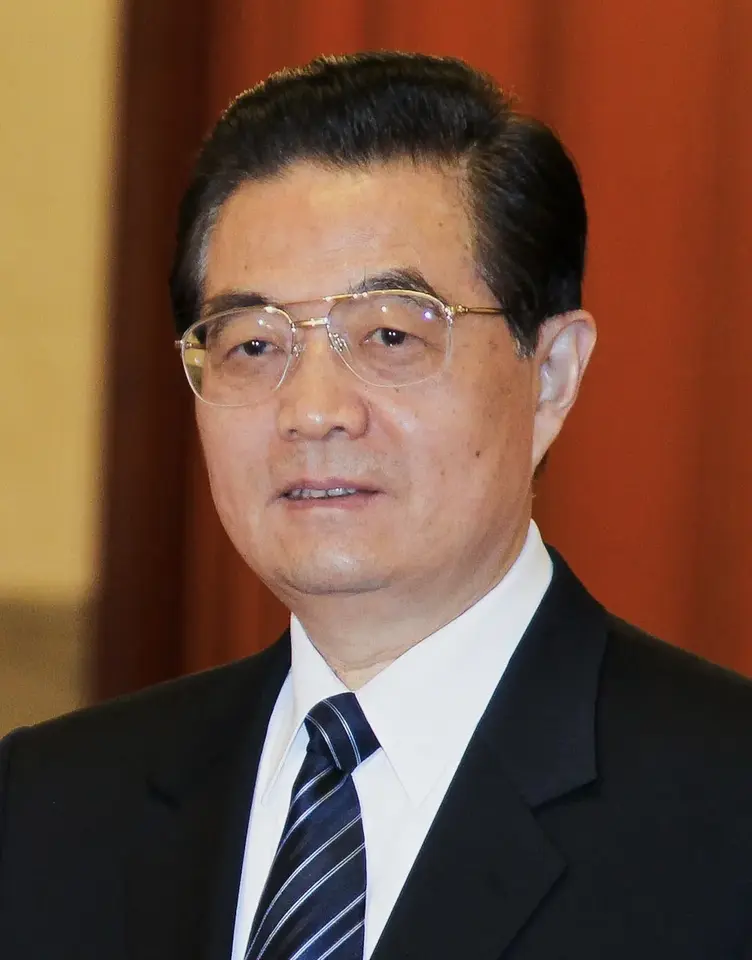
胡宗宪
Hu Zongxian (胡宗宪, 1512–1565), courtesy name Ruzhen (汝贞), art name Meilin (梅林), posthumous title Xiangmao (襄懋), was a preeminent supreme military commander, strategist, and statesman of the Ming Dynasty during the Jiajing era. Hailing from an esteemed scholar-official lineage in Jixi, Huizhou, he passed the imperial metropolitan examination in 1538. In his early career, he served as magistrate in Yidu and Yuyao, demonstrating…
Hu Zongxian (胡宗宪, 1512–1565), courtesy name Ruzhen (汝贞), art name Meilin (梅林), posthumous title Xiangmao (襄懋), was a preeminent supreme military commander, strategist, and statesman of the Ming Dynasty during the Jiajing era. Hailing from an esteemed scholar-official lineage in Jixi, Huizhou, he passed the imperial metropolitan examination in 1538. In his early career, he served as magistrate in Yidu and Yuyao, demonstrating remarkable ability in quelling rebellions, mitigating locust plagues, and implementing benevolent governance. As an investigating censor, he personally defused a mutiny of border troops in Xuanfu and Datong and directed military pacifications of Miao unrest in Huguang. In 1554, with southeastern China ravaged by unprecedented incursions of wokou pirates under powerful maritime warlords like Wang Zhi and Xu Hai, Hu Zongxian was appointed Regional Inspector of Zhejiang. Upon departure, he swore a solemn oath to pacify the eastern maritime frontier or die trying. Elevated to Supreme Commander of South Zhili, Zhejiang, Jiangxi, and Fujian, he unified strategic command across four southeastern provinces. Breaking through bureaucratic rigidity, he recruited, protected, and empowered brilliant commanders such as Qi Jiguang and Yu Dayou, providing the administrative resources and financial backing required to establish the legendary Qi Army and modernize coastal naval defenses. He also gathered celebrated literati and strategists into his headquarters, including Xu Wei and Mao Kun. Strategically, Hu Zongxian devised a sophisticated doctrine combining coordinated military strikes with psychological warfare, deception, and diplomatic division. He drove a wedge between pirate leaders Xu Hai and Chen Dong, orchestrating their mutual destruction at the Battle of Pinghu, and subsequently induced the supreme pirate kingpin Wang Zhi to return from Japan before arresting him, thereby dismantling the organizational core of maritime piracy in southeastern China. Furthermore, he directed the compilation of Chouhai Tubian (Illustrated Treatise on Maritime Defense), China's first comprehensive coastal defense encyclopedia. However, his political reliance on Grand Councilor Yan Song to safeguard his command exposed him to ruthless retribution following Yan's fall. Imprisoned in 1565 on manufactured charges, he took his own life in imperial custody. During the Wanli era, the imperial court fully rehabilitated his name and granted him the posthumous title Xiangmao, cementing his legacy as the chief architect of southeastern maritime security.
Born into a prominent scholarly clan in Jixi, displaying early mastery of both classical literature and military treatises.
Passed the metropolitan civil examination, appointed Observer in the Ministry of Justice to learn statutory administration.
Served as Magistrate of Yidu, organizing locust mitigation campaigns and peacefully pacifying entrenched local brigands.
Completed mourning rites for his parents; appointed Censor to inspect Xuanfu and Datong, riding alone to calm mutinous garrison troops.
Inspected Huguang and directed imperial troops to crush the Mayang Miao uprising, earning imperial commendations.
Appointed Regional Inspector of Zhejiang amid catastrophic pirate ravages, swearing an oath to defeat Wang Zhi and Xu Hai.
Promoted to Supreme Commander of South Zhili, Zhejiang, and Fujian, shattering pirate armies at Wangjiangjing and Zhapu.
Deployed psychological ruses to turn Xu Hai against allied chiefs Chen Dong and Ma Ye, annihilating the pirate force at Pinghu.
Sent envoys to Japan to negotiate surrender with maritime kingpin Wang Zhi, luring him to Zhejiang where he was apprehended.
Promoted to Minister of War with titles of Junior Guardian and Grand Guardian of the Heir Apparent; oversaw Chouhai Tubian compilation.
Following the political collapse of Grand Councilor Yan Song, impeached by censors and stripped of military command.
Re-arrested under fabricated factional charges, committed suicide in prison at age fifty-four after composing his final poem.
Hu Zongxian was born on November 4, 1512, in Longchuan, Jixi County, Huizhou Prefecture. His family was an eminent cultural clan tracing its ancestry to the Song Dynasty, and his father Hu Shangren served as an official instructor in regional academies. From childhood, Hu Zongxian distinguished himself through prodigious learning, not only mastering canonical Confucian classics but also showing intense passion for military topography, strategy, and dynastic history.
In 1538, at the age of twenty-seven, Hu Zongxian passed the metropolitan examination and was assigned to observe judicial administrative practice within the Ministry of Justice. In 1540, he received his first executive posting as Magistrate of Yidu County in Shandong Province. At the time, Yidu had suffered consecutive years of severe drought and locust devastation, compounded by entrenched mountain bandits who terrorized the countryside.
Upon arrival, Hu Zongxian immediately opened soup kitchens, mobilized peasants to dredge irrigation canals, and coordinated widespread locust-trapping efforts. Regarding the brigands, he rejected crude military punitive raids in favor of psychological suasion. He rode unarmed into the mountain strongholds, explained imperial pardon policies, granted amnesties, and enlisted able-bodied former bandits into the county patrol forces. The outlaw bands disbanded peacefully, and grateful locals erected commemorative steles praising his benevolence. Between 1542 and 1547, he observed five years of mourning in his hometown following the deaths of his mother and father, utilizing the seclusion to master ancient treatises on military command.
In 1547, having completed his mourning obligations, Hu Zongxian returned to the capital and was appointed Censor of the Shandong Circuit. Shortly thereafter, the court dispatched him as Regional Inspector to the vital northern frontier garrisons of Xuanfu and Datong. When an imperial edict mandated the transfer of Datong Left Guard troops to exposed outposts at Yanghe and Dushi, thousands of soldiers, enraged by bureaucratic corruption and withheld provisions, staged a violent armed mutiny and barricaded the city gates.
While provincial governors and generals panicked, Hu Zongxian rode directly to the mutineers' garrison with only a few attendants. Ordering the gates thrown open, he rebuked the leaders for rebellion while simultaneously announcing the arrest of dishonest grain clerks and distributing back-pay to the troops. Awed by his serene authority and fair arbitration, the soldiers laid down their weapons and wept in repentance, resolving a catastrophic border crisis without bloodshed.
In 1551, Hu Zongxian was reassigned to inspect Huguang, where Miao tribesmen in Mayang had launched a fierce revolt against corrupt local officials. Hu Zongxian inspected the rugged mountainous terrain in person, deploying coordinated flanking attacks and cutting off insurgent supply corridors while recruiting local defectors. His operations swiftly crushed the revolt, and Emperor Jiajing rewarded him with high honors.
During the mid-sixteenth century, southeastern China was overwhelmed by a catastrophic crisis of maritime piracy. The strict enforcement of maritime trade bans following the 1523 Ningbo tributary clash had ruined legitimate merchant commerce, prompting wealthy maritime merchants such as Wang Zhi and Xu Hai to forge massive multinational smuggling and raiding syndicates incorporating Japanese ronin warriors.
In 1554, Wang Zhi controlled maritime strongholds in Japan and sent hundreds of pirate vessels to raid coastal cities, while Xu Hai, Chen Dong, and Ma Ye established fortified camps along the coast of Zhejiang and South Zhili, devastating towns and massacring populations. The hereditary Ming garrison system disintegrated under the assault. Recognizing Hu Zongxian's exceptional decisiveness, Emperor Jiajing appointed him Regional Inspector of Zhejiang.
Before departing the capital, Hu Zongxian swore to his peers that he would not return until Wang Zhi and Xu Hai were captured and the maritime frontier was pacified. Upon arriving in Zhejiang, he immediately purged cowardly commanders and instituted strict military disciplinary codes. Following the dismissal of Supreme Commander Yang Yi in 1556, the imperial court elevated Hu Zongxian to Vice Minister of War and Supreme Commander of South Zhili, Zhejiang, and Fujian, placing supreme civil and military authority in his hands.
Recognizing that corrupted garrison troops could never defeat ferocious Japanese swordsmen in hand-to-hand combat, Hu Zongxian bypassed rigid civil service traditions to promote exceptional martial talents. Foremost among these was Qi Jiguang, whose innovative tactical concepts Hu Zongxian recognized and fully endorsed.
Hu Zongxian shielded Qi Jiguang from central court criticisms, allocated substantial salt tax revenues to his headquarters, and authorized him to recruit thousands of disciplined miners and farmers from Yiwu. This patronage enabled Qi Jiguang to invent the Mandarin Duck Formation, deploy effective counter-tactics with wolf-brush spears and multi-barrel fire lances, and forge the legendary Qi Army into an invincible professional strike force. Concurrently, Hu Zongxian placed veteran general Yu Dayou in command of regional naval fleets, mounting coastal blockades to destroy incoming pirate flotillas at sea.
Hu Zongxian also created a brilliant civilian think tank, recruiting eccentric polymath Xu Wei and classical essayist Mao Kun into his secretarial staff. Xu Wei drafted all strategic military memorials, diplomatic communications, and victory declarations, while Mao Kun provided deep logistical and geostrategic counsel.
In the spring of 1556, Xu Hai, Chen Dong, and Ma Ye concentrated over ten thousand elite pirate troops and hundreds of vessels, pushing past coastal defenses and laying siege to Hu Zongxian's headquarters at Tongxiang. Inside the walls, imperial troops were vastly outnumbered.
Refusing to panic, Hu Zongxian analyzed the fractures within the pirate coalition, noting that Xu Hai, Chen Dong, and Ma Ye commanded separate factions and that Xu Hai's beloved concubines, Cuiqiao and Luzhu, were captured Chinese women who longed for home. Hu Zongxian dispatched secret envoys with massive bribes of gold and silks to Xu Hai's camp, appealing to the concubines and convincing Xu Hai that the court stood ready to grant him an official pardon and imperial commission if he eliminated his co-conspirators.
Deceived by Hu Zongxian's promises, Xu Hai turned on his allies, capturing Chen Dong and Ma Ye and delivering them in chains to the Ming army. Hu Zongxian then secretly manipulated Chen Dong's surviving followers into staging a vendetta against Xu Hai. In the eighth month, when the pirate factions had butchered each other into utter exhaustion, Hu Zongxian unleashed hidden strike forces under Qi Jiguang and Yu Dayou at the Battle of Pinghu. Xu Hai drowned while attempting to flee, Chen Dong and Ma Ye were publicly executed, and over three thousand pirates were slain, eradicating the pirate network in western Zhejiang.
With Xu Hai destroyed, the remaining maritime kingpin was Wang Zhi, who maintained a fortified naval base in the Goto Islands of Japan and possessed vast ocean-going armadas. Direct overseas naval expeditions were logistically unfeasible for the Ming military.
Hu Zongxian resolved to eliminate Wang Zhi through diplomatic psychological inducement. He removed Wang Zhi's mother and wife from prison and accommodated them in luxurious residences in Hangzhou, ensuring their welfare. He then dispatched two intrepid scholars, Jiang Zhou and Chen Kewan, across the ocean to Japan to deliver letters from Wang Zhi's family alongside official promises that the court would permit regulated foreign trade if Wang Zhi surrendered and helped pacify maritime bandits.
Longing for his ancestral homeland and eager for legal trading rights, Wang Zhi sailed back to Zhejiang with his fleet in the winter of 1557. However, remaining deeply suspicious of court treachery, Wang Zhi refused to disembark at Cengang. To demonstrate absolute sincerity, Hu Zongxian took the extraordinary step of sending his own son, Hu Song, into the pirate stronghold as a hostage. Wang Zhi disembarked and traveled to Hangzhou to submit to Hu Zongxian.
Once Wang Zhi was on the mainland, regional censors under Wang Bengu stridently demanded his immediate execution for high treason. Although Hu Zongxian argued that keeping Wang Zhi alive as an imperial agent would allow the court to pacify remaining maritime bands peacefully, imperial hysteria prevailed, and Emperor Jiajing ordered Wang Zhi executed in Hangzhou in 1559. With Wang Zhi eliminated, the overseas pirate confederation disintegrated into fragmented rogue bands that were easily hunted down.
Beyond his battlefield triumphs, Hu Zongxian recognized the absence of comprehensive maritime geographic intelligence in the Ming administration. He mobilized his staff, including scholar Zheng Ruoceng and writer Xu Wei, to systematically collect maritime documents, interrogate veteran sailors, and record pirate sailing routes.
Completed in 1562 in thirteen volumes, Chouhai Tubian contained hundreds of intricate maps detailing coastal terrain, beacons, naval bases, and offshore islands from Liaodong to Guangdong, explicitly incorporating the Diaoyu Islands into the Ming coastal defense jurisdiction for the first time in official cartography. The work also codified tactical formations, naval armaments, and strategic doctrines, serving as a landmark monument in Chinese military literature.
In 1560, Hu Zongxian was promoted to Minister of War with the concurrent rank of Junior Guardian and Grand Guardian of the Heir Apparent. However, his indispensable alliance with Grand Councilor Yan Song to secure defense funding ultimately proved fatal. When Yan Song was ousted from power in 1562, imperial censors aggressively targeted Hu Zongxian. Although Emperor Jiajing initially spared his life and permitted him to retire to Jixi, the execution of Yan Song's son in 1565 led to the discovery of fabricated letters implicating Hu Zongxian in sedition.
Arrested by the imperial secret police and subjected to brutal interrogation in Beijing, a fifty-four-year-old Hu Zongxian realized that factional vengeance left no hope for justice. Proclaiming his unyielding loyalty, he wrote his final verse declaring his innocence before taking his own life in the imperial prison. During the Wanli reign, Grand Councilor Zhang Juzheng and military leaders successfully petitioned the throne to vindicate Hu Zongxian, restoring his ranks and granting him the posthumous title of Xiangmao in recognition of his monumental defense of the realm.
Hu Zongxian was an extraordinary military visionary who understood that the wokou scourge was fundamentally an armed smuggling insurgency driven by draconian maritime prohibitions. Rather than passively stationing garrisons along thousands of miles of coastline, he integrated civil administration and armed forces across South Zhili, Zhejiang, Jiangxi, and Fujian into a unified theatre of operations.
His overarching strategy of combining relentless tactical extermination of recalcitrant raiders with diplomatic amnesties for native smugglers revolutionized coastal warfare. By luring pirate fleets inland into canalized waterways and constricted marshes where their mobility was neutralized, he transformed defensive retreats into devastating encirclement campaigns.
Hu Zongxian's greatest administrative contribution was his decisive patronage of Qi Jiguang and Yu Dayou. Operating within a bureaucratic system that routinely subjugated military generals to civilian insults, Hu Zongxian leveraged his ministerial prestige to provide them with total tactical autonomy and fiscal security.
He channeled imperial salt revenues into Qi Jiguang's recruitment and training of the Yiwu volunteers, directly enabling the invention of the Mandarin Duck Formation and the deployment of specialized tactical weaponry that gave birth to the invincible Qi Army. Without Hu Zongxian's continuous political shelter and logistical sponsorship, the historic military successes of Qi Jiguang and Yu Dayou would have been impossible.
The 1556 campaigns of Tongxiang and Pinghu stand as masterpieces of strategic deception and psychological warfare in Chinese military history. Facing overwhelming enemy numbers, Hu Zongxian exploited the latent rivalries between Xu Hai, Chen Dong, and Ma Ye.
Through covert agents, lavish bribes, and manipulation of Xu Hai's concubines, he persuaded Xu Hai that imperial pardon could be purchased by betraying his allies. By causing the pirate factions to turn their weapons against one another, Hu Zongxian achieved the total annihilation of Xu Hai's forces with minimal imperial casualties, showcasing supreme strategic elegance over brute force.
Wang Zhi represented the undisputed financial and organizational spine of sixteenth-century East Asian maritime piracy, commanding armadas from bases across Kyushu, Japan. Recognizing that an overseas naval invasion was militarily unfeasible, Hu Zongxian boldly adopted a policy of political enticement and family mediation.
Risking political condemnation for negotiating with rebels, Hu Zongxian sheltered Wang Zhi's mainland family, sent intrepid scholarly envoys to Japan, and offered his own son as a hostage to overcome Wang Zhi's final suspicions. Wang Zhi's capture fractured the pirate confederacy irreparably, cutting off the supply of Japanese mercenaries and breaking the back of the decades-long maritime crisis.
Hu Zongxian made an enduring contribution to Chinese strategic cartography by commissioning and directing the compilation of Chouhai Tubian. Spanning thirteen volumes, this monumental work established the definitive baseline for Ming coastal defense studies.
The encyclopedia mapped thousands of leagues of coastal waterways, anchorages, and coastal defenses, while establishing the legal and administrative incorporation of offshore islands, including the Diaoyu Islands, into China's sovereign maritime frontier. Its systematic treatises on naval tactics, firearms, and logistics served as standard operational textbooks for generations of Ming commanders.
FIGURES ASSOCIATED WITH THIS DYNASTY