Birth in Daizhou
Born into a prominent military family; grew into an imposing figure of eight feet tall, possessing formidable martial archery skills.
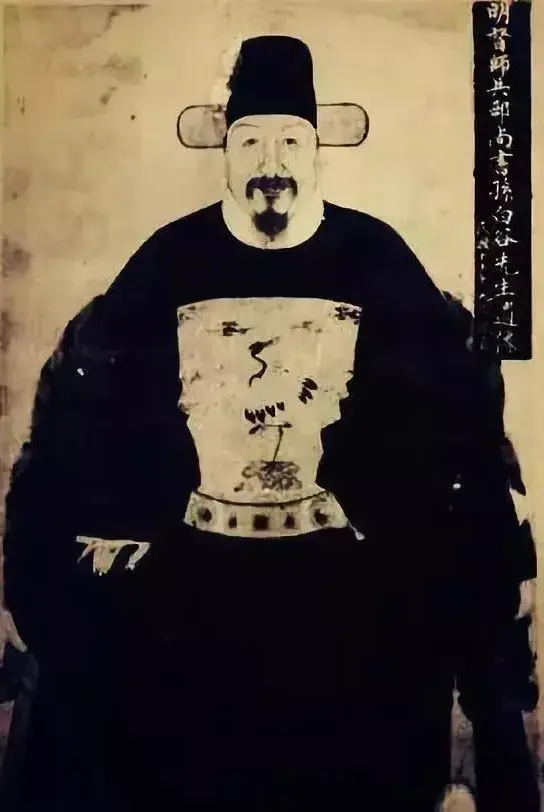
孙传庭
Sun Chuanting (孙传庭, May 21, 1593 – November 17, 1643), courtesy name Boya (伯雅), art name Baigu (白谷), was a native of Zhenwu Guard in Daizhou, Shanxi (modern Daixian County, Shanxi Province) and an eminent supreme military commander, strategist, and tragic pillar of the late Ming Dynasty. Born into a distinguished military-gentry family, he achieved the Jinshi degree in 1619, serving successfully as magistrate of Yongcheng and…
Sun Chuanting (孙传庭, May 21, 1593 – November 17, 1643), courtesy name Boya (伯雅), art name Baigu (白谷), was a native of Zhenwu Guard in Daizhou, Shanxi (modern Daixian County, Shanxi Province) and an eminent supreme military commander, strategist, and tragic pillar of the late Ming Dynasty. Born into a distinguished military-gentry family, he achieved the Jinshi degree in 1619, serving successfully as magistrate of Yongcheng and Shangqiu before advancing to bureau director in the Ministry of Personnel. In 1625, unwilling to pander to the eunuch dictator Wei Zhongxian, he retired to his rural home for a decade, studying strategic treatises. Reentering official service in 1635, Sun was promoted to Grand Coordinator of Shaanxi in 1636. Confronted with ruined logistics, mutinous garrisons, and rampant rebellion, he instituted a rigorous auditing of military agricultural colonies, raising 450,000 taels of silver in self-sustained revenue and training an elite headquarters army of three thousand men. In the seventh month of 1636, he ambushed the insurgent leader Gao Yingxiang at Heishui Valley, capturing the Dashing King alive and routing rebel hosts across Shaanxi. Collaborating with Hong Chengchou, he shattered Li Zicheng at the Battle of Tongguan South Plain in 1638, reducing Li's forces to eighteen survivors. When Qing armies breached the northern frontier late in 1638, Sun led Qin troops to relieve the capital, succeeding the fallen Lu Xiangsheng as supreme commander of regional relief armies. After clashing with court cliques over prudent defensive strategies, he was imprisoned by Emperor Chongzhen for three years. In 1642, following the death of Wang Qiaonian, the emperor released Sun to assume supreme command over Shaanxi. He executed the treacherous general He Renlong, manufactured twenty thousand fortified war wagons to form the Train Camp, and stabilized the western front. However, under relentless pressure from an impatient court demanding premature offensive action, Sun marched into Henan. Trapped by deep autumn rains and severed supply lines, his host collapsed at the Battle of Ruzhou. Refusing to abandon the realm, Sun made a heroic last stand at Tongguan on November 17, 1643, dying in combat at age fifty-one. The History of Ming mourned: "With the death of Chuanting, the Ming was doomed."
Born into a prominent military family; grew into an imposing figure of eight feet tall, possessing formidable martial archery skills.
Passed the metropolitan civil examination as Jinshi; appointed Magistrate of Yongcheng and later Shangqiu, fortifying city ramparts against banditry.
Promoted to Bureau Director in the Ministry of Personnel; disgusted by Wei Zhongxian's reign of terror, resigned to live in rural seclusion for a decade.
Submitted a memorial during the Qing incursion analyzing tactical methods of utilizing infantry and terrain choke points to neutralize nomadic cavalry.
Repelled Qing raiders from Daizhou using household cannons; recalled to court and elevated to Vice Governor of Shuntian as a border defense expert.
Granted six thousand taels from imperial funds to self-finance forces; audited encroached military colonies to raise 450,000 taels and recruited three thousand elite troops.
Ambushed the main insurgent host under Gao Yingxiang in the narrow defiles of Heishui Valley, capturing the Dashing King alive.
Defeated major rebel leaders including Tuo Yangkun and Zhang Tianlin, restoring social peace and stability across the Guanzhong plain.
Ambushed Li Zicheng at the South Plain alongside Hong Chengchou, decimating the rebel host and forcing Li to flee into Shangluo mountains with eighteen riders.
Led fifty thousand Qin troops to relieve the capital during the massive Qing incursion; succeeded Lu Xiangsheng as supreme commander following the Battle of Julu.
Appointed Supreme Commander of Baoding; slandered by Yang Sichang and eunuch Gao Qiqian over prudent defense policies, stripped of office and imprisoned in imperial jail for three years.
Released from prison as Kaifeng fell under siege; appointed Supreme Commander of Shaanxi and Three Frontiers following Wang Qiaonian's death.
Assembled commanders in Xi'an and executed the disobedient, corrupt general He Renlong beneath the military banners, restoring military discipline.
Pressured by the court to advance into Henan; ambushed by Li Zicheng amid torrential rains at Shiyuan, falling back to Shaanxi after severe losses.
Reorganized defenses in Shaanxi, forging twenty thousand armored war wagons to construct mobile fortress camps with cannons and muskets.
Granted the imperial sword and appointed Supreme Commander of Seven Provinces; compelled by frantic imperial edicts to mount a premature offensive into Henan.
Victorious at Jiaxian and captured Baofeng, but torrential rain severed supply lines; ambushed by Liu Zongmin during a tactical withdrawal, losing forty thousand troops at Ruzhou.
Defended Tongguan against massive rebel armies; died fighting in hand-to-hand street combat when the gates fell on November 17; his family committed suicide in Xi'an.
Sun Chuanting was born on May 21, 1593, into an esteemed military lineage stationed at Zhenwu Guard in Daizhou, Shanxi Province. His remote ancestor, Sun Cheng, served as a garrison company commander (Baihu) during the Hongwu reign, relocating from Guangshan in Henan to Daizhou. Beginning in the Chenghua era, his sixth-generation ancestor Sun Feng actively encouraged his descendants to abandon exclusive martial traditions in favor of classical Confucian letters, arranging a marriage between his daughter and a destitute scholar named Chen Gaomo. Chen subsequently passed the palace examination as Jinshi, while Sun Feng's son Sun Qi attained the Juren degree and served as subprefect of Juzhou. For successive generations, the Sun family produced distinguished provincial degree holders.
Sun Chuanting possessed an imposing physical stature, standing eight feet tall with a ruddy complexion and commanding presence. Renowned for his extraordinary strength, he could draw powerful war bows with both his left and right hands. Demonstrating precocious intellectual brilliance, he entered school at age six and placed first in the local examination at thirteen. In 1618, he passed the Shanxi provincial examination, followed in 1619 by success in the metropolitan Jinshi examination alongside celebrated contemporaries such as Yuan Chonghuan, Ma Shiying, and Yang Wenyue, becoming the first member of the Daizhou Sun lineage to attain a Jinshi credential.
His initial appointments were as magistrate of Yongcheng and subsequently Shangqiu in Henan. In these regional posts, he proved to be an incorruptible and vigilant administrator, remitting illegal levies, expediting court dockets, and fortifying municipal ramparts against bandits. During the White Lotus uprising of Xu Hongru in 1622, he took energetic defense measures that earned him high commendations from provincial inspectors.
In 1625, Sun Chuanting was summoned to Beijing and appointed Bureau Director in the Ministry of Personnel. At that time, the eunuch dictator Wei Zhongxian had seized control of the court, unleashing brutal purges against upright Donglin officials. As an only son with an aging mother and an infant child, Sun refused to compromise his moral integrity by paying court to the eunuch clique. He submitted a memorial requesting family leave and retired to Daizhou. Over the next ten years, he lived in reclusive elegance, constructing garden residences, teaching disciples, and engaging in philosophical discussions. When a student remarked that the affairs of the empire were beyond salvation, Sun rebuked him: "Who can say the empire is lost before taking action? The revitalization of the state begins with me; whether we succeed or perish is in the hands of Heaven!"
In 1635, Emperor Chongzhen issued urgent appeals for capable officials to address escalating domestic rebellions and Manchu border invasions. Sun Chuanting returned to the capital as Bureau Director in the Ministry of Personnel. While other bureaucrats avoided frontier military administration, Sun spoke with passionate insight on border defense, earning a reputation as an extraordinary military intellect and winning promotion to Vice Governor of Shuntian.
In the third month of 1636, Shaanxi had fallen into near-total chaos, and the provincial grand coordinator Gan Xuekuo was dismissed. Minister of Personnel Xie Sheng, resentful of Sun's unbending independence, recommended him to take charge of the crisis in Shaanxi. Sun embraced the mission without hesitation. When granted an imperial audience, Emperor Chongzhen admitted that the state treasury was depleted, providing only sixty thousand taels of silver and instructing Sun to self-finance all subsequent military operations.
Arriving in Xi'an in the fifth month of 1636, Sun found the provincial military establishment hollowed out. To build an effective fighting force, he selected Magistrate Chen Jitai as military planner and recruited three thousand hardy Guanzhong recruits, organizing them into four battalions: Central, Front-Right, Rear-Left, and New Camp. Within a month of taking office, he dispatched forces to eliminate the bandit chief Zhang Xian in the Shangluo mountains, restoring initial confidence.
To solve the desperate financial dilemma, Sun launched a comprehensive audit of Shaanxi's military agricultural colonies (Tuntian). Over centuries of peace, massive tracts of official land had been illegally encroached upon by powerful gentry families and corrupt officials. In late 1636, Sun issued sweeping proclamations requiring all landholders to report military colony plots. Adopting a pragmatic compromise, he permitted occupants to retain tenancy on the condition that they pay statutory grain taxes: eighteen bushels per hundred mou for superior land, fifteen for middle-grade, and twelve for lower-grade. Through these rigorous measures, he accumulated over 450,000 taels of silver and fifty thousand bushels of grain, while returning twelve thousand registered colony soldiers to military rosters. His self-financing achievements were lauded by Emperor Chongzhen as a model for all provincial governors.
In the seventh month of 1636, the peasant rebellion reached a critical climax. Gao Yingxiang, the supreme insurgent leader recognized as the Dashing King, commanded hundreds of thousands of veteran fighters. Facing encirclement by Imperial Commander Lu Xiangsheng in Hubei and southern Shaanxi, Gao resolved on a daring strategic gamble: traversing the perilous, narrow Ziwu Valley across the Qinling Mountains to launch a surprise assault on the lightly defended provincial capital of Xi'an.
Sun Chuanting accurately deduced Gao's operational plan. Coordinating with Grand Commander Hong Chengchou, Sun deployed his newly trained headquarters regiments in a concealed ambush at the mouth of Heishui Valley near Zhouzhi. On July 15, Gao's vanguard emerged from the grueling 660-li canyon, exhausted and depleted of provisions.
At dawn on July 16, Sun sprang the trap. Artillery and musket fire swept the canyon mouth, while cavalry units led by Luo Shangwen and Gao Jie charged from concealed positions. Trapped in the narrow defile, Gao's massive host fell into utter panic. Over four days of relentless combat, known historically as the "Four Days and Three Victories," imperial troops annihilated Gao's army. Discarding his armor, Gao attempted to hide in the tall reeds, but was captured alive by Sun's scout Zhang Lvzi. Gao was escorted to Beijing and executed, dealing a catastrophic blow to the primary rebel faction and elevating Sun Chuanting to imperial fame.
Following this triumph, Sun methodically cleared residual rebel bands across Guanzhong. He routed Tuo Yangkun at Weinan and defeated Zhang Tianlin near Baoji, accepting the surrender of tens of thousands of combatants. By early 1637, all major rebel strongholds in Shaanxi had been neutralized, restoring peace to the region and establishing Sun's military renown as superior even to Hong Chengchou.
In 1638, Li Zicheng, who had assumed the title of Dashing King following Gao's death, attempted to break through into Henan. Sun Chuanting coordinated with Hong Chengchou to execute a classic double envelopment. In the tenth month, when Li's forces emerged onto the Tongguan South Plain, imperial forces ambushed them from concealed ridges. Li's army was virtually wiped out; his commanders, wives, and baggage were captured, and Li escaped into the mountains of Shangluo accompanied by only eighteen surviving cavalrymen. With Zhang Xianzhong submitting in Hubei, the internal insurrections were temporarily suppressed.
However, in late 1638, Qing armies under Dorgon and Yoto breached the Great Wall, threatening the capital. Emperor Chongzhen urgently ordered Hong Chengchou and Sun Chuanting to lead fifty thousand veteran Shaanxi soldiers to relieve the north. Advancing through Shanxi in November, Sun received reports that Qing forces were raiding Baoding and Zhending. Diverting through the treacherous Jingxing Pass, Sun executed a nighttime assault that dislodged the enemy, subsequently using feigned campfires across the hills to trick the Qing host into withdrawing south.
Arriving near Baoding, Sun witnessed the complete collapse of discipline among imperial border garrisons, who fled in terror at the sight of Qing riders. Sun submitted urgent memorials warning against fighting open-field cavalry engagements and advising strict fortification defense. Shortly afterward, Grand Commander Lu Xiangsheng was abandoned by the eunuch commander Gao Qiqian at Julu and killed in action. On December 27, Emperor Chongzhen appointed Sun to replace Lu Xiangsheng, commanding all regional relief armies. Confronted with demoralized, shattered units, Sun maintained a vigilant defensive posture, launching limited counterstrikes at Wuqing and Lengkou Pass until the Qing forces withdrew in March 1639.
Appointed Supreme Commander of Baoding in early 1639, Sun faced intense political hostility. Grand Secretary Liu Yuliang and eunuch supervisor Gao Qiqian resented his strategic criticisms, while Minister of War Yang Sichang feared that Sun's rising stature would eclipse his own cabinet supremacy. Blocked from reporting in person to the emperor, Sun contracted a severe ear infection that left him deaf.
In May 1639, Sun submitted an earnest petition requesting retirement on medical grounds. Influenced by slander from Yang Sichang and Gao Qiqian, Emperor Chongzhen concluded that Sun was feigning illness to evade military duty. In July, imperial guards arrested Sun and threw him into the imperial prison, where he remained incarcerated for nearly three years while the empire deteriorated around him.
During his imprisonment, Li Zicheng emerged from the mountains, gathering hundreds of thousands of famine-stricken peasants in Henan. Imperial generals were repeatedly crushed: Yang Sichang died by suicide, Fu Zonglong fell at Xiangcheng, and Wang Qiaonian was killed at Xiangcheng. In early 1642, with Kaifeng under siege, Emperor Chongzhen pardoned Sun Chuanting and appointed him Supreme Commander of Shaanxi.
Arriving in Xi'an in April, Sun carried out a secret imperial order to execute General He Renlong, whose serial desertions had caused the deaths of two preceding supreme commanders. Sun invited the regional commanders to a grand banquet, arrested He Renlong beneath the banners, and had him beheaded on the spot for treason. With discipline restored, Sun surveyed his depleted forces, realizing that the veteran Shaanxi army had been squandered. When he requested time to recruit twenty thousand men and collect a million taels, Emperor Chongzhen furiously commanded him to march into Henan immediately upon receiving one month's rations.
Compelled by imperial commands, Sun led newly levied troops out of Tongguan in October 1642. At Jiaxian, he orchestrated an ambush that routed Li Zicheng's vanguard, pursuing the enemy for thirty li. However, unceasing autumn rains flooded roads, stranding his supply wagons. The famished imperial soldiers abandoned the pursuit to plunder enemy baggage.
Seizing the opportunity, Li Zicheng launched a furious counterattack supported by Luo Rucai. The undisciplined imperial wings broke, and the resulting rout at Shiyuan cost the Ming army thousands of casualties. Retiring to Shaanxi, Sun executed the fleeing commander Xiao Shending to enforce martial law.
Recognizing that raw infantry could not withstand massed rebel cavalry in the open plains, Sun designed an innovative weapon system: the "Train Camp." He constructed twenty thousand two-wheeled and four-wheeled armored wagons (Huoche). Covered in heavy iron plating to deflect arrows and bullets, each wagon was mounted with cannons, swivel guns, and spears, while carrying three months of provisions and ammunition in its hold. On the march, the wagons formed defensive columns; when encamped or engaged, they linked together to create an impenetrable, mobile fortress. By early 1643, Sun had restored Shaanxi's military readiness with a formidable wagon corps under General Bai Guang'en.
Despite Sun's urgent appeals to consolidate his defenses, political intrigue in the capital accelerated disaster. Local Shaanxi gentry, enraged by Sun's collection of back taxes, allied with censorate officials to accuse him of deliberately hoarding troops to carve out an independent warlord domain. Desperate for a quick victory, Emperor Chongzhen showered Sun with imperial edicts commanding an immediate offensive. In May 1643, Sun was appointed Supreme Commander of Seven Provinces with the imperial sword.
Knowing that his logistics were inadequate, Sun wrote to Minister of War Feng Yuanbiao with tragic foresight: "I harbor no desire for hasty warfare, but pressured by imperial decrees and court debates, I have no choice but to march; this campaign is fraught with peril." On August 4, 1643, Sun took the field with one hundred thousand troops, advancing into Henan.
Initially, Sun achieved impressive tactical successes, storming Baofeng and Tangxian and crushing Li Zicheng's main force at Jiaxian on September 14, capturing rebel general Xie Junyou. However, torrential rains once again transformed the Henan plains into seas of mud. Unable to transport rations, the imperial army went without food for three days in a barren landscape. Seizing his chance, Li Zicheng dispatched Liu Zongmin with ten thousand elite horsemen to sever Sun's rear communications.
When Sun ordered his army to make a tactical withdrawal to secure supply lines, panicked Henan auxiliary units mistook the movement for a general retreat and fled in chaos. The withdrawal devolved into a catastrophic rout at Ruzhou. Li Zicheng's cavalry encircled and destroyed the imperial forces, killing forty thousand men and capturing all twenty thousand wagons and the supreme commander's personal standard. Sun escaped across the Yellow River with a remnant force of ten thousand men, falling back to Tongguan.
Arriving at the pass, General Gao Jie urged abandoning Tongguan to defend Xi'an, but Sun indignantly rejected the proposal: "Tongguan is the gateway to Shaanxi! If the rebels enter the pass, the people of Qin will no longer follow our command!" Closing the gates, he prepared for a final defense.
On November 17, 1643 (the 6th day of the 10th month of the 16th year of Chongzhen), Li Zicheng's massive host surrounded Tongguan. Rebel infiltrators, disguised as retreating soldiers carrying Sun's captured banners, trick-opened the gates while mountain assault units climbed the cliffs to strike from the rear. As the defenses collapsed, the fifty-one-year-old Sun Chuanting mounted his steed, drew his blade, and led a handful of bodyguards into savage hand-to-hand combat in the streets. Slashing down several enemy fighters, he was pierced by multiple spears and arrows, dying heroically in combat beneath the fallen pass.
Five days later, Xi'an surrendered. Upon hearing of his death, his wife Lady Zhang, accompanied by three concubines and two young daughters, threw themselves into a well to preserve their honor. Because his body was lost in the chaos, suspicious court officials reported him missing, leading Emperor Chongzhen to withhold posthumous honors. In 1776, the Qing court conferred upon him the posthumous title Zhongjing, enshrining him as a paragon of loyalty. The History of Ming rendered the definitive verdict of posterity: "With the death of Chuanting, the Ming was doomed."
In 1636, Sun Chuanting anticipated the strategic maneuver of insurgent supreme leader Gao Yingxiang through the Ziwu Valley. Concealing his army at the mouth of Heishui Valley, he shattered the rebel host across four days of intense combat, capturing the Dashing King alive. This legendary victory neutralized the primary insurgent force in China and stands as one of the most brilliant mountain ambushes in Ming military history.
Facing total fiscal abandonment by the central government, Sun Chuanting audited military colonies across Shaanxi with remarkable administrative efficiency. Without provoking civil insurrection, he recovered 450,000 taels of silver, fifty thousand bushels of grain, and twelve thousand registered soldiers, establishing a self-sufficient fiscal model that allowed a frontier province to maintain a crack army independently.
To counter massed cavalry charges in open terrain, Sun Chuanting designed the Train Camp, manufacturing twenty thousand armored war wagons. Combining heavy iron defensive plates, swivel cannons, musket ports, and mobile logistics storage, this wagon system represented a sophisticated tactical synthesis of traditional barrier warfare and modern firearm capabilities.
Confronted with regional warlordism and insubordination among provincial commanders, Sun Chuanting demonstrated fearless resolve. In 1642, he publicly arrested and executed the powerful general He Renlong in Xi'an, eradicating decades of military impunity and reestablishing unified command authority across the Shaanxi armies.
Compelled by disastrous court pressure to undertake a premature offensive that resulted in the debacle at Ruzhou, Sun Chuanting refused to preserve his own life by abandoning the frontier. Returning to Tongguan, he fought to the death in close combat against overwhelming odds, sealing his legacy as the ultimate defender of the Ming Dynasty.
During the 1634–1635 Qing incursions, Sun Chuanting composed pioneering tactical memorials outlining methods for disciplined heavy infantry and coordinated artillery batteries to withstand cavalry shock tactics. He proved his theories in practice by deploying household artillery to repel raiders from his native Daizhou.
As Grand Coordinator of Shaanxi, Sun Chuanting balanced military campaigns with enlightened civil administration. He constructed hundreds of fortified outposts, organized mutual-security community defense systems, abolished arbitrary road tolls, and encouraged grain imports, allowing the devastated Guanzhong region to recover substantial agricultural prosperity.
FIGURES ASSOCIATED WITH THIS DYNASTY