Birth in Central Plains
Born into a gentry household in Gushi, Guangzhou; renowned in youth for mastery of Confucian classics.
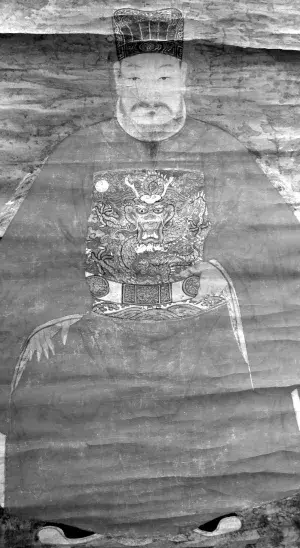
王审邽
Wang Shengui (王审邽) (858–904), courtesy name Cidu, was a native of Gushi in Guangzhou (modern Henan Province), tracing ancestral roots to Langya. He was a foundational architect of the Min state during the late Tang and Five Dynasties period. Alongside his elder brother Wang Chao and younger brother Wang Shenzhi, he was renowned as one of the "Three Kings of Min" or the "Three Dragons." Scholarly from youth, he was deeply…
Wang Shengui (王审邽) (858–904), courtesy name Cidu, was a native of Gushi in Guangzhou (modern Henan Province), tracing ancestral roots to Langya. He was a foundational architect of the Min state during the late Tang and Five Dynasties period. Alongside his elder brother Wang Chao and younger brother Wang Shenzhi, he was renowned as one of the "Three Kings of Min" or the "Three Dragons." Scholarly from youth, he was deeply versed in Confucian classics, particularly the Spring and Autumn Annals, combining literary erudition with martial competence. He joined Wang Xu's insurgent forces southward into Fujian in 885, where the brothers orchestrated the Nan'an mutiny and subsequently captured Quanzhou in 886. In 891, when Wang Chao and Wang Shenzhi advanced north to conquer Fuzhou and annex the five commanderies of Fujian, Wang Shengui was entrusted with the sole defense and governance of Quanzhou. Formally commissioned as Prefect of Quanzhou in 894, he concurrently served as Deputy Military Commissioner of the Weiwu Circuit, accumulating honorary ranks up to Acting Minister of Education and Duke of the State. Over his twelve years governing Quanzhou, he practiced frugal living, reduced taxation, promoted agricultural cultivation, and introduced terraced farming. He constructed the Quanzhou inner city, dredged rivers and harbor anchorages, and welcomed foreign merchants from across the seas. He founded the Academy of the Worthies to patronize northern literati such as Han Wo, transforming Quanzhou from an isolated coastal outpost into a renowned cultural hub. In 904, Wang Shengui passed away in office in Quanzhou at the age of forty-seven, and the imperial court conferred upon him the posthumous name Wusu. His eldest son, Wang Yanbin, succeeded him as prefect, maintaining enlightened governance for nearly three decades and laying the economic foundation for Quanzhou's rise as a premier maritime emporium.
Born into a gentry household in Gushi, Guangzhou; renowned in youth for mastery of Confucian classics.
Recruited alongside brothers Wang Chao and Wang Shenzhi into Wang Xu's army after the fall of Gushi.
Escorted his mother southward into Fujian; co-led the Nan'an mutiny against the tyrannical Wang Xu.
Participated in the capture of Quanzhou alongside Wang Chao, assuming responsibility for regional pacification.
Remained behind to govern Quanzhou while Wang Chao and Wang Shenzhi annexed Fuzhou and unified Fujian.
Officially appointed Prefect of Quanzhou by the Tang court; later advanced to Minister of Works and Military Deputy.
Following Wang Chao's demise, declined Wang Shenzhi's offer of the supreme seat, preserving stability.
Elevated to Acting Minister of Education and created Duke of the State, vigorously promoting commerce and education.
Passed away in office at age forty-seven; posthumously honored as Wusu and interred at Mount Huangji in Quanzhou.
Wang Shengui was born in 858 in Gushi, Guangzhou. His five-times great-grandfather Wang Ye had served as magistrate of Gushi, establishing the family's local lineage. Gifted with sharp intellect, Wang Shengui immersed himself in classical studies during his youth, mastering the Spring and Autumn Annals while demonstrating martial proficiency in horsemanship and archery. He and his brothers, Wang Chao and Wang Shenzhi, were revered by fellow townsmen for their courage and virtue, earning the joint honorific title of the "Three Dragons of the Wang Family."
Amid the turmoil of the late Tang period, butcher Wang Xu raised a rebel army in Shouzhou and captured Gushi in 881, compelling the three Wang brothers to join his banner. In 884, pursued by rival warlord Qin Zongquan, Wang Xu led his army south across the Yangtze into Jiangxi and Fujian. Plagued by severe grain shortages, Wang Xu grew paranoid and issued a draconian order commanding that all elderly and infirm dependents be put to death. Deeply filial, the Wang brothers concealed their mother, Lady Dong, in a baggage cart. When Wang Xu discovered the violation and prepared to execute her, the brothers stood before him and declared they would gladly die in her place. Deeply moved by their devotion, the soldiers pleaded on their behalf, forcing Wang Xu to relent.
In the eighth month of 885, when the army reached Nan'an in Fujian, widespread discontent erupted against Wang Xu's arbitrary executions. Wang Shengui and his brothers allied with disgruntled officers in a prearranged ambush, capturing Wang Xu and electing Wang Chao as their supreme commander. In 886, Wang Chao laid siege to Quanzhou, executed the oppressive prefect Liao Yanruo, and pacified southern Fujian. Wang Shengui entered Quanzhou alongside his elder brother, taking charge of civil rehabilitation.
In 891, following the death of Fujian Observation Commissioner Chen Yan, Chen's brother-in-law Fan Hui rebelled in Fuzhou. Wang Chao dispatched Wang Shenzhi northward to besiege Fuzhou while assigning Wang Shengui to hold Quanzhou and organize rear logistical convoys. In 893, Fuzhou fell, bringing five regional commanderies under Wang Chao's control. In 894, the Tang court formally appointed Wang Shengui as Prefect of Quanzhou. When Wang Chao passed away in 897, he designated Wang Shenzhi as his successor. Adhering to generational hierarchy, Wang Shenzhi offered to yield the supreme command to Wang Shengui. Recognizing his brother's exceptional strategic leadership, Wang Shengui firmly declined, cementing fraternal solidarity and preventing regional fragmentation.
Wang Shengui administered Quanzhou for twelve continuous years. Confronted by depopulated towns and damaged farmlands, he implemented comprehensive policies centered on benevolent civil governance. Living frugally in simple cloth attire, he eliminated extortionate levies and strictly restrained military personnel from encroaching upon civilian property. Returning displaced families were provided with draft cattle, plows, and seed grain by the commandery government, along with construction subsidies for new homes.
To elevate Quanzhou from an isolated coastal enclave into an enlightened cultural center, Wang Shengui initiated large-scale hydraulic conservancy, dredging the Jin River and expanding the harbor basin to accommodate oceangoing merchant vessels from Persia, Arabia, and Southeast Asia. Within the metropolis, he erected the inner city wall to protect commerce and granaries, constructed roads and stone bridges, and established the Academy of the Worthies alongside public schools. He extended lavish patronage to renowned scholar-officials such as Han Wo who had fled south from dynastic upheavals, accelerating the integration of northern culture into southern Fujian.
In 904, worn out by administrative toil, Wang Shengui passed away in his official residence in Quanzhou at the age of forty-seven. The entire populace ceased business to mourn his loss. The Tang court posthumously conferred upon him the title of Minister of Education and the posthumous name Wusu. He was interred at Mount Huangji east of Quanzhou. His eldest son, Wang Yanbin, succeeded him as prefect, continuing enlightened rule for nearly three decades and laying the foundations for Quanzhou's medieval maritime supremacy.
During his governance of Quanzhou, Wang Shengui treated agricultural rehabilitation as the cornerstone of regional recovery. He abolished arbitrary war surtaxes, supervised irrigation canals along both banks of the Jin River, and instituted water drainage projects to prevent soil salinization. He encouraged peasantry to reclaim terraced fields across the hills, introducing sugarcane, tea plants, and dryland grains.
For refugees returning from neighboring regions or arriving from northern war zones, Wang Shengui offered tax exemptions, distributed state livestock and tools, and funded homesteads. Under his stewardship, the population of Quanzhou surged dramatically, filling granaries and creating an oasis of peace and prosperity amidst national devastation.
Wang Shengui held a lifelong passion for classical learning. In an era dominated by coarse militarists who despised scholarship, he pioneered the establishment of the Academy of the Worthies and subsidized free academies in Quanzhou, recruiting displaced scholars from the Central Plains to lecture on classical philosophy.
Eminent Tang statesmen and poets, most notably former chancellor Han Wo, found safety, honor, and stipends under his protection in Quanzhou. Wang Shengui's patronage stimulated local learning, transforming Quanzhou from an underdeveloped coastal wilderness into a celebrated cultural center renowned for literary refinement.
In urban planning and commercial policy, Wang Shengui laid the groundwork for Quanzhou's emergence as an international port city. To protect the population against coastal pirates and roving brigands, he engineered the construction of the Quanzhou inner city, reinforcing stone battlements and storage depots.
Recognizing the commandery's advantageous maritime geography, he overhauled maritime customs regulations, dredged navigational channels, and introduced welcoming policies for foreign merchants. Oceangoing vessels from across the Indian Ocean and South China Sea frequented the port, trading silks, ceramics, spices, and exotic medicines, inaugurating Quanzhou's golden age along the Maritime Silk Road.
FIGURES ASSOCIATED WITH THIS DYNASTY