Birth in Houguan
Born into poverty in Houguan County; raised by his maternal family and showed early mastery in classical scholarship and military strategy.
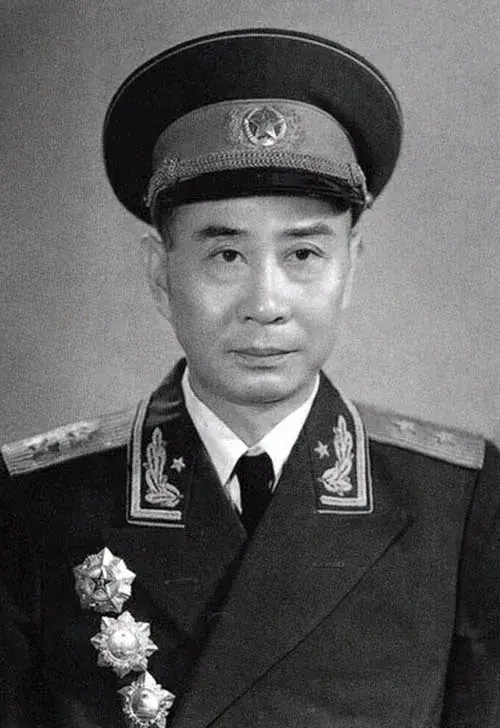
张经
Zhang Jing (张经, 1492 – November 12, 1555), courtesy name Tingyi (廷彝), art name Banzhou (半洲), was a native of Houguan County in Fuzhou Prefecture (modern Fuzhou, Fujian Province) and an eminent supreme military commander, Minister of War, and tragic hero of the mid-Ming Dynasty. Attaining the Jinshi degree in 1517, he served as Magistrate of Jiaxing before rising to Supervising Secretary in the Office of Scrutiny for…
Zhang Jing (张经, 1492 – November 12, 1555), courtesy name Tingyi (廷彝), art name Banzhou (半洲), was a native of Houguan County in Fuzhou Prefecture (modern Fuzhou, Fujian Province) and an eminent supreme military commander, Minister of War, and tragic hero of the mid-Ming Dynasty. Attaining the Jinshi degree in 1517, he served as Magistrate of Jiaxing before rising to Supervising Secretary in the Office of Scrutiny for Personnel. Known for fearless integrity, he impeached corrupt ministers, penalized provincial officials who concealed famines, and successfully advocated the curtailment of oppressive secret-police extortions by imperial guards and the Eastern Depot. In 1537, Zhang was appointed Vice Minister of War and Viceroy of Liangguang. In this regional command, he deployed Weng Wanda to crush the insurgent Yao tribal forces at Duanteng Gorge and Luoyun Mountain, capturing the chieftain Hou Gongding. Later, collaborating with Mao Bowen, he deployed overwhelming forces to the border, compelling Mac Dang Dung of Annam to surrender without bloodshed and pacifying regional unrest across Hainan and Guangxi. In 1554, with wokou pirate devastation escalating along the southeast coast, Emperor Shizong appointed Zhang as Supreme Commander overseeing seven provinces. Recognizing the weakness of local garrisons, Zhang summoned elite Lang tribal warriors from Guangxi while holding his forces in disciplined readiness. When Zhao Wenhua, the adoptive son of Grand Secretary Yan Song, demanded a bribe of twenty thousand taels of silver, Zhang sternly rejected the corrupt extortion. In retaliation, Zhao Wenhua and Hu Zongxian conspired to submit secret memorials falsely accusing Zhang of cowardice and deliberately stalling military action. Just as these slanderous reports reached the throne, Zhang executed a brilliant double envelopment with generals Lu Tang, Yu Dayou, and Tang Kekuan, crushing thousands of pirates at the Battle of Wangjiangjing in the greatest Ming coastal victory of the era. Tragically, Emperor Shizong accepted Yan Song's malicious lies, arresting Zhang and executing him in Beijing in late 1555, an injustice that shocked the empire. He was fully exonerated during the Longqing reign and granted the posthumous title Xiangmin.
Born into poverty in Houguan County; raised by his maternal family and showed early mastery in classical scholarship and military strategy.
Passed the metropolitan civil examination as Jinshi; appointed Magistrate of Jiaxing, reforming corrupt tax levies and resolving complex legal dockets.
Summoned to Beijing as Supervising Secretary; impeached Minister of War Jin Xianmin for bribery and penalized Henan officials who concealed disasters.
Appointed Vice Minister of War and Viceroy of Liangguang; directed Weng Wanda to crush insurgent Yao forces at Duanteng Gorge and Luoyun Mountain.
Deployed massive forces to the border alongside Mao Bowen, compelling Mac Dang Dung to surrender peacefully; pacified Hainan and advanced to Minister of War.
Resigned to observe filial mourning following his mother's death; funded the construction of regional schools and engaged in classical education.
Recalled as Minister of Revenue and subsequently Minister of War in Nanjing, reorganizing the southern capital's maritime river defenses.
Appointed Supreme Commander of Seven Provinces to combat rampant wokou pirate raids; mobilized elite Lang tribal shock troops from Guangxi.
Rebuffed a twenty-thousand-tael bribe demand from imperial inspector Zhao Wenhua; Zhao and Hu Zongxian slandered Zhang to the emperor.
Orchestrated the historic victory at Wangjiangjing, directing Yu Dayou and Lu Tang to annihilate thousands of wokou pirates.
Slandered by Yan Song despite his historic triumph; arrested by imperial decree and wrongfully executed in Beijing in November, before being posthumously exonerated in 1567 with all ranks restored and the posthumous name Xiangmin.
Zhang Jing was born in 1492 in Houguan County, Fuzhou Prefecture, Fujian Province. Having lost his father at a tender age, his family lived in deep poverty, compelling him to reside with his mother's maternal kin. Because his maternal grandfather had no male heirs, Zhang Jing temporarily adopted the surname Cai during his youth, only reverting to his ancestral surname Zhang after achieving national distinction in the civil examinations. Possessing an imposing, robust physique, he developed a resolute temperament from childhood, combining deep comprehension of Neo-Confucian moral treatises with extensive reading in military treatises.
In 1517, Zhang Jing passed the imperial metropolitan examination as a Jinshi during the Zhengde reign. His initial assignment was as Magistrate of Jiaxing County in Zhejiang. Jiaxing was a prosperous water-transport hub burdened by complex property disputes and aggressive tax extortion. Zhang Jing proved to be an exceptionally perceptive and upright judge, auditing unequal corvee assessments, checking the power of predatory local magnates, and clearing backlogged dockets. In 1525, his stellar regional record earned him a summons to the capital as Supervising Secretary in the Office of Scrutiny for Personnel, later advancing to Chief Supervising Secretary for Revenue.
In his censorate capacity, Zhang Jing was fearless in censuring ministerial malfeasance. When Minister of War Jin Xianmin accepted large bribes from the Ningxia regional commander Zhong Fang, Zhang Jing led his colleagues in an unyielding impeachment, forcing the disgraced minister to resign. When Grand Coordinator of Henan Pan Xun concealed devastating floods and droughts, abandoning starving refugees, Zhang Jing submitted an outspoken memorial that led to Pan's dismissal. Furthermore, he launched sharp attacks against the pervasive tyranny of the Embroidered Uniform Guard and the Eastern Depot, documenting how secret-police agents fabricated charges to blackmail merchants and commoners, and securing imperial decrees curbing their investigative excesses. Later promoted to Vice Minister of the Court of Imperial Stud and Right Vice Censor-in-Chief, his moral stature was revered throughout the capital.
In 1537, violent tribal insurrections erupted along the southern frontier. A powerful Yao chieftain named Hou Gongding seized the strategic waterways of Duanteng Gorge and Luotan, storming regional walled towns and slaying imperial magistrates. Emperor Shizong promoted Zhang Jing to Vice Minister of War and Viceroy of Liangguang. Upon arriving in the south, Zhang Jing recognized the strategic talent of Guangxi assistant surveillance commissioner Weng Wanda, entrusting him with operational command and devising a ruse that successfully captured Hou Gongding alive.
Following up on this initial breakthrough, Zhang Jing adopted a sweeping plan to destroy the insurgent mountain redoubts. He divided his army into two strike forces: Vice General Zhang Jing commanded thirty-five thousand troops in the left wing with Weng Wanda acting as supervisor, converging from Nanning in six columns; Commander Gao Qian led sixteen thousand men in the right wing converging from Binzhou. Confronting the insurgents entrenched in the rugged heights of Luoyun Mountain—where rebels felled gigantic trees, laid poisoned bamboo stakes, and rigged crushing boulders to tripwires—Zhang Jing guided his forces in outflanking the barricades. Imperial forces broke the mountain fortress, executing over a thousand rebels, capturing 450 prisoners, and pacifying 2,900 tribal residents who had resisted imperial administration for eight generations. In recognition of this sweeping success, the court elevated Zhang Jing to Left Vice Minister of War.
Shortly thereafter, a political crisis arose on the southwestern border when Mac Dang Dung assassinated the sovereign of Annam, establishing his own regime and suspending tribute while encroaching upon Chinese border garrisons. The Ming court prepared a massive punitive campaign under General Mao Bowen. Zhang Jing, consulting closely with Weng Wanda and Prefect Zhang Yue, advised against an expensive, bloody war. He argued that Annam's internal turmoil presented an opportunity for diplomatic intimidation rather than protracted warfare, advocating a policy of massing overwhelming forces along the frontier while dispatching envoys to offer terms. Mao Bowen embraced the strategy. Paralyzed by the sight of massed imperial hosts, Mac Dang Dung went to Zhennan Pass in submission, offering territory and restoring tribute payments. Zhang Jing subsequently crushed local uprisings in Hainan and Guangxi, earning elevation to Minister of War.
In 1553, the wokou pirate crisis exploded along China's southeastern seaboard. Large flotillas of armed Japanese raiders, allied with rogue Chinese seafaring syndicates under Wang Zhi and Xu Hai, raided deep into the wealthy coastal prefectures of Jiangsu, Zhejiang, and Fujian, slaughtering civilians and burning granaries. In the fifth month of 1554, the court created the supreme office of Supreme Commander of Seven Provinces, appointing Zhang Jing to oversee all military forces across Jiangnan, Jiangbei, Zhejiang, Shandong, Fujian, and Huguang.
When Zhang Jing assumed command, he discovered that regional garrisons were completely demoralized. Decades of peace had reduced hereditary garrison soldiers to fragile underlings who fled at the first sight of pirate swords. Recognizing that regular troops were useless in hand-to-hand combat against disciplined Japanese swordsmen, Zhang Jing drew upon his extensive southern experience. He petitioned the throne to mobilize veteran indigenous "Lang" tribal warriors from the hereditary chieftains of Tianzhou, Baojing, and Yongshun in Guangxi. These mountain fighters were renowned for their ferocity, mastery of heavy hook-blades, and deadly poison crossbows.
While awaiting the arrival of these reinforcements, who had to march over three thousand li from the far southwest, thousands of pirates fortified coastal bases at Zhelin and Chuanshabao, launching devastating raids against Haining, Chongde, and Zhapu. Local gentry and impatient officials launched a campaign of hysterical criticism against Zhang Jing, accusing him of cowardice and deliberately stalling military action. Yet Zhang Jing remained unperturbed, maintaining absolute tactical patience. He knew that throwing unready levies against fortified pirate encampments would invite total disaster; true victory required assembling overwhelming force for a single, decisive encirclement.
In early 1555, Zhao Wenhua, Vice Minister of Works and adoptive son of paramount Chief Grand Secretary Yan Song, arrived in Zhejiang with an imperial commission to inspect coastal defenses. Devoid of military acumen but armed with immense factional backing, Zhao Wenhua treated regional commanders with arrogant condescension. Seeking to enrich his faction, Zhao brazenly demanded an extortionate bribe of twenty thousand taels of silver from Zhang Jing.
Zhang Jing was a veteran senior statesman whose ministerial rank and military credentials far outshone Zhao's upstart position. Disdaining political sycophancy, Zhang flatly rejected the bribe and bluntly warned Zhao not to interfere in operational military maneuvers. Humiliated and furious, Zhao Wenhua allied with Zhejiang surveillance commissioner Hu Zongxian, who sought to usurp Zhang's position. In the fourth month of 1555, Zhao submitted a confidential, poisonous memorial to Emperor Shizong, slandering Zhang Jing as a corrupt, cowardly commander who hoarded supplies, avoided combat, and allowed pirates to ravage the realm.
Just as Zhao's slanderous dispatch reached Beijing, the long-awaited Lang tribal regiments from Guangxi finally arrived at the front. On the first day of the fifth month of 1555, several thousand pirate raiders launched a massive offensive toward Jiaxing from land and water. Operating with tactical mastery, Zhang Jing sprang his encirclement: he dispatched General Lu Tang with the Baojing tribal troops to block the enemy vanguard; directed General Yu Dayou with the Yongshun shock troops to sweep through Maohu toward Pingwang to sever their retreat; and ordered Commander Tang Kekuan to lead naval squadrons down the central river channels.
The armies clashed in a monumental engagement at Wangjiangjing near Jiaxing. The Guangxi tribal warriors charged fearlessly into the pirate ranks with heavy curved blades and repeating crossbows, while imperial naval batteries pounded retreating boats. Over several days of intense combat, imperial forces completely shattered the pirate host, decapitating more than 1,900 enemy fighters and drowning thousands more in the rivers. The Battle of Wangjiangjing was universally celebrated as the greatest and most decisive victory achieved by the Ming Dynasty since the onset of the coastal pirate wars.
Tragically, before the glorious news of Wangjiangjing reached the capital, Emperor Shizong had already digested Zhao Wenhua's treasonous accusations. Prone to deep paranoia and violent rage, the emperor dispatched imperial guards with heavy chains to arrest Zhang Jing.
When official victory dispatches arrived in Beijing confirming the annihilation of the pirate host, censors Li Yongjing and Yan Wangyun rushed to memorialize the throne: "The imperial forces have secured a monumental victory and shattered the enemy's spirit; replacing the supreme commander at this critical moment will invite disaster!" Enraged by what he perceived as factional obstruction, Emperor Shizong subjected both censors to fifty strokes of the imperial cudgel at Meridian Gate and dismissed them from office, confirming Zhang's arrest.
When the emperor privately consulted Chief Grand Secretary Yan Song regarding the victory, Yan Song committed an act of monstrous deceit. He lied directly to the throne, claiming: "Grand secretaries Xu Jie and Li Ben, who are natives of Jiangsu and Zhejiang, confirm that Zhang Jing indeed stalled combat; the victory at Wangjiangjing was entirely conceived and directed by Zhao Wenhua and Hu Zongxian, while Zhang Jing merely claimed their achievements." Deluded by his favorite minister's fabrications, Emperor Shizong hardened his resolve.
Brought before the imperial court in chains, Zhang Jing presented a dignified defense, detailing his operational planning and pointing out that under his six-month tenure, more than five thousand pirates had been captured or killed. His appeals fell on deaf ears. On November 12, 1555, Zhang Jing was executed alongside Zhejiang Grand Coordinator Li Tianchong in the Western Market of Beijing. His execution sparked universal grief, with citizens and soldiers weeping openly in the streets.
Following Zhang's execution, imperial coastal defenses fell into immediate disarray, and the Guangxi tribal warriors refused to cooperate with new commanders, causing pirate devastation to afflict the southeastern coast for another decade. The History of Ming recorded with bitter indignation: "Zhang Jing's merit went unrewarded, and he was murdered upon slanderous lies; this nourished the pirate plague and devastated the southeast for decades. Can the crimes of those slanderous traitors ever be fully expiated?" In 1567, during the Longqing reign, his grandson Zhang Maojue successfully petitioned the throne, leading to Zhang Jing's full official exoneration, the restoration of his titles, and the conferral of the posthumous name Xiangmin.
In the fifth month of 1555, Zhang Jing directed the historic Battle of Wangjiangjing in Jiaxing, orchestrating a coordinated three-pronged encirclement with generals Yu Dayou, Lu Tang, and Tang Kekuan. The battle resulted in the annihilation of thousands of wokou pirates and the capture of over 1,900 severed heads, shattering the aura of invincibility surrounding Japanese raiders and standing as the greatest single coastal victory of the Jiajing era.
Recognizing that regional coastal garrisons were physically and psychologically unsuited for melee combat against Japanese samurai swordsmen, Zhang Jing drew upon his southwestern administrative experience to recruit Lang tribal shock troops from Guangxi. This strategic innovation established the template for deploying specialized ethnic combatants in coastal defense, which subsequently formed the foundation for the military reforms of Qi Jiguang and Yu Dayou.
Confronted with hysterical public clamor, gentry condemnation, and extortionate demands from the powerful favorite Zhao Wenhua, Zhang Jing displayed rare strategic fortitude. Refusing to launch uncoordinated, piecemeal attacks that would squander his forces, he held his lines with iron discipline until his strike army was fully assembled, embodying the timeless principle of striking only when total victory is assured.
During his tenure as Viceroy of Liangguang, Zhang Jing deployed Weng Wanda to crush the long-entrenched Yao rebellion at Duanteng Gorge, storming the mountain citadel of Luoyun and pacifying thousands of tribal inhabitants. Furthermore, his strategic coordination with Mao Bowen along the southwestern border compelled Mac Dang Dung of Annam to submit peacefully, safeguarding the frontier without spilling imperial blood.
FIGURES ASSOCIATED WITH THIS DYNASTY