Birth into High Nobility
Born in Luoyang to Yifu Yuan and Princess Huaiyang, daughter of Emperor Xiaowen.
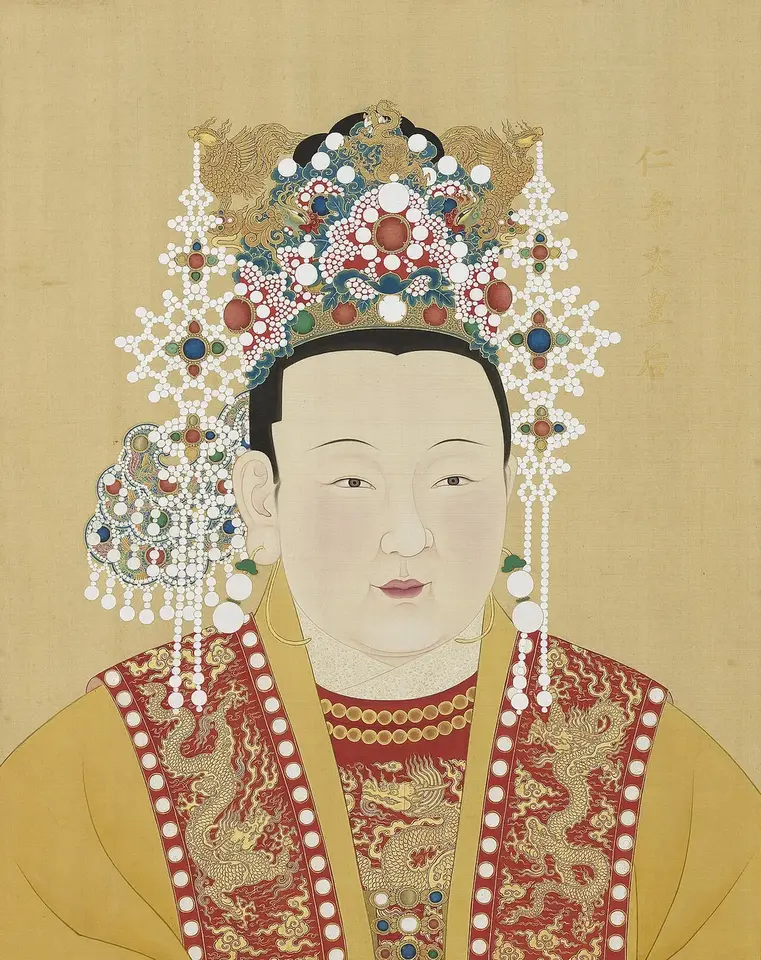
乙弗皇后
Empress Yifu (510–540 CE), posthumously titled Empress Wen, personal name unrecorded, was the first empress consort of Emperor Wen of Western Wei, Yuan Baoju, and the biological mother of Emperor Fei (Yuan Qin) and Prince of Wudu (Yuan Wu). Descended from the royal house of the Tuyuhun in Qinghai, her great-great-grandfather Yifu Mogue submitted to Northern Wei and was created Duke of Xiping. Her father Yifu Yuan served as…
Empress Yifu (510–540 CE), posthumously titled Empress Wen, personal name unrecorded, was the first empress consort of Emperor Wen of Western Wei, Yuan Baoju, and the biological mother of Emperor Fei (Yuan Qin) and Prince of Wudu (Yuan Wu). Descended from the royal house of the Tuyuhun in Qinghai, her great-great-grandfather Yifu Mogue submitted to Northern Wei and was created Duke of Xiping. Her father Yifu Yuan served as Specially Advanced with Equal Rank to the Three Excellencies, while her mother was Princess Huaiyang, daughter of Emperor Xiaowen of Northern Wei, making her a first cousin to Yuan Baoju. Celebrated for her dignified beauty, tranquil composure, and innate benevolence, Lady Yifu lived with extraordinary frugality, wearing coarse silk robes, eating plain vegetarian meals, and rejecting jewelry and luxury. Married to Yuan Baoju in 525 CE, she was invested as Empress when he founded Western Wei in Chang'an in 535 CE, while her eldest son Yuan Qin was named Crown Prince. She gave birth to twelve children, but due to wartime hardships, only Yuan Qin and Yuan Wu survived infancy. To secure an alliance with the Rouran Khaganate to counter the military supremacy of Eastern Wei, Paramount General Yuwen Tai compelled Emperor Wen to depose Empress Yifu in 538 CE and marry the Rouran princess Lady Yujiulü. Lady Yifu accepted her deposition with serene resignation, becoming a Buddhist nun. Forced into provincial exile in Qin Province by the jealous new empress, she was ultimately ordered to commit suicide in 540 CE when fresh Rouran invasions sparked rumors that the nomads fought to eliminate the deposed empress. She suffocated herself with bedclothes at age thirty-one and was entombed in a rock cave at Mount Maiji (Jiling Mausoleum). Following her son's accession, she was posthumously honored as Empress Wen and reburied alongside Emperor Wen in Yongling Mausoleum.
Born in Luoyang to Yifu Yuan and Princess Huaiyang, daughter of Emperor Xiaowen.
Married her cousin Yuan Baoju at age sixteen, establishing a deeply devoted domestic union.
Yuan Baoju ascended the throne in Chang'an, proclaiming Western Wei; Lady Yifu was invested as Empress.
Yuwen Tai forced Emperor Wen to marry Rouran Princess Yujiulü; Empress Yifu was deposed to placate the nomadic empire.
Moved to a detached palace, shaved her head, and took Buddhist vows, subsisting on vegetarian fare without complaint.
Relocated to Qin Province alongside her second son Yuan Wu to appease Empress Yujiulü's jealousy; Emperor Wen instructed her to let her hair grow.
Rouran armies attacked Western Wei borders; rumors claimed the invasion aimed to execute the deposed empress.
Received Emperor Wen's death decree; bid farewell to Yuan Wu and suffocated herself with a quilt at age thirty-one, posthumously honored as Empress Wen and reburied in Yongling Mausoleum in 551.
Empress Yifu traced her lineage to the ruling royal house of the Tuyuhun state in Qinghai. Following Northern Wei's conquest of Liangzhou, her great-great-grandfather Yifu Mogue led his tribesmen to submit to the Northern Wei court, being appointed Inspector of Ding Province and enfeoffed as Duke of Xiping, establishing his family in Luoyang through continuous intermarriage with the imperial Tuoba clan. Her father, Yifu Yuan, served as Inspector of Ding Province and was granted the rank of Specially Advanced with Equal Rank to the Three Excellencies. Her mother was Princess Huaiyang, the fourth daughter of Emperor Xiaowen of Northern Wei.
From early childhood, Lady Yifu displayed serene dignity, exceptional intelligence, and emotional restraint, rarely indulging in frivolous laughter. Cherished by her parents, they famously gestured toward her before assembled relatives, declaring: "With a daughter such as this, what need is there for sons!"
In 525 CE, at the age of sixteen, Lady Yifu was married to her cousin Yuan Baoju, the son of Prince of Jingzhao Yuan Yu. The young couple shared a deep intellectual and emotional bond. Throughout the catastrophic upheavals of the Six Garrisons Rebellion and the Heyin Massacre, they shared hardship and danger as devoted partners.
In 534 CE, Emperor Xiaowu of Northern Wei fled Luoyang to seek the protection of Yuwen Tai in Chang'an, with Yuan Baoju accompanying the imperial train. Following Emperor Xiaowu's death, Yuan Baoju was enthroned by Yuwen Tai on New Year's Day of 535 CE, founding the Western Wei dynasty as Emperor Wen. On the eighth day of the first month, Emperor Wen formally invested Lady Yifu as Empress, while their eldest son Yuan Qin was proclaimed Crown Prince.
The fledgling Western Wei regime was impoverished and surrounded by hostile powers. As mother of the realm, Empress Yifu embodied classical austerity. She wore only garments fashioned from coarse, repurposed silk, ate plain vegetarian fare, and refused all golden jewelry, jade pendants, or embroidered finery.
Her disposition was gentle, forgiving, and free from jealousy, treating imperial concubines and palace attendants with profound kindness. Over the years, she bore twelve children for Emperor Wen; however, amidst the constant dislocations of war and medicine shortages, all but two—Crown Prince Yuan Qin and Prince of Wudu Yuan Wu—succumbed to infant mortality, an ordeal that deepened Emperor Wen's tender devotion toward her.
Western Wei was locked in an existential military struggle against Eastern Wei under Gao Huan. Seizing this vulnerability, Anagui Khagan of the northern nomadic Rouran Khaganate launched destructive raids across the northern frontier, threatening Guanzhong with collapse. In 538 CE, Western Wei Chancellor Yuwen Tai calculated that the state could not survive a two-front war against both Eastern Wei and the Rouran. He resolved that peace must be purchased through marriage, urging Emperor Wen to depose Empress Yifu and marry Anagui's daughter, Princess Yujiulü, as his new empress.
Emperor Wen was devastated by the demand, fiercely refusing to abandon his lifelong partner. However, Yuwen Tai and high civil ministers presented urgent memorials, invoking the imminent destruction of the dynasty. Recognizing that imperial domestic affection could not outweigh the survival of millions of citizens, Empress Yifu displayed supreme selflessness. She consoled the weeping emperor and voluntarily requested permission to withdraw from the imperial quarters to facilitate the nomadic alliance.
In February 538 CE, Emperor Wen tearfully issued the decree deposing Empress Yifu, installing Lady Yujiulü as Empress. Following her removal, Lady Yifu severed her long black hair, took Buddhist vows, donned monastic robes, and secluded herself within a detached temple, praying continuously for peace along the frontier without uttering a single grievance.
Empress Yujiulü was merely fourteen years of age, yet possessed an imperious and jealous temperament. Learning that Emperor Wen maintained affectionate memories of his deposed consort, Empress Yujiulü expressed bitter resentment, lodging complaints with her father. To protect Lady Yifu from palace intrigue, Emperor Wen appointed their second son, Yuan Wu, as Inspector of Qin Province in 539 CE, dispatching Lady Yifu to accompany her son to modern Tianshui. Before her departure, Emperor Wen secretly instructed her to allow her hair to grow, vowing that he would recall her to the capital once peace was restored.
In the spring of 540 CE, Anagui Khagan violated his treaties and mobilized a massive nomadic cavalry army of hundreds of thousands to invade Western Wei, overrunning northern commanderies. As western armies mobilized to resist, wild rumors circulated among the troops claiming that the Rouran horde had invaded solely to exterminate the deposed empress out of nomadic vengeance.
Terrified of total annihilation, Yuwen Tai and the civil ministers converged upon the palace, pleading with Emperor Wen to command Lady Yifu's suicide to appease the Rouran and halt the war. Overwhelmed by helplessness, Emperor Wen wept uncontrollably, lamenting: "I have sinned against Heaven; having reached this pass, what face do I have to remain between heaven and earth!" With a trembling hand, he penned the secret execution decree and dispatched imperial messengers to Qin Province.
Upon the courier's arrival, Lady Yifu read the imperial edict with serene tranquility. Raising her weeping son Yuan Wu, she admonished him to serve the state with unyielding loyalty, and turned to the imperial messenger, saying: "May His Majesty live ten thousand years, and may the empire attain lasting peace; if so, I die without the slightest regret!" Entering her bedchamber, she drew a quilt over her face and suffocated herself, dying a martyr for her country at the age of thirty-one.
News of Lady Yifu's tragic death provoked profound grief among the military and civilian populace of Qin Province. Local magistrates and citizens carved a dedicated royal rock cavern high upon the cliff face of Mount Maiji in Tianshui to inter her coffin, establishing the sacred shrine known as Jiling Mausoleum. Ancient legend relates that as her casket was placed into the rock chamber, two clouds drifted into the grotto, one dispersing while the other drifted heavenward, becoming a celebrated regional miracle.
In 550 CE, as Emperor Wen constructed his imperial mausoleum, he penned an imperial rescript stipulating that after his death, Empress Yifu must be enshrined beside his ancestral altar.
In March 551 CE, Emperor Wen passed away, and Crown Prince Yuan Qin ascended the throne as Emperor Fei. His first imperial proclamation posthumously elevated his mother to the title Empress Wen. Imperial ritual officers were dispatched to Mount Maiji to escort her remains back to Chang'an, formally reburying her alongside Emperor Wen in Yongling Mausoleum.
As the inaugural Empress of the Western Wei, Lady Yifu set an enduring standard for palace virtue amidst severe wartime scarcity. By wearing repurposed cloth, eating vegetarian meals, and rejecting jewelry, she dismantled imperial luxury, establishing a moral tone of fiscal discipline that allowed the fledgling Guanzhong regime to survive its perilous early years.
In the violent geopolitics of the Northern Dynasties, Empress Yifu bore the ultimate burden of state survival. When confronted with the demands of the Rouran alliance, she relinquished the imperial crown without resistance, took religious vows, and endured frontier exile. When nomadic invasions threatened the state with destruction, she surrendered her life with words of blessing for the sovereign and the realm, resolving a national emergency through personal martyrdom.
Empress Yifu's tragic sacrifice left an indelible mark upon Chinese Buddhist art. Cave 43 at Mount Maiji (Jiling Mausoleum) was excavated specifically to serve as her imperial tomb cave. The delicate, sorrowful Buddhist statuary carved within this royal grotto reflects the compassionate, aristocratic grace of Empress Yifu, standing as a world-renowned masterpiece of medieval Chinese rock-cut sculpture.
FIGURES ASSOCIATED WITH THIS DYNASTY