Birth in Wannian
Born into a distinguished aristocratic family in Wannian, Yongzhou; mother was Princess Qingdu of Northern Zhou.
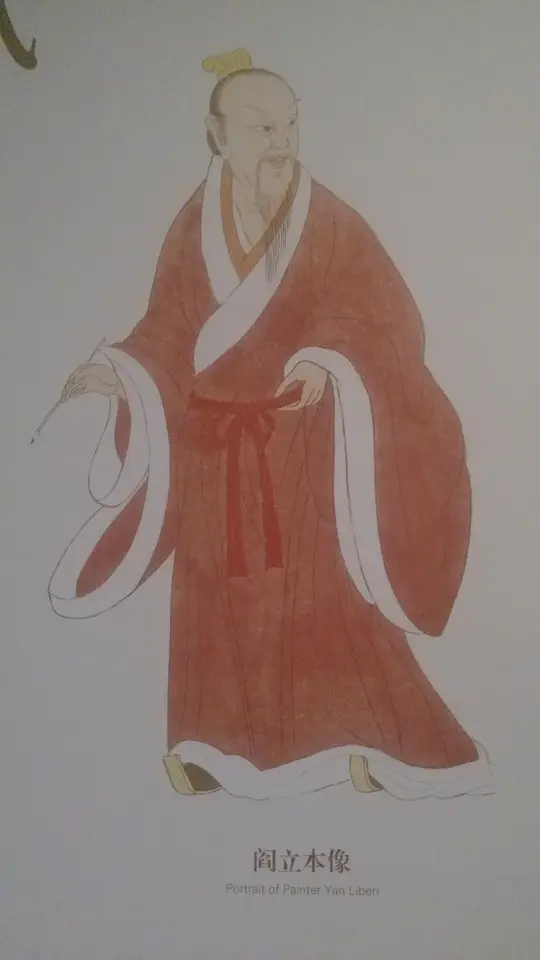
阎立本
Yan Liben (阎立本, 601 – November 14, 673) was a native of Wannian County, Yongzhou (modern Lintong District, Xi'an, Shaanxi Province). He was an illustrious statesman, supreme master painter, imperial architect, and chancellor of the early Tang dynasty. Descending from an aristocratic Sinicized Xianbei family, he was the maternal grandson of Emperor Wu of Northern Zhou (Yuwen Yong), the son of Princess Qingdu, and the…
Yan Liben (阎立本, 601 – November 14, 673) was a native of Wannian County, Yongzhou (modern Lintong District, Xi'an, Shaanxi Province). He was an illustrious statesman, supreme master painter, imperial architect, and chancellor of the early Tang dynasty. Descending from an aristocratic Sinicized Xianbei family, he was the maternal grandson of Emperor Wu of Northern Zhou (Yuwen Yong), the son of Princess Qingdu, and the younger brother of Minister of Works Yan Lide. He rose to Right Chancellor (Director of the Secretariat) and Acting Grand Master of Works (Sikong), ennobled as the Baron of Boling County. Hailing from a family celebrated across generations for architectural engineering, mechanical crafts, and fine painting, Yan combined high administrative talent with extraordinary artistic genius. During the Wude era under Emperor Gaozu, he entered the princely mansion of Li Shimin (the future Emperor Taizong) as a confidential retainer. Under Emperor Taizong, he served as Director in the Ministry of Rites, Vice Minister of Justice, and Vice Director of the Palace Directorate for Engineering, designing and executing monumental artistic projects: the architectural bas-relief sketches for the celebrated Six Steeds of Zhao Mausoleum, the full-length portraits of the twenty-four founding stalwarts in the Lingyan Pavilion, and the masterpiece The Sedan Chair (Bunian Tu), which commemorated the diplomatic reception of Tibetan ambassador Gar Tongtsen. Under Emperor Gaozong, Yan directed the imperial civil engineering apparatus as Director of the Palace Directorate for Engineering and Minister of Works, supervising the construction of palaces at Chang'an, Luoyang, and the imperial mausoleum complexes. In 668 (the 1st year of the Zongzhang era), Gaozong reformed ministerial titles and appointed Yan as Right Chancellor (Director of the Secretariat), placing him at the head of the civil chancellery alongside Left Chancellor Jiang Ke, a seasoned battlefield general. Contemporary observers popularized the phrase: "The Left Chancellor displays might in the deserts; the Right Chancellor commands glory in painting," leading later generations to celebrate Yan as the "Painting Chancellor." In office, Yan governed with modesty, judicial mercy, and diligence. He passed away on November 14, 673, at seventy-three, and was posthumously granted Grand Master of Works and Area Commander of Jingzhou, with burial in Emperor Taizong's Zhao Mausoleum.
Born into a distinguished aristocratic family in Wannian, Yongzhou; mother was Princess Qingdu of Northern Zhou.
Entered the princely household of Li Shimin; painted the Eighteen Scholars of the Qin Mansion.
Designed the sketches for the monumental stone relief sculptures of the Six Steeds of Zhao Mausoleum.
Painted the immortal historical masterpiece The Sedan Chair, depicting Emperor Taizong receiving Gar Tongtsen.
Painted the life-size portraits of the twenty-four founding ministers for the Lingyan Pavilion.
Directed the Palace Directorate for Engineering, supervising royal palaces and mausoleum construction.
Succeeded his elder brother Yan Lide as Minister of Works, overseeing public works and water conservancy nationwide.
Appointed Right Chancellor (Zhongshu Ling); ennobled as Baron of Boling; celebrated as the "Painting Chancellor."
Reappointed Director of the Secretariat and Acting Grand Master of Works as bureaucratic titles were restored.
Passed away on November 14 at seventy-three; posthumously granted Grand Master of Works, buried in Zhao Mausoleum.
Yan Liben was born into an illustrious aristocratic clan originally descending from the Xianbei Wuhuan nobility before settling in Wannian, Yongzhou. His maternal grandfather was Emperor Wu of Northern Zhou (Yuwen Yong), and his mother was Princess Qingdu. His father, Yan Pi, was a prominent architect and engineer who served as Vice Director of the Palace Directorate for Engineering under the Sui dynasty. Growing up under strict parental instruction alongside his elder brother Yan Lide, Yan mastered classical Confucian texts while learning architecture, geometric drafting, and the artistic principles of master painting.
During the Wude era of Emperor Gaozu, Li Shimin (then Prince of Qin) opened his Heavenly Strategy Mansion to recruit talented civil and military figures. Appreciating Yan's artistic genius and sharp administrative competence, Li appointed him a confidential retainer. In 621, following the conquest of Luoyang, Li Shimin founded the College of Literary Studies, inviting eighteen eminent scholars, including Du Ruhui and Fang Xuanling. Li commissioned Yan to paint the Eighteen Scholars of the Qin Mansion, with calligraphy by Chu Suiliang. The vivid portraits won nationwide acclaim, establishing Yan's artistic reputation throughout the empire.
Following Emperor Taizong's accession, Yan was appointed Director in the Ministry of Rites, Vice Minister of Justice, and Vice Director of the Palace Directorate for Engineering. During the golden age of Zhenguan, Yan served as the official visual chronicler of the Tang dynasty's triumphs and ceremonial architecture.
In 636, upon the death of Empress Zhangsun, Emperor Taizong commissioned the construction of the Zhao Mausoleum. Commemorating the six valiant warhorses that had carried him through civil war battles (Baitiwu, Telepiao, Saluzi, Quanmaogua, Qingzhui, and Shifachi), Taizong instructed Yan to draft the architectural blueprints. Studying the bone structure, muscle tension, and arrow wounds of the horses, Yan produced the sketches for the Six Steeds of Zhao Mausoleum, which master stone masons carved in deep relief on the mausoleum terraces, creating the pinnacle of ancient Chinese stone sculpture.
In 640 (the 14th year of the Zhenguan era), Tibetan Great Councilor Gar Tongtsen arrived in Chang'an to arrange the marriage of Princess Wencheng to Songtsen Gampo. Commissioned to record this historic diplomatic alliance, Yan created The Sedan Chair (Bunian Tu). Depicting Emperor Taizong seated with calm imperial majesty upon a hand-carried palanquin surrounded by court maidens, facing the dignified Tibetan envoy, the work became a celebrated treasure of Chinese art.
In 643 (the 17th year of the Zhenguan era), Emperor Taizong erected the Lingyan Pavilion next to the Sanqing Hall, ordering Yan to paint life-size portraits of the twenty-four founding ministers. Knowing each statesman intimately, Yan captured their postures and facial features with lifelike fidelity, transforming the Portraits of Twenty-Four Worthies of the Lingyan Pavilion into the ultimate symbol of imperial service in Chinese history.
Despite his renown, Yan occasionally felt professional humiliation as an artist-official. While attending Emperor Taizong on an imperial boating excursion, a rare waterbird landed near the imperial barge. Delighted, Taizong ordered: "Summon the painter Yan Liben to sketch this!" Hearing the court heralds shouting his name as a common artisan while senior colleagues watched, Yan knelt on the muddy bank to grind ink and sketch, drenched in sweat. Returning home, he warned his sons: "In youth, I studied diligently, confident my literary talents matched any peer. Yet today I am known merely as a painter, running like a servant at every imperial whim—this is a profound humiliation! You must study statecraft and never practice painting!" Yet his genius could not be obscured by bureaucratic hierarchy.
Under Emperor Gaozong, Yan advanced to Director of the Palace Directorate for Engineering. He directed the expansion of Daming Palace and the completion of the Zhao Mausoleum, completing complex public works on schedule while maintaining strict budgetary restraint.
In 656 (the 1st year of the Xianqing era), following the death of his brother Yan Lide, Emperor Gaozong appointed Yan Minister of Works, overseeing public works, river dikes, and mechanical manufacture. In 668 (the 1st year of the Zongzhang era), Gaozong reformed administrative nomenclature, renaming the Secretariat as the Right Chancellery and elevating Yan to Right Chancellor (Director of the Secretariat), ennobling him as Baron of Boling County.
Simultaneously, General Jiang Ke was appointed Left Chancellor for his military conquests in Liaodong and against the Western Turks. Contemporaries coined the famous saying: "The Left Chancellor displays might in the deserts; the Right Chancellor commands glory in painting."
Notwithstanding this court banter, Yan demonstrated seasoned administrative competence as Chancellor. During a fraught period marked by the rise of the Tibetan Empire in the west and campaigns in Korea, Yan coordinated grain transports and civil administration, championing judicial restraint and low taxation. In 671, when administrative titles reverted to their traditional forms, Gaozong reappointed Yan Director of the Secretariat and Acting Grand Master of Works.
In his seventies, beset by frailty, Yan repeatedly petitioned to retire. Emperor Gaozong declined, granting him the privilege of riding a palanquin into palace audiences and consulting him on all strategic decisions.
On November 14, 673 (the 1st day of the 10th lunar month, 4th year of the Xianheng era), Yan passed away peacefully at his official residence in Chang'an at seventy-three. Emperor Gaozong was deeply saddened, suspending court sessions and granting him the posthumous title Grand Master of Works and Area Commander of Jingzhou, with burial in Emperor Taizong's Zhao Mausoleum.
In the history of Chinese art, Yan Liben inherited the brushwork traditions of Gu Kaizhi and Zhang Sengyou, pioneering the taut "iron-wire line" and rich color palettes that defined Tang figure and equestrian painting. In Chinese political history, he stands as a rare statesman who combined supreme artistic mastery with the highest ministerial office, revered across centuries as the "Painting Chancellor."
In 636, Yan drafted the architectural sketches for the Six Steeds of Zhao Mausoleum, capturing the lifelike anatomy and battle scars of Emperor Taizong's warhorses, producing the crowning masterpiece of ancient Chinese stone relief sculpture.
In 640, Yan created the immortal handscroll The Sedan Chair (Bunian Tu), capturing Emperor Taizong receiving Tibetan ambassador Gar Tongtsen, establishing a national artistic treasure documenting early Sino-Tibetan diplomatic relations.
In 643, Yan painted the twenty-four life-size portraits of the founding ministers inside the Lingyan Pavilion, creating the visual monument of dynastic merit in imperial China.
Serving as Director of the Palace Directorate for Engineering and Minister of Works for over fifteen years, Yan oversaw the expansion of imperial palaces in Chang'an and Luoyang alongside the completion of the Zhao Mausoleum, setting the architectural standards of the Tang golden age.
Elevated to Right Chancellor (Director of the Secretariat) in 668, Yan directed civil administration, coordinated military supply logistics, and promoted judicial moderation, celebrated as the "Painting Chancellor."
FIGURES ASSOCIATED WITH THIS DYNASTY