Birth in Suzhou
Born on the 4th day of the 2nd month in Wuxu Lane, Wu County, Suzhou; his father Tang Guangde operated a tavern.
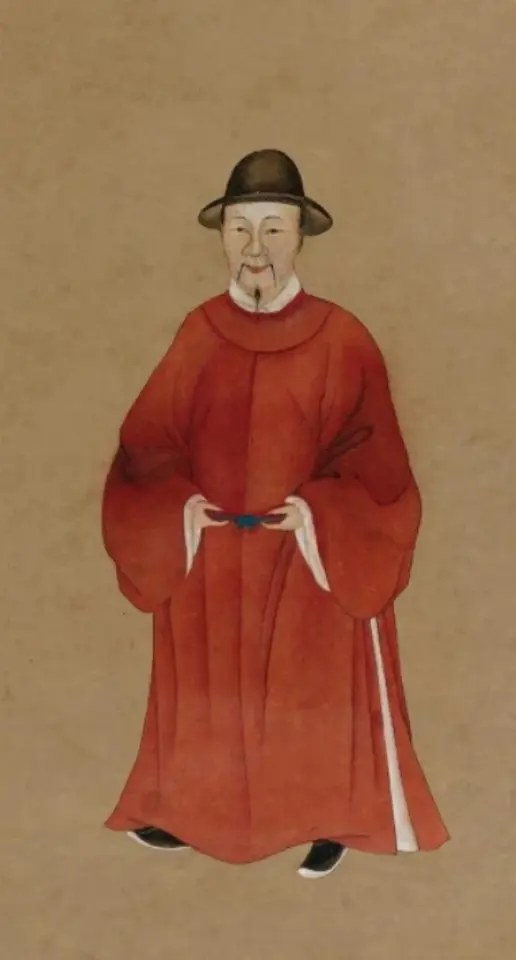
唐寅
Tang Yin (唐寅, March 6, 1470 – January 7, 1524), courtesy names Bohu and Ziwei, art names Liuru Jushi (Liurujushi) and Master of the Peach Blossom Nunnery, was a native of Wu County, Suzhou Prefecture. He was an outstanding painter, calligrapher, and man of letters of the mid-Ming dynasty, celebrated as one of the Four Masters of the Wu School alongside Shen Zhou, Wen Zhengming, and Qiu Ying, and honored as one of the Four…
Tang Yin (唐寅, March 6, 1470 – January 7, 1524), courtesy names Bohu and Ziwei, art names Liuru Jushi (Liurujushi) and Master of the Peach Blossom Nunnery, was a native of Wu County, Suzhou Prefecture. He was an outstanding painter, calligrapher, and man of letters of the mid-Ming dynasty, celebrated as one of the Four Masters of the Wu School alongside Shen Zhou, Wen Zhengming, and Qiu Ying, and honored as one of the Four Talents of Jiangnan alongside Zhu Yunming, Wen Zhengming, and Xu Zhenqing. Endowed with extraordinary literary and artistic genius from youth, Tang placed first as Jieyuan (provincial examination valedictorian) in the Yingtian provincial examination in 1498 at the age of twenty-nine, gaining nationwide renown. In 1499, while attending the metropolitan examination in Beijing, he was unjustly implicated in a major civil service examination fraud scandal involving candidate Xu Jing and chief examiner Cheng Minzheng. Tang was arrested, subjected to harsh interrogation by the Embroidered Uniform Guard, stripped of his examination honors, and demoted to serve as a petty clerk in the Zhejiang Provincial Administration Commission. Viewing this as an intolerable humiliation, Tang resolutely refused to take office, renouncing government service forever to make a living by selling calligraphy, paintings, and literary compositions. In 1514, Zhu Chenhao, the Prince of Ning, invited him to join his princely retinue in Nanchang with lavish gifts; discerning the prince's treasonous conspiracy, Tang feigned madness by running naked in public, successfully securing his release and avoiding subsequent execution. In his final years, Tang lived in poverty and deteriorating health, finding spiritual solace in Chan Buddhism before passing away at fifty-four. In painting, Tang synthesized the northern academic tradition of Southern Song court masters like Li Tang and Liu Songnian with the scholar-amateur ethos of Shen Zhou and Yuan dynasty literati, mastering landscape, figure, bird-and-flower, and particularly female beauty paintings with exceptional brushwork and refined atmosphere. His calligraphy followed Zhao Mengfu and Li Yong, characterized by vigorous structure and elegant fluidity, while his poetry was marked by genuine emotion and uninhibited lyricism. His surviving masterpieces, including Returning on a Donkey, Round Fan in the Autumn Wind, Poems on Falling Flowers, and Song of the Peach Blossom Nunnery, occupy a paramount position in the history of Chinese art.
Born on the 4th day of the 2nd month in Wuxu Lane, Wu County, Suzhou; his father Tang Guangde operated a tavern.
Placed first in the prefectural qualifying examination to become an attached student of Suzhou Prefectural School; befriended Wen Zhengming and Zhang Ling.
Married the second daughter of Xu Tingrui, studying classics and receiving high praise from senior statesmen Wang Ao and Wen Lin.
Lost his father, mother, wife, infant child, and younger sister to illness within two years; his family fell into deep destitution.
Encouraged by Zhu Yunming, studied relentlessly and captured first place (Jieyuan) in the Yingtian provincial examination.
Traveled to Beijing for the metropolitan examination; falsely implicated in the exam leakage scandal, tortured in imperial prison, and demoted to a petty clerk.
Proudly refused the clerical appointment, divorced his hostile second wife, and embarked on extensive travels across Fujian, Jiangxi, and Hunan.
Purchased an abandoned garden in Taohuawu, northern Suzhou, built the Peach Blossom Nunnery, and styled himself Liurujushi, living by art.
Summoned to Nanchang by Prince Zhu Chenhao; feigned madness to escape the treasonous conspiracy and returned safely to Suzhou.
Composed his farewell death poem in severe poverty and illness; passed away on the 2nd day of the 12th month, buried by Zhu Yunming and Wang Chong.
Tang Yin traced his distant ancestry to Tang Hui, Prefect of Jingchang Commandery during the Former Liang, and Tang Jian, an illustrious founding duke of the Tang dynasty. During the early Ming dynasty, his family settled in Wu County, Suzhou Prefecture. His grandfather Tang Tai had served as a Director in the Ministry of War's Bureau of Equipment and Communications and died heroically during the Tumu Crisis. Tang's father, Tang Guangde, ran a small tavern near Gao Bridge in Wuxu Lane. Knowing the low social status of merchants in Ming society, his father spared no effort in providing young Tang with classical education, hoping he would pass the imperial examinations and restore family honor. Born in the Gengyin year of the tiger, he was named Yin and given the courtesy name Bohu.
Tang exhibited astonishing precocity from early childhood, possessing an extraordinary memory that allowed him to memorize texts at a single glance. He quickly mastered the Confucian classics and showed natural talent for painting, copying masterpieces with remarkable fidelity. In 1484, at age fifteen, he met Wen Zhengming, who was born in the same year. Wen Zhengming's father, Wen Lin, Vice Minister of the Court of the Imperial Stud, recognized Tang's extraordinary genius and actively encouraged the two young men to cultivate learning together.
In 1485, Tang placed first in the qualifying examination and became an attached student at Suzhou Prefectural School, gaining widespread acclaim. During his school years, he formed an intimate friendship with the eccentric painter Zhang Ling, frequently singing in the streets and defying conventional decorum. In 1487, Tang was invited to inscribe poems alongside celebrated scholars Zhu Yunming, Luo Yi, and Bai Yue on Shen Zhou's landscape painting, impressing elder masters Shen Zhou and Wang Ao. In 1488, at nineteen, he married the virtuous second daughter of Xu Tingrui, living a life of literary refinement and social camaraderie.
In 1494, at age twenty-five, Tang was struck by an unprecedented series of catastrophic tragedies. His father succumbed to illness, followed swiftly by his mother, who died of grief during mourning. Soon after, his beloved wife passed away from postpartum complications, and their newborn infant also died. To compound his anguish, his only unmarried younger sister died suddenly of disease. Within a single year, five of his closest kin perished, leaving his household in ruins. Devastated by grief, Tang's hair turned prematurely white, and he indulged in heavy drinking to drown his sorrow.
At this darkest hour, his devoted friend Zhu Yunming visited him with stern reproaches and heartfelt comfort. Zhu pointed out that abandoning himself to despair would dishonor his parents and squander his Heaven-sent intellect, urging him to channel his sorrow into scholarly diligence. Deeply moved, Tang shut his doors to outside company in 1495, dedicating three full years to rigorous study of the classics, historical texts, and civil service essay composition. The Wen family provided ongoing financial and academic support.
In the autumn of 1498, at twenty-nine, Tang sat for the Yingtian provincial examination in Nanjing. His profound grasp of statecraft and exquisite literary composition won the unanimous admiration of the examiners, who ranked him first as Jieyuan. The triumphant news caused a sensation throughout Jiangnan. Tang became celebrated across the empire, sought after by prominent patrons and aspiring scholars, and he entered the capital with supreme confidence that he would capture top honors in the forthcoming metropolitan examination.
In early 1499, Tang journeyed north to Beijing alongside Xu Jing, an affluent fellow candidate from Jiangyin. Xu was ostentatious and eager to associate with high-ranking dignitaries, sharing lodgings with Tang and lavishly visiting prominent officials. That year, Vice Minister of Rites Cheng Minzheng and Junior Supervisor of the Household Li Dongyang were appointed chief examiners. Cheng designed obscure and challenging examination topics drawn from rare ancient texts. While most candidates emerged bewildered, Tang and Xu answered the questions with effortless composure.
Before the results were officially declared, rumors swirled through Beijing that Cheng Minzheng had sold the examination questions in advance to Xu and Tang. Supervising Secretary Hua Chang hastily impeached Cheng without solid evidence, alleging corruption and fraud. Emperor Xiaozong was furious and immediately ordered Cheng, Xu, and Tang arrested and interrogated in the Embroidered Uniform Guard's imperial prison. Subjected to brutal torture, Xu was coerced into confessing, though he recanted during subsequent joint hearings. Tang suffered extreme humiliation and physical abuse in the damp dungeon.
Subsequent investigations supervised by Grand Secretary Li Dongyang reviewed the sealed exam papers and revealed that Cheng Minzheng had never marked or recommended Xu's and Tang's papers for passing, proving the corruption allegations baseless. Nonetheless, caught in court political factionalism, the imperial court arrived at a compromise verdict: Cheng Minzheng was forced into retirement; Hua Chang was demoted; and Xu and Tang were stripped of their licentiate status for improper fraternization with imperial examiners and punished with flogging redeemable by fines. Tang was degraded to a petty administrative clerk in the Zhejiang Provincial Administration Commission.
The demotion from a celebrated provincial valedictorian to a degraded clerk was an insufferable disgrace for Tang Yin. In the Ming social order, clerical functionaries were treated as menial servants permanently barred from the scholar-official class. Filled with righteous indignation, Tang categorically refused to report to Zhejiang, forever cutting himself off from bureaucratic ambition. In the spring of 1500, he returned to Suzhou, physically scarred and emotionally broken, only to be met by cold mockery and contempt from relatives and neighbors.
His second wife, whom he had married after his provincial success, turned violently abusive upon seeing his ruined career, constantly berating him with cruel vitriol. Heartbroken and enraged, Tang severed their marriage and expelled her from the house. Simultaneously, his younger brother Tang Shen engaged in bitter quarrels over the division of ancestral property. Overwhelmed by personal ruin and abandonment, Tang poured out his agony in his celebrated letter to Zhu Yunming, documenting the cruelty of the dungeon and the treachery of worldly relations.
To cleanse his mind of worldly grief, Tang departed Suzhou in late 1500 on an extensive journey lasting over a year. He traveled by boat through Huaiyang, traversed the Xianxia Mountains into Fujian, explored the Nine Bends River in Mount Wuyi, climbed Mount Lu to gaze upon the Yangtze River, and sailed across Lake Dongting and Mount Heng in Hunan. Living close to towering peaks and winding waters, he broadened his inner horizon and meticulously observed natural landscapes. Although the strenuous journey depleted his funds and aggravated his pulmonary illness, it endowed his future landscape painting with monumental grandeur.
In the winter of 1501, Tang returned to Suzhou and made the conscious decision to sustain himself entirely through writing, painting, and calligraphy. The booming commercial economy of Jiangnan provided an appreciative urban market for professional art. Tang discarded traditional literati prejudices against commercial transactions, openly accepting commissions for paintings and customized texts in exchange for daily sustenance.
In 1505, Tang discovered the dilapidated estate of Song scholar Lu Daoren in Taohuawu, north of Suzhou. Despite being overgrown with weeds, the secluded property possessed serene watercourses and ancient trees. Borrowing funds and trading artwork, Tang purchased the property and spent two years developing it into his beloved retreat, the Peach Blossom Nunnery. He erected the Study Hall, Wuge Studio, Butterfly Studio, and Dream Ink Pavilion, surrounding them with hundreds of flowering peach trees. He styled himself Master of the Peach Blossom Nunnery and adopted the Buddhist name Liurujushi, derived from the Diamond Sutra's teaching that all conditioned phenomena are like dreams, phantoms, bubbles, and shadows.
During this period, Tang found domestic companionship with Shen Jiuniang, a gentle and capable woman who managed his household and assisted with his painting supplies. Tang composed his celebrated Song of the Peach Blossom Nunnery and gathered regularly with Zhu Yunming, Wen Zhengming, Xu Zhenqing, Zhang Ling, Zhou Chen, and Wang Chong. Their poetic gatherings, tea tastings, and artistic collaborations made the Peach Blossom Nunnery the epicenter of cultural life in mid-Ming Suzhou.
In 1514, Zhu Chenhao, the Prince of Ning based in Nanchang, was secretly amassing private armies and harboring outlaws in preparation for an armed rebellion to usurp the imperial throne. To elevate his prestige, the prince dispatched emissaries with bountiful gold and silk to Suzhou to recruit the famous Tang Yin to his staff. In his forties and chronically struggling with household expenses, Tang initially believed he had found a discerning patron and traveled to Nanchang.
However, after observing the prince's conduct for several months, Tang recognized Zhu Chenhao's unmistakable treasonous ambitions. Tang realized that treason carried the mandatory punishment of nine-generation extermination, yet resigning openly would prompt the ruthless prince to assassinate him to preserve secrecy. Trapped in mortal danger, Tang resorted to the ancient strategy of feigning madness.
He unfastened his hair, smeared dirt on his face, spoke incoherently, and ran completely naked through the streets of Nanchang, urinating in public and consuming filth while laughing maniacally before the princely mansion. Repulsed by this display, Prince Zhu concluded that Tang had lost his sanity and ordered him expelled from Nanchang. Tang narrowly escaped with his life, returning to Suzhou in 1515. When Zhu Chenhao launched his rebellion in 1519, the uprising was swiftly crushed by Wang Shouren within forty-three days, and all the prince's courtiers were executed. Tang's resourceful feigned madness was hailed by posterity as a masterstroke of self-preservation.
Following his escape from Nanchang, Tang became increasingly detached from worldly ambition, dedicating his remaining energy to Buddhist meditation and artistic creation. However, his physical constitution steadily declined due to pulmonary sickness and diabetes stemming from prison trauma and chronic drinking. Even more devastating, his devoted companion Shen Jiuniang fell severely ill from exhaustion and passed away in 1512, leaving him in solitary grief.
After Jiuniang's death, Tang was survived by an only daughter. To secure her future, Tang arranged her marriage to Wang Yang, the son of his close friend and distinguished calligrapher Wang Chong, expending all his remaining resources on her dowry. In his final years, widespread floods and droughts afflicted Jiangnan, crashing the local art market. Tang was repeatedly reduced to abject poverty, frequently pawning possessions and borrowing food from Wen Zhengming and Wang Chong.
In the deep winter of 1523, fifty-four-year-old Tang became bedridden. Sensing that his life was drawing to a close, he raised his brush from his bamboo couch to write his touching farewell death poem: "In the world of the living, every gathering must disperse; what matter if I return to the underworld? The underworld and the living world are both alike; let it be counted as wandering in a distant land." On January 7, 1524, Tang passed away peacefully in the Peach Blossom Nunnery. His close friends Zhu Yunming, Wang Chong, and Wen Zhengming gathered funds to handle his funeral, and Zhu composed the poignant epitaph for his tomb in Hengtang, Suzhou.
Tang Yin's scholarly journey was defined by his extraordinary triumph and shocking downfall in the imperial examination system. In 1498, overcoming deep personal trauma from family bereavements, he ranked first as Jieyuan in the Yingtian provincial examination in Nanjing. His brilliant statecraft treatise amazed examiners with its grand historical insight, establishing him as the leading intellectual talent of southeastern China.
In 1499, Tang accompanied wealthy merchant-scion Xu Jing to the metropolitan examination in Beijing. Xu's conspicuous spending and private calls at chief examiner Cheng Minzheng's residence aroused intense envy. When censor Hua Chang accused Cheng of leaking exam questions, Tang and Xu were cast into imperial dungeons. Although Grand Secretary Li Dongyang's thorough re-examination proved the fraud charges unfounded, imperial politics resulted in Tang being stripped of his licentiate degree and relegated to a petty clerical post. Tang's resolute refusal to accept this menial status marked his definitive rupture with bureaucratic office, redirecting his unmatched creative genius into the realm of popular and literati arts.
Tang Yin achieved a historic revolution in Chinese painting by masterfully synthesizing the structural vigor of Northern Song academic art with the poetic nuance of the Southern literati school. Initially mentored by Shen Zhou, he developed a profound command of literati ink play and subtle mood; subsequently, he apprenticed himself to professional master Zhou Chen, systematically assimilating the rigorous compositional discipline and sharp axe-cut brushstrokes of Southern Song court masters Li Tang, Liu Songnian, Ma Yuan, and Xia Gui.
His landscape masterpieces, such as Returning on a Donkey and Sound of Pines on a Mountain Path, exhibit soaring compositions, crisp rocky structures, and moist, rhythmic washes that blend academic monumentality with literati elegance. His figure and female beauty paintings were peerless in the Ming dynasty; works such as Round Fan in the Autumn Wind and Courtesans of the Former Shu Court feature supple, refined line work and muted, luminous coloring, conveying poignant psychological depth and social compassion.
Tang also pioneered a distinctive approach to bird-and-flower painting, moving away from rigid academic ornamentalism toward fluid ink washes and expressive simplicity, exemplified by his Ink Plum Blossoms and Cold Crows in Withered Trees. Alongside Shen Zhou, Wen Zhengming, and Qiu Ying, Tang elevated the Wu School to the dominant aesthetic force of mid-to-late Ming China, exerting enduring influence across East Asian art.
Beginning in 1505, Tang established his personal retreat, the Peach Blossom Nunnery, in Suzhou's northern suburb of Taohuawu. Building the Study Hall, Wuge Studio, and Dream Ink Pavilion amidst hundreds of blossoming peach trees, he materialized the ideal literati recluse lifestyle within an urban-suburban sanctuary.
The nunnery served as both a private workshop and a vibrant cultural hub. Tang's famous Song of the Peach Blossom Nunnery articulated a defiant philosophy of choosing artistic autonomy over political servitude. By gathering regularly with luminaries such as Zhu Yunming, Wen Zhengming, and Wang Chong, Tang helped define the social rituals of the late Ming literati class. Furthermore, his unapologetic embrace of commercial art sales demonstrated that cultural elites could earn an honorable livelihood through creative production, profoundly stimulating the commercial art market in Jiangnan.
In 1514, when summoned to Nanchang by Prince Zhu Chenhao with lavish incentives, Tang quickly uncovered the prince's covert preparations for imperial usurpation. Recognizing that involvement in dynastic treason meant certain death while open refusal invited swift murder, Tang displayed supreme presence of mind.
He staged a convincing performance of acute insanity, running naked through public markets and dining on refuse. Convinced that Tang had become completely deranged, the prince contemptuously expelled him from the province. When Zhu launched his rebellion five years later, the insurrection was swiftly crushed by Wang Shouren, and all retinue members were beheaded. Tang's strategic feigned madness preserved his life and reputation, standing as a legendary testament to intellectual resourcefulness in dangerous political climates.
As one of the Four Talents of Jiangnan, Tang rejected the rigid artificiality of early Ming court poetry as well as the dogmatic archaism of the Early Seven Masters. He advocated genuine personal emotion expressed in lucid, melodious verse, creating a poignant and accessible lyrical voice known as the Liuru style.
In 1504, when Shen Zhou composed ten poems mourning his deceased son, Tang responded by matching the rhymes in thirty magnificent poems on falling flowers. Hand-copied in his mature running script, Tang's Poems on Falling Flowers represents an immortal monument of Chinese calligraphy. Synthesizing the dynamic tension of Tang dynasty calligrapher Li Yong and Jin masters with the graceful poise of Zhao Mengfu, his brushwork exhibits majestic energy and effortless balance. The scroll ignited decades of poetic and calligraphic emulation throughout Jiangnan, epitomizing the ultimate unity of poetry, calligraphy, and painting.
FIGURES ASSOCIATED WITH THIS DYNASTY