Birth in the Steppe
Born in the royal encampment of the Turkic Khaganate as the daughter of Muqan Qaghan.
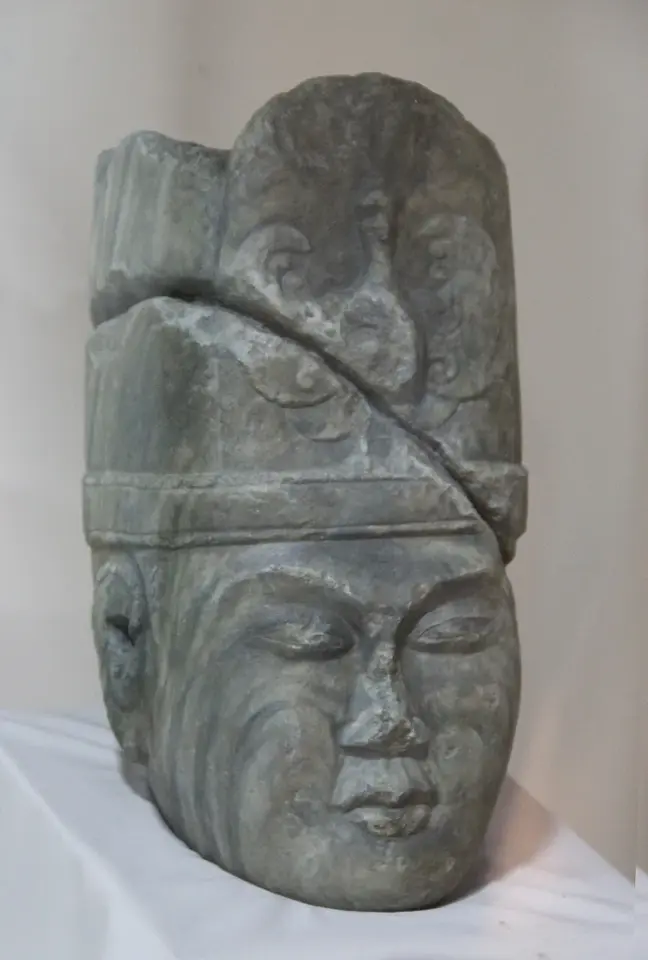
阿史那氏
Lady Ashina (阿史那氏) (551–582), a member of the royal Ashina clan of the Turkic Khaganate in the Mongolian plateau, was the daughter of the third Turkic sovereign Muqan Qaghan (Ashina Sijin) and the primary empress consort of Emperor Wu of Northern Zhou (Yuwen Yong). Known posthumously as Empress Wude, she stood as the diplomatic fulcrum of the vital military alliance between Northern Zhou and the Turkic Khaganate, while…
Lady Ashina (阿史那氏) (551–582), a member of the royal Ashina clan of the Turkic Khaganate in the Mongolian plateau, was the daughter of the third Turkic sovereign Muqan Qaghan (Ashina Sijin) and the primary empress consort of Emperor Wu of Northern Zhou (Yuwen Yong). Known posthumously as Empress Wude, she stood as the diplomatic fulcrum of the vital military alliance between Northern Zhou and the Turkic Khaganate, while simultaneously serving as a key historical catalyst for the introduction of Central Asian music into central China. During the formative decades of Northern Zhou, facing overwhelming military pressure from its rival Northern Qi, the Guanzhong leadership under Yuwen Tai and Emperor Wu repeatedly dispatched envoys to the northern steppe seeking marital alliances. In 565, Emperor Wu commissioned a grand delegation led by Prince of Chen Yuwen Chun and Duke of Shenwu Dou Yi to escort the princess south. Although Muqan Qaghan initially vacillated due to counter-offers from Northern Qi, a violent summer storm that devastated the Turkic royal camp was interpreted as divine punishment for breaking his pledge, prompting him to dispatch the princess to Chang'an. In 568, Emperor Wu personally welcomed Lady Ashina into the capital and consecrated her as empress. Dignified, elegant, and strictly observant of palace decorum, Empress Ashina earned deep reverence from Emperor Wu, who was urged by his niece Lady Dou (posthumously Empress Taimu of Tang) to honor the marriage for the security of the realm. Her bridal cortege brought prominent musicians from the Western Regions, notably the Kucha master Sujiva, who introduced the Kuchean musical theory of five modes and seven scales. Imperial musician Zheng Yi studied these principles to reform traditional Chinese court music, establishing seven-tone musical scales and revolutionizing early medieval acoustics. Surviving Emperor Wu, she was honored as Empress Dowager, Tianyuan Empress Dowager, and Grand Empress Dowager across successive reigns. Following the Sui accession, Emperor Wen of Sui treated her with imperial honors; upon her death in 582 at the age of thirty-two, she was posthumously canonized as De and interred alongside Emperor Wu in the Xiao Mausoleum.
Born in the royal encampment of the Turkic Khaganate as the daughter of Muqan Qaghan.
Following Emperor Wu's enthronement, Northern Zhou envoys initiated marital negotiations to encircle Northern Qi, securing Muqan Qaghan's consent.
An imperial embassy led by Yuwen Chun and Dou Yi arrived in the northern steppe; detained for several years due to Northern Qi counter-diplomacy.
Following celestial portents that frightened the qaghan, the princess was escorted south; crowned empress in Chang'an in the third month.
Dou Yi's daughter advised Emperor Wu to show tender devotion to Empress Ashina to maintain the steppe alliance, which the emperor implemented.
Following Emperor Wu's demise, Emperor Xuan (Yuwen Yun) ascended the throne, honoring Empress Ashina as Empress Dowager.
Upon Emperor Xuan's abdication to Emperor Jing (Yuwen Chan), elevated to Tianyuan Empress Dowager in the second month.
Elevated to Tianyuan Supreme Empress Dowager; following Emperor Xuan's death, proclaimed Grand Empress Dowager in the fifth month.
Following Yang Jian's usurpation of the Northern Zhou throne, granted honorable sanctuary in Chang'an with generous imperial stipends.
Passed away in Chang'an on May 30 at the age of thirty-two; granted the posthumous name De and buried with Emperor Wu in the Xiao Mausoleum.
Lady Ashina descended from the royal clan of the Turkic Khaganate that rose to dominance in the Altai Mountains. Her grandfather Bumin Qaghan (Ilig Qaghan) founded the nomadic empire, while her father Muqan Qaghan consolidated dominion across Central Asia, conquering the Hephthalites in the west and subduing the Khitans in the east. Raised in the nomadic headquarters of the northern steppe, Lady Ashina displayed natural intelligence, refined poise, and striking beauty from early childhood.
During the Western Wei and early Northern Zhou periods, the Guanzhong administration occupied a smaller territorial base than Northern Qi and faced intense eastern military pressure. Recognizing that northern horsemen were essential to counterbalance Northern Qi, Chancellor Yuwen Tai and Grand Mentor Yuwen Hu formulated an alliance strategy of combining with the Turks to pin down Qi. Following Emperor Wu's ascension in 560, numerous diplomatic embassies led by Liangzhou Inspector Yang Jian crossed the Great Wall with lavish silk subsidies. Muqan Qaghan ultimately agreed to betroth his daughter to the Northern Zhou monarch.
On March 25, 565, Emperor Wu organized an imperial embassy to receive the bride. Commanded by his brother Yuwen Chun (Prince of Chen) as chief envoy, with military grandees Yuwen Gui (Duke of Xu), Dou Yi (Duke of Shenwu), and Yang Jian serving as deputies, the mission departed with a portable palace, gilded carriages, imperial parasols, and one hundred and twenty palace attendants.
Concurrently, Northern Qi envoys arrived at the qaghan's camp with massive gold bribes, seeking to disrupt the marriage and secure the alliance for themselves. Tempted by Qi wealth, Muqan Qaghan broke his pledge and detained the Northern Zhou embassy in the northern steppe for nearly three years. Despite strenuous diplomatic protests, the qaghan refused to release the princess. However, during the winter of 567, an unprecedented blizzard accompanied by unseasonal thunder and violent tempests flattened the royal yurts, freezing countless cattle and horses. Steppe shamans and clan elders interpreted the catastrophe as celestial vengeance for breaking solemn covenants with the Zhou. Terrified by the portents, Muqan Qaghan relented, prepared a lavish dowry of horses and camels, and dispatched an armed retinue to escort Lady Ashina southward alongside Yuwen Chun.
On April 20, 568, Lady Ashina's bridal procession arrived outside the walls of Chang'an. Emperor Wu personally led princes, dukes, and civil ministers outside the capital to receive the princess, consecrating her as empress upon entering the imperial palace. Empress Ashina possessed exquisite dignity, adhering strictly to classical court regulations and earning deep respect from the sovereign. Although Emperor Wu already had a senior consort, Lady Li Ezi (mother of the future Emperor Xuan), the court elevated Empress Ashina as primary consort, redesignating Lady Li as Imperial Consort to signify the supreme protocol status of the Turkic princess.
Beyond geopolitics, Empress Ashina's marriage transformed Chinese musical history. Her bridal entourage included master musicians from Central Asia, notably the Kucha virtuoso Sujiva. Renowned for his pipa mastery and modal theories, Sujiva encountered Northern Zhou minister Zheng Yi, who had been tasked with standardizing court liturgical music. Astounded that Sujiva's melodies incorporated seven distinct pitches within a single modal framework, Zheng Yi studied under the Kuchean master. Mastering the five modes and seven keys of Kuchean music, Zheng Yi adapted these principles into his treatise Music Bureau Melodies, permanently enriching the traditional pentatonic scale into a comprehensive heptatonic system that formed the core of Sui and Tang court entertainment music.
On June 21, 578, Emperor Wu passed away during a northern military campaign. Crown Prince Yuwen Yun ascended the throne as Emperor Xuan, honoring Empress Ashina as Empress Dowager the following day. Despite Emperor Xuan's personal volatility and his bizarre decree establishing five concurrent empresses, he treated his stepmother with filial veneration. In April 579, upon abdicating to six-year-old Emperor Jing (Yuwen Chan), Xuan elevated her to Tianyuan Empress Dowager, advancing her to Tianyuan Supreme Empress Dowager in March 580. Following Xuan's death in June 580, Emperor Jing proclaimed her Grand Empress Dowager.
In 581, Prime Minister Yang Jian accepted the abdication of Emperor Jing and founded the Sui dynasty. Respecting Lady Ashina's serene detachment from political factionalism, Emperor Wen of Sui exempted her from clan purges, granting her peaceful residence in an imperial villa in Chang'an with generous maintenance stipends. On May 30, 582, Lady Ashina passed away in Chang'an at the age of thirty-two. Emperor Wen ordered imperial ritual officials to conduct grand funerary rites according to the highest Northern Zhou precedent, conferring the posthumous name De and interring her beside Emperor Wu in the Xiao Mausoleum.
Empress Ashina's imperial marriage secured an indispensable strategic alliance between the Guanzhong state and the dominant nomadic superpower of northern Eurasia. Her presence in Chang'an deterred major steppe raids across the northwestern frontiers for over a decade, while joint military maneuvers pinned down Northern Qi defenses from the rear. This diplomatic umbrella enabled Emperor Wu to concentrate his military resources eastward, directly facilitating the conquest of Northern Qi in 577 and laying the geographical foundation for Chinese reunification.
The arrival of Empress Ashina's Kuchean entourage introduced advanced musical theory to the central plains. Through the pedagogical collaboration between her court musician Sujiva and Chinese minister Zheng Yi, the Kuchean system of five modes and seven keys was systematically integrated into imperial liturgical practice. This cross-cultural synthesis expanded the archaic Chinese five-tone scale into a dynamic seven-tone acoustic framework, profoundly enriching the court music of the Sui and Tang dynasties and standing as a landmark achievement in Silk Road cultural history.
FIGURES ASSOCIATED WITH THIS DYNASTY