Born in Qishui
Born into an artisan household in Qishui County, Qizhou, acquiring basic craft skills in an area known for papermaking and forestry.
毕昇
Bi Sheng (毕昇, c. 972–c. 1051), a native of Qishui County, Qizhou, Huainan Circuit (present-day Yingshan County, Hubei), was a celebrated commoner inventor and master craftsman of the Northern Song dynasty who invented movable type printing. His invention of baked ceramic clay movable type broke through the physical constraints of traditional woodblock printing that had dominated East Asia since the Tang dynasty, opening a…
Bi Sheng (毕昇, c. 972–c. 1051), a native of Qishui County, Qizhou, Huainan Circuit (present-day Yingshan County, Hubei), was a celebrated commoner inventor and master craftsman of the Northern Song dynasty who invented movable type printing. His invention of baked ceramic clay movable type broke through the physical constraints of traditional woodblock printing that had dominated East Asia since the Tang dynasty, opening a revolutionary epoch in the global history of textual reproduction and communication. His innovation stands as one of the most consequential technological achievements among China's "Four Great Inventions." Born into the commoner artisan class, Bi Sheng worked for decades in commercial printing workshops and publishing houses in Hangzhou and the Song capital of Kaifeng. Through lengthy labor in manual woodblock engraving, he recognized the severe systemic bottlenecks of woodblock reproduction: carving whole-page blocks was labor-intensive and costly; wooden blocks were vulnerable to warping, moisture, and termite decay; correcting typographical errors required recarving entire panels; and for books requiring small print runs, blocks were carved at immense expense only to be discarded. These challenges inspired him to conceive an agile, modular printing system using independent, reusable character types. During the Qingli era of Emperor Renzong (1041–1048), through extensive experimentation with materials and firing techniques, Bi Sheng successfully perfected clay movable type printing. He engineered a comprehensive technological system comprising clay letter engraving, kiln vitrification, iron plate composition, resin-wax thermal bonding, planar leveling, inking and pressing, and heat-assisted disassembly with rhyme-based storage. Following Bi Sheng's death, his original type fonts were preserved by his descendants and later acquired by relatives of the polymath Shen Kuo, who documented the invention with meticulous detail in Dream Pool Essays. The 1990 excavation of Bi Sheng's gravestone in Yingshan, Hubei, conclusively verified his ancestral lineage and historical chronology.
Born into an artisan household in Qishui County, Qizhou, acquiring basic craft skills in an area known for papermaking and forestry.
Employed in commercial printshops in Hangzhou and Kaifeng, mastering the manual crafts of block carving, paper preparation, and rubbing.
Witnessed massive labor wastage in classical woodblock production, beginning preliminary experiments to cast independent character fonts.
Rejected wood due to grain deformity and moisture absorption; perfected the technique of carving fine sticky clay and firing it into durable ceramic types.
Established a standardized procedure utilizing iron plates coated with pine resin, wax, and paper ash, leveling font surfaces with wooden boards.
Designed a categorical storage system organizing thousands of type characters into wooden tray compartments based on classical rhyme groups.
Passed away in his native region and was buried at Wuguidun Village in Caopandi Town, with his gravestone inscribed on the seventh day of the second lunar month in 1052.
Polymath Shen Kuo inspected Bi Sheng's original clay types preserved by his nephews, composing a detailed eyewitness technological account in his masterwork.
Bi Sheng was born in Qishui County, Qizhou, within the Huainan Circuit during the early Song dynasty. Located along the southern foothills of the Dabie Mountains, the region boasted dense timber forests and clear mountain streams, supporting a long tradition of manual papermaking and block printing. Bi Sheng belonged to the commoner class, recorded in historical annals simply as a "commoner" (buyi). Having never sought civil service examination degrees, he earned his living as a professional engraver and printing artisan.
As a young craftsman, Bi Sheng traveled to the prosperous commercial centers of Hangzhou and the northern capital Kaifeng, working in commercial bookstores and printshops. The Northern Song witnessed an unprecedented expansion of civil service examinations and school curricula, generating explosive societal demand for Confucian classics, medical treatises, and agricultural manuals. Immersed in daily workshop operations, Bi Sheng spent decades practicing every stage of woodblock printing: preparing woodblocks from pear or jujube timber, pasting mirrored manuscript drafts onto oiled surfaces, gouging negative relief spaces, applying ink, and pressing paper sheets.
Throughout this extensive labor, Bi Sheng experienced the severe limitations inherent to traditional woodblock printing. Printing an extensive multivolume work required carving hundreds or thousands of separate wooden panels, consuming years of intensive labor and substantial silver. If a carver made a single typographical error, the entire wooden block was ruined; once carved, woodblocks were easily deformed by humidity or destroyed by termites during prolonged warehouse storage; and if a book required only dozens of copies, the immense cost of block carving could never be recouped.
Confronted with the wastefulness and rigidity of fixed woodblocks, Bi Sheng developed a bold inventive vision. He wondered whether the thousands of characters on a page could be decomposed into modular, individual type pieces that could be assembled freely for printing and subsequently disassembled for endless reuse. This conceptual breakthrough initiated the historic leap from static woodblocks to dynamic movable type printing.
To transform individual movable types into reality, Bi Sheng initially experimented with wood. However, his workshop trials revealed fatal material deficiencies in wooden characters. Wood possesses natural grain and uneven fibrous density, which caused delicate strokes to splinter during fine carving. More severely, wood naturally absorbs moisture and swells unevenly when coated with water-based inks; when locked onto an iron frame with thermal adhesives, the uneven expansion made character faces irregular in height, producing blurred impressions. Furthermore, when heat was applied to melt the bonding agent after printing, the wooden types absorbed resin and frequently charred under direct flame.
Undeterred by failure, Bi Sheng turned to ceramic craftsmanship. Observing the durability of fired roof tiles and fine porcelain, he resolved to fabricate movable types from sticky clay. He selected dense, fine-grained kaolinitic clay, kneading it thoroughly to remove air pockets and cutting it into uniform rectangular type bodies. On the upper surface of each clay piece, he carved a single mirror-image Chinese character with fine, sharp strokes as thin as the lip of a coin.
Unfired clay characters were brittle and fragile, incapable of withstanding printing pressure. Bi Sheng placed the carved clay pieces into kilns, firing them at high temperatures until the clay hardened into vitrified ceramic. Once fired, the ceramic characters were water-resistant, impervious to ink penetration, and sturdy enough to endure thousands of printing impressions without chipping. Bi Sheng had successfully solved the fundamental material obstacle, providing the physical foundation for movable type typography.
During the Qingli era of Emperor Renzong (1041–1048), Bi Sheng formulated a comprehensive system for typesetting, locking, leveling, and printing using movable clay types.
To secure thousands of loose ceramic types into a unified, rigid printing plate, Bi Sheng invented an ingenious thermal adhesion technique. He prepared a flat iron plate and placed an adjustable iron chase upon it. Across the surface of the iron plate, he applied an even layer of fusible bonding paste composed of melted pine resin, beeswax, and sifted paper ash. Typesetters arranged the ceramic characters tightly inside the iron frame according to the draft manuscript. Once the frame was filled, the iron plate was held over a gentle charcoal brazier until the resin and wax liquefied, allowing the bases of all characters to settle into the molten adhesive.
To ensure that the character faces were perfectly even, Bi Sheng took a smooth wooden board and pressed it firmly across the hot typeset surface, pushing all character faces flush with one another. When the iron plate cooled, the resin-wax mixture solidified into a rock-hard composite, binding the hundreds of individual types into a monolithic printing plate as flat as a whetstone.
To maximize production speed, Bi Sheng operated two iron plates in rotation. While one plate was being inked and pressed by paper rubbings at the front desk, typesetters prepared the next page on the second iron plate. The moment the required copies of the first page were completed, the second locked plate was ready for immediate presswork. This continuous alternating workflow achieved extraordinary printing velocity, foreshadowing modern manufacturing assembly lines.
Following the completion of an edition run, dismantling the locked plate was equally swift. The iron plate was held over fire once more until the resinous bonding paste liquefied. The typesetter then lightly brushed the character faces with a hand or soft tool, causing the ceramic characters to drop away cleanly from the iron plate without sticking or sustaining damage.
To facilitate rapid character retrieval for subsequent books, Bi Sheng invented a modular storage method using wooden rhyme cases. He fabricated multi-tiered shallow wooden trays divided into small compartments, labeled with paper tags according to traditional phonetic rhyme groups from the Guangyun rhyme dictionary. Typesetters could locate and extract specific characters rapidly based on their pronunciation. For high-frequency auxiliary particles such as zhi and ye, Bi Sheng prepared twenty or more identical duplicates per font to prevent shortages on a single page; for rare, uncatalogued characters, he carved and fired new clay types on the spot using straw embers within minutes.
Bi Sheng passed away around 1051 and was buried in his ancestral homeland. In the autumn of 1990, villagers in Wuguidun, Caopandi Town, Yingshan County, Hubei, unearthed a blue sandstone gravestone from the southern slopes of Mount Shuishi. The inscription read: "Tomb of the deceased ancestor Bi Sheng and his wife Li Miaoyin, erected on the seventh day of the second lunar month in the fourth year of Huangyou (1052), by sons Bi Jia, Bi Wen, Bi Cheng, Bi Li, and grandsons Bi Wan, Bi Ji, Bi Cong." Archeological analysis confirmed that this was the tomb of the inventor Bi Sheng, finally resolving historical ambiguities regarding his birthplace, familial lineage, and date of death.
After Bi Sheng's death, his original clay type fonts were cherished by his descendants and later acquired by the nephews of the eminent scientist Shen Kuo. Shen Kuo inspected the original ceramic types, marveled at their ingenuity, and preserved the entire technological process in Dream Pool Essays, ensuring Bi Sheng's immortal recognition in the annals of world science.
Bi Sheng's creation of movable clay type printing marks one of the most profound technological revolutions in human intellectual history. Prior to his invention, printing across Eurasia was confined to static block printing, an artisanal bottleneck that limited the speed and volume of text dissemination.
Bi Sheng overturned whole-block manufacturing, establishing the modern principles of modular typography. By decomposing written texts into independent, standardized single-character types and vitrifying clay into ceramic, he engineered durable letterforms. Through fusible thermoplastic adhesives, he resolved the twin dilemmas of font immobilization during printing and non-destructive release afterward.
His innovation deconstructed printing into six standardized operational phases: type cutting, firing, typesetting, surface leveling, pressing, and redistribution. Shen Kuo observed in Dream Pool Essays: "If one were to print only two or three copies, the method was not especially convenient; but if one printed dozens, hundreds, or thousands of copies, it was extraordinarily rapid." This assessment highlighted the immense economies of scale inherent in movable type printing.
Bi Sheng's invention liberated written knowledge from fixed woodblocks, driving down book production costs and accelerating the spread of literature, medicine, philosophy, and practical technology across Song society.
To make movable type printing commercially viable, Bi Sheng created a systematic font classification and storage system known as the "wooden-rhyme compartment method."
Because the Chinese writing system comprises thousands of distinct ideographic characters, locating individual types without an organized retrieval protocol would paralyze typesetting. Bi Sheng leveraged the standard phonological structure of the imperial Guangyun dictionary, constructing compartmentalized wooden trays labeled with rhyme markers. Typesetters identified characters by phonetic category, establishing the world's earliest modular information retrieval system for typography.
Bi Sheng also demonstrated empirical statistical foresight regarding character frequencies. For common grammatical particles, he cast up to twenty duplicates per character; for obscure words, he instituted an on-demand carving protocol, firing new types with straw embers in minutes.
This integration of phonology, statistical logistics, and modular engineering provided a practical blueprint adopted by later innovators, including Wang Zhen's revolving type cases in the Yuan dynasty and metal typography during the Ming and Qing dynasties.
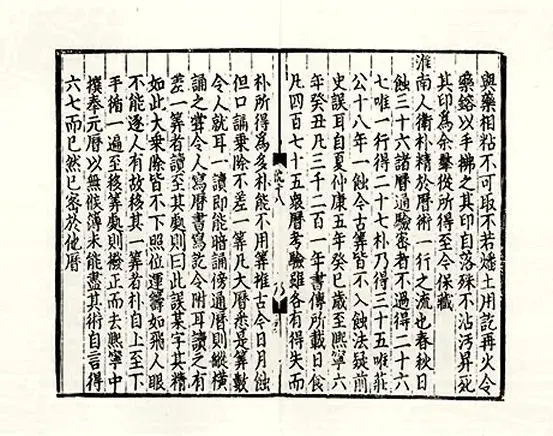
Bi Sheng's achievements were preserved for posterity through the meticulous documentation of Northern Song polymath Shen Kuo in Chapter 18 of Dream Pool Essays.
Shen Kuo recorded the complete technical process with unparalleled clarity: "During the Qingli era, commoner Bi Sheng invented movable type. His method was to carve sticky clay into types as thin as the lip of a coin, with each character forming a single seal, fired in kilns to make them hard. He prepared an iron plate covered with pine resin, wax, and paper ash. To print, an iron chase was placed on the plate, and the types were arranged densely within. When full, the plate was held over fire; as the paste softened, a flat wooden board was pressed over the face to level the characters as flat as a whetstone... Two iron plates were used in alternation: while one was being pressed, the other was typeset, proceeding with incredible speed. For characters like zhi and ye, twenty or more duplicates were prepared... If wooden characters were used, the grain would cause uneven swelling when wet, and they would stick irreversibly to the adhesive; baked clay was superior, releasing freely when warmed... Upon Bi Sheng's death, his types were obtained by my nephews, who cherish them to this day."
Historians of technology celebrate this passage as the premier primary document of typographical history. Shen Kuo recorded not only the mechanics of fabrication, but also the empirical rationale for choosing ceramic clay over wood. His notation that his family preserved Bi Sheng's original types provided unassailable proof of the invention's historical reality.
Bi Sheng's movable type technology radiated across China and outward along the Silk Road, accelerating cultural developments across Asia and Europe.
Following Bi Sheng's breakthrough, movable type printing spread throughout Song, Liao, Western Xia, and Jin territories. Western Xia authorities utilized clay and wooden types to print Tangut Buddhist sutras, such as the Auspicious Tantra of the All-Reaching Union, discovered in Ningxia as the oldest surviving physical specimen of movable type printing. In the Yuan dynasty, agronomist Wang Zhen designed wooden types and revolving storage cases, publishing his treatise Book of Movable Type Typography. During the Ming and Qing dynasties, private printers cast bronze and tin types, culminating in the massive imperial Wuying Palace Compendium of Books.
Movable type technology migrated along land and maritime trade routes into Korea, Japan, and Vietnam, and westward through Persia and Central Asia into Europe. In mid-fifteenth-century Germany, Johannes Gutenberg combined East Asian typography concepts with European metalcasting and oil-based inks to produce lead-alloy movable type.
In Novum Organum, Francis Bacon observed: "Printing, gunpowder, and the compass: these three have changed the whole face and state of things throughout the world; the first in literature, the second in warfare, the third in navigation; whence have followed innumerable changes, insomuch that no empire, no sect, no star seems to have exerted greater power and influence in human affairs than these mechanical discoveries." Bi Sheng stands as the original pioneer whose ingenuity ignited this global transformation.
FIGURES ASSOCIATED WITH THIS DYNASTY