Birth in Changshu
Born into a scholarly family in Changshu, showing remarkable intellectual sharpness, literary eloquence, and moral discipline.
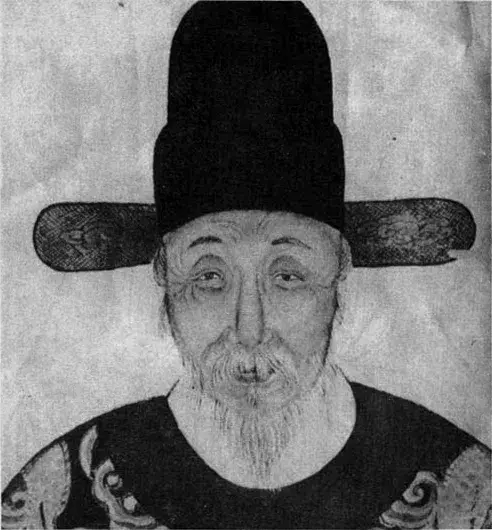
严讷
Yan Ne (严讷, 1511–1584), courtesy name Minqing (敏卿), art name Yangzhai (养斋), was a native of Changshu in Suzhou Prefecture (modern Changshu, Jiangsu Province) and an eminent statesman, Grand Secretary of the Wuying Hall, and Minister of Personnel during the Jiajing era of the Ming Dynasty. Entering officialdom as a second-class Jinshi in 1541, he was selected as a Hanlin Bachelor and appointed Compiler. Observing the severe…
Yan Ne (严讷, 1511–1584), courtesy name Minqing (敏卿), art name Yangzhai (养斋), was a native of Changshu in Suzhou Prefecture (modern Changshu, Jiangsu Province) and an eminent statesman, Grand Secretary of the Wuying Hall, and Minister of Personnel during the Jiajing era of the Ming Dynasty. Entering officialdom as a second-class Jinshi in 1541, he was selected as a Hanlin Bachelor and appointed Compiler. Observing the severe devastation of the Jiangnan region wrought by wokou pirate raids and catastrophic droughts, he courageously submitted an impassioned memorial pleading for tax remission, successfully securing imperial exemptions for millions of destitute subjects. Renowned for his classical erudition and refined Daoist prose, he served in the West Park court drafting liturgical green prayers (Qingci) for Emperor Shizong, earning exceptional imperial trust and rapid elevation to Hanlin Academician and Minister of Rites. Following the downfall of the corrupt senior grand secretary Yan Song, Yan Ne was appointed Minister of Personnel. Working in close concert with Chief Grand Secretary Xu Jie, he led a thorough reform of the imperial personnel evaluation apparatus. He established a strict rule prohibiting private lobbying at ministerial residences, appointing upright officials like Lu Guangzu, curbing factional bribery, and promoting competent local magistrates through the multi-track appointment system. Elevated to Grand Secretary of the Wuying Hall in 1565, he fell ill from unrelenting administrative labor and retired to his native Changshu to care for his aged parents. Living in serene retirement for twenty years, he passed away at age seventy-four, posthumously honored as Junior Guardian with the posthumous title Wenjing. His son Yan Cheng founded the famed Yushan Guqin School.
Born into a scholarly family in Changshu, showing remarkable intellectual sharpness, literary eloquence, and moral discipline.
Attained the eighth rank in the second class of the Jinshi examination, appointed Bachelor of the Hanlin Academy, and advanced to Compiler.
Promoted to Hanlin Reader; witnessing rampant wokou raids and famine in the Sanwu region, memorialized the throne to secure total tax cancellation for distressed populations.
Summoned alongside Li Chunfang to serve in the West Park drafting Daoist liturgical prayers, earning rapid promotion to Hanlin Academician, Vice Minister of Sacrifices, and Vice Minister of Rites.
Following the purge of Yan Song, replaced Guo Pu as Minister of Rites, managing court ceremonial and foreign diplomatic tribute with dignity.
Succeeded Guo Pu as Minister of Personnel; outlawed private lobbying, appointed Lu Guangzu, and reformed official selection through the multi-track merit system.
Awarded the prestigious rank of Grand Preceptor to the Crown Prince for purifying officialdom and rendering diligent confidential services in the West Park.
Appointed Grand Secretary of the Wuying Hall while concurrently directing the Ministry of Personnel; succumbed to exhaustion from day-and-night duties and resigned in winter.
Repeatedly declined imperial summons under Emperors Muzong and Wanli, choosing instead to personally care for his elderly parents in his native village.
Passed away peacefully at his estate in Changshu at age seventy-four; posthumously honored as Junior Guardian and granted the posthumous name Wenjing.
Yan Ne was born in 1511 in Changshu, Suzhou Prefecture. From early childhood, he showed exceptional intellectual aptitude, mastering the Confucian classics and developing a refined classical prose style. In 1528, he passed the provincial civil examination; however, because the examiner's introductory preface contained expressions deemed offensive by imperial censors, the entire cohort of successful licentiates was barred from competing in metropolitan examinations for more than a decade. Undeterred by this political misfortune, Yan Ne remained in his hometown, studying Song Neo-Confucian metaphysics and statecraft memorials with unyielding discipline.
In 1541, Yan Ne traveled to Beijing and attained the eighth rank in the second class of the metropolitan Jinshi examination. Selected as a Hanlin Bachelor, he underwent three years of advanced classical training and was subsequently appointed Hanlin Compiler, later advancing to Hanlin Reader. Throughout his tenure in the capital, Yan Ne was admired among scholar-officials for his integrity, profound learning, and graceful calligraphy.
Around 1553, the southeastern coastal provinces suffered catastrophic devastation. Wokou pirates penetrated deep into the Taihu and Sanwu regions, plundering towns and burning rural villages. Concurrently, severe droughts and epidemics struck Jiangnan, forcing over half of the farming population into flight and leaving corpses along the highways. Despite these horrors, local magistrates relentlessly extracted grain and silver quotas through brutal floggings to satisfy central fiscal demands. Deeply moved by the plight of his fellow countrymen, Yan Ne submitted a courageous memorial directly to Emperor Shizong, describing the famine in harrowing detail and pleading for full tax remission. Touched by his sincerity, the emperor approved the petition, remitting immense tax deficits and saving millions of peasants from starvation.
During the middle of the Jiajing era, Emperor Shizong withdrew into the secluded West Park complex, devoting himself to Daoist rituals and prayer ceremonies. State policies and court communications were frequently articulated through liturgical compositions known as "green prayers" (Qingci). Emperor Shizong placed immense value on the literary elegance and philosophical subtlety of these texts, and officials gifted in their composition were rapidly promoted to the inner circle of imperial power.
Recognizing Yan Ne's literary genius and profound philosophical vocabulary, the court commanded him and Li Chunfang to serve in the West Park pavilions. In this delicate capacity, Yan Ne conducted his duties with meticulous caution. His liturgical compositions combined classical Daoist poetic imagery with sincere Confucian admonitions urging royal virtue and care for the people. His prose pleased Emperor Shizong immensely, prompting the monarch to break standard promotional schedules and elevate Yan Ne to Hanlin Academician. He was successively promoted to Vice Minister of the Court of Imperial Sacrifices, Vice Minister of Rites, and Vice Minister of Personnel, while maintaining permanent service inside the West Park.
In 1562, the despotic senior grand secretary Yan Song was impeached and dismissed from power, with Xu Jie succeeding him as chief grand secretary. Minister of Rites Guo Pu was transferred to head the Ministry of Personnel, and Yan Ne was appointed Minister of Rites. In 1563, when Guo Pu took leave for filial mourning following his father's death, Yan Ne was promoted to Minister of Personnel, assuming supreme authority over all civil appointments and career evaluations.
During the twenty years of Yan Song's corrupt ascendance, offices were openly purchased, administrative discipline collapsed, and bureaucratic promotion depended almost exclusively on bribery and sycophancy. Guo Pu's tenure was brief, leaving the rot largely unaddressed. Taking charge of the Ministry of Personnel, Yan Ne resolved to purify administrative standards and restore integrity to imperial appointments. Chief Grand Secretary Xu Jie placed absolute confidence in Yan Ne, providing him with unwavering political backing.
To eliminate illicit lobbying and bribery, Yan Ne instituted a strict rule with the entire court: all official affairs, appointments, and evaluations had to be conducted openly within the public ministry chambers and the Office of Transmission; any private visits to his personal residence were strictly banned. By enforcing total personal asceticism and closing his gates to callers, Yan Ne halted the corrupt practice of currying favor with senior ministers. He carefully chose incorruptible subordinates, appointing the upright scholar Lu Guangzu to lead the Bureau of Appointments, where together they systematically suppressed opportunistic climbers and promoted deserving scholars who had languished in obscurity.
Furthermore, Yan Ne recognized that excessive reliance on metropolitan examination credentials created an artificial bottleneck that neglected practical administrative competence. He revived the classical "multi-track appointment system," placing provincial licentiates, imperial university students, and career administrative clerks on an equal footing with regular Jinshi degree holders. Any county magistrate or prefect who demonstrated outstanding regional accomplishments in agricultural restoration and famine relief was promoted directly to metropolitan posts regardless of pedigree. Yan Ne's two years of leadership purified the bureaucracy, winning widespread praise throughout the empire. In 1564, Emperor Shizong conferred upon him the rank of Grand Preceptor to the Crown Prince.
In the fourth month of 1565, Grand Secretary Yuan Wei resigned due to severe illness. Emperor Shizong issued an imperial edict promoting Yan Ne to Grand Secretary of the Wuying Hall while directing him to concurrently oversee the Ministry of Personnel until Guo Pu returned to Beijing. Holding supreme executive and administrative authority, Yan Ne reached the pinnacle of bureaucratic power.
Because Emperor Shizong remained in the secluded West Park, Yan Ne faced a grueling daily schedule. Before sunrise, he departed the imperial park to handle complex personnel evaluations in the Ministry of Personnel; at dusk, he returned to the West Park pavilions to draft state edicts and liturgical compositions, working late into the night. Possessing an anxious, conscientious disposition, he constantly worried that the slightest error might compromise dynastic harmony. Under this continuous physical and mental strain, his health deteriorated rapidly. In the eleventh month of 1565, realizing he could no longer carry the burdens of office, he submitted an earnest retirement petition. After multiple appeals, the emperor reluctantly permitted him to retire with full ministerial honors.
In late 1566, Emperor Shizong passed away and Emperor Muzong took the throne. Throughout the Longqing and early Wanli eras, court ministers repeatedly petitioned to recall Yan Ne to head the grand secretariat, but he steadfastly refused. Upon returning to Changshu, he found both of his parents still living in good health. Setting aside all grandeur, the former grand secretary dressed in simple garments and personally prepared meals for his parents, attending to their needs morning and evening for more than a decade with exemplary filial devotion.
Yan Ne lived in tranquil retirement for twenty years, enjoying poetry, painting, and calligraphy, and authoring the twenty-volume Yan Wenjing Gong Ji. In 1584, he died peacefully at his Changshu residence at the age of seventy-four. The imperial court granted lavish posthumous honors, conferring the title Junior Guardian and the posthumous name Wenjing. His son Yan Cheng inherited his scholarly legacy, mastering the guqin and founding the celebrated Yushan Guqin School, which profoundly influenced traditional Chinese music.
Serving as Minister of Personnel during the pivotal period following the purge of Yan Song, Yan Ne eradicated institutionalized corruption. He instituted public deliberations while strictly prohibiting private lobbying at ministerial residences. Collaborating with upright administrators like Lu Guangzu, he curbed bribery, broke through rigid credentialism, and instituted the multi-track appointment system. By promoting capable local officials based on verified administrative merit, he restored integrity, fairness, and morale to the Ming civil bureaucracy.
During the devastating crises of 1553, when southeastern coastal prefectures were simultaneously ravaged by wokou pirate incursions and severe droughts, Yan Ne displayed heroic moral courage. As a mid-level Hanlin official, he disregarded personal political danger to memorialize the throne, exposing the brutality of local tax collectors and securing comprehensive tax cancellations from Emperor Shizong, thereby rescuing millions of starving Jiangnan peasants from destruction.
FIGURES ASSOCIATED WITH THIS DYNASTY