Birth in Anqing
Born on January 30 in Anqing, Anhui; studied classical texts and equestrian archery under strict parental guidance.
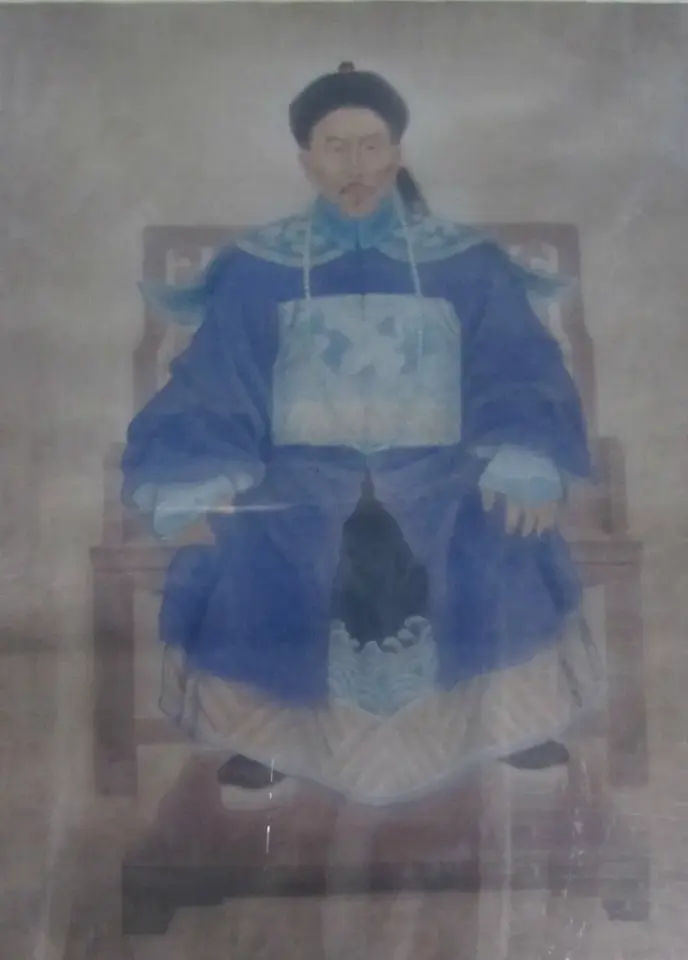
彭玉麟
Peng Yulin (彭玉麟, January 30, 1817 – April 24, 1890), courtesy name Xueqin (雪琴), art name Master Tuisheng'an (退省庵主人) and Yinxiang Waishi (吟香外史), posthumously honored as Gangzhi (刚直), was a native of Hengyang County, Hunan (modern Zhajiang Town, Hengyang County), born in Anqing Prefecture, Anhui. He was a prominent military commander, statesman, and artist of the late Qing dynasty, renowned as the creator and supreme…
Peng Yulin (彭玉麟, January 30, 1817 – April 24, 1890), courtesy name Xueqin (雪琴), art name Master Tuisheng'an (退省庵主人) and Yinxiang Waishi (吟香外史), posthumously honored as Gangzhi (刚直), was a native of Hengyang County, Hunan (modern Zhajiang Town, Hengyang County), born in Anqing Prefecture, Anhui. He was a prominent military commander, statesman, and artist of the late Qing dynasty, renowned as the creator and supreme commander of the Xiang Army Naval Fleet and celebrated alongside Zeng Guofan, Zuo Zongtang, and Hu Linyi as one of the "Four Eminent Statesmen of the Tongzhi Restoration." Accompanying his father to official postings in Anqing during his youth, Peng developed an unbending sense of personal integrity and martial skill. Following his father's death, he escorted the casket back to Hengyang, working in a local pawnshop while continuing classical studies. In 1850, he served under Li Xubin in quelling regional banditry in Xinning. In 1853 (the 3rd year of the Xianfeng era), when Zeng Guofan established the Xiang Army in Hunan, he recognized Peng's strategic naval acumen and invited him to organize an inland river force. Accepting the challenge, Peng constructed China's first modern regular riverine navy from scratch. Over a decade of fighting along the Yangtze River (1854–1864), Peng led his naval squadrons through critical victories at Xiangtan, Yuezhou, Wuchang, Hukou, Tianjiazhen, and Lake Poyang, seizing total command of the Yangtze waterways and paving the way for the conquest of Nanjing (Tianjing), the Taiping capital. Following the fall of Tianjing, Peng repeatedly declined high-ranking governorships, including Viceroy of Liangjiang and Governor of Anhui, insisting on accepting only the post of Inspector-General of the Yangtze River Fleet. Traveling incognito for decades, he investigated corruption, court-martialed abusive officers, and defended the common people, earning the affectionate moniker "Blue Sky Peng." In 1883 (the 9th year of the Guangxu era), as the Sino-French War escalated, the elderly Peng was appointed Minister of War, rushing to Guangdong to oversee southern coastal defense. He fortified the Humen forts to block French warships and recommended the appointment of veteran general Feng Zicai, which culminated in the historic Chinese victories at the Battle of Zhennan Pass and Lang Son. Retiring to Hengyang and Hangzhou, he spent his remaining years painting ink plum blossoms. He died on April 24, 1890, at seventy-four, and was posthumously granted the title Grand Preceptor to the Crown Prince, enshrined in the Temple of the Worthy, and honored as Gangzhi.
Born on January 30 in Anqing, Anhui; studied classical texts and equestrian archery under strict parental guidance.
Father died in office; escorted his mother and younger siblings back to Hengyang, living in humble rural labor.
Enlisted under Li Xubin to quell Li Yuanfa's uprising in Xinning, earning appointment as assistant district magistrate.
Joined Zeng Guofan in Hengyang, designing standardized warships and establishing the Xiang Army Naval Fleet.
Directed naval operations at Xiangtan, winning ten consecutive engagements to break the Taiping assault on Changsha.
Fought against Taiping general Shi Dakai at Hukou and Lake Poyang, reorganizing broken units to regain naval dominance.
Swept down the Yangtze River with dragon-warships, lifting the siege of Yuhuatai and besieging Nanjing's water approaches.
Breached Nanjing through coordinated naval and land attacks; declined governorships while rewarded with top imperial honors.
Served as Inspector-General of Yangtze Naval Forces; traveled incognito to purge corrupt officials, hailed as "Blue Sky Peng."
Appointed Minister of War; directed Guangdong coastal defenses and backed Feng Zicai to win the Battle of Zhennan Pass.
Died at his residence on April 24 at seventy-four; posthumously granted Grand Preceptor to the Crown Prince, honored as Gangzhi.
Peng Yulin was born in Anqing, Anhui, into a family with a tradition of military service. His father, Peng Xianrong, served as a sub-prefectural magistrate in Huaining. From early youth, Peng demonstrated sharp intellect, reading classical literature while developing formidable prowess in equestrian archery, distinguished by an uncompromising sense of justice.
In 1832 (the 12th year of the Daoguang era), his father died in office when Peng was only sixteen. Confronted with family disputes over inheritance, Peng escorted his grieving mother and younger siblings back to their ancestral home in Zhajiang, Hengyang. To sustain the impoverished household, Peng worked as a clerk in a local pawnshop, experiencing firsthand the hardships of common life while studying by lamplight late into the night.
In 1850 (the 30th year of the Daoguang era), the Li Yuanfa rebellion erupted in Xinning, threatening Hengzhou. Answering a call for volunteers, Peng enlisted under early Xiang Army commander Li Xubin. On the battlefield, Peng spearheaded charges into rebel ranks, decapitating several rebel chieftains in person. For his courage, he was awarded an imperial title, but he promptly resigned and returned home to continue his studies.
In 1853 (the 3rd year of the Xianfeng era), the Taiping armies surged eastward along the Yangtze River, seizing Wuchang and Nanjing (Tianjing) and establishing absolute naval supremacy along the river. The Xianfeng Emperor instructed Zeng Guofan, then in mourning in Hunan, to organize provincial militia. Recognizing that the Yangtze was the logistical jugular of southern China, Zeng realized that defeating the rebellion required a dedicated inland river fleet, and identified Peng as the ideal naval commander.
Zeng traveled in person to Hengyang to recruit Peng. Moved by Zeng's sincerity, Peng took command. Partnering with Yang Zaifu (Yang Yuebin), Peng established shipyards at Hengyang. Consulting seasoned fishermen and shipwrights, he engineered three classes of agile river warships: the "Long Dragon," the "Fast Crab," and the "Towing Junk." Mounting Western cannon and wall guns on their prows, he established the first standardized modern inland naval fleet in Chinese history.
In April 1854 (the 4th year of the Xianfeng era), the Taiping western expeditionary force besieged Xiangtan, endangering the provincial capital of Changsha. Zeng ordered Peng to advance with the newly organized navy. Leading over a hundred warships downriver, Peng executed combined fire attacks and flanking bombardments, winning ten successive battles, sinking hundreds of rebel vessels, and killing over ten thousand enemy troops. The Battle of Xiangtan was the first decisive strategic victory won by the Xiang Army, turning the tide of the war and establishing Peng's fame.
Following Xiangtan, Peng swept down the river to liberate Yuezhou, Wuchang, and Hanyang. However, in January 1855 at the Battle of Hukou in Jiangxi, Taiping general Shi Dakai closed the lake gates, trapping Xiang Army vessels inside Lake Poyang and burning Zeng Guofan's flagship, driving Zeng to attempt suicide by drowning. Peng maintained absolute composure, escorted Zeng through the enemy blockade, rallied scattered units inside Lake Poyang, and sustained naval operations for an entire year until regaining full water control.
Between 1857 and 1862, Peng's naval forces spearheaded the capture of strategic gateways at Hukou, Jiujiang, and Anqing. During the Battle of Anqing, Peng coordinated land and water assaults, cutting off all Taiping supply lines and annihilating the defending garrison.
In 1863, when Taiping commander Li Xiucheng mounted a massive counter-offensive against the Xiang Army camps at Yuhuatai outside Nanjing, Peng led hundreds of warships into the river center, launching relentless artillery bombardments against Taiping river crossings and isolating the besieged city. In July 1864, the Xiang Army breached the walls of Nanjing, extinguishing the Taiping state. For his supreme contributions, Peng was awarded the title Grand Guardian of the Crown Prince and ennobled as Senior Officer of the Light Chariot of the First Class.
Following the fall of Tianjing, the Qing court offered Peng lucrative provincial governorships, including Viceroy of Liangjiang and Governor of Anhui. However, Peng strictly refused high office and personal wealth, declaring: "Throughout my life, I have sought neither office nor silver." He petitioned the throne to serve solely as Inspector-General of the Yangtze River Fleet.
For over a decade during the Tongzhi and Guangxu reigns, Peng patrolled thousands of miles along the Yangtze across seven provinces. Dispensing with official yachts, he traveled incognito dressed in peasant attire and wearing a straw hat, inspecting outposts and listening to common citizens. Whenever he discovered corrupt officials or abusive military commanders, Peng opened immediate court sessions and executed offenders without hesitation. When Li Xianghe, a decorated officer under Zeng Guoquan, forcibly seized local women and terrorized civilians, local magistrates dared not intervene; upon learning of the crime, Peng arrested and executed him on the spot, creating a nationwide sensation. Grateful civilians honored his uncompromising justice with the title "Blue Sky Peng."
In 1883 (the 9th year of the Guangxu era), the Sino-French War erupted as French naval forces threatened the southern maritime frontier and northern Vietnam. Despite his advanced age of sixty-seven and recurring pulmonary hemorrhages, Peng accepted appointment as Minister of War, hurrying to Guangzhou to direct southern coastal defense.
Arriving in Guangdong, Peng reinforced defense installations with iron resolution. Stationed at the Humen forts, he fortified batteries at Shajiao and Dajiao, strung iron chains across the Pearl River estuary, and laid submarine mines, blocking French warships from advancing on Guangzhou. On the frontier battlefields of Guangxi and Vietnam, Peng fiercely opposed appeasement factions and championed the recall of veteran general Feng Zicai. Backed by Peng's tireless logistics, Feng shattered elite French infantry at the Battle of Zhennan Pass and recaptured Lang Son in early 1885, securing a historic land victory against Western colonial forces.
Following the Sino-French War, exhausted by decades of public service, Peng retired to his Tuisheng'an hermitage in Hengyang, donating his accumulated lifetime stipends and estates to ancestral charitable trusts to assist impoverished kinsmen. He passed away on April 24, 1890, at seventy-four. The Qing court suspended audiences, posthumously granted him Grand Preceptor to the Crown Prince, awarded the posthumous name Gangzhi, and enshrined him in the Temple of the Worthy and the Imperial Shrine of Loyalty.
In 1853, Peng and Zeng Guofan created the Xiang Army Navy in Hengyang, designing standardized Long Dragon and Fast Crab warships equipped with Western artillery, building China's first modern regular riverine fleet that secured absolute dominance over the Yangtze basin.
At the Battle of Xiangtan in 1854, Peng directed the novice navy in fierce offensive operations, executing fire attacks and envelopment tactics that won ten consecutive engagements and destroyed over ten thousand Taiping shock troops, reversing the tide of the rebellion.
Over a decade of river warfare, Peng recaptured major fortresses from Yuezhou to Nanjing. Following the war, he authored the Regulations for the Yangtze River Naval Fleet, establishing regular naval inspectorates, patrol stations, and dockyard standards that governed Qing riverine defense for decades.
As Inspector-General of the Yangtze Fleet, Peng steadfastly refused bribes, declined lucrative governorships, and traveled incognito to purge extortionate magistrates and corrupt officers, embodying the highest Confucian ideal of incorruptible moral governance.
During the Sino-French War of 1883–1885, Peng assumed direct command over southern coastal defenses at Humen, while mobilizing munitions and securing the appointment of veteran general Feng Zicai, which enabled the historic Chinese triumph at the Battle of Zhennan Pass and the recapture of Lang Son.
FIGURES ASSOCIATED WITH THIS DYNASTY