Attendant to Phags-pa
Entered the service of Imperial Preceptor Phags-pa in Dokhams and Sakya as wardrobe attendant (sugurchi) and took religious vows under Dam-pa Kun-dga'.
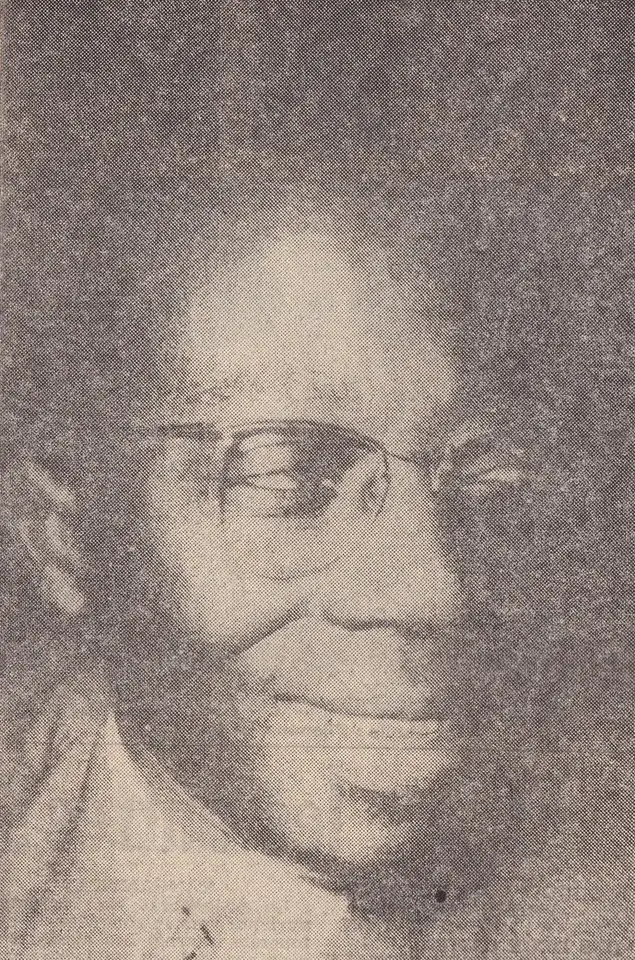
桑哥
Sangha (桑哥, birth year unrecorded in historical sources – August 17, 1291), a native of Dokhams and a lay disciple of the Tibetan Buddhist master Dam-pa Kun-dga', began his career as a wardrobe attendant (sugurchi) in the household of the Imperial Preceptor Phags-pa and was fluent in Tibetan, Mongolian, Uyghur, and Chinese. Recommended to Kublai Khan (Emperor Shizu of Yuan) by Phags-pa, he rose to Commissioner of the Bureau…
Sangha (桑哥, birth year unrecorded in historical sources – August 17, 1291), a native of Dokhams and a lay disciple of the Tibetan Buddhist master Dam-pa Kun-dga', began his career as a wardrobe attendant (sugurchi) in the household of the Imperial Preceptor Phags-pa and was fluent in Tibetan, Mongolian, Uyghur, and Chinese. Recommended to Kublai Khan (Emperor Shizu of Yuan) by Phags-pa, he rose to Commissioner of the Bureau of General Regulation (Zongzhiyuan) overseeing Buddhist affairs and Tibet; in 1280–1281 he led an imperial army into Ü-Tsang to crush the rebellion of the former ponchen Kun-dga' bzang-po following Phags-pa's death, establishing garrisons and postal stations across Tibet. Winning Kublai Khan's favor through his financial acumen and the praise of the Southern Song scholar Ye Li, he was appointed Manager of Governmental Affairs of the restored Department of State Affairs (Shangshusheng) in the intercalary second month of 1287 and Right Chief Councillor in the eleventh month—concurrently heading the renamed Bureau of Buddhist and Tibetan Affairs (Xuanzhengyuan) from 1288. During his four years in power, he stabilized the currency by issuing "Zhiyuan Treasure Notes" (Zhiyuan Baochao), established the Maritime Trade Bureau and maritime transport myriarchies at Shanghai and Fuzhou, taxed excess lands held by keshig imperial guards, and curbed lavish grants to imperial princes. However, to cover massive state deficits, he created the Directorate of Fiscal Recovery (Zhenglisi) to conduct ruthless nationwide fiscal audits (goukao), engineered the execution of Central Secretariat ministers Yang Jukuan and Guo You, drove over five hundred people to suicide in Jiangnan through extortionate tax collection, sold offices openly for bribes, and beat or imprisoned censors such as Cheng Jufu and Chen Tianxiang. Impeached in the first month of 1291 by Cheli, Bukhumu, and Öchicher, he was stripped of office, had his vast fortune confiscated, and was executed in the seventh month of 1291.
Entered the service of Imperial Preceptor Phags-pa in Dokhams and Sakya as wardrobe attendant (sugurchi) and took religious vows under Dam-pa Kun-dga'.
Accompanied Phags-pa to Daidu to present the Phags-pa script; retained by Kublai Khan for his linguistic and administrative skill and appointed to the Bureau of General Regulation (Zongzhiyuan).
Arrested by the Censorate for building a Buddhist hall beside the Imperial Preceptor's residence in Daidu, and released upon Phags-pa's intercession with Kublai Khan.
Following the death of Phags-pa and unrest in Ü-Tsang, was commissioned as Zongzhiyuan Commissioner to lead an imperial army into Tibet.
Captured the rebel strongholds at Kangmar and Gyantse, executed the former ponchen Kun-dga' bzang-po, restored temples at Sakya, and reorganized Tibetan military garrisons and postal stations.
Recommended the fiscal official Lu Shirong as Right Vice Councillor; the following year brawled with Grand Minister Over the Masses Qoridai over purchasing government oil for profit, impressing Kublai Khan.
Appointed Manager of Governmental Affairs of the restored Department of State Affairs in the intercalary second month and issued Zhiyuan paper currency; executed Central Secretariat ministers Yang Jukuan and Guo You in the tenth month; promoted to Right Chief Councillor in the eleventh month.
Renamed the Zongzhiyuan the Xuanzhengyuan; taxed keshig lands exceeding four qing in the fourth month; established the Directorate of Fiscal Recovery in the ninth month and sent twelve audit commissioners to six provinces in the tenth month.
Had Hanlin Academician Yan Fu compose the Stele of the Princely Duke's Assistance in Governance erected before the Department of State Affairs, monopolizing official appointments and selling offices for bribes.
Impeached at Liulin in the first month by Cheli, Bukhumu, and Öchicher; had his estate confiscated in the second month, his merit stele toppled in the third month, and was executed on August 17 (22nd day of the 7th month).
Sangha was a native of Dokhams on the Sino-Tibetan frontier. In his youth he received Buddhist precepts from the renowned Tibetan master Dam-pa Kun-dga' and entered the personal retinue of the first Yuan Imperial Preceptor, Phags-pa. According to the Tibetan chronicle Rgya-bod Yig-tshang (Chinese and Tibetan Historical Records), when Phags-pa returned to Sakya and established his bla-brang (household administration) modeled on the Mongol keshig guard system with thirteen categories of attendants, the erudite and multilingual Sangha was appointed wardrobe attendant (gzim-dpon / sugurchi) and was frequently sent to report to Kublai Khan. In 1269 (6th year of the Zhiyuan era), Sangha accompanied Phags-pa, Dam-pa, and the thirteen attendants back to Daidu when Phags-pa presented the newly devised Mongol state script. Impressed by Sangha's fluency in multiple languages and sharp wit, Kublai Khan retained him at court and appointed him to the Bureau of General Regulation (Zongzhiyuan), which administered nationwide Buddhist affairs and Tibetan civil-military governance. In 1274 (11th year of the Zhiyuan era), when the Censorate imprisoned Sangha for constructing a private Buddhist shrine beside Phags-pa's residence ("Flower Garden") in Daidu, Phags-pa interceded for him while watching a musical performance with the emperor, securing his release and subsequent promotion to Commissioner of the Zongzhiyuan.
After Phags-pa died at Sakya in late 1280 (17th year of the Zhiyuan era) amidst reports that he had been poisoned by the former Sakya administrator (ponchen) Kun-dga' bzang-po, Kublai Khan ordered Zongzhiyuan Commissioner Sangha to lead a large army into Ü-Tsang. In 1281 (18th year of the Zhiyuan era), Sangha stormed the rebel fortresses in modern Kangmar and Gyantse counties, captured and executed Kun-dga' bzang-po, built the Chinese-gatewayed temple at Sakya, stationed elite garrisons at strategic passes, and reorganized the Tibetan postal relay system (jam), requiring local myriarchies to supply horses, rations, and tents under military supervision.
As Kublai Khan's foreign campaigns against Japan, Champa, Annam, and Burma and lavish patronage of princes and monasteries drained the imperial treasury—leaving an annual deficit exceeding one million ingots—Sangha gained increasing influence as a financial expert. In 1284 (21st year of the Zhiyuan era) he recommended Lu Shirong as Right Vice Councillor; in 1285 he petitioned to demolish the Southern Song imperial mausoleum of Emperor Ningzong and the southern suburban altar in Hangzhou to build Buddhist temples. When the Central Secretariat commissioned a Chinese merchant to buy lamp oil for Buddhist rites, Sangha demanded the funds to purchase the oil himself so as to generate interest for the state and monasteries, coming to blows with Grand Minister Over the Masses Qoridai and delivering a handsome profit on 10,000 catties of oil that delighted Kublai Khan.
In the seventh month of 1286 (23rd year of the Zhiyuan era), Kublai Khan ordered Sangha to submit a list of candidates for chief ministers of the Central Secretariat, and when the Southern Song scholar Ye Li praised Sangha's administrative talent at audience, the emperor resolved to entrust the government to him. In the intercalary second month of 1287 (24th year of the Zhiyuan era), despite the objections of Right Chief Councillor Antong, Kublai Khan re-established the Department of State Affairs (Shangshusheng) with Sangha as Manager of Governmental Affairs, subordinating the Six Ministries and all branch secretariats to the new department; in the eleventh month, Sangha was promoted to Right Chief Councillor of the Department of State Affairs while retaining headship of the Zongzhiyuan. In 1288 (25th year of the Zhiyuan era), at Sangha's request, the Zongzhiyuan was renamed the Bureau of Buddhist and Tibetan Affairs (Xuanzhengyuan, rank 1b), placing supreme civil, fiscal, personnel, and religious authority in Sangha's hands.
Upon assuming power, Sangha enacted far-reaching fiscal and institutional measures. In the third month of 1287, he overhauled the currency system by issuing "Zhiyuan Treasure Notes" (Zhiyuan Baochao) valued at five strings of depreciated Zhongtong notes to one string of Zhiyuan notes, restoring monetary stability for the remainder of the dynasty. To secure grain supplies for Daidu, he established the Maritime Trade Bureau (Xing Quanfusi) and created two new maritime transport myriarchies at Shanghai and Fuzhou. He also sharply raised indirect taxes across the empire—increasing the salt monopoly tax from 30 to 50 strings per voucher, doubling the tea tax from 5 to 10 strings, raising wine, vinegar, and commercial taxes by hundreds of thousands of ingots in Jiangnan and North China, and requiring 180,000 auxiliary households (xiejihu) to pay full rather than half taxes.
Relying on Kublai Khan's backing, Sangha also dared to curtail the fiscal privileges of the Mongol nobility and keshig imperial guards. In the fourth month of 1288, noting that keshig guards occupied vast tracts of farmland around the capital without paying land tax, he secured an imperial decree taxing all keshig landholdings in excess of four qing on the same basis as military and postal households. In the twelfth month, targeting appanage princes who constantly pleaded poverty to solicit imperial grants, Sangha memorialized: "Wealth does not fall from Heaven or spring from the earth; it is all taken from the people. If expenditures are not carefully controlled, state finances will run dry!" Kublai Khan authorized Sangha to strike out improper grant requests directly. Sangha further recalled the seal of the Princely Administration of Anxi, abolished the duplicate title of Prince of Qin held by Ananda's brother, and downgraded the imperial seal usurped by the eastern prince Shengnakha'er to a standard princely seal, earning the deep enmity of the Mongol aristocracy.
To wipe out the state deficit, Sangha launched a ruthless campaign of fiscal audits (goukao or lisuan) across central and provincial treasuries. Starting with the Central Secretariat in 1287, he uncovered arrears of 4,770 ingots and 1,345 ingots of worn notes. Harboring a grudge against Central Secretariat Participators in Determining Governmental Matters Yang Jukuan and Guo You—who had previously blocked or recorded his irregular personnel patronage—Sangha had guards beat Yang Jukuan in the face and humiliate Guo You during interrogation, securing the execution of both ministers in the tenth month of 1287. When Censorate clerk Wang Liangbi remarked privately that the Department of State Affairs would one day be audited and executed just as easily, Sangha arrested and executed him for "slandering the administration of the Department of State Affairs."
In the ninth month of 1288, Sangha established the Directorate of Fiscal Recovery (Zhenglisi, rank 3a) and in the tenth month dispatched twelve audit commissioners—including Xindu and Minister of Revenue Wang Juji—armed with special seals and military escorts to audit tax arrears across the six provinces of Jianghuai, Jiangxi, Fujian, Sichuan, Gansu, and Anxi, while entrusting Huguang to his brother-in-law and partisan Yaoshumu. Eager to extract surpluses, the commissioners shifted decades of uncollectible deficits onto ordinary civilians. In Jiangnan, particularly around Yangzhou and Hangzhou, bailiffs arrested debtors' relatives when the original taxpayers had died or fled, and forced neighbors to pay when relatives were ruined; prisons overflowed, families sold their wives and daughters to pay assessments, over five hundred people were driven to suicide, and hundreds of local rebellions broke out across southern China. By late 1289, with tens of millions of strings still uncollectible from ruined households, even Sangha had to admit that the audit system could no longer be sustained.
To silence criticism, Sangha crippled the Censorate by requiring investigating censors to audit and sign every page of Department of State Affairs ledgers so they could be flogged for any clerical oversight, beating four censors and reducing the Censorate to clerical drudgery. When Southern Censorate Attending Censor Cheng Jufu submitted a memorial condemning Sangha for "making the fleecing of the living people his sole task," Sangha detained him in Daidu and six times requested his execution along with Censorate Secretary Wang Yue, which Kublai Khan refused. Vice Censor-in-Chief Chen Tianxiang, who impeached Sangha's brother-in-law Yaoshumu in Huguang, was imprisoned by Sangha for over four hundred days on fabricated charges of treason; Investigating Censor Zhou Zuo, who impeached corrupt officials in Jianghuai, was framed and banished to northern Mongolia with his family and property confiscated. In late 1288, Sangha arranged for Daidu residents to petition for a monument in his honor—the Stele of the Princely Duke's Assistance in Governance, composed by Yan Fu—was granted an escort of a hundred keshig guards and the privilege of riding a palanquin, and transferred all imperial appointment edicts from the Central Secretariat to the Department of State Affairs. Selling offices and pardons openly for massive bribes, he packed provincial posts with relatives and bribers—such as Yaoshumu, his brother-in-law Baji, his younger brother Damaladas, Zhang Yong, Umar, Nasir al-Din, and Xindu—sheltered wealthy Daidu households from corvée at the expense of the poor, and accepted chests of pearls and gold from Muslim officials to persuade Kublai Khan to repeal the ban on halal sheep slaughtering.
In the first month of 1291 (28th year of the Zhiyuan era), while Kublai Khan was hunting at Liulin south of Daidu without Sangha, the keshig official Cheli (Director of the Directorate of Utilization), Yelü Shenban, and Vice Censor-in-Chief Esen Temür denounced Sangha's crimes before the emperor. When Kublai Khan angrily ordered guards to strike Cheli across the face until blood poured from his mouth and nose, Cheli continued to indict Sangha from the ground; summoned for questioning, Bukhumu and keshig commander Öchicher corroborated every charge. Awakening to the truth, Kublai Khan dismissed Sangha from office on the twenty-third day of the first month and handed him over to Censor-in-Chief Üsh Temür for trial. On the twenty-fifth day of the second month, Cheli led three hundred keshig guards to confiscate Sangha's estate, uncovering gold, silver, and two chests of pearls equivalent to half the imperial treasury, along with three seamless robes woven by Chinese artisans. In the third month, the emperor ordered Sangha's merit stele pulled down and executed Yaoshumu; in the fifth month, the Department of State Affairs and Directorate of Fiscal Recovery were abolished; and on August 17, 1291 (22nd day of the 7th month), Sangha was executed.
Despite his notoriety in the Biographies of Treacherous Ministers, Sangha left three lasting institutional achievements: first, after leading the 1280–1281 campaign that pacified Ü-Tsang and reorganized Tibetan postal stations, he transformed the Zongzhiyuan into the Bureau of Buddhist and Tibetan Affairs (Xuanzhengyuan) in 1288, cementing central administrative jurisdiction over Tibet; second, his 1287 monetary reform introducing "Zhiyuan Treasure Notes" at a 1:5 ratio to Zhongtong notes halted runaway inflation and anchored the Yuan currency system for decades; third, his creation of the Maritime Trade Bureau and the Shanghai and Fuzhou maritime myriarchies institutionalized seaborne grain transport from Jiangnan to Daidu.
Tasked with financing Kublai Khan's costly wars and court expenditures, Sangha combined bold taxation of keshig lands and princely grants with the predatory nationwide audits of the Directorate of Fiscal Recovery (Zhenglisi), the execution of Central Secretariat ministers Yang Jukuan and Guo You, the crippling of the Censorate, and rampant sale of offices. While temporarily covering a million-ingot annual deficit, his exactions drove hundreds of civilians to suicide and sparked widespread rebellions across Jiangnan, compelling Kublai Khan to execute him to restore political stability.
FIGURES ASSOCIATED WITH THIS DYNASTY