Manuscript Acquisition and Bereavement
Zhuang Tinglong purchased Zhu Guozhen's unprinted late Ming history draft and enlisted scholars to supplement it before dying of illness.
· HISTORICAL EVENT
庄氏史案
The Zhuang Family Literary Inquisition was a catastrophic early Qing literary purge centered in Huzhou, Zhejiang. Zhuang Tinglong, the sight-impaired scion of a wealthy merchant family, acquired an unprinted draft of Ming dynastic history written by former grand secretary Zhu Guozhen. Seeking literary renown, Zhuang sponsored local scholars to complete the manuscript through the late Ming and Southern Ming eras, publishing it as Ming History Compendium.…
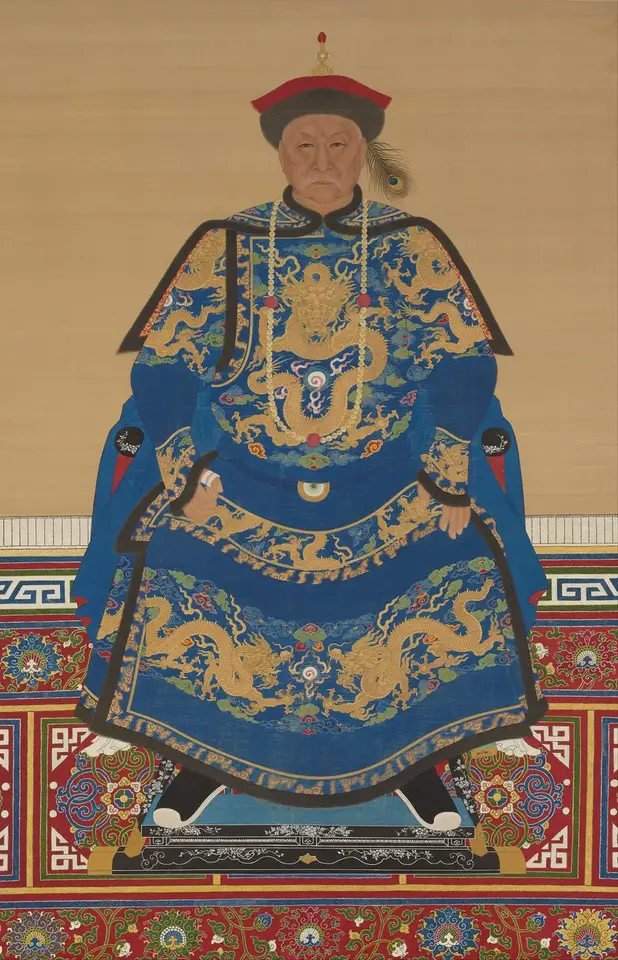
The Zhuang Family Literary Inquisition was a catastrophic early Qing literary purge centered in Huzhou, Zhejiang. Zhuang Tinglong, the sight-impaired scion of a wealthy merchant family, acquired an unprinted draft of Ming dynastic history written by former grand secretary Zhu Guozhen. Seeking literary renown, Zhuang sponsored local scholars to complete the manuscript through the late Ming and Southern Ming eras, publishing it as Ming History Compendium. The book preserved Ming dynastic legitimacy, referred to Qing founder Nurhaci by his former Ming military title, condemned Ming turncoats, and adhered to Southern Ming reign titles, directly infringing on early Qing political taboos. In 1661, dismissed former magistrate Wu Zhirong reported the publication to the capital after failed blackmail attempts. Under the regency of Oboi, the Qing court seized the case to intimidate Jiangnan gentry circles. In 1663, the imperial authorities concluded the case as high treason. Zhuang Tinglong's corpse was exhumed and desecrated, while over seventy prominent scholars, collators, calligraphers, and publishers—including Pan Chengzhang, Wu Yan, and Li Lingxi—were tortured and executed. Hundreds of relatives were exiled to Ningguta. The massacre dealt a devastating blow to Jiangnan scholarly independence and inaugurated decades of harsh imperial censorship.
Zhuang Tinglong purchased Zhu Guozhen's unprinted late Ming history draft and enlisted scholars to supplement it before dying of illness.
Zhuang's father Zhuang Yuncheng funded the printing of the Ming History Compendium, featuring Li Lingxi's preface and listing eighteen Jiangnan scholars.
Dismissed magistrate Wu Zhirong attempted to extort the Zhuang family; rebuffed, he denounced them locally, while officials accepted bribes to alter the printing blocks.
Wu Zhirong purchased an unedited first-edition copy and accused the family of high treason before the regents in Beijing; Oboi dispatched Vice Minister of Justice Luoduo to investigate.
The Ministry of Justice arrested literati and gentry across Jiangnan; Zhuang Yuncheng died under torture in prison, and Zhu Youming's family was imprisoned.
The court issued its final verdict; Zhuang Tinglong's corpse was exhumed and burned, Pan Chengzhang, Wu Yan, and twelve others suffered death by slow slicing, and over seventy people were executed.
Hundreds of female relatives and family members were exiled to the frontier at Ningguta, while Huzhou Prefect Chen Yongming's corpse was beheaded and local magistrates were hanged.
Zha Jizuo and Lu Qi were pardoned due to their prior self-reports, whereas informant Wu Zhirong was promoted and awarded half of the confiscated estates.
During the late Ming Tianqi era, Grand Secretary Zhu Guozhen compiled a massive historical chronicle titled General Historical Outline, which contained extensive biographical treatises on Ming sovereigns and ministers. Following the Ming-Qing transition and Zhu's death, his impoverished descendants sold the unpublished woodblock drafts of late Ming biographies to Zhuang Yuncheng, a wealthy silk magnate residing in Nanxun, Huzhou.
Zhuang Yuncheng's eldest son, Zhuang Tinglong, had lost his eyesight due to illness in his youth. Emulating the ancient blind historian Zuo Qiuming, Zhuang Tinglong aspired to achieve immortal literary fame by compiling a comprehensive history of the Ming dynasty. Because Zhu Guozhen's draft concluded prior to the Tianqi and Chongzhen eras, Zhuang recruited prominent local literati, including Mao Yuanming and Wu Zhiming, to collect court gazettes and private memoirs, expanding the narrative through the fall of Beijing and Southern Ming resistance regimes into a massive hundred-volume work titled Ming History Compendium.
Compiled shortly after the Manchu conquest, the Ming History Compendium deeply reflected the loyalist and orthodox sentiments of the Jiangnan scholar-gentry class. The book adhered strictly to Ming terminology: it recorded early Qing progenitor Nurhaci as a former Ming regional commander (Dudu) of Jianzhou, labeled early Manchu forces as border tribes, eulogized anti-Qing martyrs such as Shi Kefa and Yuan Chonghuan, and denounced turncoat generals like Wu Sangui and Geng Jingshong as treacherous rebels. Furthermore, the text employed the reign titles of Southern Ming monarchs Hongguang, Longwu, and Yongli while refusing to adopt Qing imperial calendars, constituting severe political heresy under Qing rule.
Before the commercial printing was fully completed, Zhuang Tinglong passed away from illness in 1660. His grief-stricken father, Zhuang Yuncheng, oversaw the printing and distribution to fulfill his son's final wishes. To lend scholarly prestige to the publication, the Zhuang family solicited a preface from Li Lingxi, a former vice director in the Ministry of Rites, and placed the names of notable Jiangnan intellectuals, including Pan Chengzhang, Wu Yan, and Zha Jizuo, onto the editorial roster without the explicit consent of all listed parties. The book circulated widely among literary circles in Jiangnan, quickly drawing official and public attention.
Wu Zhirong, a native of Guian who had been dismissed from his post as magistrate of Guian County for embezzlement, was desperately seeking funds to pay his arrears and restore his official standing. Hearing rumors about political transgressions within the Ming History Compendium, Wu procured a copy and approached Zhuang Yuncheng to extort thousands of silver taels. Although Zhuang Yuncheng paid an initial bribe and rushed to chisel out sensitive passages from the printing woodblocks to reissue an altered second edition, Wu Zhirong remained dissatisfied with the payoff.
Recognizing the explosive nature of the original edition, Wu Zhirong secretly traveled to Hangzhou to lodge accusations with the provincial authorities. When local officials, bribed by the Zhuang family, dismissed the charges, Wu traveled north to Beijing in the winter of 1661. Leveraging patronage connections, he delivered the original unexpurgated copy directly to Oboi and the Ministry of Justice, framing the book as an organized Jiangnan conspiracy against the Qing state.
The denunciation arrived at a precarious political moment: the Shunzhi Emperor had died in early 1661, leaving the eight-year-old Kangxi Emperor on the throne under four regents headed by Sonin and Oboi. Determined to establish unquestioned authority and eradicate anti-Qing dissent in the wealthy southern provinces, Oboi ordered an iron-fisted investigation and dispatched imperial commissioners alongside the Ministry of Justice to Zhejiang.
In the spring of 1662, Qing troops and investigators descended upon Huzhou and Hangzhou, arresting over a hundred scholars, printers, and officials connected to the publication. Zhuang Yuncheng was taken into custody and died of harsh treatment in Beijing's prison before trial. Scholars such as Pan Chengzhang and Wu Yan, who were celebrated historians of Ming affairs, were dragged from their homes and subjected to severe interrogations. Even minor bookbinders, itinerant booksellers, and local gentry whose names had merely appeared on the book's promotional list were apprehended indiscriminately.
In May 1663 (Kangxi 2), the Ministry of Justice delivered its final verdict, which received immediate regency ratification. Because Zhuang Tinglong had already died, the court ordered his grave opened: his corpse was disinterred, mutilated, and incinerated in public. His younger brother Zhuang Tingyue, who was blinded by torture, was executed by slow slicing along with Li Lingxi and several key contributors.
Pan Chengzhang, Wu Yan, and over thirty other scholars and family members were beheaded or strangled. The entire immediate male lineage of the Zhuang family above the age of sixteen was condemned to death. In total, more than seventy individuals were executed. Female relatives and children under sixteen, numbering several hundred, were confiscated as imperial bondservants and exiled into perpetual servitude in the frigid wilderness of Ningguta.
The purges also swept through the provincial bureaucracy. High officials who had attempted to shelter the Zhuang family or had accepted bribes to overlook initial complaints faced severe retribution. Former Zhejiang governor Zhu Changzuo, Hangzhou garrison general Song Kui, Huzhou prefect Rong Zhao, and Guian magistrate Hu Fuzeng were either executed or forced to commit suicide for negligence and bribery. In contrast, the informant Wu Zhirong was rewarded with half of the confiscated Zhuang family fortune and reinstated as an official.
The Zhuang Family Literary Inquisition virtually obliterated a whole generation of elite historians and poets in northern Zhejiang and southern Jiangsu. The deaths of towering scholars like Pan Chengzhang and Wu Yan abruptly halted grassroots private compilations of Ming history. Jiangnan intellectual society was paralyzed with terror; families possessing unofficial Ming histories, private memoirs, or Southern Ming writings hastily cast their collections into flames to avoid suspicion.
The draconian sentences signaled the Qing court's zero-tolerance policy toward Han intellectual dissent and historical revisionism. Private historical scholarship was officially outlawed, cementing an imperial monopoly over the interpretation of past dynasties. Confronted with the terror of literary inquisitions, the Qing literati class progressively abandoned politically engaged statecraft and contemporary history, retreating into politically sterile evidential research, philology, and phonology during the subsequent Qianlong-Jiaqing era.
Traditional and modern historians regard the Zhuang Family Literary Inquisition as a defining milestone in the establishment of Qing cultural autocracy. Gu Yanwu, who narrowly escaped implication through the warning of friends, wept bitterly for his executed colleagues Pan Chengzhang and Wu Yan, writing moving memorial poems mourning the destruction of Jiangnan's finest intellects.
Later Qing historians and Republican scholars such as Liang Qichao emphasized that the Zhuang case demonstrated the deep anxieties of early Manchu rulers concerning their dynastic legitimacy. By using extreme judicial brutality to suppress private historical records, the imperial court succeeded in enforcing external political obedience, but at the immense cost of stifling creative historical inquiry and estranging generations of Chinese scholars from public affairs.