Succession and Gaoping Confrontation
Chai Rong succeeds Guo Wei as Emperor Shizong; swiftly mobilizes against the Northern Han-Khitan invasion, securing a decisive victory at the Battle of Gaoping.
Later Zhou Dynasty (后周) · HISTORICAL EVENT
周世宗改革
The Reforms of Emperor Shizong of Later Zhou (周世宗改革) represent an epochal series of institutional, fiscal, legal, and military restructuring initiatives executed between 954 and 959 CE by Chai Rong, Emperor Shizong of the Later Zhou Dynasty. Confronting the legacy of half a century of warlord partition, political turbulence, collapsed fiscal authority, and the decay of social morals following the fall of the Tang Dynasty, Emperor Shizong pursued an…
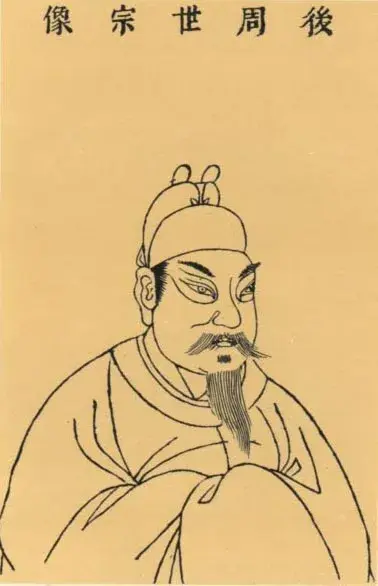
The Reforms of Emperor Shizong of Later Zhou (周世宗改革) represent an epochal series of institutional, fiscal, legal, and military restructuring initiatives executed between 954 and 959 CE by Chai Rong, Emperor Shizong of the Later Zhou Dynasty. Confronting the legacy of half a century of warlord partition, political turbulence, collapsed fiscal authority, and the decay of social morals following the fall of the Tang Dynasty, Emperor Shizong pursued an overarching vision to enrich the state, strengthen the army, and unify All under Heaven. Through unyielding political willpower, he eliminated surplus personnel, purged corrupt officials, instituted meritocratic governance, dismantled entrenched hereditary privileges, and established the authoritative legal compendium Dazhou Xingtong. Equally decisive were Emperor Shizong's military and socioeconomic interventions. Dismayed by the cowardice and insubordination of senior commanders during the initial phase of the Battle of Gaoping, Chai Rong reorganized the imperial armed forces by establishing the Palace Command as an ironclad elite central striking force, actively promoting talented field commanders such as Zhao Kuangyin. Economically, the administration carried out extensive cadastral and fiscal rectifications, surveyed agricultural plots across dozens of prefectures, distributed abandoned farms to displaced tenants, and sponsored large-scale canal engineering to secure grain logistics. Confronting an acute nationwide shortage of currency ("money famine") and monastic economic distortion, Chai Rong carried out the renowned Xiande Buddhist Deregistration, dissolving over thirty thousand unauthorized monasteries, returning hundreds of thousands of monks and unrecorded laborers to productive farming and taxation, and melting thousands of copper statues into sound legal currency known as Zhouyuan Tongbao. These multifaceted reforms restored vitality to the war-torn Central Plains and directly laid the administrative, economic, and strategic foundation for the Pax Song.
Chai Rong succeeds Guo Wei as Emperor Shizong; swiftly mobilizes against the Northern Han-Khitan invasion, securing a decisive victory at the Battle of Gaoping.
Publicly executes Fan Aina and over seventy delinquent officers; appoints Zhao Kuangyin to screen imperial guards and establish the elite Palace Command.
Dispatches Chancellor Li Gu with sixty thousand laborers to stem Yellow River dike breaches in Yunzhou, securing flood control within thirty days.
Issues an imperial decree encouraging tenants and migrants to cultivate fallow lands, securing full private land ownership upon agricultural tenancy.
Decrees the construction of Kaifeng's outer earthen fortifications (luocheng), quadrupling urban space and redesigning civic arterial avenues.
Issues the Xiande Buddhist Deregistration edict, dismantling 30,336 unauthorized monasteries and sequestering bronze idols for public currency casting.
Imperial mints initiate the widespread mintage of high-quality Zhouyuan Tongbao copper coins, restoring commercial liquidity.
Fabricates official Juntian Tu land registers; sends Ai Ying to conduct tax reassessments across Henan; completes major dredging of the Bian and Cai Rivers.
Promulgates the authoritative twelve-volume imperial criminal and administrative code Dazhou Xingtong, restoring institutional jurisprudence.
Commissions Dou Yan and Wang Pu to compile Dazhou Tongli and Dazhou Zhengle, establishing standard state rites and court musical scales.
Following rapid reconquests of the southern border and northern frontier passes, Chai Rong succumbs to sudden illness, leaving a flourishing empire to his young heir.
Since the final collapse of the Tang central authority in 907 CE, the northern Central Plains had endured rapid dynastic turnover and unending warlord rebellions. Provincial military commissioners (jiedushi) exercised unchecked sovereign powers across their territories, levying predatory taxes, executing arbitrary corporal punishments, and manipulating succession crises. Emperors reigned at the whim of the imperial guards, who grew insolent, undisciplined, and habituated to treason. Bureaucratic administration degenerated into venality, legal statutes were ignored in favor of arbitrary martial decrees, and civil institutions suffered widespread decay.
When Chai Rong ascended the throne in the first month of 954 CE upon the passing of Emperor Taizu Guo Wei, Emperor Liu Chong of Northern Han conspired with Khitan cavalry to mount an immediate full-scale invasion of the Later Zhou heartland. At the critical Battle of Gaoping in Shanxi, senior generals Fan Aina and He Hui fled from the frontline with over a thousand mounted guards before the clash peaked, almost bringing the young dynasty to destruction. Although Chai Rong personally led his bodyguards into the fray and won an improbable victory with the assistance of brave younger commanders like Zhao Kuangyin, the catastrophe laid bare the rot within the legacy imperial guards. Shizong realized that without an entirely restructured central army directly loyal to the sovereign and rigorously disciplined, political survival, let alone external pacification, remained an impossibility.
Centuries of warfare and economic breakdown had shattered the central treasury. Agricultural lands lay fallow across the Central Plains, as millions of tenant farmers fled high rents and extra-legal corvée duties. Concurrently, a severe shortage of metallic currency paralyzed domestic trade. Great Buddhist monastic establishments enjoyed extensive tax exemptions, accumulated private agricultural manors, sheltered tens of thousands of able-bodied laborers masquerading as uncertified novices, and absorbed vast amounts of metallic copper by casting oversized religious statues. Private melting of state coinage into bronze mirrors, utensils, and Buddhist idols severely drained liquidity, producing deflationary depression and depriving the state of essential tax revenues and workforce.
Immediately in the wake of the Battle of Gaoping in the fourth month of 954 CE, Emperor Shizong executed Fan Aina, He Hui, and over seventy cowardly officers in public view, establishing uncompromising battlefield discipline. He promptly initiated a comprehensive military screening program, appointing Zhao Kuangyin to scrutinize all imperial troops. Infirm, elderly, and undisciplined soldiers were honorably discharged or reassigned to agricultural duties, while physically capable and courageous recruits were conscripted from throughout the prefectures into the newly elevated Palace Command.
Through rigorous training, meritocratic promotions based strictly on combat prowess, and the institutional balance between the Palace Command and the traditional Metropolitan Directorate of Imperial Guard Cavalry and Infantry, Chai Rong forged an invincible core army. This formidable strike force proved capable of overcoming hostile heavy cavalry, executing complex amphibious operations during southern campaigns against Southern Tang, and securing rapid mobile victories against the Khitan Liao Empire along the northern border.
To replenish the agrarian economy, Emperor Shizong promulgated a sequence of decree laws between 955 and 958 CE regarding abandoned agricultural plots. Abandoned farmlands were legally declared open for reclamation by landless migrants and neighboring smallholders, guaranteeing statutory property ownership once taxes were tendered. In 956 CE, inspired by ancient equal-field principles, Chai Rong ordered the fabrication of official land assessment charts (Juntian Tu) and dispatched Left High Grand Master of the Secretariat Ai Ying and other high commissioners to undertake comprehensive cadastral land and tax reappraisals across sixty prefectures throughout Henan and the Huai River valley.
These cadastral missions unmasked covert estates concealed by powerful gentry families, brought millions of unrecorded mu into the tax registers, and lowered predatory grain levies. Even the hereditary descendants of Confucius in Qufu were required to remit standard land tax. Furthermore, upon concluding campaigns in the Huai region, Shizong disbanded local peasant levies and returned them immediately to agricultural tilling, invigorating economic resuscitation across the southern frontier.
Recognizing that grain transport and tactical mobility depended entirely on viable inland waterways, Emperor Shizong placed hydraulic engineering at the core of national governance. In the winter of 954 CE, when the Yellow River breached its dikes in Yunzhou, Shizong mobilized sixty thousand corvée laborers and dispatched Chancellor Li Gu to supervise the containment works, sealing the breach within thirty days.
Beginning in 955 CE, the administration initiated extensive waterway engineering projects. Workers dredged the Bian River, cleared the silting of the Min River, deepened the Cai River, and reopened direct navigation connecting Kaifeng with the Huai River and Jiangnan trade routes. These efforts not only provided an uninterrupted logistical artery for northern imperial campaigns against Southern Tang, but also permanently enhanced irrigation across Henan, providing water for tens of thousands of agricultural hectares and turning Kaifeng into an unparalleled center of inland water transportation.
To eradicate entrenched bureaucratic corruption and restore integrity to imperial governance, Emperor Shizong enforced severe punitive measures against fiscal embezzlement and abuse of power. High officials caught misappropriating salt monopoly receipts or military procurement funds were rigorously executed regardless of aristocratic status. Simultaneously, Chai Rong overhauled the imperial civil service examinations, ordering comprehensive imperial re-examinations of successful provincial candidates to suppress patronage networks, nepotism, and intellectual superficiality.
Chai Rong elevated capable statesmen irrespective of family ancestry, placing Fan Zhi, Li Gu, Wang Pu, and Wei Renpu into core ministerial positions. In 957 CE, the court compiled and officially promulgated the twelve-volume Dazhou Xingtong, which systematically codified statutory penal laws, imperial edicts, and institutional precedents into a clear legal framework. This landmark compilation effectively terminated the widespread practice of extra-legal executions by warlords and became the direct statutory archetype for the early Song Dynasty legal system.
In the fifth month of 955 CE, confronting systemic currency starvation and widespread tax evasion enabled by monastic establishments, Emperor Shizong launched the decisive Xiande Buddhist Deregistration. Royal edicts stipulated that no individual could enter the monastic order without obtaining formal paternal authorization and mastering a designated number of Buddhist sutra volumes under official state supervision. All unapproved, privately founded temples and hermitages were systematically abolished, while officially certified shrines with established imperial inscriptions were preserved.
Furthermore, Shizong issued a strict nationwide prohibition against private copper hoarding and unauthorized casting of idols, mandating that private holders surrender raw copper and brass statues to the treasury for fair compensation within fifty days. When confronted with religious hesitations from devout court officials, Chai Rong famously responded: "The Buddha taught that one should sacrifice oneself to benefit living beings. If my flesh could preserve the people, I would gladly offer it; why should we treasure mere copper statues over the nourishment of starving subjects?" Ultimately, 30,336 illicit temples were closed, over 61,200 monks and nuns returned to registered civilian households, and vast stockpiles of copper were delivered to imperial mints to cast the high-purity Zhouyuan Tongbao coinage, completely reviving commercial liquidity across northern China.
To accommodate the burgeoning metropolitan population and consolidate imperial authority, Chai Rong enacted ambitious urban planning initiatives in the fourth month of 955 CE, decreeing the construction of an expansive outer rampart (luocheng) surrounding Kaifeng. The outer perimeter expanded the city's built area by nearly fourfold, laying down standardized broad thoroughfares, systematic drainage infrastructure, designated commercial wards, and municipal tree planting zones.
On the cultural front, Shizong actively recruited classical scholars to standardize state ceremonies and court ritual music, commissioning Hanlin Academician Dou Yan and Master of the Hall of Righteousness Wang Pu to compile the Dazhou Tongli and Dazhou Zhengle. Furthermore, Wang Pu was instructed to reform the solar calendar, creating the mathematically sophisticated Qintian Li that eliminated superstitious anomalies. The court also dispatched imperial search missions to recover rare manuscripts lost in the flames of late Tang strife, revitalizing Confucian scholarship and classical learning.
,Target:
Emperor Shizong's reforms fundamentally dismantled the vicious cycle of warlord insurrection and palace guard usurpation that had plagued northern China for over half a century. By forging the Palace Command into an invincible strike force directly obedient to the monarchy, the central government achieved absolute military superiority over regional satraps. The reorganization of agricultural taxation and hydraulic grain shipping generated unprecedented fiscal revenues, enabling the Later Zhou court to simultaneously wage victorious external campaigns while maintaining internal socioeconomic stability.
The dissolution of over thirty thousand unauthorized monasteries and the defrocking of more than sixty thousand uncertified monastics reclaimed valuable agrarian manpower and returned hundreds of thousands of taxable mu to official ledgers. Furthermore, by breaking the religious hoarding of non-ferrous metals and transforming bronze idols into millions of standard Zhouyuan Tongbao coins, Chai Rong cured the debilitating currency depression of northern China, stimulated inter-regional commerce, and established a dependable monetary system that endured well into the Northern Song era.
The institutional innovations pioneered under Chai Rong served as the direct template for the founding institutions of the Northern Song Dynasty. From the two-tier central military command structure (Palace Command and Metropolitan Directorate), to the administrative compendium Dazhou Xingtong (which became the direct model for the Song Xingtong), to the urban layout of Kaifeng as the imperial capital, the reforms provided the comprehensive foundation upon which Zhao Kuangyin and his successors achieved the final pacification of southern and northern China.
Traditional and modern historians universally praise Emperor Shizong as the most enlightened and consequential sovereign of the Five Dynasties period. In the Xin Wudaishi, Ouyang Xiu observed: "Within a brief span of five or six years, Emperor Shizong secured Qin and Long in the west, pacified the Huai region in the south, and reclaimed the northern strategic passes. Yet within his inner realm, he invited Confucian scholars, standardized rituals, compiled the penal code, and corrected the calendar—establishing institutional models capable of serving subsequent ages."
In the Zizhi Tongjian, Sima Guang recorded high acclaim for Chai Rong's ethical focus: "Emperor Shizong may truly be described as benevolent, for he spared no personal exertion in caring for his subjects; he may truly be described as enlightened, for he refused to compromise tangible public welfare for vacuous conventions." Later scholars consistently agreed that had Chai Rong not succumbed to premature illness at the age of thirty-nine, the eventual reunification of the Sixteen Prefectures of Yanyun would have been achieved under his personal leadership.