Imperial Mobilization and Departure from Kaifeng
Chai Rong decrees the northern campaign; Zhao Kuangyin and Han Tong lead amphibious columns north along the Grand Canal.
Later Zhou Dynasty (后周) · HISTORICAL EVENT
周世宗北伐
The Northern Expedition of Emperor Shizong of Later Zhou (周世宗北伐, 959 CE) was a major strategic reconquest campaign during the late Five Dynasties and Ten Kingdoms period, wherein Emperor Shizong (Chai Rong) personally commanded imperial armies to reclaim the Sixteen Prefectures from the Khitan Liao Dynasty. Following Shi Jingtang's cession of Yanyun in 936 CE, the Central Plains had been stripped of its northern mountain barriers for over two decades.…
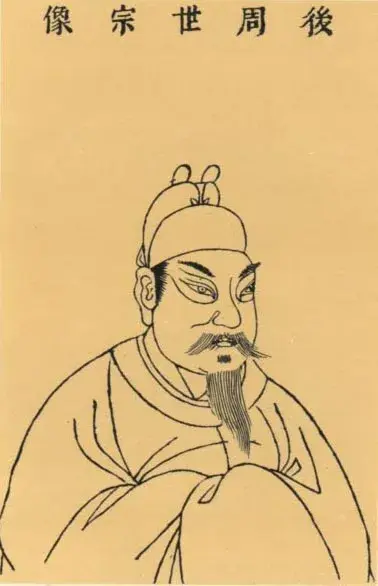
The Northern Expedition of Emperor Shizong of Later Zhou (周世宗北伐, 959 CE) was a major strategic reconquest campaign during the late Five Dynasties and Ten Kingdoms period, wherein Emperor Shizong (Chai Rong) personally commanded imperial armies to reclaim the Sixteen Prefectures from the Khitan Liao Dynasty. Following Shi Jingtang's cession of Yanyun in 936 CE, the Central Plains had been stripped of its northern mountain barriers for over two decades. Having annexed Huainan and secured the southern frontier, Chai Rong launched a lightning amphibious campaign north along the Grand Canal in the spring of 959 CE. In forty-two days, Later Zhou armies swept across the northern plains without battlefield reverses, capturing the Three Passes—Yijin Pass (Ningjiang), Waqiao Pass (Xiongzhou), and Yukou Pass (Bazhou)—while Khitan prefects surrendered Yingzhou, Mozhou, and Yizhou. Later Zhou recovered seventeen counties and vast herds, projecting power to the gates of Youzhou (modern Beijing). However, on the eve of the final assault, Emperor Shizong was stricken by terminal illness, compelling an agonizing retreat to Kaifeng, where he passed away at thirty-nine. The territorial gains of this expedition established the enduring frontier boundary between the Song and Liao dynasties.
Chai Rong decrees the northern campaign; Zhao Kuangyin and Han Tong lead amphibious columns north along the Grand Canal.
Later Zhou armies cross the northern plain, reaching Cangzhou and preparing strikes against Khitan fortifications.
Imperial river fleets capture Yijin Pass without battle, renaming it Ningjiang Army.
Waqiao Pass surrenders and becomes Xiongzhou; Yukou Pass falls and becomes Bazhou, completing the recovery of the Three Passes.
Khitan Prefect Liu Chuxin yields Mozhou, opening the northern road to Youzhou.
Seasoned general Gao Yanhui surrenders Yingzhou, bringing seventeen Guannan counties under Later Zhou rule.
Chai Rong overrules cautious courtiers, issuing operational orders to assault the Liao Southern Capital.
On the eve of battle, Emperor Shizong falls ill with toxic carbuncles, ordering an immediate withdrawal.
Chai Rong passes away at thirty-nine; his seven-year-old heir ascends the throne, setting the stage for the Chenqiao Mutiny.
In 936 CE (the first year of Tianfu of Later Jin), Shatuo general Shi Jingtang usurped the Later Tang throne by ceding the Sixteen Prefectures of Yanyun (including Youzhou, Jizhou, Yingzhou, Mozhou, and Yunzhou) to the Khitan Liao Dynasty.
The Sixteen Prefectures spanned the rugged northern defensive line of the Taihang and Yan mountain ranges, featuring natural passes that had shielded agricultural China against nomadic cavalry incursions for millennia. Their loss caused the complete collapse of northern defense infrastructure.
Once crossing the unfortified Baigou and Juma rivers, Khitan horsemen could gallop across the level North China Plain to the Yellow River in days. For decades, the threat of nomadic devastation hung over the Central Plains, perceived by contemporary Chinese as an unendurable humiliation.
Following his victory at the Battle of Gaoping in 954 CE, Emperor Shizong implemented sweeping structural reforms. Domestically, he curbed Buddhist monastic tax exemptions, minted the standardized Zhouyuan Tongbao coinage, reformed the civil bureaucracy, and reorganized imperial guards into the elite Palace Corps (Dianqiansi).
Strategically, Chai Rong executed Wang Pu's grand doctrine of "Subduing the South before striking the North": reclaiming the four western prefectures from Later Shu in 955 CE, and annexing the fourteen rich prefectures of Huainan from Southern Tang between 956 and 958 CE.
With the southern kingdoms bowing in vassalage and maritime salt and grain flowing north, Later Zhou coffers were full, and its combined ground and naval forces attained peak operational effectiveness, providing the material and military capacity required to launch an irredentist northern campaign.
While Later Zhou rose to supremacy, the Khitan Liao Empire fell into severe domestic decay. Following the sudden death of Yelü Deguang at Shahulin and the assassination of Emperor Shizong at Huoshendian, Emperor Muzong (Yelü Jing) assumed the throne.
Muzong was notoriously erratic, indolent, and cruel, spending his days in drunken stupors and hunting expeditions while sleeping through state councils, earning the derogatory title of the "Sleeping King" (Shuiwang).
Liao princes repeatedly plotted insurrections, and imperial supervision over southern frontier defense posts broke down. Recognizing that the Khitans were paralyzed by administrative torpor, Emperor Shizong seized the opportunity to strike before northern defenses could be reorganized.
In March 959 CE (the sixth year of Xiande), Emperor Shizong conducted imperial mobilization rituals in Kaifeng, formally decreeing the northern campaign to recover Yanyun.
Chai Rong engineered a rapid amphibious strike. On the renwu day of the fourth month, the Emperor led the central imperial vanguard north. Palace Inspector-General Zhao Kuangyin directed cavalry columns, while Admiral Han Tong commanded river war flotillas laden with ordnance and rations moving along the Yongji Canal toward Cangzhou.
On the guiwei day, Later Zhou forces entered Cangzhou, traversing hundreds of li across the plains within days. Astonished by the swiftness of the advance, local Chinese populations welcomed the imperial forces, providing scouts and carting grain. Chai Rong enforced strict military discipline, executing anyone who damaged standing crops and winning local hearts.
On the bingxu day of the fourth month, Emperor Shizong steered his flotilla from Cangzhou through Qianning (modern Qingxian, Hebei), advancing directly against Yijin Pass (modern Bazhou). Yijin Pass controlled the upper Ba River, serving as one of the three southern gates guarding Youzhou.
Paralyzed by drink, the Khitan commander panicked at the sight of the imperial fleet. Local Chinese inhabitants welcomed the imperial army, and the garrison opened its gates in surrender. Emperor Shizong redesignated Yijin Pass as Ningjiang Army, pardoning the defenders.
On the jichou day of the fifth month, Later Zhou cavalry reached Waqiao Pass (modern Xiongxian). Recognizing the futility of resistance, commander Yao Neibin surrendered without fighting; Shizong renamed Waqiao as Xiongzhou. Soon after, imperial forces took the third riverine redoubt—Yukou Pass (modern Xinan Town, Bazhou)—converting it into Bazhou.
In ten days of lightning operations, the Three Passes that the Khitans had fortified for over twenty years were recovered without expending an arrow, blowing open the southern approaches to Youzhou.
With the passes secured, Later Zhou columns advanced on the strategic hub of Mozhou (modern Renqiu). On the gengyin day of the fifth month, Khitan Prefect Liu Chuxin surrendered with his civil and military staffs, presenting population registers to Chai Rong, who appointed him a senior imperial guard general.
Next, imperial armies converged upon the heavily fortified city of Yingzhou (modern Hejian). The city was garrisoned by seasoned commander Gao Yanhui. Zhao Kuangyin rode before the ramparts, proclaiming imperial amnesties for those who yielded and destruction for those who resisted. Isolated from northern relief, Gao Yanhui surrendered the citadel on the renchen day.
Later Zhou detachments pushed north to accept the surrender of Yizhou (modern Yixian). In forty-two days, Emperor Shizong advanced over a thousand li, liberating the Three Passes alongside Yingzhou, Mozhou, and Yizhou, incorporating seventeen counties and tens of thousands of households while capturing over 100,000 horses and livestock in a bloodless blitzkrieg.
News of the collapse of Guannan stunned the Liao Southern Capital at Xinjinfu (Youzhou, modern Beijing). Khitan officials and garrisons prepared baggage trains to evacuate across the northern passes, while urban Chinese citizens awaited the arrival of the Later Zhou army. In the northern steppe, Emperor Muzong dismissed the disaster, remarking: "These lands were originally Chinese; if the Chinese take them back, what loss is it to me?"
On the guisi day of the fifth month, Emperor Shizong encamped at Waqiao Pass, hosting a victory banquet for his generals at the Octagonal Pavilion. Looking north from the parapets, Youzhou lay only a day's march away.
Chai Rong convened Zhao Kuangyin, Han Tong, and Li Chongjin to plan the final assault on Youzhou. While conservative ministers cautioned against overextending supply lines, Chai Rong overruled them, declaring: "The Khitan host is paralyzed and the Three Passes have fallen; the momentum cannot be arrested! I shall lead our cavalry to take Youzhou in person, clearing the northern frontier forever!"
However, at this decisive turning point in Chinese history, fate intervened cruelly.
On the yiwei day of the fifth month, on the eve of the general offensive, Emperor Shizong collapsed in his pavilion with a violent fever. Severe carbuncle ulcerations erupted across his chest and back, and his condition deteriorated until he could no longer mount a horse.
Recognizing that an imperial army without active leadership risked catastrophic encirclement in enemy territory, Chai Rong was forced to order a general withdrawal on the bingshen day, appointing Han Tong to screen the rear as he returned south in a litter.
On June 19, the imperial litter reached Kaifeng. Sensing his approaching end, Shizong relieved Zhang Yongde from command of the Palace Corps, appointing trusted general Zhao Kuangyin as Palace Grand Inspector-General (Dianqian Dudianjian). On June 21, 959 CE, Emperor Shizong passed away in Wansui Palace at the age of thirty-nine, leaving his northern reconquest unfinished.
The primary military achievement of the northern expedition was the permanent recovery of the Three Passes (Yijin, Waqiao, and Yukou) and the Guannan prefectures of Yingzhou and Mozhou.
This victory pushed the administrative frontier of sedentary China two hundred li north to the Juma and Baigou rivers. The recovered region contained an extensive network of marshes, shallow lakes, and rivers (the ancient Baiyangdian wetlands), which Later Zhou and Northern Song engineers converted into an integrated defensive water barrier (tangpo). This border fixed the permanent geostrategic boundary separating the Song and Liao empires for over a century.
For decades following Shi Jingtang's submission, Khitan cavalry had been perceived across China as an invincible military force.
Chai Rong's blitzkrieg shattered this psychological dread. Advancing across hundreds of li without a single tactical check, Later Zhou demonstrated that disciplined, well-provisioned Chinese amphibious forces could overrun Khitan frontier fortifications with ease. This triumph restored the military confidence of the Central Plains, demonstrating the structural vulnerabilities of the Liao state.
Emperor Shizong's sudden death before Youzhou stands as one of the great tragedies of Chinese imperial history.
Had Chai Rong lived, the disarray of the Liao court made the total recovery of the Sixteen Prefectures highly probable. Shizong's death left the throne to his seven-year-old son Chai Zongxun, leading directly to the Chenqiao Mutiny of 960 CE, where Zhao Kuangyin seized power to found the Song Dynasty. Because the Song inherited an incomplete northern border lacking the natural mountain barriers of Yanyun, the dynasty remained permanently trapped in an unfavorable geostrategic defensive posture opposite the northern steppe.