Paper Bridge Ambush
On May 19, Liu Yongfu's Black Flag Army ambushes and kills French Commander Henri Rivière at the Paper Bridge outside Hanoi.
Qing Dynasty (清朝) · HISTORICAL EVENT
中法战争
The Sino-French War (中法战争) was a pivotal armed conflict fought from late 1883 to 1885 between the Qing Empire and the French Third Republic over suzerainty over Vietnam and the security of southwestern China. In the late nineteenth century, France accelerated colonial conquest in northern Vietnam (Tonkin) to secure a navigable river gateway into Yunnan and Guangxi. In response to urgent appeals from the Vietnamese Nguyen court, the Qing mobilized imperial…
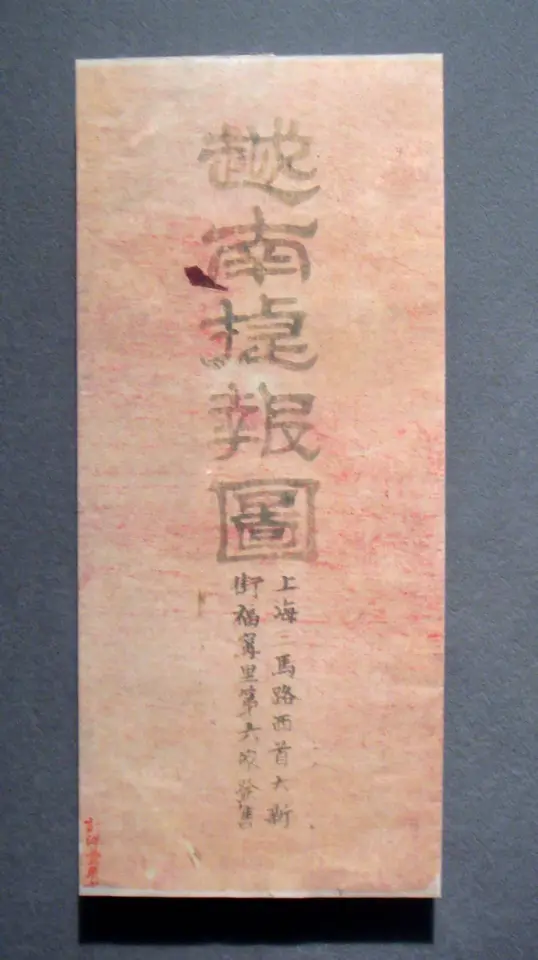
The Sino-French War (中法战争) was a pivotal armed conflict fought from late 1883 to 1885 between the Qing Empire and the French Third Republic over suzerainty over Vietnam and the security of southwestern China. In the late nineteenth century, France accelerated colonial conquest in northern Vietnam (Tonkin) to secure a navigable river gateway into Yunnan and Guangxi. In response to urgent appeals from the Vietnamese Nguyen court, the Qing mobilized imperial troops across the frontier, while Liu Yongfu's Black Flag irregulars defeated and killed French commander Henri Rivière at the Paper Bridge. In the summer of 1884, Admiral Amédée Courbet led the French Far East Squadron in a surprise assault that decimated the Qing Fujian Fleet at the Battle of Fuzhou, subsequently blockading the Taiwan Strait where General Liu Mingchuan repelled amphibious landings at Tamsui. In early 1885, combat peaked along the inland frontier where sixty-seven-year-old veteran general Feng Zicai directed the Battle of Zhennanguan, leading hand-to-hand trench counterattacks that routed French forces and liberated Lang Son. Despite the fall of the French Ferry cabinet in Paris, Empress Dowager Cixi and Li Hongzhang sued for immediate peace, signing the Treaty of Tianjin which ceded suzerainty over Vietnam, leaving a bitter historical memory of "China defeated in victory, France victorious in defeat."
On May 19, Liu Yongfu's Black Flag Army ambushes and kills French Commander Henri Rivière at the Paper Bridge outside Hanoi.
In December, French troops storm Son Tay, prompting the Qing court to deploy Yunnan and Guangxi armies across the border.
On August 23, the French Far East Squadron destroys the Qing Fujian Fleet at Mawei; the Qing officially declares war on France on August 26.
In October, Liu Mingchuan repels French amphibious landings at Tamsui, preventing the occupation of Taiwan.
On March 23, veteran general Feng Zicai directs a heroic hand-to-hand counterattack along the stone wall, routing the French army.
On March 28, Chinese armies recapture Lang Son; in Paris, Prime Minister Jules Ferry's government is forced from power.
On June 9, Li Hongzhang signs the Treaty of Tianjin, conceding suzerainty over Vietnam and withdrawing Chinese forces.
During the mid-to-late nineteenth century, the French Third Republic pursued aggressive colonial expansion across Southeast Asia to secure overseas markets. Having annexed southern Vietnam (Cochinchina), French colonial administrators focused their sights on Tonkin and the Red River basin, calculating that the river corridor provided an inland avenue to the rich mineral reserves of Yunnan. In April 1882, Captain Henri Rivière seized Hanoi, forcing the Nguyen dynasty into subservient treaties that extinguished Qing suzerainty and posed an immediate strategic threat to China's southwestern borders.
Vietnam had served as a loyal tributary state of the Qing empire for centuries, receiving imperial investiture and dispatching regular tribute missions. As French armies marched toward the Chinese frontier, the Vietnamese king sent desperate embassies to Beijing seeking military protection. The Qing court divided sharply over policy: Senior Chancellor Li Hongzhang and his Huai clique advocated accommodation and diplomatic arbitration, fearing that direct war with a Western power would deplete coastal defenses; conversely, the Qingliu (Pure Stream) faction, led by Zhang Zhidong and Zuo Zongtang, argued that Vietnam was the natural shield of southwestern China and demanded military intervention. Empress Dowager Cixi approved an ambiguous compromise: covertly supporting Liu Yongfu's Black Flag irregulars while deploying Yunnan and Guangxi provincial armies across the frontier.
In early 1883, French colonial forces advanced through the Red River Delta. Liu Yongfu, leader of the Black Flag Army—a seasoned paramilitary force composed of Chinese rebels and ethnic border minorities—allied with Qing frontier garrisons to resist French expansion. On May 19, 1883, Liu Yongfu laid a concealed ambush at the Paper Bridge west of Hanoi. Lured into swampy terrain by feigned retreats, Henri Rivière and his elite marine detachment were encircled; Rivière and dozens of French officers were killed. The debacle shocked the French government, prompting the National Assembly to allocate millions of francs to deploy an expeditionary force.
In December 1883, reinforced French columns launched a major offensive against Son Tay, marking the first direct combat engagement between regular Qing armies and French forces. Although Black Flag and Guangxi troops fought tenaciously, divided command led to the fall of Son Tay and Bac Ninh. Furious at the retreat of frontline commanders, the Qing court dismissed regional governors, appointing hardline reformer Zhang Zhidong as Governor-General of Liangguang to coordinate wartime logistics and reorganize border garrisons.
Failing to achieve immediate submission along the land border, the French government resolved to strike directly at the Chinese mainland. In July 1884, Admiral Amédée Courbet sailed the French Far East Squadron into Mawei Harbor near Fuzhou under the diplomatic pretext of taking on coal and repairing boilers. Imperial Commissioner Zhang Peilun clung to naive hopes of a peaceful settlement, strictly forbidding Chinese vessels from firing the first shot, thereby allowing French armored cruisers to train heavy broadsides on anchored wooden corvettes.
On the afternoon of August 23, 1884, Courbet launched an unexpected bombardment. Although Chinese crews aboard the flagship Yangwu returned fire with desperate bravery, the technological disparity proved overwhelming. Within thirty minutes, eleven warships of the Fujian Fleet were sunk or set ablaze, with nearly eight hundred sailors killed. French gunboats then shelled and dismantled the state-of-the-art Fuzhou Shipyard and coastal forts. The catastrophe forced the Qing government to formally declare war on France on August 26.
Following his victory at Fuzhou, Admiral Courbet blockaded the Taiwan Strait in October 1884, seeking to capture Keelung and Tamsui as territorial collateral for war indemnities. Imperial Defense Commissioner Liu Mingchuan made a courageous tactical sacrifice: recognizing that Keelung's coastal forts were vulnerable to heavy naval artillery, he evacuated Keelung and concentrated all veteran Huai regiments to defend the critical port of Tamsui, which guarded Taipei.
On October 8, French marine detachments landed at Shalun beach under supporting naval bombardments. General Sun Kaihua concealed his forces within coastal reed marshes, engaging the French in ferocious bayonet combat once they penetrated the shallows. Encircled by Chinese forces and armed civilian volunteers, the French landing force broke, abandoning equipment and fleeing back to their longboats under heavy casualties. Throughout the winter, French forces held the ruins of Keelung but remained trapped on the beachhead by typhoons and malaria, utterly failing to penetrate the interior plains.
In early 1885, French General François de Négrier launched an offensive against the mountain passes connecting Tonkin and Guangxi, capturing the border gateway of Zhennanguan and burning its gate tower. Confronting imminent invasion, Zhang Zhidong recalled sixty-seven-year-old retired general Feng Zicai to take supreme command. Renowned for integrity and charismatic authority, Feng supervised the rapid construction of a continuous three-li stone fortification wall and deep defensive trenches across the mountain valley.
On March 23, 1885, French forces launched a massive artillery bombardment and charged the stone wall. Wielding a long spear, the elderly Feng Zicai leaped over the parapet with his two sons, charging into the French lines in desperate hand-to-hand combat. Inspired by their commander's bravery, Chinese infantry surged forward from all redoubts, while Black Flag columns outflanked the French rear. After two days of combat, the French army disintegrated with over a thousand casualties; de Négrier was severely wounded, and the survivors fled southward. Pursuing the retreating enemy, Feng Zicai liberated Lang Son and Wenquan, winning the monumental Battle of Zhennanguan.
News of the catastrophic defeats at Zhennanguan and Lang Son reached Paris on March 28, 1885, igniting an explosive political crisis. Outraged parliamentarians denounced Prime Minister Jules Ferry as a murderer and imperialist warmonger. On March 30, the Chamber of Deputies voted overwhelmingly to deny military appropriations, forcing the immediate collapse of the Ferry cabinet and dealing a humiliating blow to French colonial policy.
However, Empress Dowager Cixi and Chancellor Li Hongzhang remained paralyzed by excessive fear of Western military strength, dreading international intervention by Britain or Germany and anxious over soaring military expenditures. Adopting the defeatist maxim of "reaping profits while victorious," Li Hongzhang initiated peace negotiations. On June 9, 1885, Li Hongzhang and French minister Jules Patenôtre signed the Treaty of Tianjin. The agreement formally recognized the French protectorate over Vietnam and ordered all Chinese armies to withdraw behind the border, in exchange for French evacuation of Keelung and the Pescadores. This capitulation surrendered the victories won by frontline soldiers, earning widespread historical condemnation as "China defeated in victory, France victorious in defeat."
In the early summer of 1884, land hostilities escalated following the breakdown of diplomatic negotiations. Although Li Hongzhang and French representative François-Ernest Fournier signed the Accord of Tianjin, the treaty failed to specify precise deadlines for Chinese troop withdrawals from northern Tonkin. Impatient French field commander Lieutenant-Colonel Alphonse Dugenne attempted to forcibly occupy Lang Son. On June 23, 1884, nearly one thousand French troops encountered Chinese frontier garrisons at the Guanyinqiao (Bac Le) pass, aggressively opening fire.
Confronting unprovoked French aggression, Guangxi commanders Wang Debang and Wan Zhongxuan rallied Chinese garrisons to execute an immediate counterattack. Entrenched in dense mountain forests, Chinese troops pinned down French columns with disciplined rifle volleys. Over two days of combat, Chinese regiments outflanked the French rear, inflicting heavy casualties and forcing the expeditionary forces to abandon baggage trains and retreat toward Hanoi. The victory shattered French momentum and led Paris to unilaterally abrogate the accord, broadening the war to the Chinese coastline.
While Guangxi forces and the Black Flag Army operated in the east, Governor-General of Yungui Cen Yuying mobilized tens of thousands of veteran Yunnan troops across the western border, creating a strategic pincer movement. The fortress city of Tuyen Quang on the Clear River constituted France's primary strongpoint in northwestern Tonkin, garrisoned by elite battalions of the French Foreign Legion within stone ramparts and barbed-wire entrenchments. Beginning in January 1885, Cen Yuying deployed over twenty thousand troops to encircle the fortress.
Yunnan troops executed sophisticated subterranean mining operations under heavy French defensive fire, digging dozens of sapping tunnels beneath the ramparts and detonating heavy powder charges that breached outer masonry walls. Chinese storming parties engaged French legionnaires in ferocious close-quarters combat. Although a relief column led by General Giovanninelli prevented the complete capture of the citadel, the protracted siege pinned down two entire French brigades for months, providing Feng Zicai with vital operational freedom on the eastern front.
As combat stalemated in Taiwan, Admiral Courbet sought to widen naval operations by attacking Ningbo's port of Zhenhai in early March 1885, attempting to blockade the Yong River and seize coastal fortifications. However, Zhejiang Governor Liu Bingzhang, Circuit Intendant Xue Fucheng, and General Ouyang Lijian had prepared multi-layered defenses, constructing concrete coastal gun emplacements on Mount Zhaobao and Mount Jinji while sinking ballast boats and laying defensive minefields across the harbor entrance.
On March 1, French armored cruisers advanced to bombard the harbor batteries. General Ouyang Lijian personally directed counter-battery fire from the ramparts; Chinese gunners scored direct hits on the French flagship Bayard, inflicting severe structural damage. French marine landing parties attempting an amphibious assault were repelled by concealed Chinese infantry volleys along the marshes. After several days of futile bombardments, French warships withdrew on March 20, demonstrating the effectiveness of modern coastal artillery fortifications against Western fleets.
The Sino-French War terminated over a millennium of Chinese cultural and political suzerainty over Vietnam. By signing the Treaty of Tianjin, the Qing court surrendered its traditional tributary protectorate, allowing French colonial power to establish an unbroken land border along Guangxi and Yunnan. France secured extensive commercial, railway, and mining concessions in southwestern China, leaving China's southern frontier directly exposed to Western imperialist penetration and accelerating the partition crisis.
The strategic peril demonstrated by the French blockade of the Taiwan Strait convinced the Qing government of Taiwan's paramount geopolitical importance. In October 1885, imperial decrees separated Taiwan from Fujian to establish Taiwan as an independent province, naming anti-French hero Liu Mingchuan as its inaugural Governor. Liu carried out extensive modernization programs—constructing modern railways, telegraph lines, deep-shaft coal mines, and schools—transforming Taiwan into one of the most modernized provinces in late Qing China.
The catastrophic destruction of the Fujian Fleet forced the Qing administration to overhaul its fragmented naval apparatus, prompting the establishment of the Board of Admiralty (Haijun Yamen) in 1885 to centralize naval command. More profoundly, the shameful spectacle of "losing the war in victory" shattered public faith in the self-strengthening efforts of the Self-Strengthening Movement. The realization that conservative court elites would squander battlefield triumphs to appease foreign powers catalyzed the emergence of early modern Chinese nationalism, directly inspiring the reform movements of Kang Youwei and the revolutionary crusade of Sun Yat-sen.
In his final testamentary memorial, the patriotic statesman Zuo Zongtang lamented: "Never in history was justice so mocked! With our victories at Zhennanguan and Lang Son, the Vietnamese rejoiced and the French were on the brink of collapse. Yet the court issued strict commands to halt armies and sue for peace, casting aside a tributary domain maintained for centuries. China was defeated in victory, while France triumphed in defeat. There is no greater sorrow in history!"
The reformer Liang Qichao observed in Biography of Li Hongzhang: "In military affairs, Li Hongzhang was overly cautious; in diplomacy, he lacked courage. In the Sino-French War, seventy-year-old Feng Zicai fought heroically to crush the enemy. Li Hongzhang failed to exploit the enemy's exhaustion, dreading open conflict and insisting on peace. His boast of ending the war while victorious created an evil precedent of territorial surrender."
The French historian Pierre Godé observed in History of the Third Republic's Colonies: "The Ferry cabinet collapsed because of a single encounter at Lang Son; France suffered a Waterloo on land. Yet at the diplomatic table, Beijing incomprehensibly conceded all of Paris's demands. Out of deep-seated fear of Western arms, the Qing ruling elite capitulated at the moment of triumph, awarding France colonial spoils far exceeding its battlefield achievements."