Imperial Favor and Concealment
Emperor Shenzong favors palace maid Lady Wang; upon discovery, Empress Dowager Cisheng confirms the liaison via the imperial records.
Ming Dynasty (明朝) · HISTORICAL EVENT
争国本
The Guoben Dispute (争国本), also known as the State Foundation Controversy, was a protracted political struggle that raged between 1586 and 1601 during the reign of Emperor Shenzong (Wanli) of the Ming dynasty. The crisis erupted over the designation of the imperial heir apparent between the sovereign and the civil bureaucracy. Emperor Shenzong harbored an intense aversion toward his eldest son, Zhu Changluo, who was born to an ordinary palace maid named…
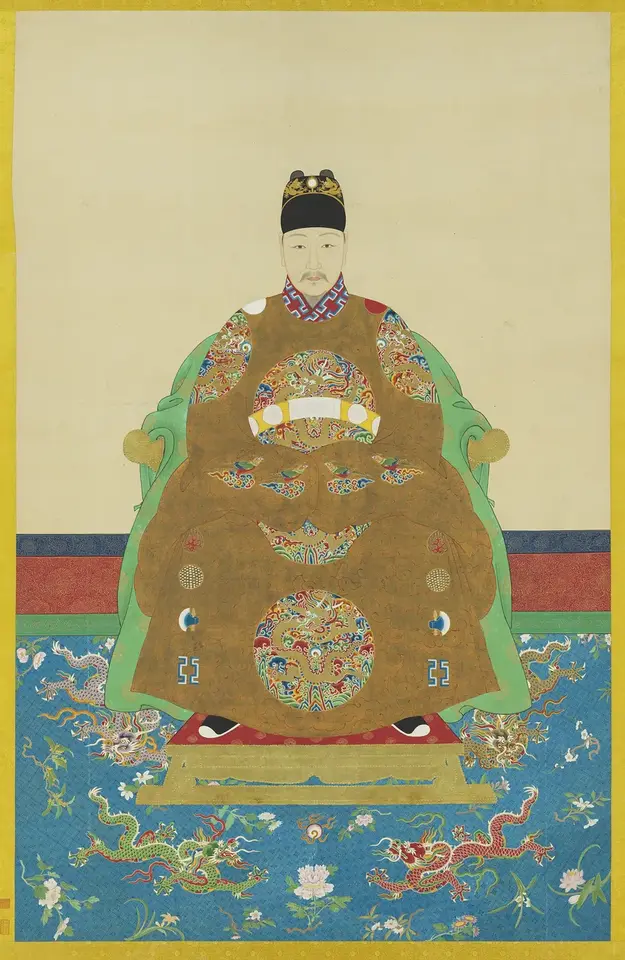
The Guoben Dispute (争国本), also known as the State Foundation Controversy, was a protracted political struggle that raged between 1586 and 1601 during the reign of Emperor Shenzong (Wanli) of the Ming dynasty. The crisis erupted over the designation of the imperial heir apparent between the sovereign and the civil bureaucracy. Emperor Shenzong harbored an intense aversion toward his eldest son, Zhu Changluo, who was born to an ordinary palace maid named Lady Wang. Conversely, the emperor doted upon his favored consort, Noble Consort Zheng, and sought to bypass imperial primogeniture to install her son, Zhu Changxun, as Crown Prince in direct contravention of Ming ancestral laws established by Hongwu. Viewing the defense of primogeniture as an existential matter of dynastic legitimacy and state survival, the scholar-official bureaucracy mounted fierce, continuous resistance led by Grand Secretaries Shen Shixing and Wang Jiaping alongside hundreds of censors and departmental officials. The emperor responded with systemic procrastination, imperial punishments, and attempts to compromise via the simultaneous enfeoffment of three princes. Despite enduring flogging, dismissal, and exile, the officials persisted, bolstered by the decisive intervention of the emperor's own mother, Empress Dowager Cisheng. In 1601, Shenzong finally capitulated, formally designating Zhu Changluo as Crown Prince. However, the fifteen-year deadlock alienated the monarch from his administration, precipitating thirty years of imperial absenteeism and fostering intense factional strife that fatally undermined the dynasty.
Emperor Shenzong favors palace maid Lady Wang; upon discovery, Empress Dowager Cisheng confirms the liaison via the imperial records.
Consort Gong gives birth to Zhu Changluo; Lady Zheng enters the palace and rapidly becomes the emperor's favorite consort.
Lady Zheng bears Zhu Changxun and is elevated to Imperial Noble Consort; Censor Jiang Yinglin submits the first memorial defending primogeniture.
As the eldest son turns six, Grand Secretary Shen Shixing requests the commencement of imperial schooling; the emperor repeatedly delays.
Shenzong attempts to simultaneously enfeoff three sons; Grand Secretary Wang Jiaping refuses to draft the edict and resigns in protest.
Shenzong disparages his eldest son as a maid's offspring, prompting the dowager's fierce rebuke that the emperor himself was born to a maid.
The emperor withdraws completely into the inner palace, leaving memorials unread and dismissing dozens of protesting officials.
Facing immense pressure from the dowager and bureaucracy, Shenzong designates twenty-year-old Zhu Changluo as Crown Prince, ending the dispute.
In the winter of 1581 (ninth year of Wanli), the nineteen-year-old Wanli Emperor visited the Cining Palace to pay respects to his mother, Empress Dowager Cisheng. During the visit, the young monarch casually favored Lady Wang, a palace maid who attended him with wash water. Ashamed of the liaison, the emperor departed without presenting the customary token of affection. However, when Lady Wang's pregnancy became visible months later, Empress Dowager Cisheng pressed her son. Shenzong initially denied the encounter until the dowager produced the Imperial Diurnal Diaries as irrefutable proof. Remembering her own humble origins as a maid, the dowager rejoiced at the prospect of an imperial grandson, urging the emperor to grant Lady Wang the rank of Consort Gong.
In August 1582 (tenth year of Wanli), Consort Gong gave birth to the emperor's eldest son, Zhu Changluo. As Empress Wang had borne no sons, Zhu Changluo was the legitimate heir apparent according to ancestral law. Yet Shenzong viewed the child's birth as an enduring humiliation, referring to Lady Wang derogatorily as a mere palace domestic. The emperor confined mother and son to the remote Jingyang Palace, barring them from contact with the outer court and subjecting them to institutional neglect.
In sharp contrast to his disdain for Consort Gong, Emperor Shenzong fell deeply in love with the witty, literate Lady Zheng, elevating her rapidly from Imperial Concubine to Worthy Consort. In early 1586, Lady Zheng gave birth to the emperor's third son, Zhu Changxun. Overjoyed, Shenzong elevated her to Imperial Noble Consort, placing her above all other consorts and directly below the Empress, while the mother of the eldest son remained a lower-ranking consort.
The unprecedented elevation of Lady Zheng signaled to the civil bureaucracy that the emperor intended to supplant the eldest son in favor of Zhu Changxun. Rumors spread that the emperor had signed a secret marital vow promising the succession to Zheng's son. Sensing a direct assault upon the dynastic constitution and Confucian ethical order, the scholar-official class mobilized for a prolonged confrontation to defend ancestral succession laws.
Following Zhu Changluo's birth in 1582, the court issued standard tax remissions, yet the emperor remained thoroughly estranged from his firstborn. Zhu Changluo was an intelligent, studious, and gentle child, yet Shenzong refused to see him for years at a time, slashing his palace allowances and leaving his quarters austere and neglected.
Meanwhile, the emperor showered Noble Consort Zheng and her son Zhu Changxun with boundless luxury and attention, ennobling her relatives and elevating her family into prominent military and civil posts. Shenzong openly displayed his partiality for Changxun, upsetting the delicate balance of inner court governance and elevating what had been a domestic palace dilemma into a national political crisis.
Within the Jingyang Palace, Consort Gong lived under constant surveillance and anxiety, as eunuchs and attendants curried favor with Consort Zheng by withholding daily heating and provisions. Experiencing hostility from his earliest days, Zhu Changluo cultivated an exceptionally cautious, humble, and obedient demeanor, immersing himself in the Confucian classics and earning widespread sympathy from his grandmother and the outer court.
When Shenzong elevated Lady Zheng to Imperial Noble Consort in 1586, Supervising Censor Jiang Yinglin submitted a blistering memorial, warning that elevating the mother of the third son over the mother of the eldest inverted dynastic hierarchy and threatened state stability, urging the immediate designation of Zhu Changluo as Crown Prince. Enraged by this challenge, Shenzong demoted Jiang to a remote frontier post in Datong.
Jiang's punishment failed to silence the bureaucracy, sparking an outpouring of solidarity across the administration. Bureau directors Shen Jing and Sun Rufa submitted follow-up memorials, while Grand Secretary Shen Shixing urged the emperor to harmonize with dynastic tradition. Confronted by mounting memorials, Shenzong adopted delaying tactics, falsely claiming that the imperial eldest son was too frail for public investiture.
Following Jiang's exile, gentry throughout Jiangnan celebrated him as a moral hero, establishing a precedent of bureaucratic defiance. Dozens of censors filed joint petitions arguing that the state foundation was public property rather than the private prerogative of the emperor. Through their collective protests, the scholar-officials erected an unyielding ideological barrier that stymied the young monarch's imperial designs.
When Zhu Changluo reached the age of six—the traditional year for commencing formal schooling—the Grand Secretariat requested the commencement of imperial lectures and the formal appointment of the heir. Once again, Shenzong broke his promise, arguing that the prince was frail and susceptible to winter colds. Over subsequent years, successive Grand Secretaries and ministerial officials submitted hundreds of memorials demanding action.
Losing patience with the relentless pressure, Shenzong shifted from evasive delays to harsh punitive measures. Censors and secretaries who raised the succession question were subjected to court flogging, removal from the civil registry, and banishment. Despite severe retribution, officials viewed defending the ancestral rule of primogeniture as the supreme test of moral integrity, embracing punishment with martyrdom-like fervor.
Grand Secretary Shen Shixing attempted to mediate between monarch and bureaucracy, privately advising Shenzong that public unrest would dissipate the moment the eldest son was declared heir. However, Shenzong resented Shen's advice, accusing the cabinet of failing to muzzle censorial critics. Caught between imperial distrust and bureaucratic condemnation, Shen Shixing resigned, effectively shattering the working relationship between the throne and the Grand Secretariat.
In the spring of 1593, facing unabated pressure, Emperor Shenzong introduced an insidious compromise proposed by Grand Secretary Shen Yiguan, known as the "Simultaneous Enfeoffment of Three Kings." The emperor ordered the cabinet to draft an edict simultaneously creating Zhu Changluo, Zhu Changxun, and his fifth son Zhu Changhao as territorial princes, postponing the appointment of Crown Prince until a later date when the emperor could select the most worthy among them.
The proposal provoked fierce outrage across the bureaucracy, which recognized that reducing the eldest son to equal status with his younger brothers was a calculated attempt to facilitate Changxun's eventual rise. Senior Grand Secretary Wang Jiaping demonstrated courageous resolve, refusing to draft the edict and leading ministerial leaders in petitioning against the plan. Overwhelmed by unanimous opposition, Shenzong was forced to rescind the decree, and Wang Jiaping resigned in protest.
Wang's unyielding resistance won him immortal renown among the scholar-gentry. In his resignation memorial, Wang boldly declared that while he could bear the displeasure of the reigning emperor, he dared not violate the eternal laws of the imperial ancestors. Hundreds of imperial academy scholars knelt along the avenues to bid him farewell, demonstrating to the emperor that bureaucratic solidarity could withstand any attempts to circumvent ancestral law.
As the deadlock dragged on, Empress Dowager Cisheng emerged as the decisive force defending dynastic tradition. Mindful of the catastrophic consequences of succession disputes in Chinese history, the dowager repeatedly admonished Shenzong. During one audience, when the dowager pressed him on the succession, Shenzong defensively retorted: "He is merely the son of a palace maid!"
The Empress Dowager erupted in furious indignation, rebuking the sovereign: "You, too, are the son of a palace maid! How dare you despise him!" As the dowager herself had risen from the ranks of palace domestics, her searing rebuke left Shenzong trembling with shame and prostrating himself in terror. The dowager's assertion that virtue and imperial motherhood admitted no discrimination shattered the emperor's final pretext for disinheriting his eldest son.
The dowager's maternal protection provided Zhu Changluo with his only reliable sanctuary during his precarious youth. At every court festival, the dowager summoned her grandson to her palace, testing his knowledge of the classics and ensuring his personal safety. She personally funded repairs to his living quarters, ordering her palace guards to protect the prince and serving as an unassailable bastion of legitimacy.
Enraged by his mother's intervention and the obstinacy of the court, Shenzong intensified purges of his critics. In 1592, Minister of Rites Li Xianke and thirty colleagues were stripped of rank; Secretary Luo Yuren submitted his famous memorial criticizing the emperor's indulgences and narrowly escaped execution. Over the course of the crisis, multiple Grand Secretaries were dismissed and over a hundred senior officials were degraded.
The intense collective resistance profoundly reshaped the political culture of late Ming scholar-officials. Stripped of official status, Gu Xiancheng and Gao Panlong returned to Wuxi and founded the Donglin Academy, combining classical lectures with moral critiques of court governance and establishing the influential Donglin Faction. In response, rivals within the bureaucracy aligned themselves with inner court eunuchs, planting the seeds of bitter partisan warfare.
Exiled officials enjoyed immense moral prestige in their home provinces, where local gentry provided financial patronage. The Donglin scholars adopted the motto: "The sound of wind and rain, the sound of reading, all enter our ears; family affairs, state affairs, world affairs, all concern our hearts." This fusion of Confucian moralism and political activism became a defining force in late Ming factional politics.
The trauma of the succession struggle inflicted permanent psychological damage upon Emperor Shenzong, cultivating an abiding resentment toward the bureaucracy. Feeling humiliated and constrained by censorial pressure, the emperor began withdrawing from public governance in 1589, initiating a three-decade strike known to history as the Wanli Absenteeism. Shenzong refused to hold morning audiences, receive Grand Secretaries, or attend ritual sacrifices.
Furthermore, the emperor adopted the tactic of shelving all official memorials without reply. Vacancies created by retirements and deaths in the six ministries and Grand Secretariat went unfilled, leaving the cabinet with only a single minister and provincial administrations crippled by absent governors. The complex bureaucratic apparatus of the Ming empire began to grind to a halt under deliberate imperial neglect.
The emperor's prolonged strike paralyzed central decision-making. Communication between outer offices and the inner court became entirely dependent on eunuch couriers, fostering an alarming expansion of eunuch influence. To extract revenues directly, Shenzong dispatched corrupt mining and tax commissioners nationwide, inciting massive urban revolts and undermining the fiscal foundations of the state.
By the autumn of 1601, Zhu Changluo had reached twenty years of age, far past the standard age for marriage and investiture. Rumors circulated throughout the realm that the court intended to harm the prince, pushing public tension to the breaking point. Under the combined pressure of Empress Dowager Cisheng's final ultimatums and appeals from Grand Secretary Shen Yiguan, Shenzong recognized that he could no longer defy universal consensus.
On the fifteenth day of the tenth month of 1601, Emperor Shenzong formally issued an imperial decree in the Hall of Imperial Supreme Harmony, designating Zhu Changluo as Crown Prince and conferring upon him the golden seals of the Eastern Palace. Simultaneously, Zhu Changxun was enfeoffed as Prince of Fu and assigned to Luoyang. The fifteen-year struggle ended with the preservation of ancestral primogeniture. Yet the compromise failed to heal dynastic divisions, leaving simmering resentments that would explode in the palace mysteries of the late Wanli reign.
The Guoben Dispute concluded with the decisive preservation of the Ming succession principle: "Install the legitimate son if present; otherwise, install the eldest." This outcome proved that even the absolute authority of the autocratic monarch could be compelled to compromise when confronted with collective bureaucratic resistance grounded in ancestral law. However, the price was devastating: dozens of principled officials were cashiered, coalescing around Gu Xiancheng to establish the Donglin Faction. The Donglin movement soon engaged in vicious partisan warfare with rival cliques, consuming the political vitality of the Ming state at the very moment northern external threats were intensifying.
The psychological scar of the succession dispute transformed Emperor Shenzong into an alienated, bitter recluse. His thirty-year refusal to conduct state business left central ministries without leadership, judicial cases unresolved, and frontier commands neglected. Taking advantage of this institutional paralysis, Nurhaci united the Jurchen tribes in Manchuria and established the Later Jin state, inflicting a crushing defeat on Ming forces at the Battle of Sarhu in 1619. Historians of the Ming dynasty famously observed: "The fall of the Ming truly began with Shenzong, and the decline of Shenzong truly began with the Guoben Dispute."
Modern historians evaluate the Guoben Dispute as the pivotal turning point that marked the transition of the Ming dynasty from late-imperial stability to terminal decline. The fifteen-year confrontation was fundamentally a structural clash between autocratic monarchical will and an entrenched, ideologically disciplined Confucian bureaucracy. While scholar-officials demonstrated extraordinary moral courage in defending constitutional principles against despotic whim, the prolonged friction ruptured trust between sovereign and ministers, paralyzing governance and leaving the dynasty incapable of addressing the structural crises of the seventeenth century.