Accession of Shenzong and Appointment of Zhang Juzheng
Emperor Muzong died; young Shenzong ascended the throne, and Zhang Juzheng formed an alliance with Empress Dowager Xiaoding and Feng Bao to become Senior Grand Secretary.
Ming Dynasty (明朝) · HISTORICAL EVENT
张居正改革
The Zhang Juzheng Reforms (张居正改革) denote the comprehensive political, economic, military, and hydraulic revitalization conducted during the early Wanli era (1572-1582) of the Ming dynasty under Senior Grand Secretary Zhang Juzheng, historically termed the Wanli New Policies. In the mid-sixteenth century, widespread land amalgamation by aristocratic houses had severed state revenues, imperial bureaucracies languished in chronic inertia, and northern…
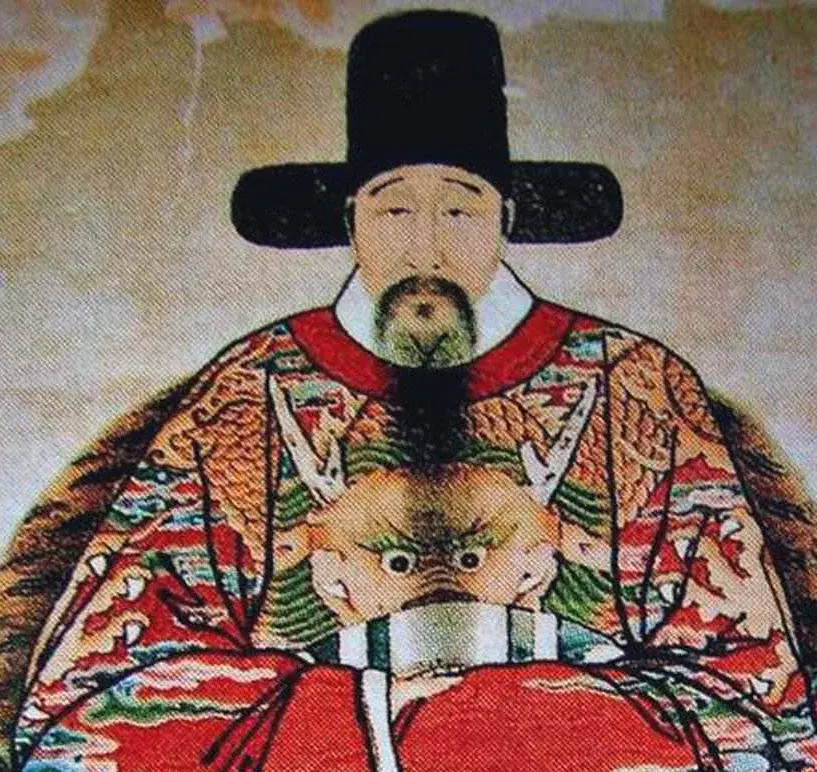
The Zhang Juzheng Reforms (张居正改革) denote the comprehensive political, economic, military, and hydraulic revitalization conducted during the early Wanli era (1572-1582) of the Ming dynasty under Senior Grand Secretary Zhang Juzheng, historically termed the Wanli New Policies. In the mid-sixteenth century, widespread land amalgamation by aristocratic houses had severed state revenues, imperial bureaucracies languished in chronic inertia, and northern nomadic forces continually tested Great Wall defenses. Following Emperor Shenzong's accession at age ten in 1572, Zhang Juzheng consolidated power with the support of Empress Dowager Xiaoding and palace director Feng Bao. Zhang Juzheng instituted the Evaluation Law, establishing strict deadlines and administrative auditing to eradicate bureaucratic negligence. Economically, he directed a nationwide land survey that uncovered over one million qing of concealed acreage, followed by the universal promulgation of the Single Whip Law, which amalgamated chaotic labor levies into land taxes assessed in silver bullion. Militarily, he appointed Generals Qi Jiguang and Li Chengliang to command border bastions while sustaining peaceful border markets with the Mongols; hydraulically, he backed Pan Jixun's innovative water-engineering to tame the Yellow River. Across a decade of vigorous governance, imperial granaries accumulated ten years of provisions and state coffers amassed four million ounces of silver, inaugurating the prosperous Wanli Restoration.
Emperor Muzong died; young Shenzong ascended the throne, and Zhang Juzheng formed an alliance with Empress Dowager Xiaoding and Feng Bao to become Senior Grand Secretary.
Zhang Juzheng instituted the Evaluation Law, establishing ledgers and auditing across central and provincial bureaucracies to eliminate administrative delays.
General Qi Jiguang constructed over a thousand hollow watchtowers along the Great Wall, integrating firearms and war wagons to secure the northern approaches.
Following his father's death, Zhang Juzheng remained in office under imperial order to ensure the continuation of his reforms, weathering intense attacks from conservative censors.
Pan Jixun implemented his hydraulic engineering along the Yellow and Huai Rivers, confining currents to scour sediment and reopening the Grand Canal.
Zhang Juzheng decreed a comprehensive cadastral survey across all provinces, dispatching official measurement teams to uncover concealed holdings.
The land survey exposed 1.3 million qing of hidden holdings; the court officially decreed the nationwide enforcement of the Single Whip Law.
Exhausted by administrative burdens, Zhang Juzheng died in Beijing at age fifty-eight, receiving supreme posthumous honors from the throne.
Following Feng Bao's dismissal, conservative factions persuaded Emperor Shenzong to revoke Zhang Juzheng's honors and confiscate his estate; the Evaluation Law lapsed, but the Single Whip Law endured.
During the mid-sixteenth century across the Jiajing and Longqing reigns, the Ming agrarian system suffered profound deterioration. Imperial clansmen, nobility, and palace eunuchs exploited political immunities to monopolize vast tracts of fertile land through forced commendation, royal grants, and coercive acquisitions. Gentry landholders concealed holdings to evade taxation, shifting the burden onto peasant cultivators and producing a reality where wealthy estates held immense lands without paying taxes while dispossessed peasants retained tax obligations on lost fields.
The flight of bankrupt smallholders eroded imperial revenue rolls. While early Ming grain revenues had approached thirty million bushels, mid-sixteenth-century collections fell below twenty million bushels. Annual silver receipts in the Ministry of Revenue plummeted under four million ounces, while border military payrolls exceeded five million ounces. The imperial government operated under persistent deficits, with state silver reserves dropping to precarious lows.
Simultaneously, the administrative machinery of the Ming state descended into systemic dysfunction. Scholar-officials indulged in factional disputes and procedural delays, ignoring imperial decrees and paralyzing central authority.
Externally, the northern frontier was exposed to repeated nomadic breakthroughs by Altan Khan of the Mongols, culminating in the Gengxu Crisis of 1550 when nomadic cavalry raided the suburbs of Beijing. Along the northeastern frontier, Jurchen tribes stirred in Manchuria, while the Yellow and Huai Rivers breached dikes across the Central Plains, severing the Grand Canal and devastating agriculture. The dynastic state stood upon the brink of administrative breakdown.
In July 1572, Emperor Muzong died, leaving his ten-year-old son Zhu Yijun upon the throne as Emperor Shenzong. On his deathbed, the late sovereign commanded Grand Secretaries Gao Gong, Zhang Juzheng, and Gao Yi to serve as regents. However, Senior Grand Secretary Gao Gong clashed with palace eunuchs over executive authority, creating a confrontation with the inner palace.
Displaying political acumen, Zhang Juzheng forged an alliance with the emperor's mother, Empress Dowager Xiaoding, and the Director of Ceremonial, Feng Bao. In an imperial audience, the empress dowager dismissed Gao Gong, elevating Zhang Juzheng to Senior Grand Secretary. As imperial tutor, Zhang Juzheng secured the absolute confidence of the sovereign and the inner court, consolidating executive authority to launch nationwide systemic reforms.
Recognizing that administrative paralysis obstructed all reform, Zhang Juzheng promulgated the Evaluation Law in 1573, introducing an administrative auditing system.
The Evaluation Law established a performance auditing mechanism based on performance ledgers and strict deadlines. Every central ministry compiled three identical administrative ledgers detailing specific policy targets and completion timelines: one kept by the ministry, one held by the supervising secretaries of the Six Offices of Scrutiny, and one submitted to the Grand Secretariat. Officials who failed to meet statutory deadlines were impeached, while supervising secretaries who concealed lapses were held accountable by the cabinet. Provincial governors and surveillance vice commissioners were audited monthly on grain collection, flood defense, and regional public order.
The implementation of the Evaluation Law dismantled bureaucratic inertia. Within its first year, dozens of negligent provincial and metropolitan officials were dismissed or demoted. Bureaucrats across all levels attended diligently to administrative duties, clearing dockets and allowing central directives to reach local townships directly, creating an administrative apparatus capable of executing deep socio-economic reforms.
With administrative discipline enforced, Zhang Juzheng addressed the agrarian fiscal crisis. In 1578, overcoming fierce resistance from gentry landowners, Zhang Juzheng petitioned the throne to launch a comprehensive nationwide land cadastral survey.
In 1579, the central court enacted strict regulations requiring prefectural magistrates to conduct field surveys using standard fish-scale registers and measuring ropes. Survey teams surveyed every parcel, recording boundaries, soil fertility, and owner identities, decreeing that concealed holdings would be confiscated and fraudulent landholders punished regardless of aristocratic rank.
Completed in 1581 after three years of surveying, the cadastral reclamation exposed over 1.3 million qing of concealed fertile farmland. Total registered agricultural land expanded from roughly four million qing under previous reigns to 7.01 million qing. This achievement curbed gentry tax avoidance, providing an accurate land baseline for fundamental tax restructuring.
Building upon the cadastral survey, Zhang Juzheng mandated the universal implementation of the Single Whip Law across all provinces in 1581.
Traditional Chinese taxation since the Tang had comprised a bewildering assortment of grain payments, corvee labor drafts, and miscellaneous local tributes, forcing peasants to perform arduous personal labor service that bankrupted smallholders. The Single Whip Law restructured this archaic system: First, consolidation of levies: all disparate corvee labor impositions, local tributes, and miscellaneous surcharges were amalgamated into regular land taxes; Second, assessment by land and adult males: labor levies were assessed primarily against landholdings and secondarily against adult males, ensuring that wealthier landowners shouldered proportionate fiscal burdens; Third, universal monetization: grain and textile levies alongside manual labor services were converted into standardized payments in silver bullion; Fourth, direct government administration: local village tax collectors were replaced by direct payments into county lockboxes, with municipal governments employing hired laborers for public works.
The Single Whip Law simplified tax collection and eliminated opportunities for clerical extortion. Crucially, by substituting cash silver payments for compulsory labor, it emancipated peasants from feudal labor ties, enabling rural cultivators to participate in artisanal trades and wage labor. This reform stimulated commodity agriculture, commercial urbanization, and the silver monetization of late Ming society, laying the foundation for modern Chinese public finance.
In border defense, Zhang Juzheng overcame traditional civil-official prejudice against military commanders, appointing veteran generals Qi Jiguang and Li Chengliang to command northern defenses with operational autonomy.
Zhang Juzheng assigned the celebrated anti-piracy commander Qi Jiguang to direct the Jizhou Garrison, defending the approaches to Beijing for sixteen years. Supported by central funds, Qi Jiguang constructed over a thousand hollow watchtowers along the Great Wall and developed coordinated tactical formations integrating firearms, war wagons, cavalry, and spearmen. Under Qi Jiguang's command, Jizhou became impregnable, deterring nomadic incursions for over a decade.
Along the northeastern perimeter, Zhang Juzheng promoted Li Chengliang as Regional Commander of Liaodong. Leading disciplined cavalry, Li Chengliang mounted pre-emptive counter-offensives against Jurchen and Mongol raiding columns, securing the northeastern borderlands.
Diplomatically, Zhang Juzheng preserved and deepened the peace accord with the Mongol leader Altan Khan, expanding official border tea-horse markets across Datong, Xuanfu, and Zhangjiakou. Nomadic pastoralists traded horses and livestock for tea, silk, and iron tools, fostering interethnic commerce and reducing frontier military expenditures by millions of ounces annually.
In the mid-sixteenth century, recurring breaches of the Yellow and Huai Rivers in Jiangsu and Shandong devastated agricultural plains and severed Grand Canal navigation. As court officials debated bypass canals, Zhang Juzheng appointed hydraulic specialist Pan Jixun to oversee the Grand River Conservancy.
Pan Jixun formulated the hydraulic doctrine of harnessing the current to scour the silt: using water to scour sand, using water to manage water, and confining currents with embankments to sweep away sediment.
Backed by central funding, Pan Jixun constructed continuous double-tier dikes along the lower Yellow River, narrowing the floodway to accelerate current velocity so that rushing waters scoured bed sediment into the ocean, while directing the clear Huai River into the main channel to aid silt scouring. Pan Jixun's engineering confined the Yellow River to its historical bed, cleared sediment obstructions in the Grand Canal, and protected millions of acres of farmland, standing as a triumph of classical hydraulic science.
In public expenditure, Zhang Juzheng enforced strict fiscal discipline. The chancellor pruned the empire's postal courier system, prohibiting local officials from requisitioning postal horses or claiming travel subsidies for private journeys, saving hundreds of thousands of ounces of silver annually.
Simultaneously, Zhang Juzheng constrained court expenses, repeatedly rejecting palace requests for jewelry and investigating corruption in imperial construction projects. Under a decade of prudent management, Ming state finances experienced an extraordinary turnaround.
Treatises on food and money record that by Zhang Juzheng's death in 1582, the central granaries in Beijing stored thirteen million bushels of grain, sufficient to provision the capital for a decade. The Ministry of Revenue held over four million ounces of silver in reserve, while regional treasuries accumulated millions more. The state maintained solvent defenses and overflowing depots, casting off decades of deficits to realize the Wanli Restoration.
The most immediate material triumph of the Zhang Juzheng Reforms was the salvation of Ming state finances from impending insolvency. The cadastral survey unearthed over 1.3 million qing of unrecorded farmland, eliminating elite tax immunities. Following the implementation of the Single Whip Law, national silver collections surged, transforming treasury deficits into a surplus of over four million ounces, while state granaries accumulated thirteen million bushels of grain—enough to provision metropolitan forces for ten years. This wealth provided the financial foundation that enabled Emperor Shenzong to finance the Three Great Campaigns of the Wanli Era in Ningxia, Bozhou, and Korea.
The universal adoption of the Single Whip Law represented a transformative turning point in Chinese fiscal history. By consolidating chaotic corvee labor drafts into land taxes, it dismantled feudal labor obligations upon the peasantry. By monetizing all tax payments in silver bullion, it elevated unrefined silver into the primary currency of imperial commerce, stimulating commercial agriculture, craft industries, and global trade across the Pacific with Spanish Manila. This decimal, land-based silver tax framework served as the direct precursor to the Qing dynasty's tax reforms under the Yongzheng Emperor.
Nevertheless, the reforms operated as an elite administrative restructuring within the framework of imperial autocracy without reforming the institutional foundations of monarchical rule or aristocratic privilege. In pursuing his reforms, Zhang Juzheng exercised autocratic authority, suppressed academy debates, and created bitter political enmities. His decision to remain in office during his father's mourning in 1577 alienated orthodox scholar-officials.
Following Zhang Juzheng's death in 1582, conservative factions persuaded the young Emperor Shenzong to unleash a vindictive political purge. The throne confiscated the Zhang family estate, rescinded his posthumous titles, and banished his proteges. Although the Evaluation Law was abandoned, the fiscal benefits of the Single Whip Law and cadastral surveys were preserved by the state, illustrating the tragic fragility of reforming ministers in imperial China.