Guangwu Restores the Han Dynasty
Liu Xiu ascends the imperial throne at Hao, deploying Deng Yu, Wu Han, and generals across the realm to wage the war of restoration.
Eastern Han Dynasty (东汉) · HISTORICAL EVENT
云台二十八将图绘
The Painting of the Twenty-Eight Generals of the Cloud Platform (云台二十八将图绘) was a major imperial commemorative and portraiture project commissioned in 60 AD (third year of Yongping) by Emperor Ming of Han (Liu Zhuang) in the Cloud Platform Gallery of the Southern Palace at Luoyang. To honor the arduous founding struggles of his father, Emperor Guangwu (Liu Xiu), and to memorialize the military commanders who helped restore the Han dynasty, Emperor Ming…
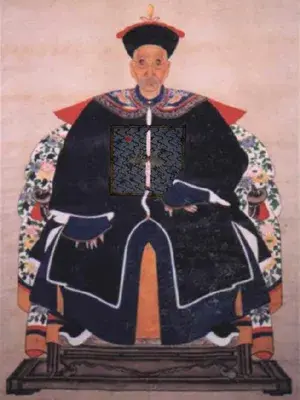
The Painting of the Twenty-Eight Generals of the Cloud Platform (云台二十八将图绘) was a major imperial commemorative and portraiture project commissioned in 60 AD (third year of Yongping) by Emperor Ming of Han (Liu Zhuang) in the Cloud Platform Gallery of the Southern Palace at Luoyang. To honor the arduous founding struggles of his father, Emperor Guangwu (Liu Xiu), and to memorialize the military commanders who helped restore the Han dynasty, Emperor Ming directed imperial court artists to paint lifelike full-length portraits of twenty-eight preeminent generals upon the gallery walls. The portrait gallery was headed by Grand Tutor Deng Yu, Marquis of Gaomi, followed closely by Grand Commander Wu Han, Marquis of Guangping. The sequence of twenty-eight generals was astrologically mapped to the twenty-eight lunar mansions of traditional Chinese cosmography, symbolizing that the Eastern Han dynasty enjoyed divine mandate, with stars in the heavens circling and shielding the Son of Heaven. Subsequently, four senior civil and military contributors—Wang Chang, Li Tong, Dou Rong, and Zhuo Mao—were added to adjacent walls. Significantly, the legendary General Ma Yuan was deliberately omitted because his daughter had been crowned empress, reflecting Emperor Ming's strict policy against honoring maternal relatives. The Cloud Platform portraits represented the apex of Eastern Han imperial ceremonial memory, enduring as an immortal benchmark for honoring patriotic devotion throughout Chinese history.
Liu Xiu ascends the imperial throne at Hao, deploying Deng Yu, Wu Han, and generals across the realm to wage the war of restoration.
Regional warlords are eradicated; Emperor Guangwu ennobles hundreds of founding generals while retiring their military commands in favor of civil governance.
Emperor Guangwu passes away; Crown Prince Liu Zhuang ascends the throne, inaugurating the golden age of Ming-Zhang governance.
Emperor Ming decrees the execution of portraits commemorating the founding generals upon the walls of the Cloud Platform Gallery in Luoyang.
Deng Yu is placed at the head of the roster, followed by Wu Han; the twenty-eight generals are astrologically aligned with the twenty-eight lunar mansions.
To prevent maternal relatives from accumulating dynastic influence, Emperor Ming deliberately excludes his father-in-law, General Ma Yuan.
Emperor Ming commissions portraits of Wang Chang, Li Tong, Dou Rong, and Zhuo Mao on adjacent walls, completing a pantheon of thirty-two figures.
The Cloud Platform gallery is established as a sacred dynastic memorial, inspiring military commanders and statesmen throughout imperial history.
Following the collapse of Wang Mang's Xin dynasty and the chaos of the Green Forest and Red Eyebrow rebellions, Emperor Guangwu launched his uprising from Chongling. Over twenty years of relentless campaigning, he crushed rival warlords across the empire, reuniting China and inaugurating the Eastern Han dynasty. Having witnessed how Han Gaozu had executed generals like Han Xin and Peng Yue, Guangwu instituted a benevolent policy: he rewarded his generals with vast hereditary marquisates and generous stipends while relieving them of direct provincial administrative authority, preserving life-long trust between monarch and ministers.
In 57 AD, Emperor Guangwu passed away and Crown Prince Liu Zhuang ascended the throne as Emperor Ming. Dedicated to rigorous governance and classical ritual, Emperor Ming led the dynasty into a golden age of peace and prosperity. By 60 AD, state coffers were overflowing and frontiers were pacified. Moved by filial devotion to his father's memory and wishing to ensure that imperial successors never forgot the blood and sacrifice that built the dynasty, Emperor Ming resolved to create a monumental state artistic pantheon inside the imperial palace.
Since the Western Han, the imperial court had maintained a tradition of painting virtuous ministers and sages upon palace walls to project state authority. In 51 BC (third year of Ganlu), Emperor Xuan of Han had commissioned portraits of eleven preeminent ministers—including Huo Guang and Zhao Chongguo—in the Qilin Gallery of Weiyang Palace, establishing the highest ceremonial honor in imperial China. By reviving this institution in Luoyang, Emperor Ming not only honored Western Han precedent but also created a distinct monumental symbol affirming the sovereign legitimacy of the Eastern Han restoration.
The generals of the Eastern Han restoration rose largely from local gentry and military outposts, following Guangwu through countless engagements across northern China. Military commanders such as Geng Yan conquered Qi, Cen Peng subdued Jingxiang, Feng Yi crushed the Red Eyebrows at Mianchi, and Jia Fu sustained twelve wounds in frontline charges. These generals were distinguished by strict military discipline and steadfast loyalty to the restoration cause.
Following universal pacification in 37 AD, Guangwu ennobled 365 meritorious officers with county marquisates and generous tax revenues. Although their direct military commands were gradually retired in favor of civil administration, the emperor honored them at every major imperial assembly. For three decades, the sovereign and his commanders lived in mutual trust, providing the foundation of spotless reputations that justified their subsequent immortalization under Emperor Ming.
Throughout his thirty-year reign, Emperor Guangwu maintained deep personal affection for his founding companions. Whenever generals fell ill, the emperor dispatched imperial physicians and medicines to their estates, granting opulent state funerals and posthumous titles upon their deaths. When Feng Yi died on campaign and Cen Peng was assassinated in Shu, Guangwu wept bitterly in open court. This genuine camaraderie ensured that the Eastern Han generals enjoyed spotless moral renown, free from the purge and slaughter that marred other dynastic foundings.
In 60 AD, Emperor Ming issued an imperial edict to the Master of Writing and the Court of Imperial Attendants to inaugurate the memorial gallery. The emperor selected the Cloud Platform of the Southern Palace as the sanctuary for the portraits. The Southern Palace served as the primary residence and administrative center of the Eastern Han emperors, while the Cloud Platform towered above the northern sector, housing secret archives, classical manuscripts, and state registers.
By situating the portraits in the Cloud Platform, Emperor Ming placed his father's generals alongside the sacred archives of the realm, conferring eternal dynastic veneration upon their memories. The emperor personally reviewed the proposed rosters, ordering the Secretariat to verify the merit registries compiled during the Jianwu era to ensure that the ranking reflected battlefield achievements and strategic contributions.
The Cloud Platform occupied a sacred status within the palace complex, serving as the emperor's retreat for fasting and political reflection. Before launching the project, Emperor Ming ascended the tower with senior ministers, gazing across the Luoyang skyline while recounting the hardships endured by his father's generals. The interior walls were decorated with landscape murals and cosmic ceilings, creating an awe-inspiring atmosphere that evoked the unity of heaven and humanity.
Among the twenty-eight generals selected, Grand Tutor Deng Yu, Marquis of Gaomi, was ranked first. Having formed a close bond with Guangwu during his youth in Chang'an, Deng had ridden north to join him, formulating the foundational grand strategy of winning hearts and attracting talent. Revered for his modesty, classical scholarship, and strategic foresight, Deng's position at the head of the roster was universally acclaimed.
Ranked second was Grand Commander Wu Han, Marquis of Guangping. A bold, resolute field commander, Wu had led the Youzhou shock cavalry across northern battlefields before commanding the river fleet that conquered Shu Han. Third was Jia Fu, celebrated for unmatched frontline ferocity; fourth was Geng Yan, compared by Guangwu to Han Xin for his mastery of mobile warfare; fifth was administrative organizer Kou Xun; sixth was southern strategist Cen Peng; and seventh was the selfless Feng Yi.
The remaining commanders, from Zhu You to Liu Zhi, were systematically arrayed: Zhu You, Zhai Zun, Jing Dan, Gai Yan, Jian Tan, Geng Chun, Zang Gong, Ma Wu, Liu Long, Ma Cheng, Wang Liang, Chen Jun, Fu Jun, Du Mao, Tiao Qi, Wang Ba, Ren Guang, Li Zhong, Wan Xiu, Pi Tong, and Liu Zhi. The ranking achieved an exquisite balance of strategic leadership, battlefield valor, personal rectitude, and regional representation.
Emperor Ming structured the roster to match the twenty-eight lunar mansions of traditional Chinese astrology, establishing the sacred theological framework known as the "Twenty-Eight Constellations of the Cloud Platform." Under the Han doctrine of cosmological correspondence, the four celestial quadrants—Azure Dragon, Black Tortoise, White Tiger, and Vermilion Bird—were viewed as celestial guardians encircling the Imperial Pole Star.
According to this cosmological schema, the Azure Dragon quadrant corresponded to commanders such as Deng Yu (Horn), Wu Han (Neck), Jia Fu (Root), Geng Yan (Room), Kou Xun (Heart), Cen Peng (Tail), and Feng Yi (Winnowing Basket). The northern Black Tortoise corresponded to Zhu You and Zhai Zun; the western White Tiger to Ma Wu and Liu Long; and the southern Vermilion Bird to Tiao Qi and Wang Ba.
This cosmic alignment elevated the terrestrial military campaigns of the restoration into divinely ordained celestial destiny. It proclaimed to the empire that Emperor Guangwu and his generals were the earthly incarnations of the Pole Star and the twenty-eight constellations, reinforcing the supernatural legitimacy of the Eastern Han dynasty and providing a sacred mythological foundation for Han imperial rule.
Emperor Ming mobilized the most talented painters of the Court of Imperial Attendants to execute the murals. Working from historical sketches, physical descriptions preserved in family archives, and the facial features of living descendants, the artists rendered lifelike full-length figures clad in formal iron armor, ceremonial silk tabards, and gold seals with purple cords.
The compositions were monumental, with figures rendered at life-size scale using durable mineral pigments such as cinnabar, azurite, and malachite. Beside each portrait, calligraphers inscribed the general's name, courtesy name, noble rank, official titles, and a concise summary of military exploits in elegant Han clerical script.
The artists captured individual character with profound psychological nuance: Grand Commander Wu Han was depicted with stern martial gravitas, his hand resting upon his sword pommel; while Feng Yi, the "Big Tree General," was portrayed with modest serenity, reflecting his practice of sitting quietly beneath a tree while other commanders boasted of their victories. Visiting the gallery, Emperor Ming marveled at the lifelike vitality of the completed works.
The most conspicuous omission from the Cloud Platform pantheon was General Ma Yuan, the famed Subduer of the Waves. Ma Yuan was one of the most accomplished commanders of the age, having pacified Jiaozhi in the far south, crushed Qiang insurrections in the west, and died in armor on the battlefield. By any standard of military merit, Ma Yuan surpassed many within the twenty-eight.
His exclusion was a calculated act of statecraft by Emperor Ming. Ma Yuan's daughter had been chosen as Emperor Ming's consort and elevated to empress—the celebrated Empress Mingde. Mindful of how maternal clans such as the Lu, Huo, and Wang families had undermined the Western Han dynasty, Emperor Ming established a strict precedent excluding maternal relatives from merit honors, deliberately omitting his own father-in-law to prevent dynastic usurpation.
This principled exclusion was celebrated by subsequent historians as a masterstroke of monarchical vigilance. The fifth-century historian Fan Ye observed: "Emperor Ming commemorated the founding generals at the Cloud Platform, deliberately omitting Ma Yuan due to the domestic favor enjoyed by Empress Mingde. In curbing the influence of imperial uncles and eradicating the seeds of usurpation, how profound was his foresight!"
Following the completion of the twenty-eight military portraits, Emperor Ming recognized that certain statesmen had contributed uniquely to dynastic foundation through political foresight, regional surrender, and moral leadership. Consequently, the emperor ordered four additional figures painted upon the adjacent walls: Wang Chang, Li Tong, Dou Rong, and Zhuo Mao.
Each of these four figures represented a vital pillar of the restored empire: Wang Chang had brought the Green Forest armies to Guangwu's banner, praised by the emperor as possessing the loyalty of Boyi; Li Tong had supported the uprising in Chongling with his entire clan fortune; Dou Rong had surrendered the Hexi Corridor intact, preserving the northwest frontier; and Zhuo Mao, a venerated Confucian scholar, had been appointed Grand Tutor at Guangwu's enthronement to exemplify moral rectitude.
These additions enriched the commemorative scope of the Cloud Platform. While the twenty-eight generals represented military brilliance in the field, the four additional figures encompassed diplomatic unification, moral governance, and early dynastic alliance, creating an integrated vision of civil and military harmony that defined the golden age of Eastern Han statecraft.
Following its completion, the Cloud Platform Gallery became a national temple where successive Eastern Han emperors venerated dynastic ancestors and inspired commanders departing for frontier campaigns. The gallery served alongside the Imperial Academy and the Hall of Light as the spiritual pillar of the Eastern Han state, functioning as an enduring symbol of dynastic restoration.
Over centuries, the Cloud Platform became the supreme cultural symbol of patriotic service and posthumous glory in Chinese civilization. Tang Dynasty poets frequently invoked its imagery: Li Bai wrote, "When shall I join the commanding tent, and have my name inscribed in the Cloud Platform?"; while Du Fu praised, "Look upon the paintings of the Cloud Platform, where martial winds forever blow." The institution became an indelible part of the Chinese heroic ideal.
The Painting of the Twenty-Eight Generals of the Cloud Platform represented the pinnacle of Eastern Han political ideology and official portraiture art. By integrating Western Han commemorative traditions with Han cosmological theories of the twenty-eight lunar mansions, the project sacralized imperial legitimacy, presenting the restoration as a cosmic mandate executed by stellar deities. This synthesis of monumental art, dynastic ritual, and astrological theology provided an enduring blueprint for imperial merit halls across Chinese history.
The Cloud Platform gallery created an enduring cultural benchmark that motivated scholar-officials and military officers for two millennia. The aspiration to have one's portrait painted in the Cloud Platform became the supreme expression of patriotic ambition in Chinese literature. When Emperor Taizong of Tang established the Lingyan Gallery with twenty-four portraits in 643 AD, he consciously emulated Emperor Ming's precedent, embedding the Cloud Platform ideal within the cultural DNA of Chinese dynastic governance.
Modern historians evaluate the Cloud Platform portraits as a masterclass in political legitimacy and institutional statecraft. Scholars recognize the project as a deliberate effort to consolidate the cultural identity of the Eastern Han dynasty, celebrating the peaceful transition from military conquest to civil governance under Guangwu. In particular, Emperor Ming's resolute exclusion of his father-in-law Ma Yuan is praised as an act of exceptional political discipline that shielded the early Eastern Han court from maternal clan usurpation.