Shenzong Dies and Gao Rules as Regent
Emperor Shenzong passes away; young Zhezong ascends the throne with Empress Dowager Gao as regent, determined to reverse reforms.
Northern Song Dynasty (北宋) · HISTORICAL EVENT
元祐更化
The Yuanyou Restoration (元祐更化) was a momentous reversal of national political architecture during the Yuanyou era of Northern Song Emperor Zhezong. In 1085 (Yuanfeng 8), the reformist Emperor Shenzong passed away, and his ten-year-old son Zhao Xu ascended the throne, with his grandmother Grand Empress Dowager Gao (Empress Xuanren Shenglie) ruling as regent from behind the curtain. Originating from an eminent military aristocracy, Empress Dowager Gao had…
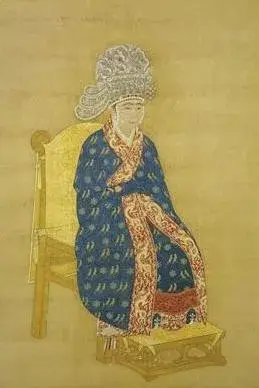
The Yuanyou Restoration (元祐更化) was a momentous reversal of national political architecture during the Yuanyou era of Northern Song Emperor Zhezong. In 1085 (Yuanfeng 8), the reformist Emperor Shenzong passed away, and his ten-year-old son Zhao Xu ascended the throne, with his grandmother Grand Empress Dowager Gao (Empress Xuanren Shenglie) ruling as regent from behind the curtain. Originating from an eminent military aristocracy, Empress Dowager Gao had vehemently opposed Wang Anshi's New Policies. Upon assuming power, she dismissed leading reformist councilors Cai Que and Zhang Dun, recalling conservative leader Sima Guang from fifteen years of retirement in Luoyang to serve as prime minister, alongside elder statesmen Lyu Gongzhu, Wen Yanbo, and the Su brothers. Adopting an uncompromising approach, Sima Guang abolished the Green Sprouts Law, Hired Service Law, Baojia militia system, and Market Trade Law within months, attempting to restore ancestral institutions wholesale. Following Sima Guang's demise, the conservative coalition fractured into bitter internecine warfare among the Luo, Shu, and Shuo factions. In 1093, Empress Dowager Gao died, and Emperor Zhezong assumed direct personal rule, launching the Shaosheng Shaoshu policy that recalled the reformists and brutally purged the Yuanyou conservatives, entangling the court in destructive vendettas.
Emperor Shenzong passes away; young Zhezong ascends the throne with Empress Dowager Gao as regent, determined to reverse reforms.
Sima Guang is appointed to high office; New Faction leaders Cai Que, Zhang Dun, and Lyu Huiqing are dismissed.
Sima Guang becomes prime minister and forcibly abolishes the Hired Service Law, Green Sprouts Law, and Baojia system within days.
Sima Guang dies in office; Lyu Gongzhu and Fan Chunren take power while Wen Yanbo acts as senior councilor.
Without Sima Guang, the conservative coalition disintegrates into regional and ideological factions engaged in bitter feuds.
Target of relentless attacks by Luo and Shuo censors, Su Shi voluntarily accepts provincial appointment to Hangzhou.
Empress Dowager Gao passes away, ending her eight-year regency and bringing the Yuanyou Restoration to a close.
Emperor Zhezong assumes direct rule, adopts the Shaosheng era name, appoints Zhang Dun, and initiates severe purges against Yuanyou officials.
During the Xining and Yuanfeng eras, Northern Song Emperor Shenzong appointed Wang Anshi to implement sweeping socio-economic and military reforms to combat chronic fiscal deficits and military weakness. The New Policies—including the Green Sprouts Law, Hired Service Law, Equitable Transportation Law, Land Survey and Fair Tax Law, and the Baojia militia system—substantially bolstered imperial revenues and strengthened defense mobilization. However, these measures disrupted the entrenched privileges of high-ranking bureaucrats and wealthy landed gentries, provoking severe opposition among scholar-officials. Elder statesmen such as Sima Guang, Han Qi, Fu Bi, and Ouyang Xiu condemned the reforms as state commercialism that trampled ancestral traditions. Over fifteen years of debate, this divide solidified into two irreconcilable political camps: the reformist New Faction and the conservative Old Faction.
In early 1085, devastated by the catastrophic failure of the five-route military expedition against Western Xia, Emperor Shenzong fell mortally ill. In February, Prime Minister Wang Gui led grand councilors into the imperial bedchamber to request the appointment of an heir and the regency of the Empress Dowager. In March, Shenzong designated his ten-year-old sixth son Zhao Xu as Crown Prince. Upon Shenzong's death, Zhezong ascended the throne, and Empress Dowager Gao was elevated to Grand Empress Dowager, formally assuming imperial regency from behind the curtain. Gao hailed from a prestigious military lineage, being the great-granddaughter of founding general Gao Qiong and granddaughter of Cao Bin. Strongly traditionalist, she had consistently sheltered conservative literati during Shenzong's reign. With absolute imperial authority concentrated in her hands, the stage was set for a total conservative restoration.
From the outset of her regency, Empress Dowager Gao moved swiftly to reconfigure the apex of bureaucratic power. Although New Faction leaders Cai Que, Zhang Dun, and Han Zhen still controlled the Secretariat and Bureau of Military Affairs, Gao recognized that only an elder statesman of immense moral prestige could counter their influence. In March 1085, she issued an imperial decree recalling Sima Guang from Luoyang, appointing him Vice Director of the Chancellery. Since retiring in 1070 over his opposition to the reforms, Sima Guang had spent fifteen years compiling the Comprehensive Mirror in Aid of Governance (Zizhi Tongjian). His steadfast aloofness had elevated him to mythic status among conservative literati and commoners; when he entered Kaifeng, tens of thousands of citizens lined the avenues cheering, hailing him as our living savior.
Upon arriving at court, Sima Guang met Empress Dowager Gao in an emotional audience where both wept, forging an immediate pact to dismantle the New Policies. Sima Guang submitted memorials urging the immediate abolition of the Baojia militia and the revocation of all reform legislation, branding the measures oppressive and ruinous. Backed by the regent, the court initiated a sweeping purge of reformist leadership. Prime Minister Wang Gui died in anxiety; Zhang Dun, who vigorously defended the fiscal benefits of the reforms on the palace floor, was stripped of military office and demoted to Huzhou; Chancellor Cai Que was demoted to Chenzhou; and key reformer Lyu Huiqing was disgraced and banished to Suizhou. Reformist leaders were entirely expelled from the capital.
Simultaneously, Empress Dowager Gao and Sima Guang recalled dozens of conservative literati who had been dismissed or had resigned over the preceding fifteen years. Lyu Gongzhu was named Vice Director of the Department of State Affairs, ninety-year-old Wen Yanbo returned as Grand Preceptor to oversee state affairs, Fan Chunren was promoted to the Bureau of Military Affairs, Su Shi was recalled as Hanlin Academician, and his brother Su Zhe became Policy Reviewer. Within months, Luoyang conservatives dominated all central ministries and the censorate, establishing an uncontested political monopoly.
In April 1086 (Yuanyou 1), Sima Guang rose to Prime Minister, with Lyu Gongzhu as Vice Prime Minister. Sima Guang took an absolute, moralistic approach to dismantling the New Policies, arguing that Shenzong had merely been misled by deceitful flatterers like Wang Anshi and that reversing the laws fulfilled filial piety. Under his decree, all reforms enacted during the Xining and Yuanfeng eras were abolished wholesale, regardless of their practical efficacy.
First to be repealed were the Baojia militia system and the Square Fields and Fair Tax Law. Sima Guang dismissed Baojia as burdensome and prone to bureaucratic extortion, disbanding rural militias in May and reinstating hereditary village patrols. Next, he struck down the Green Sprouts Law, which had provided low-interest seasonal state loans to tenant farmers to curb private usury; despite Fan Chunren's pleas to preserve its beneficial elements, Sima Guang shut down state grain-lending offices. Furthermore, the Market Trade Law and Horse Breeding System were discontinued, and frontier fortresses along the Western Xia border that Shenzong had conquered were ceded back unconditionally to appease the Tangut state.
The fiercest contention erupted over the Hired Service Law. For over a decade, this law had permitted households to pay a graduated fee in lieu of physical labor, funding hired workers and sparing middle-class farmers ruinous corvee duties. Sima Guang demanded the complete reinstatement of compulsory corvee within five days. Even fellow conservative Su Shi protested vehemently, warning that the Hired Service Law had proven convenient and that abruptly forcing peasants back into compulsory service would spark widespread ruin. Sima Guang angrily shouted down Su Shi, refusing to compromise. When compulsory service was reimposed, wealthy gentries shifted the burden back onto poor freeholders, generating intense public disillusionment and demonstrating the dogmatic detachment of the restoration.
In September 1086, Sima Guang died in office at age sixty-eight, exhausted by the frantic campaign to revoke the reforms. Empress Dowager Gao mourned bitterly, conferring upon him the title Duke of Wen and halting court audiences for three days. Tens of thousands of weeping citizens attended his funeral cortege. Lyu Gongzhu succeeded him as Prime Minister, with Fan Chunren entering the grand council. However, deprived of Sima Guang's towering moral authority, the conservative coalition quickly fragmented along regional lineages and ideological doctrines into three mutually hostile factions: the Luo, Shu, and Shuo cliques.
The Luo Faction was led ideologically by Neo-Confucian master Cheng Yi, supported by scholars from Henan and Luoyang; dogmatic and moralizing, Cheng Yi frequently lectured Emperor Zhezong and high officials on rigid ritual proprieties, provoking widespread resentment. The Shu Faction was headed by Su Shi and Su Zhe, comprising pragmatic Sichuan intellectuals renowned for literary genius who advocated flexible governance and opposed Cheng Yi's pedantry. The Shuo Faction was anchored by northern scholars from Hebei and Shandong, notably Liu Zhi, Liang Tao, and Wang Yansou, who dominated the Censorate with aggressive, uncompromising rhetoric.
These three conservative factions spent the subsequent years in bitter mutual recriminations over official appointments, classical interpretations, and personal conduct. In 1087, Su Shi was impeached by Luo censors for allegedly mocking Cheng Yi in verse. Later, when the Shuo Faction gained preeminence, Liu Zhi attacked the Shu faction for nepotism, forcing Su Shi to request a provincial governorship in Hangzhou. Soon after, Shuo censors turned on Luo leader Cheng Yi, having him dismissed from court lectureship. The imperial court devolved into sterile pedantic warfare, severely compromising administrative effectiveness and destroying the moral standing of the conservative literati.
Throughout the eight years of the Yuanyou era, the youthful Emperor Zhezong sat silently on the throne while Empress Dowager Gao conducted all state business from behind the curtain. Ministers directed their memorials toward the curtain, rarely even looking at the young monarch. Precocious, intelligent, and deeply devoted to the memory of his father Shenzong, Zhezong silently endured this marginalization while harboring profound resentment toward the ministers who had systematically undone his father's life work, vowing to avenge him once he gained power.
In September 1093, Empress Dowager Gao fell mortally ill. Recognizing the inevitable political backlash, she summoned Fan Chunren and Lyu Dafang to her bedside, warning them to retire to Luoyang before Zhezong reversed their policies. Upon her death, eighteen-year-old Zhezong assumed direct personal rule. He promptly proclaimed the era name Shaosheng (Continuing the Sage) for the coming year, formally declaring his commitment to continuing Emperor Shenzong's reform agenda. Zhezong dismissed conservative councilors Fan Chunren and Lyu Dafang, recalling New Faction leaders Cai Que and Zhang Dun to head the court.
In 1094, upon becoming Prime Minister, Zhang Dun launched a ruthless campaign of political vengeance, reinstating all of Wang Anshi's New Policies and systematically persecuting Yuanyou conservatives. Sima Guang and Lyu Gongzhu were posthumously stripped of all honors and their tomb monuments demolished; Wen Yanbo, Su Shi, Su Zhe, and dozens of other officials were exiled to disease-ridden outposts in Lingnan and Hainan Island. The Yuanyou Restoration and its reactionary aftermath trapped the Northern Song in an irreversible vortex of political extremism, exhausting state vitality on the eve of the Jurchen Jin invasion.
The eight-year Yuanyou Restoration came to a definitive close with the death of Empress Dowager Gao and the assumption of direct personal rule by Emperor Zhezong. Under the leadership of Sima Guang and Empress Dowager Gao, the foundational reform legislation of the Xining and Yuanfeng eras—including the Green Sprouts Law, Hired Service Law, Market Trade Law, and Baojia system—was comprehensively eradicated, reverting governance to pre-Shenzong conventions. However, the conservative coalition failed to implement constructive alternatives, devolving after Sima Guang's death into bitter internecine warfare among the Luo, Shu, and Shuo factions. In 1093, Emperor Zhezong assumed direct power, launched the Shaosheng era, recalled reformist leader Zhang Dun, and unleashed sweeping retaliatory persecutions against conservative officials, completely dismantling the Yuanyou legacy.
The Yuanyou Restoration exerted a ruinous, destabilizing effect on the political culture of the late Northern Song Dynasty. Rather than healing administrative divides, it transformed policy disagreements into existential partisan bloodsports. The initial purge of reformists and the subsequent retaliatory terror under Shaosheng established a toxic precedent of systemic political retribution, annihilating bureaucratic consensus and filling high offices with careerist sycophants. Furthermore, erratic policy reversals and dogmatic fiscal retrenchment exhausted imperial treasuries and paralyzed frontier defense structures along the northern and northwestern borders, critically degrading the dynasty's strategic resilience and paving the direct path toward the Jingkang Catastrophe and the fall of northern China to the Jurchen Jin.