Ascension of Emperor Wen
Following the deposition of Emperor Shao, Liu Yilong ascends the throne in Jiankang and establishes the Yuanjia era.
Northern and Southern Dynasties / Southern and Northern Dynasties (Liu Song Dynasty) · HISTORICAL EVENT
元嘉之治
The Rule of Yuanjia refers to the illustrious thirty-year reign of Emperor Wen of Song, Liu Yilong, from 424 to 453, recognized in imperial historiography as the golden age of political stability, economic affluence, and cultural brilliance during the Southern Dynasties. Following the founding of the dynasty by Emperor Wu and the brief reign of the deposed Emperor Shao, Liu Yilong was summoned from Jiangling to assume the imperial throne in Jiankang.…
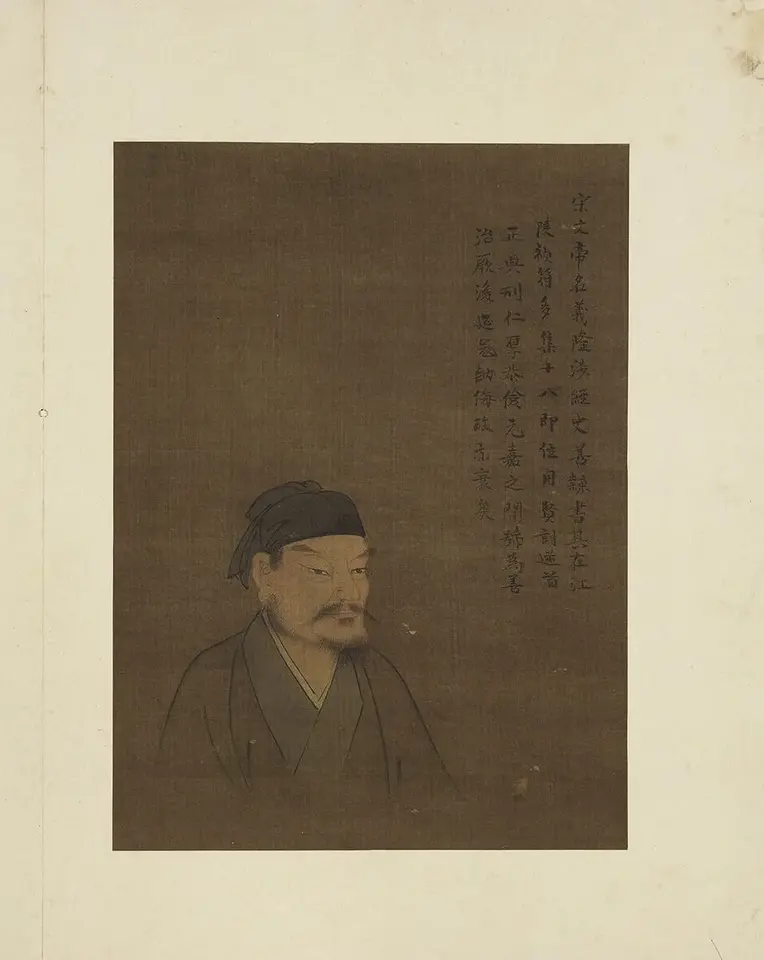
The Rule of Yuanjia refers to the illustrious thirty-year reign of Emperor Wen of Song, Liu Yilong, from 424 to 453, recognized in imperial historiography as the golden age of political stability, economic affluence, and cultural brilliance during the Southern Dynasties. Following the founding of the dynasty by Emperor Wu and the brief reign of the deposed Emperor Shao, Liu Yilong was summoned from Jiangling to assume the imperial throne in Jiankang. Demonstrating exceptional political acumen, Emperor Wen purged overbearing regent ministers Xu Xianzhi, Fu Liang, and Xie Hui, consolidating imperial authority while championing broad policies of popular rehabilitation. Administratively, the court restrained the economic privileges of aristocratic clans, elevated talented plebeians to manage state secrets, and enforced rigorous judicial audits; economically, the throne remitted agricultural taxes, sponsored hydraulic canal networks, instituted the Yuanjia Four-Zhu coinage, and outlawed the monopolization of mountains and lakes; culturally, the emperor founded the pioneering Four Academic Institutes for Confucianism, Metaphysics, History, and Literature, fostering enduring masterpieces including Pei Songzhi's Commentary on the Records of the Three Kingdoms, Fan Ye's Book of the Later Han, and He Chengtian's Yuanjia Calendar. Although three ill-fated northern military campaigns resulted in Northern Wei counter-invasions that devastated the Jiangbei frontier, the Rule of Yuanjia stood as the most prosperous and stable epoch in the history of the Southern Dynasties.
Following the deposition of Emperor Shao, Liu Yilong ascends the throne in Jiankang and establishes the Yuanjia era.
Emperor Wen executes Xu Xianzhi and Fu Liang, defeating Xie Hui in Jiangling to reclaim personal imperial power.
Song forces advance to the Yellow River, but are routed by Northern Wei cavalry when the river freezes in winter.
The court establishes state mints to cast the Yuanjia Four-Zhu Coin, stabilizing commercial currency across the empire.
The emperor outlaws aristocratic enclosure of natural waterways and forests, protecting smallholder farmers.
Emperor Wen founds the specialized academic institutes for Confucianism, Metaphysics, History, and Literature.
Astronomer He Chengtian creates the Yuanjia Calendar, establishing solar and lunar calculations.
The second northern expedition collapses; Northern Wei cavalry advance to Mount Guabu, ravaging Jiangbei.
Crown Prince Liu Shao stages a bloody palace coup and murders Emperor Wen, concluding the Rule of Yuanjia.
At the end of the Eastern Jin dynasty, the plebeian military commander Liu Yu seized supreme authority through triumphant northern expeditions and domestic pacification, founding the Liu Song dynasty in 420 as Emperor Wu. During his brief three-year reign, Emperor Wu enacted vital institutional reforms, including the Yixi Tuduan to register unregistered households and strip aristocratic lineages of illicit tax exemptions. However, Emperor Wu died prematurely in 422, leaving the young regime vulnerable. Across the southern provinces, vast aristocratic agricultural manors persisted, with hereditary clans continuing to enclose commons, conceal tenant labor, and dominate local offices, demanding sustained domestic peace to heal society.
On his deathbed, Emperor Wu entrusted the imperial regency to four senior statesmen: Xu Xianzhi, Fu Liang, Xie Hui, and Tan Daoji. The youthful successor, Emperor Shao, proved frivolous and indifferent to governance. In 424, Xu Xianzhi and his fellow regents orchestrated a palace coup, deposing and murdering Emperor Shao and Prince of Luling Liu Yizhen, and sent an imperial delegation to Jiangling to invite Emperor Wu's third son, Liu Yilong, Prince of Yidu, to ascend the throne. In August 424, Liu Yilong was crowned in the Qingshu Hall in Jiankang, adopting the era name Yuanjia and initiating thirty years of transformative governance.
Upon arriving in Jiankang from Jiangling, Emperor Wen found central governance dominated by the regent triumvirate of Xu Xianzhi, Fu Liang, and Xie Hui, who monopolized imperial seals, held senior military commands, and controlled the strategic middle Yangtze fortress of Jiangling. These ministers posed an existential threat to the fledgling throne. Endowed with profound patience and tactical cunning, Emperor Wen, guided by loyal confidants Wang Hua and Wang Tanshou, outwardly treated the regents with meticulous deference while systematically securing the allegiance of palace guards and senior field commanders.
In January 426 (the third year of Yuanjia), having consolidated control over the metropolitan garrison, Emperor Wen proclaimed the treasonous crimes of Xu Xianzhi and his cabal in murdering two imperial princes. Palace guards swiftly arrested and executed Xu Xianzhi and Fu Liang in the capital, while general Tan Daoji led an amphibious expeditionary fleet up the Yangtze to crush Xie Hui in Jingzhou. Captured and brought to Jiankang for execution, Xie Hui's destruction removed the entrenched oligarchic regency, returning undisputed executive command to the sovereign.
Having dismantled the regency, Emperor Wen restructured the imperial decision-making apparatus to prevent high-ranking aristocratic lineages from monopolizing power. While continuing to award ceremonial titles to prestigious aristocratic clans such as the Wang of Langya and Xie of Chenliu, the emperor bypassed the aristocratic leadership of the Department of State Affairs by assigning functional administrative authority to trusted imperial secretaries of plebeian origin.
Emperor Wen institutionalized the reliance on plebeian secretariats, empowering the Secretariat Drafters and Palace Gate Messengers to handle secret memorials, draft imperial edicts, and inspect provincial magistracies. The emperor personally attended audiences daily in Xianyang Palace, reviewing official dockets and interviewing candidates for promotion. This centralization of bureaucratic power subordinated entrenched hereditary elites, establishing an administrative framework where policy emanated directly from the throne.
At the start of the Yuanjia era, decades of armed instability and chronic weather extremes had impoverished the rural populace across Jiangnan and the Huai valley. Emperor Wen established popular recuperation as the cardinal objective of statecraft. In the opening years of his reign, the court issued successive tax relief decrees, ordering nationwide audits of agricultural distress and remitting land taxes, cloth levies, and labor service across flood- and drought-stricken commanderies, while distributing grain reserves from state granaries to destitute farming households.
To resettle the large numbers of refugees who had fled south to escape warfare in the Central Plains, the throne enacted generous homesteading regulations, instructing local magistracies to grant migrants arable crown land and tax holidays of up to five years, while forbidding noble estates from seizing unattached peasants as serfs. These benevolent policies encouraged millions of dispossessed cultivators to clear idle soil, fostering population growth and solidifying civilian loyalty to the imperial house.
To achieve agricultural abundance, Emperor Wen made agricultural promotion the supreme operational metric of provincial administration. Each spring, the emperor led civil ministers in performing the ceremonial plowing rites on the imperial sacred fields south of Jiankang, exemplifying state veneration of agrarian labor. Regional inspectors, commandery governors, and county magistrates were evaluated and promoted based on the acreage of reclaimed wasteland, expansion of irrigated rice paddies, and local grain production.
Under imperial direction, massive hydraulic engineering campaigns were launched across southern commanderies. Regional administrations dredged waterways, erected stone levees, and repaired ancient reservoirs throughout the Lake Tai basin, the Ningbo-Shaoxing plain, and Kuaiji. In the Huai River valley, engineers constructed irrigation networks that converted low-lying marshes into productive wet-rice basins. These hydraulic investments shielded southern agriculture from droughts and floods, producing over two decades of uninterrupted bountiful harvests.
Throughout the Eastern Jin, aristocratic magnates had ruthlessly enclosed mountains, coastal marshes, forests, and salt flats as private property, forcing common fishermen, hunters, and woodcutters to pay illicit tolls. Condemning this predatory exploitation, Emperor Wen promulgated the celebrated Edict on Prohibiting the Enclosure of Mountains and Marshes in 432, proclaiming that wilderness resources were the shared endowment of all people and outlawing aristocratic enclosures.
The decree ordered magistrates to dismantle all private barricades across rivers and forests, prescribing severe legal punishments for any aristocrat attempting to tax commoners gathering firewood, hunting, or fishing in common wetlands. Concurrently, imperial auditors recovered vast tracts of fertile public soil illicitly incorporated into noble manors. This decisive intervention curbed the parasitic expansion of aristocratic manors and safeguarded the livelihoods of smallholder peasant households.
Emperor Wen maintained that righteous statecraft depended entirely on selecting moral, capable regional administrators. To eradicate the chronic bribery and extortion that had characterized local government under the Eastern Jin, the emperor instructed the Ministry of Personnel to evaluate magistracies on administrative integrity and popular welfare rather than ancestral pedigree, promoting talented incorruptible officials such as Lu Hui and Shen Tian.
In the imperial palace, Emperor Wen displayed official register boards listing the names, tenures, and performance records of every provincial inspector and commandery governor across the realm. Officials who demonstrated administrative thrift, protected civilian livelihoods, and pacified their borders were honored with imperial commendations, gifts of silver, and extended tenures to maintain stability. Conversely, venal magistrates who abused the populace were removed and prosecuted, fostering a disciplined and responsive provincial administration.
To broaden the imperial fiscal base and curb aristocratic harboring of unregistered dependents, Emperor Wen executed several systematic Tuduan residency-settlement campaigns, building upon the foundational reforms of Emperor Wu. The court dispatched imperial auditors and censors to inspect villages, manors, and markets, examining household registers and detecting concealed tenant laborers, serfs, and retainers.
Through these rigorous investigations, millions of concealed commoners were detached from private aristocratic control and enrolled on the imperial yellow registers as taxpayers subject to state levies and corvee duties. The deepening of the Tuduan policy not only augmented state revenues and enlarged the military recruitment pool, but also accelerated the conversion of nominal emigre commanderies into regular territorial jurisdictions, cementing the fiscal foundation of the unified empire.
For decades, the Southern Dynasties had suffered from chaotic currency depreciation, driven by the circulation of debased, clipped, and privately counterfeited copper coins that crippled merchant commerce and triggered price inflation. To restore monetary stability, Emperor Wen ordered a fundamental currency reform in October 430, establishing state-supervised mints to cast a new official copper coin bearing the inscription Four Zhu, historically known as the Yuanjia Four-Zhu Coin.
The Yuanjia Four-Zhu Coin was distinguished by its high-purity copper alloy, standardized weight, and crisp rim contours, while private counterfeit casting was banned under penalty of death. The circulation of this dependable state currency drove debased private coins out of the market and stabilized consumer commodity prices. The establishment of monetary discipline stimulated market exchange between urban centers and rural production zones, fueling economic prosperity.
In legal administration, Emperor Wen embodied the Confucian principle of ruling with benevolence and exercising judicial clemency. Repulsed by the draconian tortures and arbitrary executions common in preceding decades, the emperor directed the Ministry of Justice to systematically purge the statutory codes inherited from the Western Jin, commuting harsh corporal penalties and abolishing collective clan execution for ordinary crimes.
The court established stringent appellate procedures, requiring that every death sentence receive comprehensive review by the judicial review courts and obtain personal imperial ratification. During extreme droughts, scorching summers, or freezing winters, the emperor personally inspected the detention wards of Jiankang, examining prisoners to rectify miscarriages of justice and pardoning repentant offenders. The promulgation of the revised Yuanjia Statutes produced a humane judicial environment celebrated for low crime and public trust.
Emperor Wen prioritized classical education and cultural patronage. In the early years of his reign, recognizing that civil disorder had caused the imperial university to fall into decay, the emperor restored the Imperial Academy in Jiankang, enrolling hundreds of aristocratic and commoner youths. In a pioneering institutional innovation in 439, Emperor Wen shattered the traditional single-discipline curriculum by establishing the Four Academic Institutes: the Institute of Confucianism led by Lei Cizong, the Institute of Metaphysics under He Shangzhi, the Institute of History under He Chengtian, and the Institute of Literature under Xie Yuan.
This specialized division of higher education recognized the autonomy of philosophical, historical, and literary disciplines, creating the earliest institutional precedent for specialized faculties in Chinese higher education. Emperor Wen attended philosophical debates at the institutes, bestowing honors upon visiting masters and attracting scholars from throughout China, making Jiankang the intellectual capital of East Asia.
Stimulated by enlightened imperial patronage, the Yuanjia era produced magnificent achievements in historical scholarship and literary art. In 429, historian Pei Songzhi was commissioned to compose a comprehensive commentary on Chen Shou's Records of the Three Kingdoms. Gathering materials from more than one hundred and forty historical sources, Pei multiplied the original text threefold, establishing an innovative historiographical commentary methodology that enriched historical analysis.
Concurrently, scholar Fan Ye composed the celebrated Book of the Later Han, synthesizing earlier chronicles into a unified, elegant narrative that became a permanent classic of Chinese historiography. In literature, Bao Zhao revolutionized heptasyllabic poetry with his impassioned ballad poetry, while Xie Lingyun and Yan Yanzhi perfected landscape poetry and the ornate Yuanjia style, elevating classical poetry to new aesthetic heights.
Technological and mathematical sciences achieved historic breakthroughs under Emperor Wen. Traditional calendars were plagued by accumulating errors in solar-lunar cycles and solstice alignments. In 443, the emperor appointed brilliant mathematician and astronomer He Chengtian to execute a comprehensive calendar reform. Following years of meticulous observation, He Chengtian created the scientifically advanced Yuanjia Calendar.
The Yuanjia Calendar discarded the traditional nineteen-year seven-leap-month rule in favor of a precise astronomical calculation, integrating the concept of precession into calendar compilation for the first time in world history. Promulgated by imperial edict as the official civil calendar of the dynasty, the Yuanjia Calendar provided farmers with accurate seasonal forecasts and laid the theoretical foundation for Zu Chongzhi's later astronomical breakthroughs.
Agricultural growth stimulated a boom in handicraft industries and commercial urbanization throughout Jiangnan. The silk textile industry expanded rapidly, with public and private weaving mills in Jiankang and Kuaiji producing brocades, silks, and damasks that circulated throughout East Asia. Papermaking reached exceptional sophistication; smooth, durable hemp and rattan papers were manufactured in large quantities, facilitating state administration and the commercial copying of imperial libraries. In ceramic arts, the Yue kilns achieved artistic perfection, producing celadon wares of translucent green glazes.
Metropolitan commerce flourished along the waterways of the south. Jiankang became a bustling metropolis of several hundred thousand households, its riverbanks lined with multi-storied commercial houses, wharves, and markets. Provincial centers including Jiangling, Suzhou, and Shaoxing emerged as regional trading hubs, connected by merchant flotillas plying the Yangtze. Foreign maritime embassies and merchant fleets arrived in Jiankang from Linyi, Funan, and the Korean kingdoms, generating commercial prosperity.
The Yuanjia era witnessed the intellectual maturation and societal integration of Buddhism and Daoism alongside traditional Confucian statecraft. Emperor Wen maintained an inclusive patronage toward Buddhism, holding audiences with master Gunabhadra to discuss ethical doctrines, praising Buddhist morality for reinforcing royal virtue. The court sponsored the construction of prominent Buddhist temples in Jiankang and subsidized the translation of Sanskrit texts, including Gunabhadra's translation of the foundational Lankavatara Sutra.
In Daoist scholarship, master Lu Xiujing systematically cataloged and standardized the liturgical texts of the Lingbao and Shangqing traditions, compiling China's first comprehensive Daoist bibliography, the Three Caverns Catalog. The creative synthesis of Confucian statecraft, Buddhist metaphysics, and Daoist cosmology enriched southern intellectual culture, fostering a sophisticated philosophical milieu.
While the Liu Song flourished in peace, the geopolitical landscape of northern China underwent a historic consolidation. The nomadic Tuoba Xianbei rulers of Northern Wei, under Emperor Taiwu, Tuoba Tao, systematically conquered the Northern Liang, Northern Yan, and Xia states, unifying northern China by 439. Northern Wei wielded hundreds of thousands of veteran cavalry, establishing an aggressive nomadic military empire along the Yellow River that confronted the southern empire in a strategic standoff.
Emperor Wen harbored a lifelong dream of liberating the Central Plains and restoring ancient Han territory, viewing the barbarian occupation of the northern heartland as an unbearable national humiliation. However, while the southern infantry and naval forces were formidable in defensive river warfare, they suffered from severe tactical vulnerabilities when fighting mobile armored cavalry on the plains of Henan. This strategic disparity would produce catastrophic consequences.
In 430 (the seventh year of Yuanjia), believing that years of peace had accumulated sufficient treasure, Emperor Wen launched his first major northern expedition. Disregarding the cautious advice of veteran generals, the emperor appointed general Dao Yanzhi as supreme commander, leading fifty thousand troops up the Huai and Si rivers to reclaim Henan. Occupied with campaigns against the Rouran khaganate in the north, Emperor Taiwu ordered his southern border garrisons to withdraw north of the Yellow River, allowing the Song armies to capture Luoyang, Hulao, and Huatai without resistance.
However, the Song expeditionary force overextended its supply lines across hundreds of leagues, leaving garrisons exhausted. In the winter of 430, the Yellow River froze solid, and Northern Wei cavalry under general An Yuan swept across the ice to launch a devastating counter-offensive. Northern cavalry isolated the Song detachments, crushing loyalist positions outside Luoyang. Panicked by the northern cavalry, Dao Yanzhi burned his fleet and supplies and retreated in disarray.
Following Dao Yanzhi's retreat, the isolated fortress of Huatai along the north bank of the Yellow River was encircled by Northern Wei cavalry. Song garrison commander Zhu Xiuzhi conducted a heroic defense, repelling assaults for months despite running out of food. Emperor Wen dispatched Tan Daoji with reinforcements, who fought over twenty engagements against northern forces, but could not break the siege due to exhaustion.
In February 431, Huatai fell to the Wei armies after its ammunition was spent, and Zhu Xiuzhi was captured, ending the first northern expedition in defeat. During the retreat, Tan Daoji found his troops surrounded and starving, executing his celebrated stratagem of measuring sand by night, scattering rice over sand mounds to trick northern scouts into believing the army was abundantly provisioned, allowing the southern forces to retreat intact. Despite Tan's tactical skill, the campaign squandered immense wealth and thousands of soldiers.
In the military and political balance of the Yuanjia era, the fate of founding hero Tan Daoji became a tragic turning point. Tan Daoji had earned legendary prestige through decades of battlefield victories, commanding deep loyalty among soldiers and civilians along the northern border, while his sons were accomplished cavalry commanders. In 436 (the thirteenth year of Yuanjia), when Emperor Wen was bedridden with severe illness, Chancellor Liu Yikang and other imperial princes grew terrified that if the sovereign died, the court would be unable to control the veteran general.
Acting on fabricated charges of treason, Liu Yikang forged an imperial decree summoning Tan Daoji to the capital, where he and his eleven sons were arrested and condemned to death. Facing execution, Tan Daoji threw his cap to the ground and roared in agony: You have demolished your own Great Wall! News of his death caused celebration in the Northern Wei capital of Pingcheng, where generals declared that with Tan dead, the southern dynasty was defenceless, permanently crippling the strategic defense of the southern empire.
Behind the veneer of cultural flourishing, intense political factionalism festered within the central government. Prince of Pengcheng Liu Yikang served as chancellor for years, surrounding himself with ambitious courtiers and creating a personal faction that challenged the throne. Following his recovery, Emperor Wen grew suspicious of his brother's influence, stripping Liu Yikang of his ministerial offices in 440 and exiling him to Jiangzhou to purge his inner circle.
In 445 (the twenty-second year of Yuanjia), Palace Attendant Fan Ye and court official Kong Xixian conspired to orchestrate an armed coup to depose Emperor Wen and enthrone Liu Yikang. The conspiracy was betrayed, and Emperor Wen executed Fan Ye, Kong Xixian, and dozens of co-conspirators, demoting Liu Yikang to commoner status before ordering his execution in exile. The treason scandal threatened to destroy Fan Ye's newly completed Book of the Later Han, exposing deep fissures between the throne and imperial princes.
Following the suppression of internal unrest, Emperor Wen planned a second grand campaign. In 450 (the twenty-seventh year of Yuanjia), learning that Northern Wei was embroiled in campaigns in the north and shaken by the Cui Hao purge, the emperor believed the moment had arrived to reclaim the Central Plains. Overruling the pleas of seasoned commanders including Shen Qingzhi, the emperor mobilized an allied host of several hundred thousand troops under Wang Xuanmo, Xiao Bin, and Liu Yuanjing, marching to liberate Luoyang and Chang'an.
In the western theater, Liu Yuanjing advanced with remarkable speed, seizing the passes into Guanzhong and defeating northern garrisons. However, in the primary eastern sector, vanguard commander Wang Xuanmo acted with greed and arrogance, failing to capture Huatai and alienating the local populace. Emperor Taiwu mobilized the main Northern Wei host, personally leading hundreds of thousands of elite cavalry to relieve the siege.
In October 450, Tuoba Tao clashed with Wang Xuanmo's army outside Huatai. Northern armored cavalry smashed into the flanks of the southern battle lines, routing Wang Xuanmo, who fled in panic. The southern army suffered thousands of casualties during the retreat. In the west, despite his victories, Liu Yuanjing was forced to burn his encampments and retreat to avoid being cut off, terminating the northern campaign.
Exploiting his victory, Emperor Taiwu launched a massive counter-offensive into the southern empire. Northern columns swept through Henan and Huainan, capturing cities and advancing to the fortress of Xuyi. Garrison commander Zang Zhi held Xuyi with artillery, inflicting heavy losses on the besiegers. Realizing the city could not be taken quickly, Tuoba Tao bypassed Xuyi and drove his army to Mount Guabu on the northern bank of the Yangtze, opposite the southern capital of Jiankang.
In December 450, Emperor Taiwu established his headquarters atop Mount Guabu, his cavalry watering their horses in the Yangtze within sight of Jiankang. The southern capital was placed under martial law, and Emperor Wen climbed the Stone Fortress, gazing across the river and lamenting that he had ignored the warnings of Tan Daoji and Shen Qingzhi. Every civilian was mobilized to man the ramparts, and southern war fleets patrolled the river. Unable to cross the river and running out of supplies, Tuoba Tao ordered a general retreat.
During their withdrawal, Northern Wei forces enacted a brutal scorched-earth policy across the six provinces of Xu, Yan, Qing, Ji, Yu, and Si. Towns were burned, adult males were slaughtered, infants were impaled on lances, and fields were leveled. The once fertile plains north of the Huai were reduced to ruins, destroying decades of agricultural development and wiping out hundreds of thousands of civilians.
Following the withdrawal of the northern forces, Emperor Wen issued a formal imperial edict acknowledging his strategic errors in launching the campaign, ending offensive military operations to focus on domestic rehabilitation.
The central government dispatched massive reserves of grain and silver from the Jiankang treasuries to relieve the famine-stricken populations of the northern commanderies, granting three to five years of tax exemptions to devastated districts, while penalizing merchants who hoarded grain. Because the rich agricultural heartland south of the Yangtze remained untouched by the northern cavalry, the Jiangdong economy recovered rapidly, and agricultural production was restored across the south, stabilizing civilian livelihoods in the late Yuanjia era.
In the closing years of the reign, a horrific tragedy unfolded within the imperial palace. Crown Prince Liu Shao had developed an unyielding, arrogant temperament, keeping company with disreputable associates and drawing frequent rebukes from the emperor. Terrified of being disinherited, Liu Shao and his younger brother Liu Jun conspired with a sorceress named Yan Daoyu, burying jade figurines bearing the emperor's name in the East Palace to curse the sovereign to death.
In February 453 (the thirtieth year of Yuanjia), the sorcery conspiracy was exposed. Shaken by the betrayal, Emperor Wen conferred secretly with ministers Xu Zhanzhi and Jiang Zhan to draft decrees deposing the crown prince. However, due to the emperor's indecision, news of the impending deposition was leaked to the East Palace. On February 21, Liu Shao staged a coup, leading several thousand palace guards into the imperial bedchamber and murdering his father, Emperor Wen, at the age of forty-seven.
Following the patricide, Liu Shao usurped the throne, but his reign was brief. Emperor Wen's third son, Liu Jun, Prince of Wuling, mobilized an army from Jiangzhou and, supported by general Shen Qingzhi, captured Jiankang, executed Liu Shao, and ascended the throne as Emperor Xiaowu. The tragic death of Emperor Wen brought thirty years of peaceful governance to an end.
The conclusion of the Rule of Yuanjia marked a fatal watershed in Southern Dynasties history. It terminated the longest period of peace in the Southern Dynasties and initiated a cycle of bloody dynastic infighting and paranoia within the imperial family. The vast resources accumulated during the Yuanjia era were squandered in civil wars, leaving the southern empire permanently weakened and paving the way for the fall of the Liu Song dynasty.
The Rule of Yuanjia provided the Southern Dynasties with thirty years of unprecedented social stability and wealth accumulation. Emperor Wen's economic policies produced a rural renaissance where grain was plentiful and the population expanded significantly compared to the Eastern Jin. The establishment of plebeian secretariats broke aristocratic administrative monopolies, while the creation of the Four Institutes stimulated literature, historiography, and astronomy. However, the failure of three northern military campaigns depleted imperial reserves, and Tuoba Tao's counter-invasion laid waste to six northern provinces. The patricide of Emperor Wen in 453 terminated the era.
The Rule of Yuanjia holds an exalted position in the history of medieval China. As the preeminent golden age of the Southern Dynasties, it demonstrated that an empire centered in the Yangtze basin could generate sophisticated agricultural, industrial, and artistic achievements. It accelerated the historical migration of China's economic and demographic gravity from the Yellow River to the southern rivers, providing the economic foundation that would support the unified Sui and Tang empires. The Four Institutes established a model for specialized higher education, while the rise of plebeian secretariats presaged the bureaucratic systems of subsequent dynasties.