The First Expedition
Dao Yanzhi advances into Henan, recapturing Luoyang and Huatai after northern forces stage a strategic withdrawal.
Northern Wei Dynasty (北魏) · HISTORICAL EVENT
元嘉北伐
The Yuanjia Northern Expeditions were three massive strategic military offensives launched between 430 and 452 during the reign of Emperor Wen of Song, Liu Yilong, in an ambitious attempt to liberate the Central Plains from the Xianbei-led Northern Wei dynasty. Leveraging the wealth accumulated during the Rule of Yuanjia, Emperor Wen sought to emulate his father Emperor Wu's martial triumphs. In 430, the first campaign under Dao Yanzhi briefly recaptured…
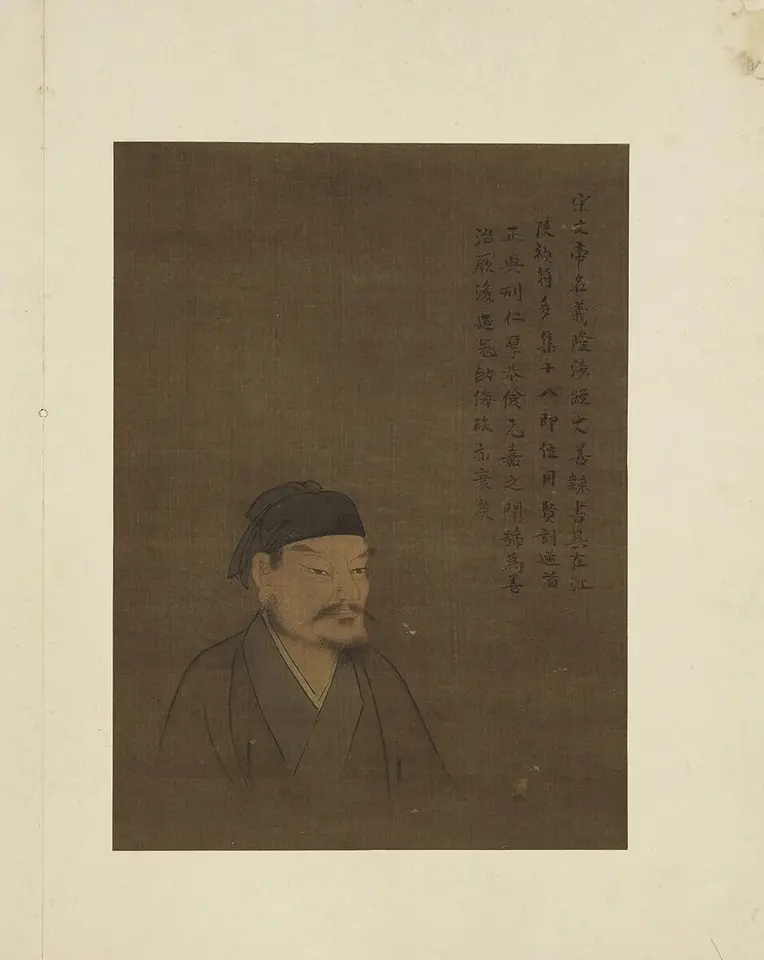
The Yuanjia Northern Expeditions were three massive strategic military offensives launched between 430 and 452 during the reign of Emperor Wen of Song, Liu Yilong, in an ambitious attempt to liberate the Central Plains from the Xianbei-led Northern Wei dynasty. Leveraging the wealth accumulated during the Rule of Yuanjia, Emperor Wen sought to emulate his father Emperor Wu's martial triumphs. In 430, the first campaign under Dao Yanzhi briefly recaptured Luoyang and Huatai, but collapsed when Northern Wei cavalry crossed the frozen Yellow River in winter, leaving general Tan Daoji to execute a famous tactical retreat. In 450, Emperor Wen mobilized hundreds of thousands of troops in a second grand expedition; while Liu Yuanjing achieved victories in the west, vanguard commander Wang Xuanmo was crushed at Huatai, enabling Emperor Taiwu of Northern Wei to lead cavalry to Mount Guabu opposite Jiankang, laying waste to six provinces during his retreat. A third expedition in 452 ended in failure. The campaigns depleted the southern treasury, shattered the demographic and agricultural foundation of Jiangbei, and permanently reversed the balance of power, leaving the Southern Dynasties locked in strategic defense.
Dao Yanzhi advances into Henan, recapturing Luoyang and Huatai after northern forces stage a strategic withdrawal.
Northern Wei cavalry cross the frozen Yellow River, crushing the overextended southern garrisons and retaking Luoyang.
Huatai capitulates after a protracted siege; Tan Daoji executes his sand-measuring ruse to safely extract his army.
The successful defense of Xuanhu convinces Emperor Wen to launch the second northern expedition.
Southern armies advance on three fronts; Liu Yuanjing wins victories at Shancheng while Wang Xuanmo besieges Huatai.
Emperor Taiwu's relief host crushes Wang Xuanmo outside Huatai; northern armies invade the southern heartland.
Northern Wei cavalry advance to Mount Guabu on the Yangtze; the northern retreat leaves six provinces in ashes.
Emperor Wen launches an abortive third campaign following Taiwu's assassination, ending in total tactical failure.
At the end of the fourth century, Emperor Wu of Song, Liu Yu, had conducted triumphant northern expeditions that destroyed Southern Yan and Later Qin, restoring Luoyang and Chang'an to imperial authority before withdrawing to establish the Liu Song dynasty. While the Yellow River frontier was subsequently lost, southern elites regarded the Central Plains as the sacred cradle of Chinese civilization, viewing its subjugation under nomadic Xianbei rule as an unbearable national disgrace. Following two decades of economic recuperation under the Rule of Yuanjia, the southern empire boasted full granaries, flourishing riverine cities, and an expanding population, inspiring Emperor Wen with the ambition to reclaim the ancient imperial capitals.
Concurrently, the Northern Wei dynasty had consolidated absolute supremacy over the northern heartland under the brilliant leadership of Emperor Taiwu, Tuoba Tao, conquering Xia, Northern Yan, and Northern Liang to unify the Yellow River basin by 439. Northern Wei fielded over one hundred thousand armored Xianbei cavalrymen possessing exceptional operational mobility and close-combat shock power. In contrast, while Liu Song possessed skilled riverine marines and disciplined infantry capable of fortress defense, its foot soldiers lacked cavalry protection on the wide open plains of Henan. Once southern formations moved beyond the natural waterways of the Huai and Si rivers, they were exposed to encirclement and destruction by northern cavalry.
In the spring of 430, Emperor Wen judged that treasury reserves were sufficient to support a large-scale offensive. Learning that Emperor Taiwu was campaigning in the northern steppes against the Rouran khaganate, leaving the Yellow River garrisoned by skeleton forces, the emperor overruled conservative counselors and appointed general Dao Yanzhi as supreme commander, directing fifty thousand infantry and naval forces up the Huai and Si river corridors into Henan.
The southern expeditionary force advanced in impressive naval formations along the river networks. Aware that the main Northern Wei host was occupied far to the north, the Wei frontier commanders enacted a calculated withdrawal strategy, evacuating their forward garrisons along the southern bank of the Yellow River and concentrating their elite cavalry formations north of the river. Dao Yanzhi marched into Henan virtually unopposed.
By June 430, southern spearheads reached the banks of the Yellow River. Liu Song naval flotillas entered the Luo River, recapturing Luoyang and the strategic fortress of Hulao, while general Zhu Xiuzhi occupied the vital Yellow River ferry crossing at Huatai, and Du Ji secured the citadel of Jinyong. Within weeks, ancestral territory spanning hundreds of leagues south of the Yellow River had returned to southern administration, sending waves of celebration through the capital in Jiankang.
However, beneath this apparent triumph lay critical strategic flaws. Dao Yanzhi lacked experience in directing combined-arms warfare across open terrain, dispersing his forces to garrison isolated fortified cities along a thin, vulnerable perimeter spanning hundreds of leagues. Furthermore, transport barges were stranded by seasonal autumn droughts along the inland waterways, leaving advance garrisons short of food. Confined to muddy river encampments, thousands of southern infantrymen succumbed to endemic dysentery, eroding operational combat power.
In October 430, having concluded his campaigns against the Rouran, Emperor Taiwu returned to Pingcheng and immediately dispatched veteran commanders An Yuan and Jieli with tens of thousands of elite cavalry to relieve Henan. By November, severe winter frosts froze the Yellow River into a solid sheet of ice. The formidable natural moat that had shielded the southern infantry vanished overnight, allowing Northern Wei cavalry to sweep across the frozen river in overwhelming numbers.
The northern cavalry executed devastating blitzkrieg tactics, surrounding Jinyong and forcing Du Ji to abandon Luoyang in panic. Northern columns then assaulted Hulao, scattering the defending southern garrisons across the plains. Isolated detachments of southern infantry were enveloped and slaughtered in open engagements on the snowy plains, completely upending the military balance along the Yellow River.
Witnessing the sudden collapse of Luoyang and Hulao, supreme commander Dao Yanzhi succumbed to panic. Rather than consolidating his remaining forces to fight a coordinated defensive campaign, Dao ordered an immediate general retreat, commanding that thousands of transport vessels laden with armor and food be torched and scuttled in the rivers before fleeing south with his staff. This catastrophic retreat left the northernmost garrison of Huatai completely isolated behind enemy lines.
Garrison commander Zhu Xiuzhi demonstrated extraordinary heroism, leading several thousand soldiers in a stubborn defense of Huatai against overwhelming northern siege columns. Enduring freezing blizzards and starvation, the defenders repelled dozens of assaults over several months, boiling leather and trapping rodents for sustenance. Emperor Wen ordered veteran commander Tan Daoji to march north with an armored relief column, but northern cavalry blocked the relief routes. In February 431, after hundreds of days of resistance, Huatai fell, Zhu Xiuzhi was captured, and the first northern expedition ended in complete defeat.
Following the capitulation of Huatai, Northern Wei cavalry encircled Tan Daoji's retreating relief corps. Out of food and surrounded on open ground, panic spread through the southern ranks, compounded when deserters informed the Wei commanders that the southern army was starving. Facing imminent destruction, the veteran general Tan Daoji devised the celebrated sand-measuring ruse to save his army.
Under cover of darkness, Tan ordered his men to illuminate the camp with torches, heap mounds of sand within the center of the stockade, and cover the sand with thin layers of polished white rice. Officers loudly measured out the rice with wooden bushels, counting off bushels through the night. Peering through the palisades, Northern Wei scouts concluded that the southern army was abundantly provisioned, executing the deserters for providing false intelligence. At dawn, Tan Daoji rode out in white robes atop an open chariot, directing his columns in disciplined retreat; terrified of ambushes, northern cavalry stood down, allowing the southern host to escape intact.
The disaster of 430 cost the Liu Song tens of thousands of veteran soldiers and depleted the central treasury. Emperor Wen refrained from major foreign campaigns for nearly twenty years, focusing on agricultural reclamation and administrative reform under the Rule of Yuanjia. As state granaries refilled, Emperor Wen's ambition to liberate the northern heartland revived, leading the court to redeploy strategic garrisons along the Huai River and stockpile weapons in preparation for a second invasion.
Between 444 and 448, the court appointed imperial princes to govern strategic frontier commands: Prince Liu Jun garrisoned Xiangyang, Prince Liu Shuo held Shouyang, and Prince Liu Jun commanded the vital fortress of Pengcheng. Grain revenues from Jiangzhou and Xiangzhou were funneled directly into frontier depots. When Northern Wei cavalry raided the northern circuits of Yan and Qing in 446, capturing civilians and livestock, Emperor Wen was determined to seek military retribution.
In planning the second expedition, sharp strategic dissension fractured the imperial court. Censor He Chengtian submitted his famous Treatise on Frontier Defense, arguing that northern nomadic cavalry possessed incomparable mobility across open plains, rendering southern infantry vulnerable. He recommended consolidating agricultural defenses along the Huai and Si valleys, clearing the countryside, and waiting until the state accumulated immense grain reserves and the enemy suffered internal decay before striking. Veteran general Shen Qingzhi similarly cautioned against placing military command in the hands of inexperienced scholars.
However, Emperor Wen dismissed these prudent warnings, falling under the sway of literary official Wang Xuanmo. Wang possessed persuasive rhetorical skills and delivered grandiose memorials promising that northern Chinese would rise in rebellion to welcome southern armies. Listening with fascination, Emperor Wen declared to his courtiers: Listening to Xuanmo's plans makes one yearn to reach the summit of Mount Langjuxu! Courtiers flattered the emperor with promises of performing imperial sacrifices atop Mount Tai, blinding the court to operational realities.
In February 450, Emperor Taiwu besieged the southern fortress of Xuanhu with one hundred thousand cavalry; garrison commander Chen Xian held the city for forty days until the northern forces withdrew. Believing the northern army was exhausted, Emperor Wen launched his second grand expedition without waiting for the autumn harvest. The court levied conscripts across six provinces, drafted one out of every three adult males, and forcibly extracted a twenty-five percent asset loan from wealthy merchants and Buddhist monasteries to fund the war.
The strategic deployment comprised three massive armies: the eastern army under vanguard Wang Xuanmo advanced toward Huatai, supported by Xiao Bin; the central army under Zang Zhi marched from Xuchang toward Luoyang; and the western army under Liu Yuanjing advanced through Wuguan toward Guanzhong, with Jiangxia Prince Liu Yigong coordinating overall logistics from Pengcheng. The imperial armies set out with hundreds of thousands of men, marching north toward the Yellow River.
In the western operational sector, the southern army achieved impressive tactical success. General Liu Yuanjing marched his disciplined columns north from Xiangyang through the rugged passes of Wuguan, defeating northern garrisons at Lushi and Hongnong. Supported by local Chinese gentry, southern spearheads pressed toward the strategic stronghold of Shancheng outside Guanzhong.
In the autumn of 450, southern vanguard commander Xue Andu charged into the northern battle lines outside Shancheng, slaying the enemy commander with his lance. Southern infantry followed up the charge, killing thousands of northern soldiers and capturing the fortress. Chinese gentry throughout the Guanzhong basin rose in revolt against Northern Wei officials, welcoming the southern forces with provisions. Liu Yuanjing prepared to advance directly on Chang'an, but his operational breakthrough was aborted by disaster on the eastern front.
On the eastern front, vanguard commander Wang Xuanmo captured the forward fortress of Que'ao after northern defenders withdrew, advancing to lay siege to the walled city of Huatai. However, Wang lacked tactical competence and administrative discipline, permitting his troops to plunder civilian granaries, extorting cloth from local merchants, and selling wheat at exorbitant rates. Outraged by this cruelty, the local northern Chinese population turned against the southern army.
During the siege of Huatai, Wang Xuanmo acted with obstinate arrogance, rejecting suggestions to breach the walls using sapping mines or incendiary fire-missiles. Instead, he forced southern infantry to launch frontal assaults against fortified brick ramparts, resulting in thousands of casualties. The siege dragged on for months without breakthrough, exhausting ammunition and food supplies while northern defenders held the line, awaiting the arrival of their relief armies.
In September 450, Emperor Taiwu gathered an immense host of several hundred thousand cavalry and infantry to relieve Huatai. Personally commanding the vanguard, the northern emperor led his armored cavalry south across the Yellow River. In October, the horizon outside Huatai was filled with northern war banners, surrounding the southern siege lines.
Confronting the main Northern Wei host, Wang Xuanmo lost his nerve entirely. When northern armored cavalry smashed into the front lines, Wang abandoned his command and fled the battlefield with a handful of retainers. The leaderless southern army disintegrated into catastrophic panic. Northern cavalry pursued the fleeing infantry, butchering tens of thousands across the plains and capturing all heavy siege weaponry, completely wiping out the eastern expeditionary strike force.
The catastrophe at Huatai shattered the entire southern campaign. In the west, Liu Yuanjing was forced to burn his fortified encampments and abandon Guanzhong to avoid being severed from his supply bases. Capitalizing on the rout, Emperor Taiwu launched an invasion of the southern empire, marching hundreds of thousands of cavalry south across Henan and Huainan, capturing cities and advancing on the fortress of Xuyi.
Xuyi occupied a vital crossroads and contained massive stores of southern grain and armaments. Southern commander Zang Zhi and prefect Shen Pu mounted a ferocious defense. Emperor Taiwu directed battering rams against the battlements, but Zang Zhi deployed stone-throwing catapults and repeating ballistas, crushing assault columns and killing northern officers. Besieged for weeks, northern troops suffered from food shortages and torrential rains that spread lethal pestilence, prompting Tuoba Tao to abandon the siege and bypass Xuyi toward the Yangtze River.
In December 450, Emperor Taiwu led his cavalry to the summit of Mount Guabu, establishing his command pavilion overlooking the Yangtze River opposite the southern capital of Jiankang. Northern war banners lined the riverbank, and northern horsemen watered their mounts in the river, visible from the imperial palaces of Jiankang.
The southern capital was gripped by terror. Emperor Wen ascended the battlements of the Stone Fortress, staring at the enemy cavalry and lamenting: If only Tan Daoji were still alive, we would never have been brought to this pass! The emperor placed the capital under martial law, mobilizing imperial guards and civilian men to fortify the walls. The southern war fleet patrolled the river, cutting off river crossings. Because the nomadic cavalry lacked naval transport and were vulnerable in southern wetlands, Emperor Taiwu ordered a withdrawal after several days of confrontation.
During their retreat northward, Northern Wei forces executed a systematic scorched-earth policy across the southern provinces of Xu, Yan, Qing, Ji, Yu, and Si. Northern columns burned towns, slaughtered adult males, impaled infants on lances, and carried off more than fifty thousand civilian households as enslaved captives. Granaries, canals, and farmhouses were razed to the ground, and orchards were chopped down.
The devastation reduced the fertile Huai and Yellow river basins to a desolate wasteland of smoke and skeletons. Historical records describe the aftermath: Spring swallows returned to find no trees to nest upon; across thousands of leagues not a single hearth fire burned, and the survivors ate corpses; the villages stood deserted and the cities were left in ruins. Decades of demographic and economic progress in Jiangbei were eradicated in a single season.
In 452, news reached Jiankang that Emperor Taiwu had been assassinated by the palace eunuch Zong Ai, throwing the Northern Wei court into political chaos. Obsessed with northern conquest despite the devastation of his realm, Emperor Wen launched a third expedition, ordering general Zhang Yong to assault Que'ao while dispatching Lu Shuang from Shouyang toward Xuchang.
However, the Liu Song army was depleted and lacked transport. Zhang Yong besieged Que'ao for months without success, and when northern relief columns arrived in July, his lines collapsed in a chaotic night rout, losing all equipment and thousands of troops. In the west, Lu Shuang was forced to retreat due to starvation. The third expedition ended in humiliating defeat, permanently crushing Emperor Wen's hopes of northern conquest.
The Yuanjia Northern Expeditions were the largest offensive campaigns mounted by the Southern Dynasties, but their failure cemented the permanent reversal of the geopolitical balance between northern and southern China. The famous Southern Song patriot-poet Xin Qiji captured this tragic legacy in his enduring lines: In Yuanjia, hasty schemes to win glory atop Mount Langjuxu brought only panic and retreat.
The three failed campaigns permanently extinguished the offensive military capacity of the Southern Dynasties. Northern regimes maintained strategic superiority, leaving southern states locked in defensive survival behind the Yangtze moat. The devastation of six northern provinces deprived the south of critical tax revenues and conscription bases, while internal wartime exactions bred widespread civilian disaffection. The immense wealth accumulated during thirty years of the Rule of Yuanjia was squandered on battlefields, accelerating the dynastic collapse of the Liu Song.
All three northern expeditions failed to secure any territorial gains south of the Yellow River. The campaigns resulted in the destruction of over two hundred thousand southern soldiers, the loss of Henan, and the devastation of the Huai River basin. Emperor Taiwu's counter-offensive laid waste to the six northern provinces of Xu, Yan, Qing, Ji, Yu, and Si, with tens of thousands of civilians murdered and over fifty thousand households dragged into northern captivity. The court's forced exactions of private and monastic wealth generated severe domestic unrest.
The Yuanjia Northern Expeditions reshaped the balance of power in medieval China. By destroying the southern empire's veteran field formations, the campaigns permanently stripped the Southern Dynasties of offensive capabilities, ensuring that the initiative in Chinese reunification remained permanently with northern dynasties. The loss of Jiangbei's agricultural productivity degraded the fiscal foundation of the Southern Dynasties, bringing thirty years of peaceful economic recovery under the Rule of Yuanjia to a close. Furthermore, the operational blunders of the campaigns became an enduring cautionary tale of military amateurism, epitomized by Xin Qiji's famous warning against hasty campaigns.