Accession of Emperor Xianzong
Li Chun ascends the throne and adopts Chancellor Du Huangshang's strategy to curtail autonomous military commands.
Tang Dynasty (唐朝) · HISTORICAL EVENT
元和中兴
The Yuanhe Resurgence refers to the dramatic political and military reunification and restoration of central imperial authority achieved during the reign of Emperor Xianzong of Tang, Li Chun, from 805 to 820. Following the catastrophic upheaval of the An Lushan Rebellion, the three autonomous garrisons of Heshuo and warlords in the Central Plains governed their territories as hereditary feudal domains, withholding regional grain revenues and defying…
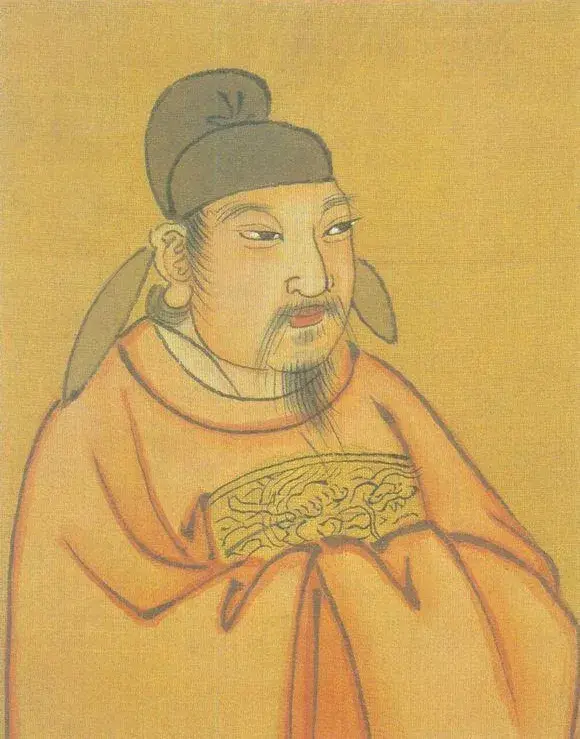
The Yuanhe Resurgence refers to the dramatic political and military reunification and restoration of central imperial authority achieved during the reign of Emperor Xianzong of Tang, Li Chun, from 805 to 820. Following the catastrophic upheaval of the An Lushan Rebellion, the three autonomous garrisons of Heshuo and warlords in the Central Plains governed their territories as hereditary feudal domains, withholding regional grain revenues and defying central decrees. Upon ascending the throne, Emperor Xianzong appointed decisive chancellors Du Huangshang and Pei Du, resolving to restrain the regional commands through statutory authority and military discipline. Reorganizing the Jiangnan canal transportation network to fill the imperial treasury, the court launched punitive expeditions that subdued Liu Pi in Sichuan and Yang Huilin in Xiasui. When Weibo commander Tian Hongzheng submitted voluntarily, the imperial army besieged Huaixi, where general Li Su staged a legendary surprise attack through a howling snowstorm to seize Caizhou in 817. By 819, imperial forces crushed Li Shidao in Ziqing, compelling the formidable northern warlords of Chengde and Lulong to surrender lands and hostages. For the first time in sixty years, all regional military governors acknowledged imperial directives, inaugurating the historic resurgence known as the Yuanhe Resurgence.
Li Chun ascends the throne and adopts Chancellor Du Huangshang's strategy to curtail autonomous military commands.
Gao Chongwen pacifies Liu Pi in Sichuan, and Yan Shou suppresses Yang Huilin in Xiasui, establishing imperial resolve.
General Tian Hongzheng brings the formidable Weibo command back under imperial authority, rupturing the Heshuo league.
Wu Yuanji seizes command in Huaixi following his father's death; Xianzong mobilizes sixteen imperial armies to encircle Caizhou.
Pei Du directs supreme field operations, while Li Su executes a legendary snowstorm night assault to capture Wu Yuanji.
Imperial forces destroy Li Shidao; the warlords of Chengde and Lulong surrender lands and hostages, reunifying the empire.
Emperor Xianzong is murdered by palace eunuchs; administrative missteps under Emperor Muzong quickly revive warlord rebellions.
Following the conclusion of the An Lushan Rebellion in the late eighth century, the Tang central government lacked the military resources to totally eradicate rebel remnants, resorting to a policy of pragmatic appeasement by enfeoffing surrendered generals as regional military commissioners. This compromise established the entrenched autonomous circuits of Weibo, Chengde, and Lulong across the Heshuo region north of the Yellow River. These northern commands maintained formidable personal armies known as dental guards, established hereditary succession, appointed their own civil magistracies, and refused to remit agrarian taxes to the imperial capital, leaving the imperial court powerless outside the Guanzhong passes. Warlords in Ziqing and Huaixi imitated this insubordination, frequently mobilizing troops to threaten the central government.
Emperor Dezong had attempted to subdue the autonomous commands through force, but the resulting Jingyuan Mutiny compelled him to flee Chang'an, forcing the court into decades of timid appeasement. When Emperor Xianzong, Li Chun, succeeded to the throne in August 805 following Emperor Shunzong's brief reign, he resolved to reverse this decline. Resolute and energetic, Xianzong modeled himself on Emperors Taizong and Xuanzong, viewing regional disunity as an unendurable stain on dynastic dignity. Recognizing that appeasement had only emboldened provincial defiance, the young sovereign resolved to overhaul imperial finances, concentrate loyal shock divisions, and employ decisive military force to subdue the autonomous warlords.
Upon ascending the throne in 805, Emperor Xianzong cast aside the timid council of traditional court bureaucrats and embraced a grand strategy of uncompromising central reassertion. Chancellor Du Huangshang forcefully argued that past imperial debility stemmed not from lack of resources, but from irresolution and the paralyzing meddling of palace eunuchs in field commands. Du advised the emperor to select upright, proven generals, grant them undivided operational authority, and bypass eunuch commissioners during campaigns. Xianzong embraced this counsel, appointing talented ministers and reforming the Liangshui taxation regime and Jiangnan grain canal transports to guarantee inexhaustible logistics for imperial armies.
To forge an effective strike weapon, Xianzong reorganized the imperial Shence Army in Chang'an, instituting rigorous training regimens and expanding cavalry contingents. The throne promulgated a clear frontier policy: regional governors who observed vassal obligations and remitted taxes would be honored with imperial patronage; but any warlord who defied imperial decrees or seized hereditary succession would face the full military might of the empire, shifting the court from passive retreat to active offensive strategy.
In 806 (the first year of the Yuanhe era), an immediate challenge to imperial authority arose in the southwest. Following the death of veteran governor Wei Gao, regional vice commissioner Liu Pi seized unilateral control over Xichuan, invading Dongchuan and demanding that the throne invest him with supreme jurisdiction over the three Sichuan circuits. While the imperial cabinet favored appeasement, Emperor Xianzong and Du Huangshang acted with resolute speed, stripping Liu Pi of all honors and appointing general Gao Chongwen to lead an expeditionary corps into Sichuan. Gao Chongwen enforced immaculate discipline, won successive battles, captured Chengdu, and executed Liu Pi in Chang'an, restoring imperial control over Sichuan.
Concurrently, Yang Huilin, the acting commissioner of Xiasui along the northern frontier, launched an armed rebellion to resist imperial reassignment. Xianzong dispatched Yan Shou to coordinate allied provincial garrisons, storming the rebel stronghold and executing Yang Huilin within months. These twin victories broke the psychological myth of warlord invulnerability, electrifying loyalist soldiers and proving that the revived Tang court possessed the tactical capacity to enforce its will.
In 812, Tian Ji'an, the autocratic ruler of Weibo—the most formidable of the Heshuo commands—died, leaving a juvenile heir amidst factional mutiny. Veteran field officer Tian Hongzheng, recognized for his civic moderation, was elected by the dental guards to head the circuit. Choosing loyalty over rebellion, Tian Hongzheng rejected separatist insubordination and dispatched couriers to submit his entire realm to the throne. Xianzong rewarded Tian with the governorship, bestowed large silver bonuses upon his troops, and integrated Weibo into the imperial orbit, creating a massive wedge within the northern warlord alliance.
However, an acute crisis erupted in the Central Plains in 814 when Wu Shaoyang of Huaixi died, and his son Wu Yuanji concealed his death, seized military command, and unleashed cavalry raids into Henan. Huaixi was a heavily fortified enclave situated at the crossroads of imperial communications, threatening the vital Grand Canal route. Determined to eradicate this cancer, Xianzong mobilized ninety thousand loyalist troops from sixteen circuits to encircle the province. However, due to lack of coordinated leadership, the siege stagnated for three frustrating years.
As the siege dragged on, defeatist ministers urged the emperor to call off the campaign. Warlord allies Li Shidao and Wang Chengzong sent assassins into the imperial capital who murdered Chief Minister Wu Yuanheng and wounded Chancellor Pei Du. Undaunted by terror, Emperor Xianzong unsheathed his sword, reaffirmed his commitment to victory, and appointed the recovered Pei Du as Chief Minister and Supreme Field Commander. Pei Du vowed never to return alive unless Huaixi was conquered, traveling to the front lines to restore discipline and morale.
In the winter of 817, veteran commander Li Su took command of the vanguard at Wencheng. Feigning operational inertia to lower enemy guard, Li Su drilled nine thousand elite shock troops in secret. On the night of October 12, amidst a blinding blizzard that froze sentries at their posts, Li Su launched an audacious night assault, marching his men sixty leagues across snowdrifts directly to the walls of the rebel capital of Caizhou. Scaling the ramparts in the dead of night, imperial troops seized the citadel and captured Wu Yuanji in his bed, ending thirty years of Huaixi rebellion in a single stroke.
Following the triumph at Huaixi, the imperial court turned its full military power toward Ziqing, where Li Shidao maintained twelve wealthy coastal commanderies. In 818, Xianzong ordered five loyalist armies under Tian Hongzheng and Li Guangyan to launch a converging amphibious and ground assault. Tian Hongzheng led his veteran Weibo cavalry across the Yellow River, smashing rebel field lines. By February 819, facing imminent destruction, rebel officer Liu Wu launched a palace mutiny, decapitating Li Shidao and surrendering all twelve commanderies to the throne.
The total annihilation of Huaixi and Ziqing shattered the nerve of surviving autonomous warlords. Wang Chengzong of Chengde sent his sons to Chang'an as hostages and ceded two strategic border prefectures to prove his contrition; Liu Zong of Lulong submitted the registers of Youzhou to imperial inspectors and abdicated his command to become a Buddhist monk; Lu Congshi of Zhaoyi was arrested and exiled, while Cheng Quan of Henghai surrendered his command. For the first time in nearly sixty years, every provincial command across northern and central China observed imperial edicts, restoring territorial integrity under the Tang crown.
The Yuanhe Resurgence directly eliminated four of the most entrenched autonomous warlord regimes in medieval China: Liu Pi in Xichuan, Yang Huilin in Xiasui, Wu Yuanji in Huaixi, and Li Shidao in Ziqing. Furthermore, it induced the voluntary surrender of the northern garrisons of Weibo, Chengde, and Lulong, restoring dozens of lost commanderies across Henan and Hebei to imperial administration. The central court successfully dispatched civil magistrates to govern provincial jurisdictions, reopened regular tax receipts from the Yellow River valley, and reasserted the supremacy of central edicts over provincial armies.
The Yuanhe Resurgence is celebrated by dynastic historians as the finest demonstration of imperial revitalization in mid-Tang history. It proved that despite the traumatic fractures of the An Lushan Rebellion, the Tang imperial state retained substantial administrative resilience, ideological legitimacy, and tactical striking power. However, because Emperor Xianzong was assassinated by palace eunuchs before he could dismantle the internal dental guard system of the northern garrisons, the political recovery was fragile. Under his successor, Emperor Muzong, bureaucratic incompetence provoked the soldiers of Lulong, Chengde, and Weibo to mutiny once again, cutting short the lasting benefits of the resurgence.