The Xuan-Yuan Realignment
Emperor Yuan ascends the throne, discarding Emperor Xuan's pragmatic balance to rule through Confucian moralism.
Western Han (西汉) · HISTORICAL EVENT
元成之世
The Era of Yuan and Cheng refers to the four-decade historical period (48–7 BCE) spanning the successive reigns of Emperor Yuan (Liu Shi) and his son Emperor Cheng (Liu Ao), which marked the decisive watershed in which the Western Han dynasty transitioned from the zenith of the Zhao-Xuan Resurgence into irreversible dynastic decline. Emperor Xuan had famously warned that his heir's gentle obsession with Confucianism would ruin the imperial house. Upon…
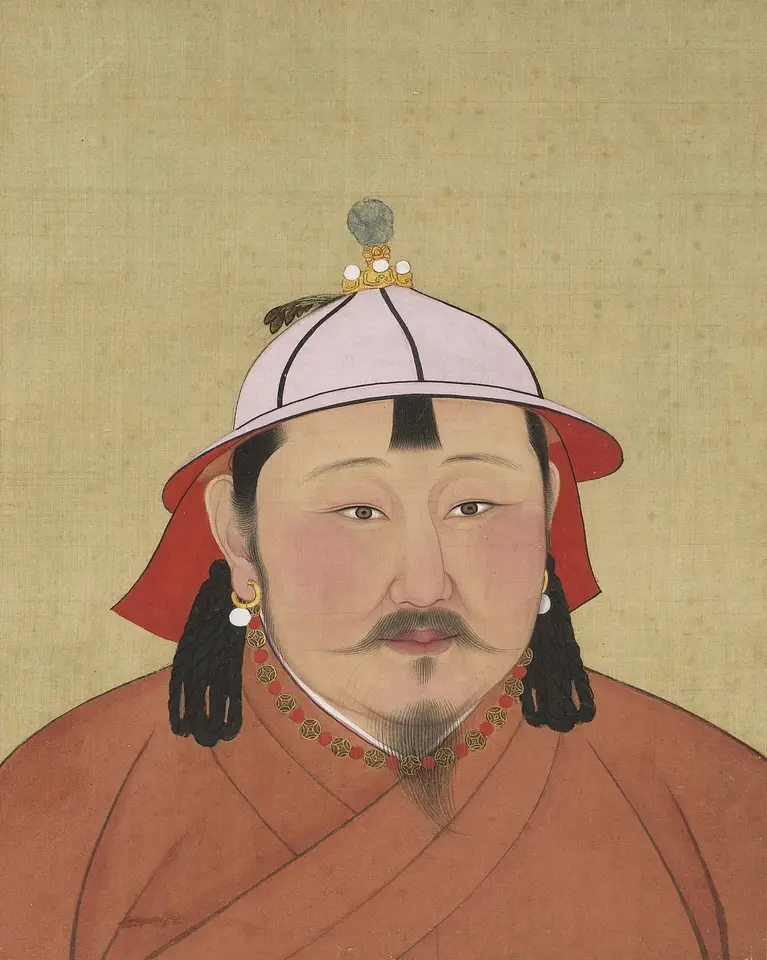
The Era of Yuan and Cheng refers to the four-decade historical period (48–7 BCE) spanning the successive reigns of Emperor Yuan (Liu Shi) and his son Emperor Cheng (Liu Ao), which marked the decisive watershed in which the Western Han dynasty transitioned from the zenith of the Zhao-Xuan Resurgence into irreversible dynastic decline. Emperor Xuan had famously warned that his heir's gentle obsession with Confucianism would ruin the imperial house. Upon ascending the throne, Emperor Yuan abandoned the pragmatic balance of legalist realism and Confucian benevolence in favor of dogmatic moral education; plagued by chronic ill health, he delegated memorial review to eunuch Shi Xian, who purged upright scholars including Xiao Wangzhi. While the era achieved notable external triumphs, such as Chen Tang's execution of Zhizhi Chanyu and Wang Zhaojun's diplomatic marriage to the Xiongnu, internal governance deteriorated rapidly. Under Emperor Cheng, who indulged in palace debauchery with the Zhao sisters, supreme military and civil authority was surrendered to the maternal lineage of Empress Dowager Wang Zhengjun, with General Wang Feng and his brothers appointed as the Five Marquises in a single day. The monopolization of state offices by the Wang clan, coupled with predatory land enclosures and popular uprisings, directly set the stage for Wang Mang to usurp the Han throne.
Emperor Yuan ascends the throne, discarding Emperor Xuan's pragmatic balance to rule through Confucian moralism.
Eunuch Shi Xian consolidates authority, orchestrating the arrest and forced suicide of Senior Chancellor Xiao Wangzhi.
Chen Tang and Gan Yanshou launch a surprise campaign across Central Asia, executing Zhizhi Chanyu on the Talas River.
Wang Zhaojun marries Huhanye Chanyu; Emperor Yuan dies, and his frivolous heir Emperor Cheng succeeds the throne.
Emperor Cheng enfeoffs five maternal Wang uncles as marquises simultaneously, consolidating the Wang clan's regency.
Scholar Liu Xiang is commissioned to direct the comprehensive textual collation of imperial manuscripts in Tianlu Pavilion.
Dispossessed iron laborers under Su Ling erupt in armed rebellion, storming state arsenals across nineteen commanderies.
Emperor Cheng dies childless in the palace; Grand Empress Dowager Wang Zhengjun seizes power, setting the stage for Wang Mang.
Following Emperor Wu's sweeping expansions, Emperors Zhao and Xuan restored domestic tranquility through fiscal retrenchment, judicial audits, and the rigorous supervision of local magistrates, producing the prosperous Zhao-Xuan Resurgence. Emperor Xuan strictly adhered to a pragmatic governing philosophy, famously declaring: The Han house possesses its own statutory institutions, which combine the hegemonic methods of legalism with the kingly principles of moral virtue; why should we rely purely on moral teaching and revive the governance of the Zhou? However, Crown Prince Liu Shi was deeply immersed in classical Confucian studies from boyhood, repeatedly urging his father to employ only Confucian scholars and replace statutory punishments with moral admonition, prompting Emperor Xuan's somber prophecy: The one who disrupts our imperial house will surely be the crown prince!
In December 49 BCE, Emperor Xuan died, and Crown Prince Liu Shi ascended the throne as Emperor Yuan, inaugurating the Chuyuan era. His coronation signaled a profound realignment in Han statecraft. The traditional methods of legalist accountability and administrative scrutiny were cast aside in favor of pure Confucian moralism. Thousands of classical scholars were appointed to central offices, preaching moral benevolence while lacking practical administrative capacity to address the deepening socioeconomic polarization across the provinces.
Upon ascending the imperial throne, Emperor Yuan instituted a sweeping redirection of imperial policy. An ardent disciple of the Gongyang Commentary on the Spring and Autumn Annals, the emperor convened Confucian masters into the inner palace to debate state policy, reduced court luxury, and remitted agricultural levies to project moral benevolence. However, Emperor Yuan lacked Emperor Xuan's penetrating insight and legalist discipline, allowing statecraft to degenerate into empty moral posturing. When addressing corruption and aristocratic land enclosures, the court engaged in sterile theoretical debates rather than applying decisive statutory penalties.
This ideological transformation dismantled the institutional equilibrium of the central government. Regional aristocratic lineages and wealthy merchant magnates were freed from the surveillance of tough judicial inspectors, unleashing a wave of land enclosures across the fertile eastern commanderies. Millions of smallholder peasant families were dispossessed of their ancestral fields, falling into bonded tenancy or vagrancy. The structural social contradictions that had accumulated over a century erupted under the government's permissive administration.
Plagued by chronic illness, Emperor Yuan found the daily burden of reviewing official memorials exhausting. Viewing inner palace eunuchs as dependent retainers devoid of factional ties, the emperor violated dynastic precedent by delegating the review and processing of all state memorials to Palace Eunuch Prefect Shi Xian and his deputy Lao Liang. This fateful delegation allowed Shi Xian to seize control over imperial audiences and executive appointments, inaugurating the first major period of eunuch domination in Han history.
Shi Xian was a cunning and vindictive operator who built a web of sycophants and purged upright officials who opposed his dominance. Senior Chancellor Xiao Wangzhi, Imperial Household Grandee Zhou Kan, and imperial clansman Liu Xiang repeatedly petitioned the sovereign to curtail eunuch influence, only to be targeted by Shi Xian's trumped-up charges of treason. Xiao Wangzhi was driven to commit suicide by drinking poison, Zhou Kan was demoted to commoner status, and Liu Xiang was cast into prison. Although Emperor Yuan grieved for his mentor Xiao Wangzhi, he continued to trust Shi Xian blindly, leaving the court terrified and consolidating eunuch supremacy.
Despite internal decline, the foreign frontier strategy under Emperor Yuan achieved historic breakthroughs. Following the division of the Xiongnu confederation into northern and southern branches, Huhanye Chanyu submitted to the Han court and settled along the southern Gobi, while Zhizhi Chanyu migrated westward to dominate the Kangju kingdom, murdering Han imperial envoys and menacing the Silk Road city-states. In 36 BCE, Assistant Protector-General Chen Tang and Protector-General Gan Yanshou mobilized forty thousand troops from thirty-six Western Region kingdoms, marching thousands of leagues across Central Asia to storm Zhizhi's fortified capital on the Talas River, slaying Zhizhi Chanyu. In his victory dispatch to Chang'an, Chen Tang declared: Let it be known to all that those who dare offend mighty Han shall be executed, no matter how far away they are!
In 33 BCE, Huhanye Chanyu visited Chang'an in audience to request an imperial marital alliance to cement eternal peace. Emperor Yuan selected palace lady Wang Zhaojun from Nan commandery and bestowed her upon Huhanye as his imperial consort. Celebrated as the Ninghu Yanzhi, Wang Zhaojun journeyed to the northern steppes, winning the devotion of the nomad tribes and facilitating economic and cultural exchange between Han and Xiongnu. Her diplomatic marriage pacified the frontier, ensuring that the northern borders remained free of armed conflict for over half a century.
In May 33 BCE, Emperor Yuan died, and his son Liu Ao ascended the throne as Emperor Cheng. Frivolous and pleasure-loving, Emperor Cheng had no interest in the burdens of statecraft, spending his days drinking, gambling, and pursuing women. Upon his accession, the emperor elevated his biological mother, Wang Zhengjun, to Empress Dowager, surrendering civil administration and military command to his maternal uncle, General-in-Chief Wang Feng. The Wang consort lineage leveraged this patronage to monopolize the central bureaucracy.
In 27 BCE, Emperor Cheng took the unprecedented step of enfeoffing five of Wang Feng's brothers—Wang Chong, Wang Shang, Wang Li, Wang Gen, and Wang Fengshi—as full marquises on the very same day, an event celebrated in history as the Five Marquises in One Day. The Wang brothers accumulated enormous agricultural estates, built palatial mansions, and took massive bribes for ministerial appointments. General-in-Chief Wang Feng ruled as regent for over a decade, intimidating chancellors and driving rivals to suicide. Following Wang Feng's death, his brothers and nephew Wang Mang succeeded him as regents, establishing the dynastic dominance of the Wang consort clan.
During the decades of Wang consort hegemony, the socioeconomic crisis reached catastrophic proportions. Allied with provincial magnates, the Wang family acquired vast tracts of arable land, leaving millions of impoverished peasants without land of their own. Great estates deployed thousands of armed retainers and enslaved laborers, while tenant cultivators were squeezed by fifty percent grain rents, head taxes, and compulsory labor.
From 22 to 14 BCE, widespread droughts and locust swarms pushed millions of peasants into starvation. In 22 BCE, forced laborers at the Yingchuan state iron foundry rose in armed rebellion under Shentu Sheng; in 14 BCE, iron foundry worker Su Ling led two hundred and twenty-eight armed laborers in an insurrection in Shanyang, capturing state arsenals, seizing nineteen commanderies and kingdoms, and slaying imperial magistrates. The imperial court was forced to mobilize massive army garrisons to suppress the uprising, exposing the fragility of Han rule.
Amid political rot, the intellectual culture of the era witnessed a monument of classical scholarship. Following the imperial book burnings of the Qin dynasty and decades of civil war, surviving bamboo and silk scrolls in the imperial archives suffered from corrupt transcriptions and missing chapters. In 26 BCE, Emperor Cheng commissioned imperial clansman Liu Xiang to direct an exhaustive state project to collect, authenticate, and catalog the literary heritage of China in the Tianlu Pavilion.
Liu Xiang assembled an elite team of scholars, including military officer Ren Hong to catalog tactical treatises, astronomer Yin Xian to verify cosmological manuscripts, and physician Li Zhuguo to authenticate medical works. Working for over a decade, Liu Xiang corrected textual errors, eliminated duplications, and composed comprehensive prefaces detailing the historical transmission of each work, compiled in his Separate Records. His son Liu Xin completed the project, producing the Seven Summaries, the earliest comprehensive classified library catalog in Chinese history, preserving pre-Qin civilization for posterity.
During his later reign, Emperor Cheng descended into depravity. Traveling in disguise through the capital, the emperor encountered the courtesan-dancer Zhao Feiyan and her younger sister Zhao Hede, bringing them into the palace and creating them Empress and Brilliant Companion. The Zhao sisters monopolized imperial favor for over a decade. Driven by jealousy over their failure to conceive an heir, the sisters systematically poisoned pregnant concubines and murdered newborn imperial infants, an atrocity remembered as the swallow devouring the imperial progeny, leaving Emperor Cheng without a surviving son.
In March 7 BCE, Emperor Cheng collapsed and died suddenly in the bedchamber of Consort Zhao Hede at the age of forty-five. Because the emperor died without an heir, Grand Empress Dowager Wang Zhengjun assumed supreme authority over the succession, enthroning Emperor Ai and subsequently Emperor Ping. This void enabled her nephew Wang Mang to present himself as a Confucian sage, exploiting the social discontent sown during the Era of Yuan and Cheng to usurp the throne in 8 CE and establish the Xin dynasty, extinguishing two centuries of Western Han rule.
The Era of Yuan and Cheng brought the Western Han empire from stability to the brink of collapse. Structurally, Emperor Yuan's reliance on eunuchs and Emperor Cheng's subservience to the Wang lineage institutionalized the destructive precedent of eunuch and consort regencies, enabling the Wang family to monopolize high office and paving the way for Wang Mang's coup. Socioeconomically, the abandonment of legalist checks on land grabbing permitted aristocratic magnates to dispossess smallholder peasants, sparking labor insurrections across nineteen commanderies. Emperor Cheng's childless death extinguished the direct imperial lineage of Emperor Xuan.
The Era of Yuan and Cheng stands as the definitive turning point in Western Han history. Philosophically, it completed the institutionalization of Confucianism as the sole orthodox state ideology, embedding classical scholarship at the core of imperial bureaucracy. In scholarship, Liu Xiang's collation project preserved pre-Qin philosophical literature, founding the discipline of Chinese bibliography. Diplomatically, the frontier settlements of Chen Tang and Wang Zhaojun stabilized the northern steppes for generations. However, institutionally, the era served as a cautionary benchmark for dynastic decline, illustrating the dangers of imperial negligence, eunuch ascendancy, and consort nepotism.