Assassination of Gao Jie
The murder of warlord Gao Jie in Shuizhou exposes the northern defense line as Zuo Liangyu rebels against Nanjing.
Southern Ming (南明) · HISTORICAL EVENT
扬州十日
The Yangzhou Massacre (扬州十日, lit. "Ten Days in Yangzhou"; also known as the Sack of Yangzhou) was a ten-day civilian massacre perpetrated by Qing imperial forces under Prince Yu (Dodo) between May 20 and May 29, 1645 (from the 25th day of the 4th lunar month to the 5th day of the 5th lunar month in the 2nd year of Shunzhi / 1st year of Hongguang). Following the collapse of the Da Shun regime in Shaanxi, Qing armies launched a coordinated offensive toward…
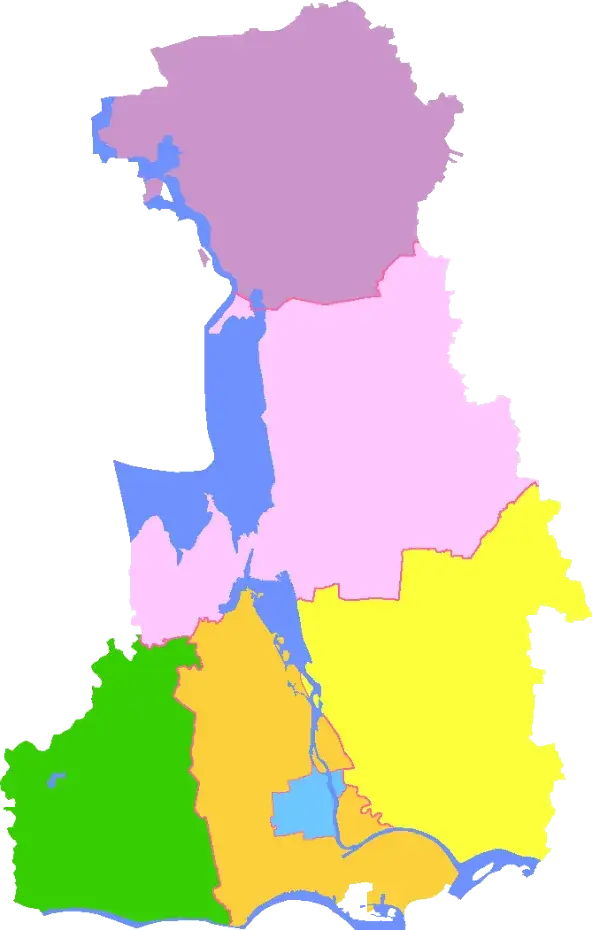
The Yangzhou Massacre (扬州十日, lit. "Ten Days in Yangzhou"; also known as the Sack of Yangzhou) was a ten-day civilian massacre perpetrated by Qing imperial forces under Prince Yu (Dodo) between May 20 and May 29, 1645 (from the 25th day of the 4th lunar month to the 5th day of the 5th lunar month in the 2nd year of Shunzhi / 1st year of Hongguang). Following the collapse of the Da Shun regime in Shaanxi, Qing armies launched a coordinated offensive toward the wealthy lower Yangtze delta. Paralyzed by partisan rivalry and the mutiny of General Zuo Liangyu, the Southern Ming court saw its northern garrisons disintegrate. Grand Secretary and Minister of War Shi Kefa retreated to the strategic hub of Yangzhou, rallying a meager force of loyal soldiers and civilians to withstand the siege. After Shi Kefa repeatedly spurned five personal appeals for surrender, Qing forces deployed heavy Western breech-loading red-coat cannons to batter down the northwestern ramparts. When the defense collapsed on May 20, Shi Kefa was captured and executed after refusing to submit, while garrison commanders died in vicious hand-to-hand urban warfare. In retaliation for heavy siege casualties and to terrorize the populace into submission, Dodo commanded an unrestricted ten-day sack of the city. Banner units engaged in systematic murder, torture, gang rape, and arson, killing hundreds of thousands of residents and clogging the Grand Canal with corpses. The atrocities were documented in vivid detail by eyewitness survivor Wang Xiuchu in A Record of Ten Days in Yangzhou.
The murder of warlord Gao Jie in Shuizhou exposes the northern defense line as Zuo Liangyu rebels against Nanjing.
Prince Dodo leads Qing banner cavalry to surround the city of Yangzhou, severing all external communications.
Shi Kefa tears up Dodo's five written surrender invitations and writes five farewell letters pledging to die for the Ming.
Generals Liu Zhaoji and He Gang direct firearm and artillery fire from the ramparts, repelling initial Qing scaling assaults.
Dodo transports Western red-coat cannons from Huaian and constructs elevated artillery platforms opposite the northwestern wall.
The northwestern wall collapses; Shi Kefa is captured and executed, and Dodo issues arrow tallies ordering a ten-day massacre.
Qing troops ignite residential neighborhoods, trapping civilians; women drown themselves in wells to escape sexual enslavement.
Captives are bound by neck ropes and beheaded en masse; blood turns the Grand Canal crimson as Wang Xiuchu documents the ordeal.
Fearing pestilence from decomposing corpses, Dodo orders troops to sheath weapons and establishes pacification bureaus.
Buddhist monks cremate hundreds of thousands of remains; Qing forces cross the Yangtze, seize Nanjing, and capture the Hongguang Emperor.
Following the fall of Beijing and the suicide of the Chongzhen Emperor in 1644, Ming loyalists in Nanjing enthroned the Prince of Fu (Zhu Yousong) as the Hongguang Emperor. However, the southern court became mired in hedonism, administrative corruption, and vicious partisan conflict led by ministers Ma Shiying and Ruan Dacheng against the Donglin and Fushe reformist factions. Deluded by the naive strategy of "allying with the Tartars to suppress bandits", the court celebrated the Qing destruction of Li Zicheng's peasant armies while failing to prepare defenses along the northern front.
To protect the Yangtze perimeter, the Hongguang court established the Four Garrisons north of the river under warlords Huang Degong, Gao Jie, Liu Zeqing, and Liu Liangzuo. These generals operated as autonomous despots, extorting local civilians while feuding among themselves. In early 1645, Gao Jie was assassinated in Shuizhou, fracturing the frontier defense network. Simultaneously, General Zuo Liangyu launched an eastern rebellion from Wuchang against Nanjing under the slogan of "clearing the court of corrupt sycophants." Panicked, the Nanjing cabinet recalled northern garrison units to defend the river, leaving the northern approaches undefended. Qing Prince Regent Dorgon seized the opportunity, dispatching Prince Yu (Dodo) with veteran banner horsemen to spearhead a rapid southward drive. Key generals, including Liu Zeqing and Liu Liangzuo, surrendered their armies, collapsing regional defense.
Confronting imminent dynastic collapse, Grand Secretary Shi Kefa assumed supreme command of the northern defense. A man of unyielding personal integrity and Confucian devotion, Shi Kefa was nonetheless hampered by indecisive strategic judgment and lacked authority over mutinous garrison commanders. As surrounding outposts surrendered or fled, Shi was forced to retreat into Yangzhou with a small corps of loyalist troops.
Yangzhou sat at the strategic intersection of the Grand Canal and the Yangtze River, acting as the commercial center for the imperial salt monopoly and the primary northern gateway shielding Nanjing. However, the regular garrison consisted of only several thousand troops under Regional Commander Liu Zhaoji, supplemented by volunteers under He Gang. Defensive manpower was woefully inadequate for a walled metropolis of several hundred thousand residents. Shi Kefa's urgent pleas to Nanjing for reinforcements and grain were completely ignored by court ministers seeking to protect their own positions.
Beginning on April 18, 1645, Dodo's armies converged on Yangzhou, encircling the city. Aware of Shi Kefa's moral stature across southern China, Dodo repeatedly dispatched emissaries carrying wax-sealed letters offering princely titles and supreme regional governance in exchange for capitulation. Shi Kefa adamantly tore up the letters at the city ramparts. Ascending the watchtower, he penned five farewell letters to his mother, wife, and uncles, expressing his solemn determination to sacrifice his life for the fallen Ming dynasty. Inspired by his fortitude, the city's inhabitants climbed the walls to bolster defenses.
In the spring of 1645, the rapid southward thrust of Qing armies threw Southern Ming defenses into disarray. While garrisoned near Gaoyou, Grand Secretary Shi Kefa issued three conflicting military directives in a single day: ordering Commander Ying Tingji to march toward Pukou in the morning, instructing forces to return to Yangzhou by midday, and ordering an immediate emergency redeployment toward Tianchang in the afternoon. These contradictory orders exhausted regional troops and paralyzed operational coordination.
Capitalizing on this confusion, Dodo's cavalry reached the Huai and Grand Canal basins. Defecting Ming commanders, such as Li Chengdong and Liu Liangzuo, guided the Qing advance guards. On April 18, Qing columns breached the outer perimeter and established an impenetrable encirclement around Yangzhou.
The city walls stretched for more than twenty li, dividing the urban center into the Old and New cities. However, the western and northwestern sectors of the Old City occupied low-lying terrain overlooked by high hills outside the walls, rendering defense highly precarious. Despite being outnumbered, Liu Zhaoji commanded three thousand veteran troops alongside local militia. When Liu suggested launching a nocturnal counter-offensive to disrupt the arriving enemy before they could entrench, Shi Kefa demurred, preferring to husband defensive resources within the fortifications. As Ming communications were severed, Yangzhou became a besieged enclave.
As Qing siege lines tightened, Dodo made repeated attempts to secure a bloodless surrender. Between April 19 and April 24, five formal surrender summonses were delivered into the city. Shi Kefa publicly destroyed each summons, proclaiming that death in service of the dynasty was an honor.
Frustrated by loyalist intransigence, Dodo abandoned diplomatic efforts and ordered dozens of heavy Western breech-loading red-coat cannons (Hongyipao) transported from Huaian. Conscripted laborers were forced to construct high earthwork firing batteries overlooking the city's vulnerable northwestern ramparts.
On the night of May 19 (the 24th day of the 4th lunar month), torrential rain lashed the city. At dawn on May 20, the rain subsided, and Qing siege batteries opened a devastating barrage against the northwestern walls. Massive iron cannonballs smashed into the parapets, pulverizing battlements and inflicting catastrophic casualties among defenders. Ming archers and gunners retaliated with firearms and rockets, killing hundreds of Qing storm-troopers, but could not halt the unrelenting heavy artillery fire.
Around the hour of Chen (between 7:00 and 9:00 AM) on May 20, a section of the battered northwestern masonry wall collapsed with a thunderous roar, tearing open a breach several dozen yards wide. Heavily armored banner cavalry and vanguard shock troops rushed through the debris.
Ming commander Zhuang Zigu positioned spearmen to hold the breach, fighting hand-to-hand until he was killed under a hail of arrows. Regional Commander Liu Zhaoji led surviving infantry into the narrow urban lanes, engaging in desperate street fighting until his entire force was annihilated. Ministry official He Gang drew his sword and took his own life, while Circuit Censor Chen Daoheng drowned himself in an urban well.
Observing the defense collapse from the East Gate, Shi Kefa attempted suicide with his personal blade, but was restrained by attendants. Crying out that he must perish with the city, he was cut off by Qing cavalry near the Small East Gate. Stepping forward calmly, he identified himself as the Ming Minister of War and demanded to be taken to Dodo.
Escorted to the Qing headquarters, Shi Kefa was received with ceremonial deference by Dodo, who renewed his plea: "I previously sent you letters, yet you refused. Having fulfilled your loyalty, if you surrender now, you shall receive highest imperial honors." Shi Kefa rebuked him: "I have received profound imperial favors and swore to die with this city! My head may be severed and my body shattered, but I shall never surrender! Kill me immediately, but spare the innocent people of this city!" Seeing that Shi Kefa remained utterly intractable, Dodo ordered him executed beneath Wanfu Bridge. Shi Kefa was martyred at forty-four years of age. His body was lost in the chaos, and his adoptive son Shi Dewei later buried his ceremonial robes on Plum Blossom Ridge (Meihualing) outside the city.
Following Shi Kefa's martyrdom, Prince Dodo unleashed full retribution against the populace. Having suffered hundreds of casualties during the siege, Qing commanders resolved to make an example of Yangzhou to shatter the will of southern cities.
At noon on May 20, Dodo issued official arrow tallies authorizing an unrestricted slaughter: "Kill one hundred at each gate for soldier casualties; then pass the tally to slay one thousand; upon completion, pass another to slay a thousand more... slaughtering up to hundreds of thousands!" Thousands of banner troops and defected auxiliary soldiers surged through the neighborhoods, conducting systematic murder and plunder.
Qing squads smashed through residential doors with axes. Able-bodied men were beheaded on sight, while the elderly and nursing infants were disemboweled or impaled on spears for sport. Wealthy families that yielded their silver, pearls, and jewelry were slaughtered immediately after handing over their valuables. Soldiers engaged in widespread sexual violence, dragging women from their bedrooms; countless young women drowned themselves in residential wells or hanged themselves to preserve their honor. Wells throughout the city became choked with corpses to the brim, preventing subsequent victims from jumping into the water.
Eyewitness survivor Wang Xiuchu recorded the ten-day horror in his memoir A Record of Ten Days in Yangzhou, providing a searing documentary indictment of the atrocities.
Wang recounted how Qing soldiers systematically set fire to entire urban wards to smoke out hidden civilians. As residential districts burst into flames under billows of suffocating smoke, families hiding in cellars, attics, and straw stacks fled into the thoroughfares, where waiting soldiers cut them down with sabers. Thoroughfares became impassable with piled corpses, and streams of warm blood pooled above the ankles.
Soldiers tied lines of civilians together by their necks with coarse hemp ropes, driving them toward execution grounds like herds of cattle. Women barefooted through shards of broken porcelain and blood, shrieking under whips. At execution sites, prisoners were forced to kneel in rows as butchers severed heads with broadswords; arterial blood gushed into ditches, turning the Grand Canal completely red.
Wang Xiuchu and his family endured harrowing escapes, hiding in latrines, decomposing manure piles, empty coffins, and flooded drainage culverts under constant threat from tracking dogs. His younger brother Wang Xiuze was captured and beheaded during flight. By May 26, after days of torrential downpours, naked, mutilated bodies filled the flooded streets, their entrails exposed. The unbearable stench of burning and rotting flesh settled over the charred ruins of the city.
The massacre continued unabated for ten days until May 29, 1645 (the 5th day of the 5th lunar month). Seeing that the city was completely sacked, that few survivors remained, and that summer heat threatened to unleash catastrophic pestilence among imperial troops, Dodo recalled his execution tallies and declared an end to the killing.
On May 30, Qing authorities appointed local collaborators to post pacification notices and directed Buddhist monks from Daming Temple to recover the decaying dead. Monks organized surviving residents with carts to clear the roadways. The famous modern street name "Luosijieding" (corrupted from "heaping corpses to the rampart top") bears witness to the urban corners where corpses had piled level with the battlements.
Massive funeral pyres were erected outside the city gates and beneath Plum Blossom Ridge. Monks doused heaps of human remains with tung oil and wine, burning them in bonfires that smoked for days. Temple registries recorded the cremation and burial of over eight hundred thousand bodies. Although modern historians estimate that casualties numbered in the hundreds of thousands based on urban demographics and refugee density, the total devastation of the populace remains an indisputable historical fact. The celebrated cultural metropolis of Yangzhou was reduced to scorched ruins, requiring decades to recover its vitality.
The Yangzhou Massacre ended with the annihilation of hundreds of thousands of civilian lives and the physical destruction of an ancient cultural center. The strategic northern bastion protecting the lower Yangtze was wiped out, along with its garrison and high commanders. Terrified by the atrocities, Ming defensive units stationed at Zhenjiang and Guazhou fled without offering resistance. On June 1, Qing columns crossed the Yangtze River unobstructed; on June 8, Nanjing surrendered, and the fugitive Hongguang Emperor was captured in Wuhu and sent to Beijing for execution, terminating the first Southern Ming regime.
The Yangzhou Massacre inflicted profound psychological and political trauma upon early Qing society. First, rather than pacifying the region, the brutality inflamed universal resistance across Jiangnan, provoking fierce rebellions such as the Siege of Jiangyin and the Jiading Massacres, compelling the Qing court to maintain oppressive military garrisons for generations. Second, during the Qianlong era, the Qing government enacted severe literary persecutions, systematically confiscating and burning historical chronicles such as A Record of Ten Days in Yangzhou. Third, when copies of Wang Xiuchu's suppressed memoir were rediscovered in Japan in the late 19th century, it was mass-printed by revolutionary intellectuals such as Sun Yat-sen and Zhang Taiyan, becoming a premier ideological manifesto that fueled the 1911 Xinhai Revolution to overthrow the Qing Dynasty.