Regency and Ascension of the Prince of Guang
Emperor Wuzong fell critically ill; eunuch commander Ma Yuanzhi forged an edict proclaiming Prince of Guang Li Chen Imperial Grand-Uncle to oversee state affairs, and Xuanzong ascended the throne.
Tang Dynasty (唐朝) · HISTORICAL EVENT
唐宣宗大中之治
The Reign of Dazhong under Emperor Xuanzong of Tang (846–859, from the Regency of the Imperial Grand-Uncle in the sixth year of Huichang to the thirteenth year of Dazhong) represents the final era of social tranquility and political stability in the late Tang Dynasty amidst the stranglehold of military warlords and eunuch domination. Before his ascension, Emperor Xuanzong Li Chen concealed his intellect under a facade of dullness to survive lethal court…
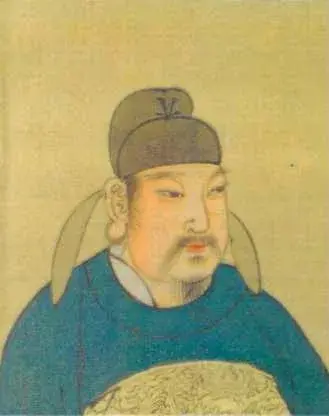
The Reign of Dazhong under Emperor Xuanzong of Tang (846–859, from the Regency of the Imperial Grand-Uncle in the sixth year of Huichang to the thirteenth year of Dazhong) represents the final era of social tranquility and political stability in the late Tang Dynasty amidst the stranglehold of military warlords and eunuch domination. Before his ascension, Emperor Xuanzong Li Chen concealed his intellect under a facade of dullness to survive lethal court intrigues. Upon being enthroned by eunuch commander Ma Yuanzhi, he immediately revealed formidable political resolve. Over thirteen years of rule, Xuanzong modeled his governance on the Zhenguan era, taking the Essentials of Governance as his maxim. He punished corruption, curbed royal relatives, suppressed eunuch overreach, and banished Li Deyu to dissolve the Niu-Li factional strife. Externally, he pacified Tangut uprisings and endorsed Zhang Yichao's liberation of eleven Hexi-Longyou prefectures from century-long Tibetan rule, reopening the Silk Road corridor. Honored by contemporaries as the Lesser Taizong, his reign nevertheless failed to alter the structural crisis of eunuch military power, serving as the glorious sunset of the Tang Empire.
Emperor Wuzong fell critically ill; eunuch commander Ma Yuanzhi forged an edict proclaiming Prince of Guang Li Chen Imperial Grand-Uncle to oversee state affairs, and Xuanzong ascended the throne.
Emperor Xuanzong stripped Li Deyu of his chancellorship, sending him away as Military Commissioner of Jingnan and initiating the end of forty years of Niu-Li factional strife.
Xuanzong ordered the Essentials of Governance inscribed on palace screens, personally interviewed appointed magistrates, and sanctioned the rebuilding of lawful Buddhist temples.
In Dunhuang, Zhang Yichao led an uprising taking advantage of internal Tibetan civil wars to liberate Shazhou, subsequently advancing across the Hexi Corridor.
Repeatedly demoted to an administrative post in Yazhou on Hainan Island, Li Deyu passed away in Haikou, bringing a definitive close to the Niu-Li partisan struggles.
Zhang Yitan presented registers of eleven reclaimed Hexi prefectures at Chang'an; Xuanzong created the Return-to-Righteousness Army and commissioned Zhang Yichao.
Xuanzong replaced abusive border commanders and dispatched Bai Minzhong to conciliate Tangut tribes through fair trade, ending northwest border unrest.
Tibetan commander Shang Yanxin surrendered Hezhou and Weizhou to the Tang, securing the entire Silk Road and driving imperial prestige to its late Tang peak.
Xuanzong died from elixir poisoning; eunuch Wang Zongshi executed secret envoys defending the Prince of Kui and enthroned Prince of Yun Li Wen as Emperor Yizong.
Following the An Lushan Rebellion in the mid-Tang, the imperial government suffered from outward provincial warlord autonomy and inward eunuch control over the elite Shence Imperial Guard. Beginning in the late Yuanhe era of Emperor Xianzong, imperial successions were repeatedly orchestrated by palace eunuchs serving as Commissioners of the Privy Council and Military Protectors. Emperors Muzong, Jingzong, and Wenzong met premature deaths or succumbed to palace putsches, while the Sweet Dew Incident of 835 crushed civilian efforts to eliminate eunuch domination. Although Emperor Wuzong and Chancellor Li Deyu curbed eunuch power in the Huichang era, Wuzong consumed toxic alchemical elixirs and fell mortally ill at age thirty-three without appointing a crown prince.
Li Chen, originally named Li Yi, was the thirteenth son of Emperor Xianzong. His mother, Lady Zheng, had been a concubine of the rebel general Li Qi and entered the palace as a low-ranking maidservant. As a youth, Li Chen was quiet and reserved, never speaking out of turn during royal gatherings. Royal nephews like Jingzong, Wenzong, and Wuzong openly mocked him as a fool. Emperor Wuzong harbored deep suspicions and attempted to harm him, yet Li Chen endured all humiliations through profound dissimulation. In the third month of 846 (Huichang Year 6), as Wuzong lay dying, eunuch commander Ma Yuanzhi and his allies believed the seemingly dim Prince of Guang would serve as a pliable puppet. They forged an imperial edict naming him Imperial Grand-Uncle to manage state affairs. Following Wuzong's demise, the thirty-seven-year-old prince ascended the throne as Emperor Xuanzong.
From the reign of Xianzong through Wuzong, the imperial bureaucracy remained crippled by forty years of partisan warfare between the Li faction under Li Deyu and the Niu faction under Niu Sengru and Li Zongmin. This protracted strife exhausted administrative competence and eroded governance. Protracted military operations burdened the populace with heavy labor levies, while frontier generals exploited Tangut tribes in the northwest, sparking recurrent rebellions. In the vast Hexi and Longyou regions, millions of Chinese subjects had languished under Tibetan rule for nearly a century since the An Lushan Rebellion. Facing severe internal decay and border crises, Emperor Xuanzong realized that only decisive administrative surgery could preserve the Tang state.
Upon taking the throne, the eunuchs and courtiers who had anticipated a dim-witted sovereign were stunned to find Emperor Xuanzong presiding over the Liangyi Hall with grave dignity and penetrating judgment. His decades of foolishness had been nothing more than an elaborate disguise. Recognizing that factional rivalries had paralyzed central administration, Xuanzong acted swiftly. In the fourth month of 846, barely a month into his reign, he dismissed the all-powerful chancellor Li Deyu from office, reassigning him as Military Commissioner of Jingnan. He subsequently used the judicial mishandling of the Wu Xiang case to demote Li Deyu repeatedly, ultimately banishing him to Yazhou on Hainan Island.
While purging Li Deyu, Xuanzong refused to favor the rival Niu faction unconditionally. Although he appointed officials like Bai Minzhong and Linghu Tao, he strictly outlawed partisan favoritism. Throughout his reign, chancellors were selected from upright and prudent officials, and illicit political alliances were severely punished. Through these firm measures, the destructive forty-year Niu-Li Factional Strife was brought to a definitive end, restoring executive authority to the sovereign's throne.
Emperor Xuanzong venerated the governance of Emperor Taizong above all else. He had key passages of the Essentials of Governance inscribed upon his bedroom screens, reading them with folded hands morning and evening. He adopted the adage that supreme disorder stems from employing the unworthy, while supreme order arises from appointing the virtuous. He worked untiringly, committing to memory the geography, strategic mountain passes, and magistrate records of every prefecture across the realm. Before local prefects and county magistrates departed for their posts, Xuanzong personally examined them in imperial audience chambers to evaluate their governing policies, revoking appointments if candidates lacked integrity or clear plans.
Regarding imperial honors, Xuanzong was extremely frugal, never granting purple robes or titular titles lightly. Even Chancellor Linghu Tao, who headed the council for a decade, broke into cold sweats whenever summoned by the emperor. Xuanzong strictly forbade palace favorites from meddling in state affairs. While he treated Ma Yuanzhi with polite honor for his role in the succession, he barred eunuchs from political councils or military planning, effectively checking the rampant growth of palace eunuch dominance.
Emperor Xuanzong practiced strict frugality and curbed the unlawful excesses of imperial clansmen and royal consorts. Although his mother, Empress Dowager Zheng, came from humble beginnings, Xuanzong ensured that members of her household respected statutory law. When his beloved daughter Princess Wanshou married Secretariat Drafter Zheng Hao, Xuanzong repeatedly instructed her to observe marital decorum and adhere to civil law. When Princess Wanshou mistreated an imperial maidservant, Xuanzong severely reprimanded her and temporarily barred his son-in-law from court.
Imperial princes and nobles who seized farmland or abused civilians were handed over to the Censorate for severe prosecution, with no leniency granted on grounds of imperial blood. Whenever the emperor traveled through the capital, ordinary commoners were permitted to halt the imperial carriage to petition grievances directly. This impartial enforcement of the law compelled metropolitan elites to restrain their conduct, bringing an era of institutional cleanliness unseen for decades.
In border governance, Emperor Xuanzong abandoned the aggressive and costly military expeditions of the Huichang era. During Wuzong's reign, Tangut tribes had rebelled repeatedly because corrupt border generals embezzled rations, seized sheep and horses, and murdered innocent tribesmen. Recognizing that border instability was provoked by rapacious military commanders, Xuanzong issued an edict forbidding soldiers from harassing frontier nomads, dismissed cruel generals, and appointed lenient civilian officials to lead frontier garrisons.
Xuanzong appointed Bai Minzhong to oversee military affairs in Binning and Yanzhou, surrounding him with distinguished scholars to conduct pacification through benevolence and border markets. Deeply moved by imperial goodwill, Tangut tribes laid down their arms and submitted to the court. Beacon fires were extinguished along the borders, merchant caravans traversed the northern frontiers safely, and the northwest was pacified in just a few years.
Following the An Lushan Rebellion, the Tibetan Empire took advantage of Tang troop withdrawals to conquer the Hexi Corridor and Longyou territories, severing the Silk Road for nearly a century and subjecting millions of Chinese inhabitants to foreign subjugation. In 842 (Huichang Year 2), Tibetan King Langdarma was assassinated, throwing the Tibetan state into violent civil war and disintegration. In 848 (Dazhong Year 2), Zhang Yichao, an elite Chinese leader in Shazhou, rallied monastics and civilians in Dunhuang, driving out the Tibetan garrison and reclaiming the city.
Zhang Yichao subsequently led righteous armies across the region, liberating key strategic centers including Guazhou, Yizhou, Suzhou, and Ganzhou. In the eighth month of 851 (Dazhong Year 5), Zhang Yichao dispatched his elder brother Zhang Yitan at the head of a twenty-nine-member diplomatic mission across thousands of miles to Chang'an, presenting maps and registers of eleven reclaimed prefectures. Emperor Xuanzong hosted a grand banquet in the Liangyi Hall, established the Return-to-Righteousness Army (Guiyijun), and named Zhang Yichao its Military Commissioner. In 857 (Dazhong Year 11), Tibetan general Shang Yanxin surrendered his forces to the Tang, restoring imperial control over the ancient Silk Road and elevating Tang prestige to its late imperial zenith.
In his final years, as political conditions stabilized, Emperor Xuanzong fell prey to the same alchemical delusions that had doomed previous Tang rulers. Despite knowing that Wuzong had died from elixirs and executing Daoist charlatans early in his reign, Xuanzong grew obsessed with longevity. He recalled hermit Xuan Yuanji from Lingnan and routinely consumed mineral elixirs compounded by court physicians like Li Xuanbo, which caused his temperament to grow irritable and suspicious.
A far more dangerous crisis brewed over the imperial succession. Xuanzong disliked his eldest son, Prince of Yun Li Wen, regarding him as weak, while heavily favoring his third son, Prince of Kui Li Zi. Yet, constrained by primogeniture protocols, Xuanzong delayed appointing a crown prince. Grand Chancellors Wei Mo and Pei Xiu repeatedly submitted memorials urging him to establish an heir, but Xuanzong dismissed their appeals and removed Pei Xiu from the chancellery. Leaving the heir apparent undecided created a lethal void that allowed palace eunuchs to orchestrate another violent coup upon his death.
Domestically, the Reign of Dazhong accomplished impressive administrative rejuvenation. By dismissing Li Deyu and restraining the Niu faction, Emperor Xuanzong terminated forty years of debilitating bureaucratic polarization. By personally inspecting local prefects and enforcing legal punishments against corruption, central policy execution was restored across the empire. The emperor practiced personal frugality, lowered corvee obligations, and allowed the populace to recuperate. Agricultural output recovered swiftly, treasury granaries were replenished, and the metropolitan provinces enjoyed a rare era of peace and stability.
On the frontiers, the Dazhong reign achieved the most remarkable territorial recovery of the late Tang period. Under Zhang Yichao, the Return-to-Righteousness Army liberated eleven prefectures, including Guazhou, Shazhou, Yizhou, Suzhou, Ganzhou, Liangzhou, Shanzhou, Kuozhou, Minzhou, Hezhou, and Lanzhou, reuniting them with the Tang realm. The Silk Road was restored, enabling uninterrupted merchant caravans between Chang'an and Central Asia. Imperial prestige in the Western Regions was reestablished, providing a vital strategic shield for Tang frontiers.
Nevertheless, the Reign of Dazhong remained a personal tour de force of autocratic diligence rather than a fundamental systemic reform. Xuanzong failed to dismantle the institutional roots of eunuch command over the Shence armies or regional military independence. While he personally intimidated eunuchs, he left their statutory military offices untouched. His refusal to name an imperial heir enabled eunuch commander Wang Zongshi to usurp power upon his death and crown the hedonistic Emperor Yizong. The dissipation of resources under Yizong and Xizong sparked the Pang Xun and Huang Chao rebellions, driving the Tang Dynasty into inevitable collapse.
Historians across eras have viewed Emperor Xuanzong and the Reign of Dazhong with high esteem tinged with profound regret. The appraisal in the Old Book of Tang states: "Emperor Xuanzong was perceptive and resolute, impartial in executing the law, receptive to remonstrance, cautious with official honors, frugal, and compassionate toward the people. Thus, until the fall of the Tang, people remembered his reign with fondness, calling him the Lesser Taizong. Possessing imperial majesty yet practicing the humility of a commoner, his virtues seemed endowed by heaven."
In the Comprehensive Mirror in Aid of Governance, Northern Song historian Sima Guang remarked: "Emperor Xuanzong was discerning and resolute, impartial in justice, receptive to counsel, and benevolent to the people; until the end of the Tang, people celebrated his reign as the Lesser Taizong." Yet Sima Guang also observed his flaws: "He was overly severe in judicial penalties and failed to eradicate the underlying curse of palace eunuchs, leaving the realm unable to sustain itself after his death." Ming philosopher Wang Fuzhi noted in his Reflections on the Comprehensive Mirror that while Xuanzong enjoyed the reputation of Lesser Taizong, his governance relied excessively on personal suspicion and reversing Huichang policies, ultimately failing to construct enduring institutional foundations.