Investiture of Phagpa as State Preceptor
Kublai Khan confers the title of State Preceptor and a jade seal upon Phagpa, establishing the foundational Mongol-Sakya political alliance.
Yuan Dynasty (元朝) · HISTORICAL EVENT
宣政院
The Bureau of Buddhist and Tibetan Affairs, known natively as Xuanzheng Yuan, was one of the paramount central state organs of the Yuan dynasty, directly supervising nationwide Buddhist monastic affairs and wielding comprehensive civil, religious, and military jurisdiction over the Tibetan region. In 1264, Kublai Khan established the initial bureau, titled Zongzhi Yuan, ranked second class, appointing the supreme Sakya lineage patriarch and first Imperial…
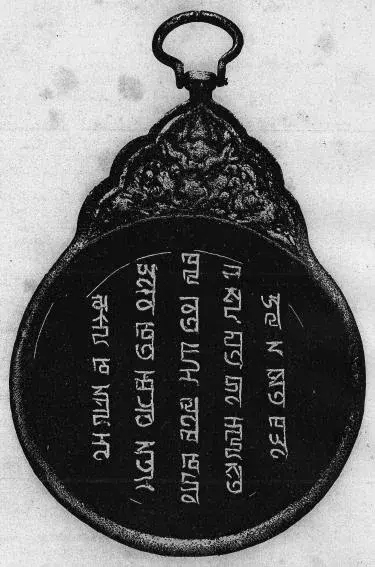
The Bureau of Buddhist and Tibetan Affairs, known natively as Xuanzheng Yuan, was one of the paramount central state organs of the Yuan dynasty, directly supervising nationwide Buddhist monastic affairs and wielding comprehensive civil, religious, and military jurisdiction over the Tibetan region. In 1264, Kublai Khan established the initial bureau, titled Zongzhi Yuan, ranked second class, appointing the supreme Sakya lineage patriarch and first Imperial Preceptor, Drogon Chogyal Phagpa, to head its administration. In 1288, upon the memorial of Grand Councillor Sangha invoking the Tang dynasty precedent of receiving Tibetan emissaries in the Xuanzheng Hall, the organ was renamed Xuanzheng Yuan and elevated to senior first class. Ranked alongside the Central Secretariat, the Bureau of Military Affairs, and the Censorate, it formed one of the four principal administrative pillars of the Yuan state. The Xuanzheng Yuan governed Tibet through three Pacification Commissionerates, appointed Sakya Ponchen administrators, conducted landmark censuses, and established an extensive relay postal courier network. Its foundation marked Tibet's definitive incorporation into China's unified central administrative domain.
Kublai Khan confers the title of State Preceptor and a jade seal upon Phagpa, establishing the foundational Mongol-Sakya political alliance.
Kublai Khan establishes the Zongzhi Yuan at second rank, appointing Phagpa to oversee monastic affairs and the Tibetan plateau.
The bureau executes the first imperial census of Tibet, instituting the thirteen myriarchies and establishing an integrated postal relay route.
Following the creation of the Phagpa script, Kublai elevates Phagpa to Imperial Preceptor, greatly augmenting the bureau's prestige.
Sangha memorials for the name change based on Tang precedents; the bureau is promoted to senior first rank alongside the Central Secretariat.
The Xuanzheng Yuan cooperates with the military command to deploy troops to Tibet, crushing the regional revolt and securing imperial order.
The Yuan court standardizes the bureau's organizational quota at ten commissioners, establishing an enduring bureaucratic governance structure.
The Yuan dynasty falls to Ming forces; the bureau disbands, but its governing traditions inspire the Ming U-Tsang Regional Military Commission.
In the early thirteenth century, Genghis Khan unified the Mongol tribes and launched sweeping expansions, projecting Mongol military influence toward the Tibetan plateau. During the reign of Ogedei Khan, Prince Koten garrisoned Liangzhou and convened the historic Liangzhou Summit in 1247 with the Tibetan Sakya master Sakya Pandita. At this conference, secular and monastic leaders from central Tibet acknowledged Mongol suzerainty, establishing a close collaborative relationship between Mongol imperial rulers and the Sakya school of Tibetan Buddhism.
During Mongke Khan's reign, early appanage and myriarchy structures were instituted across the Tibetan borderlands, though a centralized, unified imperial bureaucracy had not yet been forged. Following Mongke's death in 1259, a protracted succession struggle erupted between Kublai and Ariq Boke. Throughout this critical juncture, Phagpa, the fifth patriarch of the Sakya school, provided steadfast ideological, religious, and political support to Kublai's enterprise of constructing an integrated Sinitic imperial dynasty. In 1260, upon ascending the throne, Kublai invested Phagpa as State Preceptor, granting him a jade seal and supreme authority over Buddhist affairs throughout the empire.
Following the defeat of Ariq Boke, Kublai consolidated his hold over the Yuan realm, an expansive empire encompassing diverse ethnic groups and divergent regional traditions. Across northern and southern China, thousands of Buddhist and Chan monasteries maintained extensive tax-exempt estates and vast monastic populations. Monastic property disputes, civil litigations involving clerics, and the unregulated issuance of monastic certificates grew increasingly complex, overwhelming the traditional Ministry of Rites.
Simultaneously, the Tibetan plateau remained fragmented among competing monastic lineages, local warlords, and mountain chieftaincies. To end regional instability and establish long-term imperial security across the western frontiers, the Yuan throne required an unprecedented institutional framework: a specialized central bureau possessing sovereign central authority while respecting Tibetan traditions, thereby integrating the plateau firmly into the administrative framework of the empire.
In 1264, Kublai Khan promulgated an imperial edict formally establishing the Zongzhi Yuan as an executive organ subordinate directly to the emperor. Ranked at the regular second civil grade, its statutory mission was officially defined as superintending Buddhist clerics throughout the empire and administering the territories of Tibet. Kublai appointed State Preceptor Phagpa to concurrently direct the organ, creating a specialized staff of commissioners, associate directors, deputy commissioners, signatories, and judge-investigators.
Assuming leadership of the bureau, Phagpa established an institutional bridge connecting the imperial capital with local Tibetan society. Although Phagpa frequently resided at Dadu or accompanied the imperial entourage, he governed Tibetan civil affairs through a newly established secular office known as the Sakya Ponchen. Nominated by the Imperial Preceptor and confirmed by imperial decree, the Ponchen exercised executive authority over judicial, administrative, and tax affairs in Tibet, reporting directly to the Zongzhi Yuan.
Under the coordination of the Zongzhi Yuan, the Yuan state initiated historic administrative integration across the Tibetan highlands. In 1268, imperial officials dispatched by the Zongzhi Yuan partnered with Sakya Ponchen Shakya Zangpo to execute the first comprehensive census of Tibet, recorded in Tibetan historiography as the Census of Zhiyuan. Imperial commissioners systematically cataloged agricultural estates, nomadic households, pasturage areas, and livestock.
Based upon these census rolls, central Tibet was formally partitioned into thirteen administrative myriarchies, with myriarch commanders receiving official patents, silver seals, and tiger tallies from the imperial court. Concurrently, the Zongzhi Yuan constructed a vast postal relay station network stretching from Dadu through Qinghai and Kham to Lhasa and Sakya Monastery. Dozens of fortified courier posts provided fresh post-horses, rations, and military escorts. This infrastructural accomplishment drastically reduced communication delays between Dadu and Lhasa, enabling rapid conveyance of imperial edicts and binding Tibet closely to the central empire.
In 1288, Grand Councillor of the Department of State Affairs and commissioner of the Zongzhi Yuan, Sangha, presented a detailed memorial to Kublai Khan. Sangha argued that because the bureau was entrusted with managing Buddhist affairs nationwide and administering extensive frontier territories, its designation should reflect greater historical dignity. He proposed adopting the historic precedent of the Tang dynasty, wherein imperial emperors received Tibetan envoys within the majestic Xuanzheng Hall, to rename the agency Xuanzheng Yuan.
Kublai Khan approved the memorial, promulgating an edict renaming the agency the Bureau of Buddhist and Tibetan Affairs. Simultaneously, Kublai elevated the official rank of the bureau commissioner from the second rank to senior first rank, placing the Xuanzheng Yuan on an equal bureaucratic plane with the Central Secretariat, the Bureau of Military Affairs, and the Censorate. The office was staffed by clerical and secular officials alike, frequently led by the Imperial Preceptor or presiding imperial chancellors, equipped with a comprehensive retinue of directors, vice commissioners, secretaries, and military administrators.
Following its structural elevation, the Xuanzheng Yuan established a tiered administrative hierarchy across the plateau. The Yuan empire divided all Tibetan-inhabited territories into three major Pacification Commissionerates: the Pacification Commissionerate and Chief Military Command of Tuban and Other Places, headquartered at Hezhou for modern Qinghai and southern Gansu; the Pacification Commissionerate and Chief Military Command of Tuban Route, headquartered at Changdu for Kham; and the Pacification Commissionerate and Chief Military Command of U-Tsang, Ngari, and Sogruksum, headquartered at Sakya for central and western Tibet.
In daily governance, the Xuanzheng Yuan demonstrated notable administrative adaptability. When local insurrections erupted, the bureau conferred with the Bureau of Military Affairs to mobilize Mongol garrisons alongside regional levies. For regional administrative supervision, the court dispatched branch bureaus known as Xing Xuanzheng Yuan to investigate grievances and enforce monastic discipline. When the Drigung Monastery rebelled against Sakya authority in 1290 during the Drigung Rebellion, the Xuanzheng Yuan coordinated with imperial generals to march imperial troops into central Tibet, quelling the revolt and cementing central authority over the plateau.
The creation and elevation of the Xuanzheng Yuan established a standardized, permanent administrative apparatus connecting the imperial court with the Tibetan plateau. By utilizing high-ranking commissioners, resident Sakya Ponchen officials, three regional Pacification Commissionerates, and thirteen registered myriarchies, the Yuan state brought an end to centuries of localized fragmentation that had persisted since the fall of the Tibetan Empire. The Xuanzheng Yuan exercised exclusive authority over clerical appointments, tax assessments, postal logistics, and final judicial appeals, integrating the highlands into the imperial governance mechanism.
The establishment of the Xuanzheng Yuan represented an institutional innovation of profound historical significance, formalizing Tibet's entry into the unified administrative territory of China. It established the initial sovereign legal precedent for China's central authority over Tibet. Successive dynasties inherited and refined these administrative structures: the Ming dynasty instituted the U-Tsang Regional Military Commission and practiced multi-lineage patronage; the Qing dynasty elevated these mechanisms into the Lifan Yuan, the resident Grand Minister Amban system, and the Golden Urn lottery. The model of coordinated secular and spiritual administration pioneered by the Xuanzheng Yuan remains a foundational legacy in Chinese administrative history.