Emperor Xiaowen Assumes Power
Grand Empress Dowager Feng dies; Emperor Xiaowen assumes personal rule and initiates confidential plans to move the capital
Northern Wei Dynasty (北魏) · HISTORICAL EVENT
孝文帝迁都洛阳
Emperor Xiaowen's Relocation of the Capital to Luoyang was a monumental geopolitical and strategic transformation carried out during the Taihe era of the Northern Wei Dynasty. Ever since Emperor Daowu (Tuoba Gui) established Pingcheng (present-day Datong, Shanxi) as the imperial capital in 398, Pingcheng served for nearly a century as the military anchor from which northern China was unified. However, as the dynasty evolved from an expansive steppe…
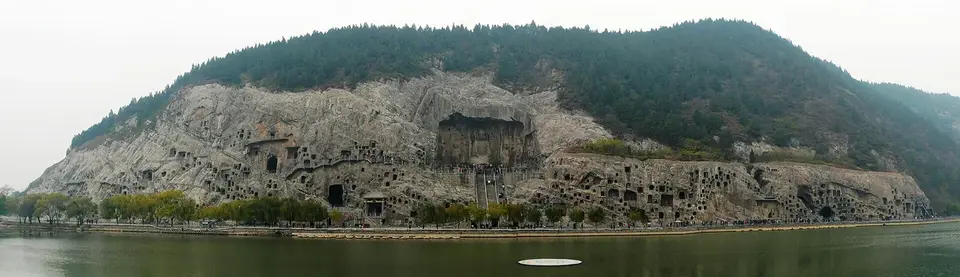
Emperor Xiaowen's Relocation of the Capital to Luoyang was a monumental geopolitical and strategic transformation carried out during the Taihe era of the Northern Wei Dynasty. Ever since Emperor Daowu (Tuoba Gui) established Pingcheng (present-day Datong, Shanxi) as the imperial capital in 398, Pingcheng served for nearly a century as the military anchor from which northern China was unified. However, as the dynasty evolved from an expansive steppe conquest state into a sedentary agrarian empire, Pingcheng's acute vulnerabilities—its freezing northern climate, arid landscape, structural grain deficits, and perilous mountain supply lines—became untenable. Crucially, the entrenched conservative Xianbei military aristocracy clustered at Pingcheng bitterly opposed any transition toward centralized Confucian governance. In the autumn of 493, Emperor Xiaowen (Yuan Hong) launched an audacious strategic ploy, mobilizing an army of over three hundred thousand troops ostensibly for a grand campaign against the Southern Qi Dynasty. Arriving at the ruins of Luoyang amidst relentless autumn downpours and military exhaustion, Xiaowen leveraged his soldiers' reluctance to engage in southern campaigns to mandate the permanent establishment of the imperial capital at Luoyang. Returning to Pingcheng the following spring, Xiaowen systematically debated and outmaneuvered conservative elder statesmen in the Palace of Supreme Ultimate, subsequently transferring the ancestral imperial spirit tablets to Luoyang. This strategic relocation successfully emancipated the monarchy from northern tribal reactionary pressures, situated the dynasty at the ideological heart of traditional Chinese civilization, and laid the indispensable foundation for his comprehensive Sinicization reforms and the eventual emergence of the Sui and Tang unified empires.
Grand Empress Dowager Feng dies; Emperor Xiaowen assumes personal rule and initiates confidential plans to move the capital
Xiaowen secretly convenes with Yuan Cheng, outlining the strategy of using a simulated southern military expedition
Xiaowen departs Pingcheng at the head of a 300,000-man army, marching south under the pretext of invading Southern Qi
Facing continuous downpours and muddy roads at Luoyang, Xiaowen forces weeping commanders to assent to the relocation
Xiaowen returns to Pingcheng, personally debating and overcoming Mu Pi and conservative elder statesmen
Following Yuwen Fu's advice, the court creates Heyang Stud Farm to acclimatize northern warhorses to the central plains
Xiaowen conducts farewell rituals at the Pingcheng ancestral temple and conveys imperial tablets south to Luoyang
The Palace of Supreme Ultimate, ancestral temples, and three hundred residential wards are completed, operating as the imperial seat
An imperial edict mandates that relocated Xianbei must register locally in Luoyang and be buried in Mount Mang
For nearly a century, Pingcheng functioned effectively as the military base of the Northern Wei, perfectly situated near the steppe borders to confront nomadic Rouran incursions and unify the non-Han peoples of northern China. Following the unification of the North in 439, however, imperial priorities shifted decisively from territorial conquest to administrative consolidation over sedentary agrarian societies. Located on a desolate northern plateau, Pingcheng was plagued by bitterly cold winters, persistent sandstorms, and a brief agricultural growing season. The arid regional terrain produced far too little grain to feed over a million aristocrats, bureaucrats, palace retainers, and metropolitan garrison troops.
To avert catastrophic famine, the imperial government was forced to transport immense quantities of grain from the fertile plains of Shandong and Hebei. This logistical lifeline required traversing dangerous mountain passes across the Taihang Mountains, a process that incurred staggering financial costs, tremendous loss of draft animals, and persistent risks of supply disruptions whenever landslides, heavy snows, or floods blocked the roads. Pingcheng was repeatedly shaken by acute grain shortages. Furthermore, nomadic Rouran cavalry continuously raided the northern frontiers, placing Pingcheng under constant military danger and perpetually draining state revenues that could otherwise be dedicated to governance.
As the ancestral cradle of the Tuoba Xianbei, Pingcheng harbored an entrenched, reactionary military nobility. These aristocratic veterans controlled vast tracts of ancestral grazing lands, possessed tens of thousands of unfree laborers, and monopolized hereditary military commands. Clinging rigidly to traditional tribal customs, they harbored profound hostility toward sedentary Chinese institutions, bureaucratic taxation, and Confucian rituals. Every attempt by reform-minded emperors to introduce institutional modernization met with fierce covert subversion and open hostility from the Pingcheng nobility.
Conversely, Emperor Xiaowen, an exceptionally learned ruler thoroughly steeped in classical Confucian literature, possessed a grand vision of universal kingship. Xiaowen recognized that so long as the court remained in Pingcheng, southern regimes and traditional Han scholar-officials would dismiss the Northern Wei as a crude, ephemeral barbarian conqueror. To claim unquestioned dynastic legitimacy, bridge the deep cultural divide between northern rulers and southern subjects, and project unquestioned authority across all of China, the monarchy had to relocate its seat of power to Luoyang—the sacred dynastic capital of the Zhou, Eastern Han, and Western Jin Dynasties situated at the center of the civilized realm.
Following the death of Grand Empress Dowager Feng in 490, Emperor Xiaowen assumed personal governance and immediately prioritized the relocation of the capital. Fully aware that an overt proposal to abandon Pingcheng would incite violent opposition and potential military rebellion from the conservative northern nobility, Xiaowen devised an intricate covert strategy to achieve the relocation under the guise of an inevitable military emergency, collaborating closely with trusted Han advisor Li Chong and palace confidants.
Xiaowen identified his influential uncle, Prince of Rencheng Yuan Cheng, as the vital royal ally required to sway the Tuoba clan. In an intimate audience, Xiaowen dismissed imperial attendants and candidly outlined the fatal geopolitical limitations of Pingcheng, arguing that the Northern Wei must anchor itself in the Central Plains to establish an enduring universal empire. He disclosed his confidential scheme to mobilize the army under the pretext of a southern expedition against Southern Qi, and then permanently halt the march at Luoyang to mandate the capital transfer. Deeply moved by the emperor's strategic clarity, Yuan Cheng pledged his unequivocal support, becoming the foremost royal champion of the plan.
Over the ensuing months, Xiaowen maintained a high-profile public posture advocating a grand military campaign against Southern Qi. He held elaborate military reviews, performed martial rituals, and delivered fiery speeches condemning southern intransigence. Convinced that the emperor was merely preparing a customary punitive expedition, conservative Xianbei officers made extensive logistical preparations, completely oblivious to the monarch's grand geopolitical design.
In the eighth month of 493, Emperor Xiaowen formally launched his southern campaign, personally taking command of an immense combined host of over three hundred thousand cavalry and infantry accompanied by civil officials, imperial retinues, and vast logistical convoys. By late autumn in the ninth month, the grand army crossed the Yellow River and reached the war-torn ruins of Luoyang. Precisely at this juncture, unseasonal torrential rains lashed the region continuously for weeks, converting the central plains into an impassable sea of mud. Exhausted by the grueling journey across the mountains, facing dwindling food supplies and terrified of the humid, disease-ridden southern marshes, the northern troops fell into widespread despair.
On a bleak, rain-swept morning, Emperor Xiaowen emerged in full battle armor atop his warhorse, brandishing his riding whip and ordering the reluctant divisions to cross the Luo River immediately to resume the southward advance. Terrified by the prospect of fighting in treacherous southern terrain under such conditions, senior Xianbei generals and imperial princes, led by Prince of Rencheng Yuan Cheng and Grand Commandant Yuan Pi, cast themselves into the mud before the emperor's steed, prostrating themselves and tearfully imploring the emperor to abort the campaign and return to Pingcheng.
Displaying feigned indignation, Xiaowen sternly rebuked the assembled commanders, proclaiming that an imperial mobilization of three hundred thousand men could not retreat in humiliation without compromising the prestige of the throne. He then delivered his calculated ultimatum: if the princes and generals were unwilling to bleed in the southern campaign, they must agree to establish the dynastic capital here in Luoyang immediately. Faced with the immediate horror of a disastrous southern war versus the permanence of Luoyang, the exhausted commanders chose the lesser hardship, kneeling in the downpour and shouting unanimous acclaim for the capital relocation. Xiaowen promptly ordered the cessation of military operations, successfully completing the first decisive phase of his relocation gambit.
Although the army had yielded in the field, fierce resistance simmered among the conservative elder statesmen and imperial matriarchs remaining at Pingcheng. Recognizing that lasting success required neutralizing this northern conservative opposition, Xiaowen entrusted the initial reconstruction of Luoyang to Prince Yuan Cheng and Li Chong, while personally journeying back to Pingcheng in the third month of 494. Entering the historic Palace of Supreme Ultimate, the emperor convened a plenary court debate to confront the ministers who remained behind directly.
Senior noble Mu Pi, Inspector of Yanzhou, stepped forward to deliver an impassioned protest, arguing vehemently that Pingcheng was the hallowed cradle of their ancestors, that the nomadic Rouran posed an existential threat in the north, and that migrating to Luoyang violated ancestral traditions and court stability. Remaining calm and commanding, Emperor Xiaowen engaged Mu Pi and the elders in rigorous ideological debate, drawing extensively on the Book of Changes and the Spring and Autumn Annals. Xiaowen countered: "Ancient sage rulers took the four seas as their home; dwelling at the center of the earth, they governed the universe. Pingcheng may serve as a fortress of war, but it cannot function as the capital of civil culture."
Xiaowen systematically demonstrated how Pingcheng's barren environment, catastrophic grain logistics, and extreme isolation obstructed dynastic flourishing, contrasting this with Luoyang's central geography, fertile river valleys, and venerable status as the cultural heart of Chinese civilization. Overwhelmed by the emperor's compelling logic, historical erudition, and unshakeable resolve, and seeing that royal heavyweights like Yuan Cheng solidly backed the throne, the conservative elders realized that the historical tide had turned. Reluctantly submitting, they prostrated themselves and formally assented to the relocation edict.
Having neutralized political opposition, Xiaowen executed the logistical transfer of the imperial apparatus. To reassure the traditionalist population remaining in Shanxi, Xiaowen appointed the venerable elder prince Tuoba Pi as Grand Tutor in Charge of Secretarial Affairs, leaving him with plenary authority to supervise border defense and regional administration in Pingcheng, thereby preserving its formal dignity as the northern auxiliary capital.
In the tenth month of 494, Emperor Xiaowen conducted solemn farewell sacrifices at the ancestral temple in Pingcheng, respectfully transferring the spirit tablets of the Tuoba imperial ancestors from Emperor Shenyuan onward onto imperial wagons. Accompanied by thousands of civil officials and imperial guards, the sacred procession departed Pingcheng, traveling via Ye, and arrived triumphantly in Luoyang in late November, where grandiose state ceremonies were held to inaugurate the new imperial seat.
To solve the acute challenge of northern warhorses struggling with the warm, humid climate of the Central Plains, Xiaowen adopted the proposal of General Yuwen Fu to establish the vast Heyang Stud Farm along the fertile northern bank of the Yellow River near Mengxian. Thousands of cavalry steeds from the Hexi Corridor and northern steppes were gradually acclimatized in Bingzhou before being transferred down to Heyang, successfully securing the empire's military cavalry assets. Simultaneously, Xiaowen promulgated a strict decree mandating that all Xianbei officials and military households who migrated south must register as permanent residents of Luoyang and be interred upon death at Mount Mang, legally and ritually terminating any possibility of returning to the northern steppes.
Throughout 494 and 495, under the direct architectural supervision of Minister Li Chong, the reconstruction of Luoyang proceeded at extraordinary speed. Built upon and expanding the ancient Han and Wei footprints, the new imperial metropolis featured an inner walled palace city and a vast outer ward city divided into over three hundred residential wards (Lifang). Master craftsmen erected the grand Palace of Supreme Ultimate, Eastern and Western Halls, an ancestral imperial temple, the Bright Hall, the Imperial Academy, and the Round Mound for celestial sacrifices, completely restoring classical Confucian architectural norms.
Across the outer wards, three sprawling commercial markets were established, alongside designated international quarters such as the Ward of Yearning for Transformation (Muhuali) and the Ward of Returning to Virtue (Guide-li) to accommodate foreign emissaries, merchants, and defecting southern scholars. As the principal ministries—including the Secretariat, Chancellery, and Department of State Affairs—opened their headquarters in Luoyang, Pingcheng formally transitioned into a northern military bastion. The seamless transfer of power marked the total metamorphosis of the Northern Wei from an isolated tribal confederation into a dominant, civilized Chinese empire.
The relocation to Luoyang accomplished an immense logistical, military, and demographic migration within two years, transferring over three hundred thousand Xianbei citizens and the entire administrative apparatus into the central plains. Rising from the ruins of two centuries of warfare, Luoyang rapidly developed into an international metropolis boasting over one million inhabitants, filled with opulent palaces, Buddhist monasteries, and vibrant commercial markets. Relocated Xianbei households were legally integrated into Luoyang registers and interred at Mount Mang, while Pingcheng assumed the secondary role of a northern frontier fortress.
Emperor Xiaowen's Relocation of the Capital to Luoyang represents a seminal turning point in Chinese imperial history: First, it permanently dismantled the reactionary stranglehold of the steppe aristocracy. Moving away from the geographical stronghold of the northern clans at Pingcheng allowed Emperor Xiaowen to enact his revolutionary Sinicization edicts—such as adopting Han clothing, language, surnames, and social rankings—without fear of violent local subversion. Second, it validated the dynastic legitimacy of the Northern Wei. By establishing its capital at Luoyang, the symbolic and ritual center of Chinese civilization, the Northern Wei transitioned from being viewed as an alien barbarian conqueror into an authentic successor to the classical Chinese dynasties, winning the active allegiance of the Han scholar-gentry. Third, it fostered unprecedented economic and demographic integration across the Yellow River basin. Hundreds of thousands of Xianbei people entered the sedentary agricultural economy, creating a vibrant cultural and biological synthesis that revitalized northern China and laid the geopolitical foundations for the great reunification under the Sui and Tang Dynasties.