The Snowy Night Strategy
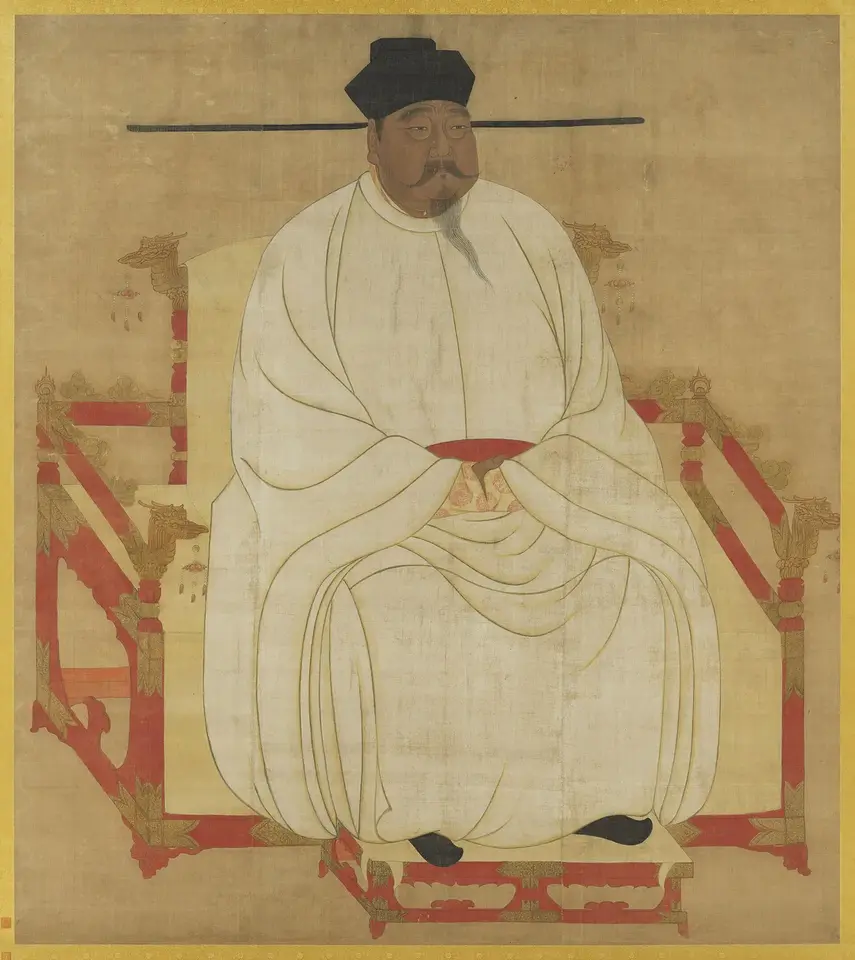
Emperor Taizu and Grand Councilor Zhao Pu formulate the strategy of conquering the south before the north and subduing the vulnerable first.
Northern Song Dynasty (北宋) · HISTORICAL EVENT
北宋统一战争
The Northern Song Wars of Unification were an expansive military campaign spanning from 962 to 979 (from the 3rd year of Jianlong to the 4th year of Taiping Xingguo) executed by the Northern Song dynasty to end the fragmentation of the Five Dynasties and Ten Kingdoms. Following the fall of the Tang dynasty, the Central Plains cycled through five ephemeral dynasties while surrounding border territories fractured into ten autonomous kingdoms, inflicting…
The Northern Song Wars of Unification were an expansive military campaign spanning from 962 to 979 (from the 3rd year of Jianlong to the 4th year of Taiping Xingguo) executed by the Northern Song dynasty to end the fragmentation of the Five Dynasties and Ten Kingdoms. Following the fall of the Tang dynasty, the Central Plains cycled through five ephemeral dynasties while surrounding border territories fractured into ten autonomous kingdoms, inflicting severe disruption on the economy. After founding the Song in 960, Emperor Taizu (Zhao Kuangyin) and his chief minister Zhao Pu formulated the grand strategic doctrine of conquering the south before the north and tackling the vulnerable before the formidable. This strategy prioritized absorbing the wealthy yet militarily frail southern regimes to replenish the state treasury and build troop reserves before directing imperial forces against the northern bastion of Northern Han, which relied on the nomadic Khitan Liao dynasty. Beginning with a deceptive march through Jingnan in 962 that rapidly pacified Hunan, Song armies subsequently executed a two-pronged offensive to overrun Later Shu, marched southward over the Five Ridges to incinerate Southern Han's elephant corps, and constructed a massive pontoon bridge across the Yangtze River to besiege Jinling and extinguish Southern Tang. In 978, Chen Hongjin of Minnan and Qian Chu of Wuyue peacefully submitted their territories to avoid bloodshed. In 979, Emperor Taizong personally led the northern expedition against Taiyuan, routing Liao relief forces at Baimaling and flooding Jinyang until Northern Han ruler Liu Jiyuan surrendered. Spanning seventeen years, the campaigns re-established unified sedentary governance across the Chinese heartland.
Emperor Taizu and Grand Councilor Zhao Pu formulate the strategy of conquering the south before the north and subduing the vulnerable first.
Murong Yanzhao and Li Chuyun feign transit to capture Gao Jichong at Jiangling and defeat Zhou Baoquan, annexing seventeen prefectures across Hunan and Hubei.
Wang Quanbin marches through the Qinling passes while Liu Guangyi and Cao Bin advance up the Yangtze gorges, dismantling Shu river barriers at Kuimen.
Wang Quanbin outflanks Jianmen Pass, crushing the Shu army and forcing Meng Chang to surrender Chengdu after a sixty-six-day campaign.
Pan Mei leads imperial divisions southward from Hunan, capturing Hezhou, Zhaozhou, and Guizhou to dismantle the northern mountain defenses of Lingnan.
Pan Mei deploys flaming crossbow volleys to stampede Liu Chang's war elephants at Baitian, capturing Panyu and incorporating sixty Lingnan prefectures.
Cao Bin and Pan Mei guide one hundred thousand troops down the Yangtze, throwing a massive floating bridge across the river at Caishi to directly threaten Jinling.
Sudden wind reversal consumes Zhu Lingyun's relief fleet in flames at Wankou; Jinling falls and Li Yu surrenders thirty prefectures.
Chen Hongjin cedes Minnan and King Qian Chu surrenders thirteen prefectures and eighty-six counties of Wuyue, peacefully uniting the southeastern coast.
Guo Jin crushes the Liao relief army at Baimaling, and Emperor Taizong floods Taiyuan, compelling Liu Jiyuan to surrender and ending the Ten Kingdoms era.
Following the An Lushan Rebellion in the mid-eighth century, regional military commissioners (jiedushi) consolidated hereditary regional autocracies. The sweeping Huang Chao Rebellion in the late Tang completely shattered imperial coordination. In 907, warlord Zhu Wen usurped the Tang throne to establish Later Liang, inaugurating the Five Dynasties and Ten Kingdoms era. Across the Yellow River basin, five ephemeral regimes—Later Liang, Later Tang, Later Jin, Later Han, and Later Zhou—succeeded one another in rapid succession through violent military coups and patricidal overthrows, devastating the social fabric.
Simultaneously, southern China and the mountain basin around Taiyuan fractured into ten sovereign regional realms: Former Shu, Later Shu, Wu, Southern Tang, Wuyue, Min, Chu, Southern Han, Jingnan (Nanping), and Northern Han. These regimes declared themselves kingdoms or empires, erecting militarized borders, levying onerous customs taxes, and waging incessant internecine conflicts. Although southern regimes were militarily brittle, they capitalized on natural defenses such as the Yangtze River, the Qinling Mountains, and the Five Ridges. In the north, Later Jin founder Shi Jingtang ceded the strategic Sixteen Prefectures of Yanyun to the Khitan Liao empire in 936, leaving the North China Plain vulnerable to nomadic cavalry. Northern Han acknowledged the Khitan rulers as imperial overlords, functioning as a permanent northern menace against the Central Plains.
In February 960 (the 1st year of Jianlong), Palace Guard Commander Zhao Kuangyin was proclaimed emperor by his troops during the Chenqiao Mutiny, establishing the Song dynasty at Kaifeng. Taizu confronted acute domestic rebellions by Later Zhou loyalists Li Yun in Luzhou and Li Zhongjin in Yangzhou, alongside external threats from surrounding kingdoms and the hostile northern alliance between Northern Han and Liao. Zhao Kuangyin swiftly suppressed the internal revolts and peacefully transferred military commands away from senior generals, concentrating fiscal revenues, judicial authority, and elite palace guards directly under imperial authority.
With imperial control stabilized, determining the sequence of unification became the primary strategic imperative. A faction within the court advocated immediate northern offensives against Taiyuan. However, during a nocturnal conference amidst heavy winter snowfall, Emperor Taizu and Grand Councilor Zhao Pu analyzed geopolitical realities. Zhao Pu persuasively argued that Northern Han acted as a buffer against nomadic incursions; seizing it prematurely would force the fledgling Song to bear the full brunt of Khitan assaults alone. Conversely, southern regimes controlled fertile agrarian plains but suffered from corrupt leadership, weak military cohesion, and an inability to mount coordinated alliances.
Persuaded by Zhao Pu's analysis, Emperor Taizu adopted the Grand Strategy of conquering the south before the north and subduing the vulnerable before the formidable. The Song court resolved to systematically annex the southern kingdoms to absorb their immense agricultural yields and trade surpluses, before concentrating the full power of a wealthy, unified empire to isolate and crush Northern Han.
The unification campaigns commenced in the strategic middle reaches of the Yangtze River basin. Jingnan (Nanping) occupied the Jianghan Plain around Jiangling, controlling a minuscule realm of three prefectures that served as the primary waterway crossroads connecting northern China, Sichuan, and the lower Yangtze. Immediately south of Jingnan lay the Wuping circuit (Hunan), governing fourteen prefectures. Following the death of veteran governor Zhou Xingfeng, his eleven-year-old son Zhou Baoquan inherited command, provoking an immediate armed rebellion by general Zhang Wenbiao. Desperate for survival, young Zhou Baoquan petitioned Kaifeng for military intervention in late 962. Recognizing an exceptional strategic opening, Emperor Taizu and Zhao Pu enacted the classical stratagem of borrowing transit through one state to conquer both.
In February 963 (the 1st year of Qiande), Emperor Taizu commissioned veteran general Murong Yanzhao as campaign commander and Assistant Bureau Director Li Chuyun as army supervisor, dispatching over ten thousand elite troops ostensibly to assist Hunan against Zhang Wenbiao by traversing Jingnan. When the expedition reached Xiangyang, Jingnan ruler Gao Jichong sent his uncle Gao Baoyin with supplies to inspect Song dispositions. Li Chuyun feigned genial courtesy, hosting lavish banquets while secretly racing several thousand elite shock cavalry forward toward Jiangling.
Alarmed by the sudden arrival of imperial cavalry, Gao Jichong hurried outside the municipal walls to offer greeting. While Li Chuyun engaged the ruler in cordial discussions, detachments of Song cavalry bypassed the assembly, galloped through the city gates, and secured all defensive bastions and arsenals. Realizing he had been outmaneuvered, Gao Jichong surrendered his three prefectures and seventeen counties without striking a blow.
Without pausing, Song forces pressed south into Hunan. By this juncture, loyalist forces had already crushed Zhang Wenbiao. Realizing Song intentions, Zhou Baoquan dispatched general Zhang Congfu to fortify defensive bottlenecks. Murong Yanzhao and Li Chuyun advanced via coordinated land and river columns, smashing the Hunan fleet at Sanjiangkou. Li Chuyun executed aggressive psychological warfare, causing the defenders to break and flee. In March 963, Song forces stormed Langzhou (modern Changde), capturing Zhou Baoquan and annexing all fourteen prefectures of Hunan. The conquest secured control over the middle Yangtze, driving a permanent wedge between Later Shu and Southern Tang.
With the middle Yangtze secured, Taizu directed his offensive against Later Shu. Endowed with the vast wealth of the Sichuan basin, Later Shu ruler Meng Chang led a lavish, negligent court, relying complacently on the formidable barriers of the Qinling Mountains and Jianmen Pass. In the autumn of 964, Meng Chang dispatched an envoy bearing a wax-sealed secret missive to Northern Han ruler Liu Jun, proposing a coordinated northern-southern offensive against the Song. However, the messenger defected upon reaching Song territory, delivering the letter to Taizu. The emperor seized upon this intercepted treason as legitimate cause for war.
In November 964, Taizu ordered a synchronized two-pronged offensive: veteran general Wang Quanbin was named commander of the northern force with Cui Yanjin as deputy, leading thirty thousand cavalry and infantry south from Fengxiang across the rugged Qinling trails; simultaneously, Liu Guangyi and Cao Bin directed a southern army of twenty thousand up the Yangtze River gorges from Guizhou (modern Zigui).
The southern column under Liu Guangyi and Cao Bin advanced rapidly through the Three Gorges, confronting heavily fortified Later Shu river defenses at Kuimen. Shu commanders had strung massive iron chains and floating boom barriers across the river chasm, flanked by fortified cliffside bastions. Cao Bin and Liu Guangyi deployed combined amphibious assaults: land contingents scaled the cliffs to capture the artillery redoubts, while river squadrons severed the iron cables under heavy archery fire, crushing ten thousand Shu defenders. Shu general Gao Yanchou burned himself to death in honorable defiance. Song troops swept forward through Wanzhou, Zhongzhou, and Fuzhou, capturing Jiangjin and threatening Chongqing, effectively dismantling Later Shu's eastern riverine flank.
Simultaneously, Wang Quanbin's northern column pushed through snowbound mountain passes, clearing Shu outposts at Mantian Fort and Luofu to capture Xingzhou and Quanzhou before converging upon Jianmen Pass. Perched upon sheer cliffs, Jianmen was defended by twenty thousand elite Shu troops under Wang Zhaoyuan. Wang Quanbin gathered local intelligence and uncovered an abandoned wilderness trail leading around the rear of the pass near Jinniu Station. The Song commander dispatched general Shi Yande with a shock detachment to scale the rear precipices while launching frontal attacks with assault wagons. Surprised by signal fires erupting behind their lines, the Shu army collapsed in panic, and Wang Zhaoyuan was captured. With Jianmen breached, Shu defenses evaporated. In January 965, Song forces surrounded Chengdu, and Meng Chang surrendered. In just sixty-six days, the Song incorporated forty-six prefectures and two hundred forty counties into the empire.
Following the conquest of Later Shu, senior commanders Wang Quanbin and Cui Yanjin failed to maintain troop discipline, permitting rampant extortion, plunder, and the confiscation of local property in Chengdu. In February 965, the imperial court decreed the relocation of over twenty thousand Shu soldiers to Kaifeng; however, accompanying Song transport officers embezzled grain supplies and subjected the troops to brutal beatings. Driven to desperation, the former Shu soldiers elected veteran officer Quan Shixiong as their leader, sparking a massive general insurrection.
The rebellion rapidly seized Guankou and Pengzhou, with insurgents across seventeen prefectures rallying to besiege Chengdu and throwing Sichuan back into chaos. Deeply angered, Emperor Taizu dismissed Wang Quanbin, appointed Bureau Director Cao Bin to assist in quelling the rebellion, and issued strict orders forbidding atrocities against civilians. Cao Bin applied a balanced strategy of conciliation and targeted military strikes, isolating insurgent factions and defeating the main rebel concentrations at Baishi and Jintang. By late 966, Quan Shixiong was killed in combat, and the remaining insurgent pockets were pacified. The ordeal provided Taizu with critical strategic lessons, leading to strict enforcement of military discipline and benevolent treatment of surrendered populations in subsequent campaigns.
Turning southward, the Song targeted Southern Han, which occupied sixty prefectures across Lingnan. Ruler Liu Chang was a sadistic tyrant who entrusted state affairs entirely to sorceresses, corrupt eunuchs such as Gong Chenshu, and court maidservants, executing royal kin and meritorious officials while imposing draconic penal codes. Relying on the natural barrier of the Five Ridges, tropical diseases, and a specialized corps of several hundred armored war elephants—each bearing an archery tower housing ten armed warriors—Liu Chang dismissed the Song threat.
In September 970 (the 3rd year of Kaobao), Emperor Taizu appointed Pan Mei as commander of the Hezhou expedition, with Yin Chongke as deputy. Pan Mei advanced through mountainous trails from Hunan directly toward Hezhou. When the garrison retreated behind their battlements to await relief from Guangzhou, Pan Mei enacted the tactic of besieging a citadel to strike incoming relief forces. He concealed elite ambuscades along the Fuyi River, destroying several thousand Southern Han reinforcements and executing commanding general Wu Yanrou. Deprived of aid, Hezhou surrendered.
Song forces swept down the He and West Rivers, taking Zhaozhou, Guizhou, and Lianzhou, systematically collapsing the northern mountain defenses of Lingnan. In early 971, Pan Mei's army arrived at Baitian, just outside the Southern Han capital of Panyu (modern Guangzhou). Liu Chang concentrated over one hundred thousand soldiers and deployed his armored elephant corps in the front lines to trample the imperial ranks. Surveying the battlefield, Pan Mei ordered one thousand expert crossbowmen to form firing lines equipped with incendiary bolts laced with sulfur and pitch.
As the war elephants charged, the crossbowmen unleashed concentrated volleys of flaming bolts into the beasts' faces and flanks. Terrified by the sudden flames, blinding smoke, and agonizing burns, the elephants panicked, wheeled about, and stampeded blindly through Southern Han's own infantry and cavalry lines. The Southern Han formations dissolved into total chaos, with thousands crushed beneath their own panic-stricken beasts. Pan Mei signaled a full-scale offensive, obliterating the defending army. Liu Chang attempted to flee by sea with his amassed treasury, but his favored eunuchs stole the transport ships; left with no escape, he surrendered. Within six months, Lingnan was completely annexed, returning the far south to central imperial administration.
With Later Shu and Southern Han eradicated, Southern Tang remained the wealthiest independent regime south of the Yangtze River. Governing thirty prefectures across Jiangnan and Jiangxi, Southern Tang was renowned for its agricultural wealth, flourishing cultural institutions, and vast urban centers. Ruler Li Yu formally submitted tribute and abandoned the title of emperor, yet secretly reinforced his river fleets and bolstered city walls. Recognizing that Southern Tang posed an intolerable strategic liability, Emperor Taizu summoned Li Yu to Kaifeng in the autumn of 974; when Li Yu demurred, Taizu famously declared that he would allow no neighbor to sleep beside his imperial bed, ordering a full-scale invasion.
In September 974, Taizu placed Cao Bin in overall command with Pan Mei as deputy, directing one hundred thousand land and river forces down the Yangtze from Jingnan, while coordinating with Wuyue ruler Qian Chu to strike Changzhou from the east. Southern Tang officials rested their security entirely upon the natural barrier of the Yangtze River, mocking northern troops as incapable of crossing deep waters. However, years prior, Taizu had secretly commissioned scholar Fan Ruoshui to design modular pontoon bridge components at Jianghan and conduct secret anchoring tests at Shipaikou.
In November 974, Pan Mei's vanguard drove off Southern Tang defenders at Caishi on the southern riverbank. Working with extraordinary precision, Song engineers deployed thousands of anchored vessels, heavy iron chains, and interlocking timbers to span the turbulent Yangtze River. Within three days, an immense floating bridge spanned the water barrier. Over one hundred thousand Song troops traversed the river on foot, shattering Southern Tang morale and leaving the court in total disarray.
After crossing the Yangtze, Song forces defeated regional Tang forces at Bailuzhou and Xinlin Harbor, reaching the walls of Jinling (modern Nanjing) in February 975 and establishing an iron blockade around the capital. Li Yu urgently summoned Southern Tang's premier strategic force—the Divine Martial Army under commander Zhu Lingyun, comprising one hundred thousand elite riverine troops stationed at Hukou. Zhu Lingyun navigated hundreds of towering multi-decked war junks eastward down the Yangtze, aiming to smash the Caishi floating bridge, sever the Song supply lines, and relieve Jinling through a pincer strike.
In October 975, the decisive naval confrontation erupted at Wankou (modern Anqing, Anhui). Exploiting upstream currents and prevailing winds, Zhu Lingyun pushed massive incendiary vessels forward, intending to blast liquid naphtha and oil fires across the Song fleet. However, at the critical juncture, the wind suddenly reversed, blowing the inferno directly back into the packed Southern Tang war junks. Within minutes, the Tang fleet was engulfed in a raging wall of fire, with countless soldiers burning to death or drowning in the river, and Zhu Lingyun threw himself into the flames. Southern Tang's last hope was extinguished.
Following the victory at Wankou, the garrison inside Jinling exhausted all provisions, surviving on tree bark and shoe leather. Throughout the siege, Cao Bin enforced strict discipline, prohibiting civilian massacres and repeatedly sending letters urging Li Yu to accept an honorable surrender. On December 28, 975, Song assault columns breached the outer defenses. Li Yu emerged with his civil and military officials to submit formal articles of capitulation. Cao Bin prevented looting, sealed the imperial archives and treasuries, and escorted the royal family safely to Kaifeng, restoring all thirty prefectures of Southern Tang to imperial rule.
Following the collapse of Southern Tang, only two autonomous enclaves endured along China's southeastern seaboard: the Pinghai circuit governing Zhangzhou and Quanzhou under Chen Hongjin, and the wealthy Wuyue kingdom governing thirteen prefectures under Qian Chu. Confronting Song military dominance, both rulers recognized that armed resistance was futile.
Emperor Taizu passed away in November 976, and his younger brother Zhao Guangyi ascended the throne as Emperor Taizong, inaugurating the Taiping Xingguo era. Taizong maintained the momentum of dynastic consolidation. In May 978, Chen Hongjin traveled to Kaifeng and submitted the administrative registers of Zhangzhou, Quanzhou, and fourteen affiliated counties, peacefully ceding his territory to the throne.
Shortly thereafter, King Qian Chu of Wuyue fulfilled the ancestral admonition of his lineage, which held that if a true sovereign arose in the Central Plains, the family should submit to preserve their people from war. In June 978, Qian Chu traveled to the imperial capital, officially presenting the land registers of thirteen prefectures, eighty-six counties, an army of one hundred ten thousand soldiers, and complete civil tax registries. The voluntary surrender of Pinghai and Wuyue incorporated the prosperous southeastern coast into the Northern Song intact and spared its populace the horrors of war.
While the south was systematically unified, Northern Han remained an intractable thorn in the empire's northern frontier. Occupying ten prefectures across Shanxi, the regime was centered at the fortress city of Jinyang (modern Taiyuan), ringed by steep mountain ridges and sustained by military support from the Khitan Liao empire. Emperor Taizu had mounted three separate northern campaigns during his lifetime:
In 968, following the death of Northern Han ruler Liu Jun, Song forces under Li Jixun defeated regional armies at the Wo River but withdrew when vast Liao cavalry divisions advanced south. In 969, Taizu personally led the imperial guards to invest Taiyuan, constructing siege lines and diverting the Fen and Jin Rivers to flood the citadels; however, persistent summer downpours, widespread camp epidemics, and entrenched Liao reinforcements compelled him to lift the siege in June. In 976, Taizu launched another northern expedition under Dang Jin and Pan Mei, but operations were abruptly terminated upon his sudden death. Although these early campaigns failed to capture Jinyang, they severely eroded Northern Han's military reserves, depleted its tax base, and prepared the groundwork for its final defeat.
In February 979, Emperor Taizong resolved to commit the empire's full military resources to conclude the wars of unification. He appointed Pan Mei as overall commander of the northern front, dividing the imperial forces into four advancing columns to surround Taiyuan, while the emperor personally mobilized the central guard divisions.
In desperation, Northern Han ruler Liu Jiyuan dispatched urgent pleas to the Liao court. Emperor Jingzong of Liao dispatched Southern Chancellery Prime Minister Yelü Sha and King of Ji Yelü Dilie with tens of thousands of elite Khitan cavalry to relieve the siege. Anticipating the Khitan counter-offensive, Taizong positioned veteran general Guo Jin with elite units at the mountain pass of Shilingguan. In April 979, Guo Jin laid a trap at Baimaling. When the Khitan army began fording a mountain river, Guo Jin struck before their formations could assemble. The Song charge shattered the Khitan vanguard, killing Prince Yelü Dilie and his son, while Yelü Sha fled on horseback. The victory at Baimaling severed Northern Han from external military assistance.
In May, Emperor Taizong arrived outside Taiyuan to personally oversee siege operations. Hundreds of thousands of Song troops surrounded the ramparts, raining heavy projectiles from giant traction trebuchets and double-bow catapults while breaching river levees to flood the city streets. Submerged in knee-deep water and facing starvation, the garrison collapsed. On June 3, 979, Liu Jiyuan led his officials out of the city gates to tender unconditional surrender. Spanning seventeen years under two emperors, the Northern Song Wars of Unification concluded in triumph, permanently extinguishing the Five Dynasties and Ten Kingdoms era.
The seventeen-year unification campaign eradicated eight autonomous regional kingdoms, terminating more than two centuries of warlord autonomy and fragmentation that had plagued China since the mid-Tang dynasty.
By systematically stripping regional governors of military commands, judicial autonomy, and local revenue collection, the Song court established a centralized civil bureaucracy. This administrative framework permanently broke the pattern of military usurpations and warlord regimes characteristic of the Five Dynasties, returning internal peace to the Chinese heartland.
The wars of unification dismantled regional trade barriers, customs checkpoints, and protectionist tariffs, reopening major riverine and terrestrial arteries across the Yangtze, Han, and Yellow River basins. Agrarian surpluses, fine silks, ceramics, and salt from the south flowed northward to Kaifeng, while northern administrative systems and populations migrated south.
The peaceful surrenders of Wuyue and Pinghai preserved the infrastructure of the lower Yangtze and southeastern coasts from devastation. This continuity accelerated the southern shift of China's economic and cultural center, laying the foundation for the profound economic boom, urban development, and intellectual flourishing of the Song dynasty.
Despite unifying the traditional agrarian interior, the Song failed to recover the Sixteen Prefectures of Yanyun or subdue the Western Xia in the northwest, establishing a permanent geopolitical stalemate against the Khitan Liao dynasty.
Deprived of the northern mountain passes of Yanshan and the natural horse-breeding pastures of the northern plateaus, the Northern Song faced an enduring deficiency in cavalry, leaving its northern borders exposed to nomadic invasions and shaping its defensive military posture throughout its history.