Imperial Edict Promulgated
Emperor Guangxu issues the edict On Setting the National Policy, initiating the Hundred Days' Reform.
Qing Dynasty (清朝) · HISTORICAL EVENT
戊戌政变
The Wuxu Coup (戊戌政变) was a decisive palace coup staged by Empress Dowager Cixi and conservative court factions from September 21 to September 28, 1898 (the 24th year of Guangxu) to abruptly terminate the Hundred Days' Reform. In the summer of 1898, Emperor Guangxu promulgated intensive reform edicts aimed at modernizing the imperial bureaucracy, military, and educational systems. These sweeping measures dismantled sinecure government offices and permitted…
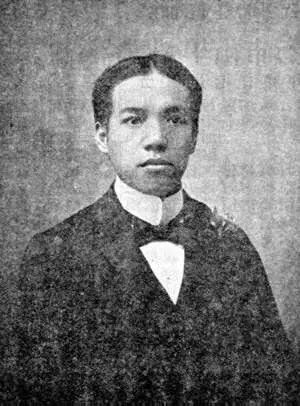
The Wuxu Coup (戊戌政变) was a decisive palace coup staged by Empress Dowager Cixi and conservative court factions from September 21 to September 28, 1898 (the 24th year of Guangxu) to abruptly terminate the Hundred Days' Reform. In the summer of 1898, Emperor Guangxu promulgated intensive reform edicts aimed at modernizing the imperial bureaucracy, military, and educational systems. These sweeping measures dismantled sinecure government offices and permitted commoners to submit memorials directly, severely threatening the vested hereditary privileges of Manchu princes and high officials. Facing imminent plans by conservatives to stage a coup during an upcoming military review in Tianjin, Emperor Guangxu issued secret imperial edicts urging reformists to formulate protective countermeasures. Tan Sitong secretly visited the newly appointed commander Yuan Shikai at Fahua Temple to persuade him to mobilize modern troops, eliminate conservative warlord Ronglu, and detain Cixi at the Summer Palace. However, Yuan betrayed the conspiracy to Ronglu. Ronglu rushed to Beijing to inform Cixi, who stormed into the Forbidden City, stripped the emperor of his seals, and placed him under permanent house arrest on Yingtai Island. With the subsequent execution of the "Six Gentlemen of Wuxu" at Caishikou, the reform movement was crushed, demonstrating the impossibility of peaceful institutional reform under imperial autocracy.
Emperor Guangxu issues the edict On Setting the National Policy, initiating the Hundred Days' Reform.
Cixi forces the dismissal of imperial tutor Weng Tonghe and appoints Ronglu to command the Beiyang military.
Emperor Guangxu dismisses six obstructive senior officials of the Ministry of Rites and appoints four young reformers to the Grand Council.
Emperor Guangxu secretly warns Yang Rui that his imperial throne is imperiled as conservative coup rumors mount.
Tan Sitong secretly visits Yuan Shikai at night, urging him to eliminate Ronglu and detain Cixi to safeguard the emperor.
Yuan Shikai returns to Tianjin by train and betrays the reformist military conspiracy to Governor-General Ronglu.
Ronglu travels overnight to the Summer Palace; Cixi storms the Forbidden City, imprisons Guangxu on Yingtai, and resumes regency.
While Kang and Liang flee abroad, Tan Sitong refuses to escape and is arrested at the Liuyang Guildhall.
Tan Sitong, Kang Guangren, and their four reformist colleagues are publicly executed at Caishikou.
Cixi reinstates the civil examination system, dismantles new government bureaus, and restores conservative autocratic control.
In June 1898, Emperor Guangxu promulgated the imperial edict On Setting the National Policy, initiating the Hundred Days' Reform. As the reform directives deepened, they struck at the political and economic foundations of traditional Qing ruling structures. The emperor abolished numerous redundant sinecure offices, such as the Supervisorate of Imperial Instruction, the Office of Transmission, and the Court of Imperial Entertainments, while also eliminating superfluous provincial governorships and grain-transport circuits. Thousands of hereditary Manchu banner aristocrats and corrupt bureaucrats lost their lifelong stipends overnight, generating widespread resentment throughout the capital.
Furthermore, the abolition of the eight-legged essay in imperial civil service examinations struck a heavy blow against millions of conservative Confucian scholars who relied on rigid textual recitation. The emperor also opened channels for junior officials and common scholars to submit policy memorials directly to the throne, breaking the traditional monopoly of information held by the Grand Council and the Six Ministries. Conservative bureaucrats viewed the young reformists as treacherous radicals seeking to destroy ancestral dynastic traditions, fostering a dangerous undercurrent of counter-revolutionary revanchism.
In early September 1898, the confrontation between the imperial party and the conservative faction reached an open rupture. Wang Zhao, a junior secretary in the Ministry of Rites, submitted a proposal advising Emperor Guangxu to tour Japan to inspect Meiji modernization firsthand. Conservative Ministers Huai Tabu and Xu Yingkui refused to forward the memorial and verbally abused Wang. Wang boldly petitioned the emperor directly, impeaching his superiors for obstructing communication channels. In response, Emperor Guangxu issued an unprecedented imperial edict on September 4 summarily stripping all six senior officials of the Ministry of Rites of their posts and promoting Wang Zhao.
Simultaneously, the emperor appointed leading reformist figures Tan Sitong, Yang Rui, Liu Guangdi, and Lin Xu as Fourth-Rank Secretaries in the Grand Council, formally known as the Four Military Secretaries. These four young reformers were granted the authority to enter the inner palace daily, draft all reform edicts, and review secret memorials submitted from across the empire before presenting them to the emperor. This drastic measure established an operational headquarters for the reformist movement within the Grand Council, sidelining conservative grand councilors and alarming the court nobility.
Buoyed by their initial breakthroughs, Emperor Guangxu and the reformists sought to institutionalize a decision-making body entirely independent of the Grand Council. In mid-September, Kang Youwei proposed establishing the Maoqin Hall Advisory Bureau within the Forbidden City. This council was intended to serve as a central planning headquarters staffed by dynamic reformist scholars, including Tan Sitong, and international statesmen such as former Japanese Prime Minister Ito Hirobumi and British missionary Timothy Richard.
On September 13, Emperor Guangxu visited the Summer Palace to seek formal approval from Empress Dowager Cixi to open the Maoqin Hall. Recognizing that this institution would permanently strip her of informal supreme oversight, Cixi sternly rebuked the emperor for altering ancestral governance laws and rejected the request outright. This confrontation marked the ultimate failure of peaceful political negotiation between the sovereign and the dowager, prompting conservative leaders to prepare for armed intervention.
Empress Dowager Cixi and her inner circle had established strategic military control over the capital region well before the final crisis. At the beginning of the reform, Cixi compelled the emperor to dismiss his close imperial tutor Weng Tonghe and appointed her most loyal Manchu confidant, Ronglu, as Governor-General of Zhili and Commissioner of Northern Coastal Defense. This command placed the Huai Army, the Resolute Army, and the various Northern armies directly under conservative control, isolating the Forbidden City from military reinforcement.
Subsequently, Ronglu and Grand Councilor Gangyi petitioned for Emperor Guangxu and Empress Dowager Cixi to conduct a grand inspection of the Beiyang military and naval forces at Tianjin in October 1898. The true objective was to lure the emperor away from his palace stronghold in Beijing. Once in Tianjin, Ronglu planned to deploy his surrounding divisions to depose Emperor Guangxu, install Prince Duan's young son Puzhuan as the new emperor, and officially restore Empress Dowager Cixi's absolute regency.
As rumors of the impending military coup in Tianjin spread through Beijing, tension reached a fever pitch. Emperor Guangxu, acutely aware of his complete lack of armed forces, issued a desperate secret edict written in cinnabar ink to Yang Rui on September 13: "My throne can hardly be preserved; how can other matters be addressed? I command you all to deliberate carefully and formulate rescue measures, which I will execute immediately."
Upon receiving this harrowing decree, Kang Youwei, Liang Qichao, and Tan Sitong realized that institutional lobbying was doomed. Surrounded by hostile provincial garrison commanders, including Dong Fuxiang's Gansu Army and Nie Shicheng's Front Division, the reformists looked toward the Newly Created Army stationed at Xiaozhan near Tianjin. Commanded by Judicial Commissioner Yuan Shikai, this force of seven thousand soldiers was the only modern, German-equipped army in the capital region. Because Yuan had previously associated with the reformist Society for National Strengthening, the desperate reformists pinned their hopes on securing his allegiance.
Late on the night of September 18, 1898, Tan Sitong embarked on a perilous mission. Concealing a short dagger beneath his civilian robes, he walked alone through the cold streets of Beijing to Fahua Temple outside Xuanwumen, where Yuan Shikai was temporarily lodging.
Meeting in private quarters, Tan directly presented Emperor Guangxu's secret decree and confronted Yuan with the conservative conspiracy to depose the monarch. Tan urged Yuan to take bold action: "Ronglu's scheme to dethrone His Majesty is known across the realm. You alone possess the power to rescue the sovereign! Return to Tianjin, eliminate Ronglu, dispatch your elite troops to surround the Summer Palace, and place the Dowager under detention. You will be remembered as the foremost hero of dynastic restoration!" Tan added that if Yuan refused, he was prepared to shed blood on the spot.
Faced with this dramatic appeal, Yuan Shikai feigned total loyalty. He shed tears and pledged: "His Majesty is our heavenly sovereign; having received such immense grace, how could I not sacrifice my life? Striking down Ronglu would be as trivial as slaughtering a dog! I will depart for Tianjin tomorrow and mobilize my regiments upon royal command." Reassured by his solemn oaths, Tan departed.
In reality, Yuan Shikai was a calculating pragmatist. He calculated that the reformists were unarmed scholars with negligible institutional leverage, whereas Cixi and the Manchu nobility held overwhelmingly superior military force. Attempting an armed insurrection carried near-certain destruction, while betraying the conspiracy to the imperial court promised immense personal wealth and political elevation.
On the morning of September 20, Emperor Guangxu granted Yuan Shikai a final audience at the Hall of Mental Cultivation, appointing him an expectant Vice Minister of War and instructing him to depart Beijing immediately. Yuan boarded a midday express train to Tianjin. Arriving at the Governor-General's headquarters that evening, Yuan requested an urgent private audience with Ronglu and disclosed every detail of Tan Sitong's visit, the emperor's secret edict, and the plan to surround the Summer Palace.
Terrified by the revelation, Ronglu placed the Tianjin garrison on high alert and boarded a midnight special locomotive to Beijing. Arriving at the Summer Palace at two o'clock in the morning on September 21, Ronglu prostrated himself before Cixi and tearfully disclosed the entire assassination and abduction conspiracy.
Livid with rage and convinced that the emperor was actively plotting against her life, Empress Dowager Cixi acted decisively. Before dawn on September 21, she rode in an imperial palanquin from the Summer Palace straight into the Forbidden City, accompanied by elite guards.
Storming into the Hall of Mental Cultivation, Cixi cornered the terrified young emperor and cursed him: "Ignorant fool! I raised you for more than twenty years; are you now listening to scoundrels to murder me?" She immediately confiscated all private documents, secret memorials, and the imperial jade seals, effectively terminating the emperor's sovereign power.
Cixi then ordered Emperor Guangxu escorted under heavy military guard to Yingtai Island, an isolated palace pavilion situated within the southern waters of Zhongnanhai. The emperor was placed under permanent solitary confinement, with guards strictly forbidding unauthorized contact. Later that morning, an imperial decree was published in the emperor's name declaring that due to severe illness, he had requested Empress Dowager Cixi to resume full political tutelage. The Hundred Days' Reform was crushed after lasting only 103 days.
Following the coup, Emperor Guangxu was deprived of his liberty and political authority. He was confined to Hanyuan Hall on Yingtai, where Cixi had the sole connecting wooden drawbridge dismantled. During bitter winters when the surrounding lakes froze, eunuchs were ordered to shatter the ice day and night to prevent any escape or outside communication. The emperor spent a decade in cold, damp confinement, suffering severe psychological trauma and steadily deteriorating health until his eventual assassination in 1908.
Emboldened by their victory, conservative factions attempted to depose Guangxu entirely. In the winter of 1899, Ronglu and Gangyi conspired with Cixi to designate Puzhuan, the fourteen-year-old son of conservative Prince Duan, as the Heir Apparent, intending to force the emperor's abdication on New Year's Day of 1900. This maneuver, known as the Jihai Succession Scheme, triggered widespread outrage. Over 1,200 prominent gentry and merchants in Shanghai sent a joint telegram of protest, southern viceroys Liu Kunyi and Zhang Zhidong registered strong opposition, and Western diplomatic ministers refused to recognize the heir. This failure deepened the hatred of Cixi and Prince Duan toward foreign powers, directly motivating their disastrous decision to sponsor the Boxer uprising against foreign legations in 1900.
On the morning of the coup, Cixi ordered Beijing's city gates sealed and dispatched three thousand imperial guards to arrest reformist leaders. Kang Youwei escaped through Shanghai to Hong Kong with British assistance, while Liang Qichao fled into the Japanese Legation and sailed for Japan.
Tan Sitong resolutely refused all offers of escape. When Japanese associates urged him to seek sanctuary, Tan proclaimed: "No reform in any nation has succeeded without the shedding of blood. Today in China, no one has yet bled for the cause of reform, which is why the country remains unfree. If blood must be shed, let it begin with Sitong!" On September 24, Tan was calmly arrested at the Liuyang Guildhall.
On September 28, 1898, the imperial court condemned Tan Sitong, Kang Guangren, Yang Rui, Liu Guangdi, Lin Xu, and Yang Shenxiu to death without public trial. Transported to the Caishikou execution ground, Tan stood unflinching and recited his famous parting poem: "With nowhere to turn, I think of Zhang Jian; bearing death for a moment, I await Du Gen. I draw my sword and laugh to the heavens; leaving behind a loyal soul between two Kunlun peaks!" The executioner used a dull execution blade, striking dozens of blows before Tan expired. The six martyrs became known to posterity as the Six Gentlemen of Wuxu.
In the aftermath, Cixi executed a sweeping reactionary rollback: reformist provincial governors were stripped of office, the eight-legged essay was reinstated, newly created commercial and agricultural bureaus were dissolved, and public political associations and newspapers were banned. Of all the Hundred Days' modernizing initiatives, only the Imperial University of Peking was permitted to survive.
The eight-day Wuxu Coup culminated in a decisive military and political triumph for Empress Dowager Cixi and the conservative Manchu nobility. Emperor Guangxu was permanently stripped of personal liberty and confined on Yingtai Island. The leading reformist intellectuals were executed without trial, progressive provincial administrators were purged, and modernizing decrees were rescinded, with the sole exception of the Imperial University of Peking. Through her fourth resumption of political tutelage, Cixi concentrated supreme autocratic power within a reactionary clique of royal princes, plunging the late Qing state into unprecedented institutional stagnation.
The Wuxu Coup altered the trajectory of modern Chinese history across multiple critical dimensions. First, it decisively terminated the possibility of modernizing China through top-down, non-violent constitutional monarchy, proving that the decrepit Qing imperial court was fundamentally incapable of voluntary reform. Second, the coup deepened the regime's internal and external crises; seeking to retaliate against foreign legations that sheltered reformist refugees, conservative court factions foolishly unleashed the Boxer violence in 1900, culminating in the invasion of the Eight-Nation Alliance and the ruinous Boxer Protocol. Third, and most importantly, the tragedy at Caishikou shattered the illusions of progressive Chinese intellectuals regarding peaceful reform, fundamentally directing national political energy toward the revolutionary anti-Qing movement led by Sun Yat-sen and making the 1911 Xinhai Revolution historically inevitable.