Su Shi Transferred to Huzhou
Su Shi assumes office as Prefect of Huzhou, submitting the Memorial of Thanks upon Arriving in Huzhou containing critiques of the newly promoted.
Northern Song Dynasty (北宋) · HISTORICAL EVENT
乌台诗案
The Crow Terrace Poetry Case (乌台诗案), occurring in 1079 (second year of Yuanfeng), was a landmark literary inquisition and political prosecution that shook the Northern Song empire. Upon being transferred from Xuzhou to serve as Prefect of Huzhou, the literary master Su Shi submitted the customary Memorial of Thanks upon Arriving in Huzhou, remarking that he was "too foolish to keep pace with the newly promoted" and "too old to stir up trouble." Zealous…
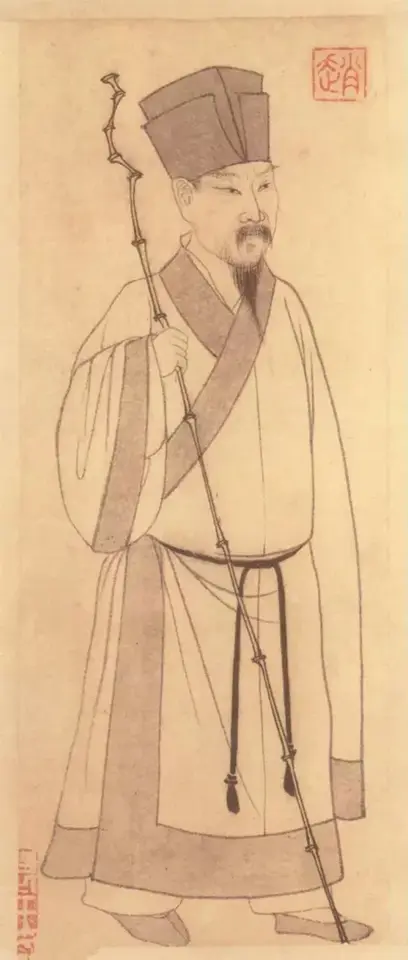
The Crow Terrace Poetry Case (乌台诗案), occurring in 1079 (second year of Yuanfeng), was a landmark literary inquisition and political prosecution that shook the Northern Song empire. Upon being transferred from Xuzhou to serve as Prefect of Huzhou, the literary master Su Shi submitted the customary Memorial of Thanks upon Arriving in Huzhou, remarking that he was "too foolish to keep pace with the newly promoted" and "too old to stir up trouble." Zealous partisans within the Censorate, led by Vice Censor-in-Chief Li Ding and Investigating Censors Shu Dan and He Zhengchen, seized upon these phrases to launch a coordinated assault, combing through Su Shi's published anthologies to compile treason charges alleging that his satirical poems slandered the imperial New Policies and insulted Emperor Shenzong. In July 1079, imperial bailiffs stormed Huzhou, arresting Su Shi and transporting him in chains to the Censorate Prison in the capital, known colloquially as the "Crow Terrace." Subjected to over 130 days of harsh, around-the-clock interrogation, Su Shi faced impending execution. The crisis triggered a profound rescue effort: his brother Su Zhe offered to forfeit his own offices to ransom him, retired Chancellor Wang Anshi wrote from Jinling declaring that an enlightened age should not slaughter brilliant scholars, and the mortally ill Grand Empress Dowager Cao reminded Emperor Shenzong of the dynastic prohibition against harming literati. Emperor Shenzong finally relented, commuting the death penalty and exiling Su Shi to Huangzhou under strict surveillance. The ordeal transformed Su Shi into the transcendent "Master of Dongpo," while marking the tragic descent of Northern Song politics into vindictive factional warfare.
Su Shi assumes office as Prefect of Huzhou, submitting the Memorial of Thanks upon Arriving in Huzhou containing critiques of the newly promoted.
Censors He Zhengchen, Shu Dan, and Li Ding extract couplets from Su Shi's poems, accusing him of treason and slandering the New Policies.
Imperial bailiff Huangfu Zun arrives in Huzhou, arresting Su Shi and seizing his manuscripts as his wife burns his papers in terror.
Su Shi is incarcerated in the Censorate Prison in Bianjing, enduring 130 days of continuous harsh interrogation.
Mistaking a fish delivery for an execution signal, Su Shi composes two farewell poems to Su Zhe, moving Emperor Shenzong to compassion.
Empress Dowager Cao admonishes Shenzong on her deathbed, and Wang Anshi petitions against executing scholars, shifting imperial policy.
Shenzong spares Su Shi's life, demoting him to Militia Commissioner of Huangzhou; Su Zhe, Wang Shen, and Sima Guang are penalized.
Su Shi arrives in Huangzhou, farming the eastern slope, adopting the name Dongpo, and composing his immortal rhapsodies on the Red Cliff.
In 1069 (second year of Xining), Emperor Shenzong appointed Wang Anshi as Vice Grand Councillor, initiating the far-reaching Xining Reforms. Su Shi, his brother Su Zhe, and their circle advocated moderate, gradualist administration, arguing that hasty economic reorganization would disrupt social stability. Su Shi submitted exhaustive memorials criticizing the Green Sprouts loans, Service Exemption measures, and Equitable Transport systems. Encountering fierce hostility from reformist partisans, Su Shi requested peripheral provincial assignments to escape factional friction, serving successively as Vice Prefect of Hangzhou and Prefect of Mizhou and Xuzhou.
Throughout his decade in local administration, Su Shi witnessed how the New Policies degenerated in implementation under corrupt local bureaucrats. The Green Sprouts policy, originally designed as low-interest agricultural credit, became a predatory mechanism for magistrates to extort usurious interest from peasants. The state salt monopoly left poor villagers deprived of basic sustenance, and the property-reporting laws turned neighbors into informers. Moved by profound compassion for the populace, Su Shi gave voice to rural suffering through satirical poetry, penning verses such as: "If the Eastern Sea knew the enlightened sovereign's will, it would transform salty wastelands into mulberry groves."
Following Wang Anshi's second retirement in 1076, Emperor Shenzong assumed direct personal direction over the reform program, inaugurating the Yuanfeng era. Opposing the New Policies was now equated with challenging the sovereign will. Concurrently, younger careerist censors such as Li Ding, Shu Dan, and He Zhengchen ascended within the Censorate. Lacking the philosophical integrity of earlier reformers, these officials sought political advancement by fabricating treason cases against prestigious conservative literati, targeting the internationally renowned Su Shi as their primary victim.
At his court debut under Emperor Renzong, Su Shi had been hailed as a future chancellor. When Shenzong embraced Wang Anshi's sweeping reforms, Su Shi authored celebrated memorials arguing that the state should not enrich treasuries by impoverishing commoners. His critiques infuriated reformist officials, who accused him of obstructing imperial modernization.
Recognizing that productive debate had become impossible in Bianjing, Su Shi requested reassignment to the south in 1071. Emperor Shenzong granted his petition, dispatching him as Vice Prefect to Hangzhou. Travelling along the Grand Canal, Su Shi observed the distress of conscripted laborers, channeling his sorrow into poetry and establishing a poetic tradition of social engagement.
Before departing Bianjing, Su Shi bid farewell to his mentor Ouyang Xiu and senior statesman Zhang Fangping. Aware of Su Shi's unvarnished candor, the elder statesmen implored him to avoid political commentary. Yet Su Shi's commitment to the welfare of the people impelled him to speak, setting him on a collision course with imperial authority.
In his provincial posts across Hangzhou, Mizhou, and Xuzhou, Su Shi dedicated himself to public relief and flood prevention. In 1074, while inspecting drought-stricken hills, he saw elderly villagers gathering wild herbs to survive while fleeing state tax collectors, prompting him to compose poems exposing the predatory nature of the agricultural loan quotas.
In Mizhou, enforcement of the coastal salt monopoly resulted in the flogging and execution of poor fishermen for trading small quantities of sea salt. Su Shi composed his Five Poems on Mountain Villages, using biting irony to denounce the extortion of local collectors who claimed to execute imperial policy while devastating rural livelihoods.
Transcribed and sung throughout Jiangnan, these poems resonated with the public. However, in Bianjing, reformist censors compiled private dossiers, interpreting his artistic expressions of sorrow as calculated sedition.
During the catastrophic Yellow River flooding at Xuzhou, Su Shi personally labored alongside soldiers on the ramparts to save the city. Even amidst this emergency, fiscal quotas arrived from the capital. His poetic laments exposed administrative falsehoods, intensifying censorial hostility.
In March 1079, Su Shi was appointed Prefect of Huzhou, arriving at his post in April. Fulfilling bureaucratic protocol, he drafted the Memorial of Thanks upon Arriving in Huzhou, writing self-deprecatingly: "Acknowledging that I am too foolish to keep pace with the newly promoted; realizing that I am too old to stir up trouble, perhaps I may shepherd the small folk."
The term "newly promoted" was widely understood as a derogatory reference to opportunistic bureaucrats who rode the reform wave to power. In an official communication addressed to the emperor, the remark was interpreted by the Censorate as public insolence.
Investigating Censor He Zhengchen submitted the inaugural indictment, charging Su Shi with insolence and sedition. He argued that Su Shi resented imperial appointments and belittled imperial authority, igniting the political trial.
The phrase "too old to stir up trouble" was twisted into an insinuation that the emperor's reforms were disruptive. Partisans argued that if celebrated writers were permitted to ridicule imperial policy, provincial obedience would disintegrate, converting imperial annoyance into rage.
Following He Zhengchen's memorial, Vice Censor-in-Chief Li Ding and Investigating Censor Shu Dan escalated the assault. Combing through Su Shi's collected works, Shu Dan submitted a detailed indictment analyzing dozens of couplets out of context.
Shu Dan claimed that Su Shi's poem on cypress trees—"Roots reach nine springs where no crookedness lies, known in this world only to the slumbering dragon"—contained treasonous designs to overturn the dynasty by invoking subterranean dragons. Every lyrical contemplation was reinterpreted as malicious mockery of state law.
Li Ding petitioned the throne, demanding Su Shi's execution on four capital counts: insubordination, ingratitude, sedition, and factional conspiracy. Convinced that the authority of his reforms was at stake, Emperor Shenzong authorized the Censorate to arrest the prefect.
The Censorate mobilized judicial clerks to comb through all of Su Shi's private writings. This forensic scrutiny established the precedent for imperial Chinese literary inquisitions, stripping poetic composition of metaphorical ambiguity.
On July 28, 1079, imperial bailiff Huangfu Zun arrived at the Huzhou yamen accompanied by armed guards, brandishing imperial arrest warrants. The sudden arrival threw the prefectural staff into panic, while citizens gathered outside weeping.
Fearing execution, Su Shi initially hesitated to appear. Reassured by Vice Prefect Zu Wupo, Su donned his formal robes to receive the emissary. Huangfu Zun stripped the prefect of his badges of office, bound him in irons, and ransacked his chambers for private manuscripts.
In the inner residence, Su Shi's terrified wife, Lady Wang, burned baskets of his manuscripts to prevent them from incriminating family members. As Su Shi was escorted aboard the prison boat, citizens knelt along the waterways, praying for the survival of their beloved magistrate.
Local clerks and deputies nearly clashed with the imperial escorts before Su Shi intervened, ordering obedience to dynastic law. The sorrowful journey along the Grand Canal illustrated the gulf separating popular reverence for the poet from the venom of capital politics.
On August 18, Su Shi arrived in Bianjing and was cast into the Censorate Prison. Known as the Crow Terrace due to the thousands of ravens roosting in its ancient cypresses, the prison was dreaded across the empire.
Li Ding and Shu Dan subjected the poet to grueling interrogation. Deprived of sleep and food, Su Shi was interrogated under torchlight by relays of inquisitors demanding confessions regarding the political targets of each satirical verse.
Despite physical exhaustion, Su Shi refused to confess to treason. While conceding that his verses criticized the abuses of local tax collectors, he rejected accusations that he plotted against the dynasty or despised the emperor, preserving his integrity under torture.
The dungeons were damp, vermin-infested chambers where prisoners were kept in heavy chains. In the moments between interrogations, Su Shi composed philosophical commentaries in his mind, refusing to implicate elderly statesmen like Sima Guang and Wen Yanbo.
During his confinement, Su Shi arranged an emergency signal with his eldest son, Su Mai: food deliveries would consist solely of meat and vegetables, but if an execution decree was issued, a fish would be sent. In November, Su Mai left the capital to borrow funds, entrusting deliveries to a relative who sent a cooked fish without knowledge of the code.
Believing his execution was imminent, Su Shi wept and composed two farewell poems to his brother Su Zhe, writing: "The sagely sovereign is like heaven where all things bloom in spring; it is this humble servant who failed his radiant grace... In this place green hills may bury my bones; in future years, rainy nights will bring solitary sorrow. Brother to brother across all lives to come, we shall renew our unfinished bond!"
Moved by the verses, the warden delivered the manuscript to Li Ding. When Emperor Shenzong read the poems, he was profoundly moved by Su Shi's loyalty and brotherly love, and his resolve to impose the death penalty dissolved.
Concurrently, Su Zhe submitted his famous memorial, Petitioning the Throne on Behalf of My Imprisoned Brother, offering to surrender his own official rank and honors to redeem his brother's life. This fraternal devotion touched both the court and the populace.
As rumors of impending execution spread, a spontaneous rescue coalition formed across the scholar-official class. Retired Chancellor Zhang Fangping and Vice Commissioner of Military Affairs Fan Zhen submitted memorials pleading for the poet's life, warning that executing the empire's greatest literary talent over poetry would dishonor the dynasty.
Even within the New Policies leadership, Vice Grand Councillor Zhang Dun confronted Li Ding in the Hall of State Affairs, denouncing the Censorate for attempting to trap the sovereign in the infamy of executing scholars.
Furious at this resistance, Shu Dan expanded the investigation, searching Su Shi's correspondence to indict thirty prominent figures who had exchanged verses with him, including imperial son-in-law Wang Shen, Sima Guang, and Huang Tingjian. This overreach backfired, uniting principled officials against the prosecution.
Zhang Fangping went so far as to stake his family's honor on Su Shi's loyalty. This courageous solidarity demonstrated that despite bitter factional divisions, the moral conscience of the Song scholar-official class remained intact.
The critical turning point came from the deathbed intervention of Grand Empress Dowager Cisheng (Empress Cao), consort of Emperor Renzong and grandmother to Shenzong. As the dowager lay dying in the palace, Emperor Shenzong attended her bedside.
Weeping, the dowager asked the sovereign what weighed upon his mind. When Shenzong explained the poetry trial, the dowager struggled upright, admonishing him: "When Emperor Renzong examined scholars, he secured Su Shi and Su Zhe, rejoicing that he had found two chancellors for his descendants! How can you execute Renzong's chosen talent over mere verses?"
The dowager invoked the ancestral pledge established by Song Taizu prohibiting the execution of scholar-officials and memorialists. Her dying appeal shattered Shenzong's resolve to carry out capital punishment, and the emperor promised to spare the poet.
The dowager's constitutional intervention possessed immense authority. Her invocation of ancestral law rescued Su Shi while upholding the foundational compact between the Song crown and the literati.
The final intervention arrived from Wang Anshi, living in retirement at Half-Mountain Garden in Jinling. Despite being the architect of the reforms Su Shi criticized, Wang was appalled by the Censorate's cruelty.
Wang Anshi dispatched an urgent memorial to Emperor Shenzong containing eight decisive words: "How can an enlightened age execute brilliant scholars!" Coming from the intellectual architect of the New Policies, this judgment stripped the Censorate of its ideological shield.
Emperor Shenzong seized upon Wang Anshi's plea to conclude the case. On December 28, 1079, the emperor issued an imperial decree commuting the death penalty, ordering Su Shi's release from the Crow Terrace after 130 days of imprisonment.
Wang Anshi's magnanimity illustrated the intellectual dignity of early Song statesmen. His defense of his political rival preserved Su Shi's life and affirmed the supremacy of cultural values over administrative expediency.
Su Shi was demoted to the minor post of Militia Commissioner of Huangzhou, placed under local surveillance, and prohibited from signing official documents. Emerging from prison emaciated but unbroken, Su laughed aloud in his lodgings, penning the ironic couplet: "Lifelong writings have burdened my existence; departed hence, I shall not mind my reputation falling low."
Dozens of associates suffered political penalties: Su Zhe was demoted to an inspector of liquor in Junzhou; Consort Commandant Wang Shen was stripped of all noble titles for printing Su's poems and alerting him to the investigation; and Sima Guang and Fan Zhen were fined substantial weights of copper.
In early 1080, accompanied by his son Su Mai, Su Shi departed Bianjing amidst freezing blizzards, traveling toward exile on the Yangtze River to begin years of administrative isolation.
The sentencing marked the expulsion of Su Shi from the bureaucratic elite. Yet his release proved that imperial authority was still constrained by ethical consensus, preserving the poet for his greatest creative era.
Exile in Huangzhou catalyzed Su Shi's ultimate philosophical and literary metamorphosis. Impoverished and stripped of his salary, he cleared an abandoned plot of land on the eastern slope of the town, naming it "Dongpo" and adopting the name "Master of Dongpo."
Surrendering bureaucratic ambition, Su Shi achieved profound spiritual transcendence. Along the Red Cliffs of the Yangtze, he composed his masterpieces: the two Rhapsodies on the Red Cliff and Niannu Jiao: Reminiscence of the Red Cliff, scaling the heights of Chinese literature with cosmic meditations on human existence.
Yet the Crow Terrace Poetry Case permanently poisoned Song political culture. It shattered the convention of mutual tolerance, inaugurating the practice of using literary works as weapons for factional extermination. The subsequent Yuanyou and Chongning factional purges drew directly upon its methods, sowing the seeds of dynastic collapse.
The Crow Terrace Poetry Case marked the end of the open political culture that characterized the early Northern Song. The foundational compact established by Song Taizu—ruling in partnership with the literati and prohibiting the execution of memorialists—was brought to the brink of destruction. The case established the precedent of utilizing private correspondence and poetic metaphor to fabricate capital treason indictments. During the subsequent Yuanyou and Chongning eras, rival factions abandoned policy debate in favor of total political annihilation, paving the way for the loss of northern China in the Jingkang Incident.
In Chinese cultural history, the Crow Terrace Poetry Case transformed a brilliant court official into an immortal philosopher-poet. The poverty, isolation, and proximity to death experienced during his imprisonment and subsequent exile in Huangzhou dismantled Su Shi's conventional bureaucratic ambitions, inspiring the philosophical detachment and joyous equanimity that defined his mature works. The rhapsodies and calligraphy produced at Huangzhou established the aesthetic zenith of Song dynasty culture, providing an enduring spiritual refuge for Chinese intellectuals confronting political adversity.
Modern historians evaluate the Crow Terrace Poetry Case as a structural tragedy arising from the centralization of imperial power and ideological intolerance. Scholars emphasize that the trial was not a simple judicial proceeding, but an organized assault by opportunistic bureaucrats against an independent intellectual. Su Shi's steadfast moral courage under interrogation exemplified the highest ideals of the Confucian scholar, while the cross-factional interventions of figures like Wang Anshi demonstrated that ethical solidarity temporarily transcended partisan divisions.