Intruder at the Palace and Lockdown of the Capital
A suspicious swordsman flees the palace gate, prompting an eleven-day lockdown of Chang'an and stoking imperial fears of witchcraft.
Western Han (西汉) · HISTORICAL EVENT
巫蛊之祸
The Witchcraft Calamity (巫蛊之祸) was a catastrophic political purge and armed court conflict that erupted in the imperial capital of Chang'an in 91 BCE, during the Zhenghe era of the Western Han Dynasty. In his old age, Emperor Wu grew physically frail, forgetful, and intensely paranoid, placing excessive trust in shamans and fearing that palace attendants were cursing him through sorcery and buried effigies. Harsh official Jiang Chong harbored a bitter…
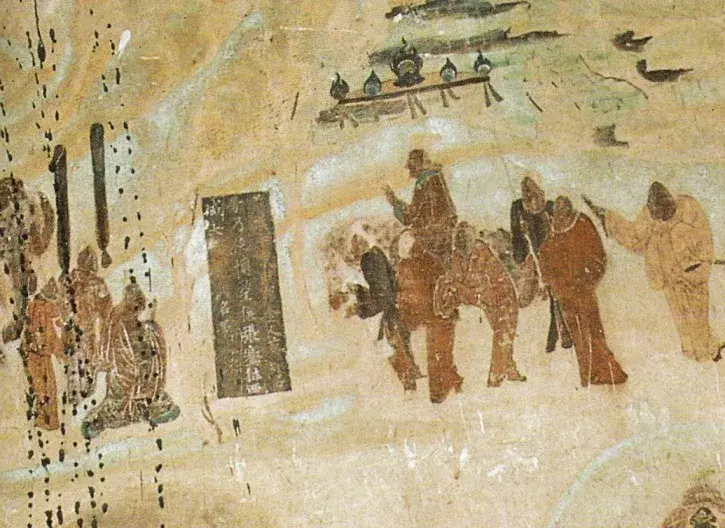
The Witchcraft Calamity (巫蛊之祸) was a catastrophic political purge and armed court conflict that erupted in the imperial capital of Chang'an in 91 BCE, during the Zhenghe era of the Western Han Dynasty. In his old age, Emperor Wu grew physically frail, forgetful, and intensely paranoid, placing excessive trust in shamans and fearing that palace attendants were cursing him through sorcery and buried effigies. Harsh official Jiang Chong harbored a bitter grudge against Crown Prince Liu Ju. Fearing execution once the crown prince ascended the throne, Jiang Chong exploited his imperial commission to investigate witchcraft by fabricating false evidence and claiming that wooden effigies cursing the emperor had been unearthed within the prince's palace. Faced with imminent slaughter and unable to communicate with Emperor Wu at Ganquan Palace, Crown Prince Liu Ju followed the advice of his tutor Shi De, forged imperial decrees to arrest and decapitate Jiang Chong, and engaged in five days of fierce street fighting against imperial troops led by Chancellor Liu Qu'li. Overwhelmed by regular reinforcements, the prince fled Chang'an and hanged himself in Hu County, while Empress Wei Zifu committed suicide. Tens of thousands of officials and civilians perished in the sprawling trials. Only after petitions from commoner Linghu Mao and officer Tian Qianqiu laid bare the frame-up did Emperor Wu awaken to his tragic error, executing Jiang Chong's kin and erecting the Palace of Mourning for My Son. The tragedy obliterated the Wei family and impelled Emperor Wu to issue the Edict of Luntai, steering the empire back toward peace and economic recovery.
A suspicious swordsman flees the palace gate, prompting an eleven-day lockdown of Chang'an and stoking imperial fears of witchcraft.
Zhu Anshi accuses Gongsun Jingsheng of sorcery, leading to the execution of Chancellor Gongsun He, Princess Yangshi, and Wei Kang.
Authorized to investigate witchcraft, Jiang Chong plants fabricated evidence and tears down imperial chambers in search of figurines.
Facing fabricated charges and cut off from the emperor, Crown Prince Liu Ju executes Jiang Chong; Su Wen flees to Ganquan Palace.
Chancellor Liu Qu'li mobilizes imperial troops while the prince arms civilians; five days of fighting end in the prince's total collapse.
Emperor Wu rescinds the imperial seal of Empress Wei, prompting her suicide by hanging; the Wei family is subjected to widespread slaughter.
Surrounded by county soldiers at Quanjiu Lane, Crown Prince Liu Ju commits suicide, his grandsons are killed, and the peasant host dies in combat.
Petitions reveal the prince's innocence, prompting Emperor Wu to eradicate Jiang Chong's lineage and erect the Palace of Mourning for My Son.
During the later decades of Emperor Wu's reign, continuous foreign military campaigns and an expansive legal penal code severely drained the empire's resources. Entering his twilight years, the emperor was afflicted by chronic physical ailments and mental disorientation. On one occasion, he awoke from an afternoon sleep terrified after dreaming that thousands of wooden figures were beating him with cudgels, leaving him convinced that members of his court were practicing witchcraft (wugu) against him. In Han popular superstition, wugu referred to invoking malevolent spirits and burying cursed figurines to bring illness or death upon an enemy. In the inner palace, competing consorts routinely invited female shamans into their quarters to perform rituals and cast reciprocal curses, fostering an atmosphere of mutual suspicion.
In the winter of 92 BCE, while residing at Ganquan Palace, Emperor Wu spotted a suspicious man carrying a sword near the Zhonglonghua Gate. When the intruder escaped capture, the infuriated emperor executed the gate wardens, mobilized cavalry from the metropolitan commanderies to comb the imperial parks, and locked down the gates of Chang'an for eleven days. This incident deepened the emperor's psychological anxiety, attracting charlatans and shamans to the capital who exploited the ruler's fears to manipulate imperial justice.
Crown Prince Liu Ju, who had been designated imperial heir in 122 BCE, was recognized for his benevolent and measured temperament, enjoying broad popular support. However, Emperor Wu favored strict Legalist doctrine and viewed the prince's affinity for Confucian leniency as overly soft. While Supreme General Wei Qing lived, he acted as a moderating buffer between father and son. Following Wei Qing's death in 106 BCE and the aging of Empress Wei Zifu, the Wei family lost its paramount standing at court.
Jiang Chong, an astute and ruthless official, gained imperial favor after prosecuting members of the princely houses and was appointed Director of Waterways. Strict in applying the letter of the law to intimidate the aristocracy, Jiang Chong once impounded the carriages of the crown prince for traveling on the imperial transit way and reported the infraction directly to the emperor, despite the prince's humble pleas for leniency. Realizing that the crown prince would inevitably exact vengeance upon ascending the throne, Jiang Chong determined that his only hope for survival lay in exploiting Emperor Wu's dread of witchcraft to eliminate the imperial heir.
In 92 BCE, Gongsun Jingsheng, the Minister of the Imperial Stud and son of Chancellor Gongsun He, was imprisoned for embezzling nineteen million cash from the Northern Army. As the brother-in-law of Empress Wei Zifu, Gongsun He enjoyed considerable imperial regard and offered to capture the notorious capital fugitive Zhu Anshi in exchange for his son's pardon. Although Gongsun He succeeded in apprehending Zhu Anshi, the prisoner retaliated from his cell by submitting a deposition accusing Gongsun Jingsheng of illicit relations with Princess Yangshi and claiming he had directed shamans to bury cursed wooden figures along the imperial route to Ganquan Palace.
Emperor Wu was consumed by fury and ordered judicial officials to conduct ruthless interrogations. In January 91 BCE, Chancellor Gongsun He and his son both perished in prison, and their entire lineage was exterminated. The purge rapidly widened to encompass members of the imperial family: Princess Yangshi, Princess Zhuyi, and Wei Kang, the eldest son of Wei Qing, were all executed on charges of sorcery. The destruction of Gongsun He deprived Crown Prince Liu Ju of his foremost ministerial ally, effectively stripping the Wei lineage of its senior political defenses and leaving the crown prince defenseless against hostile court factions. Emperor Wu then appointed Liu Qu'li, Prince of Zhongshan's son, as Chancellor.
Following the conclusion of the Gongsun He trial, Emperor Wu's health deteriorated further, leaving him perpetually disoriented. Jiang Chong seized the opportunity to inform the sovereign that his illness stemmed entirely from witchcraft practiced within the imperial compounds. Convinced, Emperor Wu appointed Jiang Chong as imperial commissioner with unrestricted authority to investigate sorcery. Jiang Chong mobilized foreign shamans to dig across Chang'an in search of wooden puppets, arresting anyone suspected of holding nocturnal séances or claiming communication with ghosts. Jiang Chong instructed his henchmen to secretly splatter blood on selected sites, declaring the stains to be proof of sorcery, and used red-hot irons to force confessions.
Under these brutal methods, officials and subjects turned upon each other in a frenzy of mutual accusations. Anyone implicated was branded guilty of treason, and tens of thousands across Chang'an, the metropolitan districts, and distant commanderies were put to death. Having cowed the capital populace, Jiang Chong colluded with the shaman Tan He to declare that sorcery emanated directly from the imperial palace. Emperor Wu granted Jiang Chong permission to enter the inner quarters with armed guards. Jiang Chong ransacked the palace chambers, dismantled the emperor's imperial throne to dig up the foundation, and turned the living quarters of Empress Wei Zifu into mounds of dirt and debris.
Eventually, Jiang Chong directed his search toward the palace of the crown prince. To manufacture undeniable proof of guilt, Jiang Chong secretly planted wooden puppets into the excavations and extracted them before witnesses, proclaiming loudly that vast numbers of cursed figures and treasonous silk manuscripts had been uncovered in the crown prince's residence. At that time, Emperor Wu had relocated to Ganquan Palace to escape the summer heat. Crown Prince Liu Ju repeatedly sent couriers to request an audience to proclaim his innocence, but all messengers were intercepted by Jiang Chong's ally, the chief eunuch Su Wen. Rumors circulated across Chang'an that the emperor had already passed away.
Sensing imminent doom, Shi De, the Junior Tutor to the Crown Prince, urged Liu Ju to take decisive action, reminding him of the fate of Crown Prince Fusu of the Qin Dynasty, who committed suicide after accepting a forged decree. Shi De argued that with the emperor out of reach and Jiang Chong fabricating evidence, the only path to survival lay in forging imperial orders to execute the conspirators. Driven to the brink, Crown Prince Liu Ju sent retainers disguised as imperial envoys on the night of July 9 to arrest Jiang Chong and his associates. The prince personally decapitated Jiang Chong in front of the palace halls and burned the shaman Tan He alive, while Su Wen fled under cover of darkness to Ganquan Palace.
Upon reaching Ganquan Palace, Su Wen wept before Emperor Wu, claiming that the crown prince had rebelled and murdered imperial envoys. Emperor Wu initially doubted the report, assuming his son had acted in panic, and sent a palace messenger to Chang'an to summon Liu Ju. However, the terrified messenger refused to enter the city and rode back to report falsely that the crown prince was indeed in open rebellion and had attempted to kill him. Infuriated, Emperor Wu bestowed imperial tallies upon Chancellor Liu Qu'li and ordered him to mobilize the capital garrison to suppress the insurrection.
Meanwhile, Crown Prince Liu Ju proceeded to the Weiyang Palace to inform Empress Wei Zifu of the crisis. The empress authorized the opening of the Changle Palace armory, distributing weapons and armor to household servants and civilian volunteers. The prince rode to the Northern Army barracks to solicit troops from Imperial Commissioner Ren An, but Ren An accepted the commission yet locked the camp gates to remain neutral. Left without professional military support, the crown prince opened local jails and assembled an improvised force of tens of thousands of prisoners and citizens. The prince's makeshift army clashed with Chancellor Liu Qu'li's regular troops in the streets and outside the Changle Palace gates. The urban battle raged for five bloody days, claiming tens of thousands of lives and leaving the avenues drenched in blood.
As imperial cavalry summoned from Ganquan Palace arrived and imperial decrees confirmed that Emperor Wu was still alive, the morale of the prince's supporters collapsed. Besieged by regular troops and facing widespread desertions, the crown prince's forces broke under pressure. Recognizing the battle was lost, Crown Prince Liu Ju broke through the city gates with a small group of loyal retainers and fled eastward.
Following the defeat in Chang'an, Crown Prince Liu Ju and two of his young grandsons slipped through the capital cordon. Emperor Wu dispatched officials to confiscate the imperial seal of Empress Wei Zifu. Despairing and unwilling to suffer humiliation, Empress Wei committed suicide by hanging in her palace; she was buried without honors at Tongbai Pavilion south of the capital. Meanwhile, Liu Ju made his way to Quanjiu Lane in Hu County (in modern Henan), seeking refuge with an impoverished peasant family he had once befriended. The peasant household sacrificed everything to protect the fugitive prince, selling personal possessions to buy wine and food on credit, which inadvertently aroused local suspicion.
In August 91 BCE, local magistrates tracked the prince's location and dispatched county officer Li Shou and soldier Zhang Fuchang with an armed detachment to encircle the dwelling. Hearing the shouting outside and resolving never to endure trial before cruel judicial inquisitors, Crown Prince Liu Ju barred the door and hanged himself. Imperial soldiers broke down the door and fought over the corpse for reward; during the melee, the protective peasant host was slain, and both young imperial grandsons were butchered. Emperor Wu subsequently enfeoffed Li Shou and Zhang Fuchang with marquisates. The entire Wei lineage in Chang'an was wiped out, leaving only an infant great-grandson, Liu Bingyi (the future Emperor Xuan of Han), who survived inside prison through the secret protection of jail warden Bing Ji.
In the wake of the tragedy, public grief and shock reverberated throughout the empire. Linghu Mao, a respected village elder from Huguan, bravely submitted a direct memorial to Emperor Wu, condemning the slaughter of the imperial heir, exposing Jiang Chong's malicious schemes, and demonstrating that the prince had acted in legitimate self-defense rather than rebellion. The emperor was deeply moved. Soon after, Tian Qianqiu, an officer guarding Emperor Gaozu's mausoleum temple, petitioned the throne, recounting a dream in which a white-haired elder declared that a son wielding his father's weapons merited a flogging, but killing the emperor's son over an accidental death was a tragedy for all under heaven.
Reading Tian Qianqiu's memorial, Emperor Wu wept openly and recognized his monumental error. The emperor immediately appointed Tian Qianqiu as Grand Herald and promoted him to Chancellor shortly thereafter. Emperor Wu initiated a thorough investigation, ordering the extermination of Jiang Chong's clan and the immolation of the eunuch Su Wen upon the Hengqiao Bridge. Those who had desecrated the crown prince's body at Hu County were executed. In 90 BCE, Chancellor Liu Qu'li was executed by waist bisection after his wife was convicted of practicing witchcraft to influence the succession. Overcome by grief and remorse, Emperor Wu erected the Palace of Mourning for My Son at Hu County and raised the Terrace of Longing for Return at Huayin, gazing eastward in sorrowful contemplation of his lost heir.
The Witchcraft Calamity was the bloodiest and most destructive political convulsion in Western Han history. It completely extirpated the Wei consort clan that had served as the military and political cornerstone of the empire for nearly half a century. Crown Prince Liu Ju committed suicide, Empress Wei took her own life, two imperial princesses were executed, and tens of thousands of officials, soldiers, and ordinary citizens perished in the interrogations and urban warfare. The destruction of the direct heir disrupted the dynastic succession line, leaving the court deeply destabilized and inflicting enduring trauma upon the Han imperial house.
The devastation of Chang'an and the realization of his son's innocence forced Emperor Wu into deep introspection regarding the consequences of his harsh governance and relentless military expeditions. In 89 BCE, the emperor issued the celebrated Edict of Luntai, openly repenting for past policies that had caused immense suffering across the realm, renouncing plans for distant garrison agriculture in the Western Regions, and redirecting state policy toward agricultural encouragement and tax moderation. On his deathbed, Emperor Wu entrusted his young successor Liu Fuling (Emperor Zhao) to Huo Guang and Jin Midi, preserving the foundations that enabled the subsequent Zhao-Xuan Resurgence.