Xulüquanqu Dies and Coup Erupts
Xulüquanqu Chanyu passes away; Dowager Zhuanqu and Dulongqi seize power, installing Woyanqudi Chanyu, who initiates bloody purges.
Western Han (西汉) · HISTORICAL EVENT
五单于争立
The Five Chanyu Conflict (五单于争立), raging from 58 BC to 53 BC during the reign of Emperor Xuan of Han, was an unprecedented dynastic civil war and succession crisis that fractured the Xiongnu Empire. Following the death of Xulüquanqu Chanyu, the usurper Woyanqudi Chanyu seized power through a violent palace coup, instituting a reign of terror and executing imperial elders. Supported by the right-wing aristocracy and his father-in-law Wushanmu, Prince…
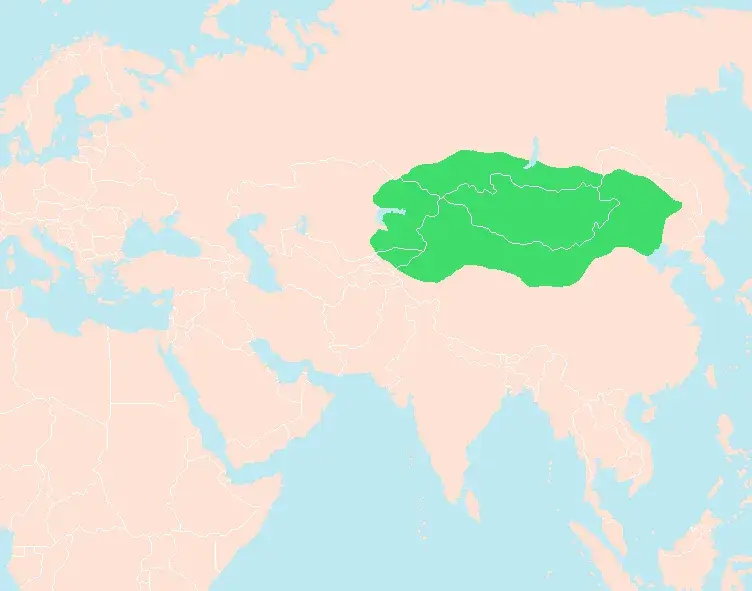
The Five Chanyu Conflict (五单于争立), raging from 58 BC to 53 BC during the reign of Emperor Xuan of Han, was an unprecedented dynastic civil war and succession crisis that fractured the Xiongnu Empire. Following the death of Xulüquanqu Chanyu, the usurper Woyanqudi Chanyu seized power through a violent palace coup, instituting a reign of terror and executing imperial elders. Supported by the right-wing aristocracy and his father-in-law Wushanmu, Prince Jihoushan rose in rebellion and was crowned Huhanye Chanyu, driving Woyanqudi to suicide. However, the collapse of central imperial authority triggered general anarchy across the steppe, where rival princes simultaneously claimed the supreme title, resulting in a five-way civil war among Huhanye, Tuqi, Hujie, Chezhe, and Wuji. Devastated by unceasing internecine slaughter and crippling winter famines, the nomadic population was decimated. In 53 BC, pushed to the brink of annihilation by his brother Zhizhi Chanyu, Huhanye Chanyu took the historic decision to submit as a vassal to the Western Han Empire. Emperor Xuan magnanimously received Huhanye, providing famine relief grain and military protection. In 51 BC, Huhanye traveled to Chang'an to pay personal homage to the Han emperor at the Weiqiao Bridge, bringing an end to the destructive civil war and opening a glorious era of frontier peace and cultural integration between Han and Xiongnu.
Xulüquanqu Chanyu passes away; Dowager Zhuanqu and Dulongqi seize power, installing Woyanqudi Chanyu, who initiates bloody purges.
Jihoushan is crowned Huhanye Chanyu; Woyanqudi commits suicide in disgrace, inaugurating the Five Chanyu civil war.
Tuqi claims the throne in Mobei; Hujie, Chezhe, and Wuji declare themselves Chanyus in quick succession, fragmenting the steppe.
Tuqi crushes Chezhe and Hujie in western campaigns; Wuji is executed, reducing the conflict to a duel between Tuqi and Huhanye.
Huhanye launches an all-out offensive in the northern desert, routing Tuqi's army and driving him to suicide before executing Runzhen.
Huhanye's brother proclaims himself Zhizhi Chanyu, defeating Huhanye and dividing the Xiongnu into Northern and Southern confederations.
Facing starvation and defeat, Huhanye adopts Zuo Yizhizi's counsel, dispatching his son as a hostage to Chang'an and submitting to Han rule.
Huhanye Chanyu pays personal homage to Emperor Xuan at Weiqiao Bridge, concluding half a century of nomadic war and ushering in Pax Sinica.
Beginning with the Mayi ambush under Emperor Wu, the Western Han Dynasty mobilized imperial resources to launch major strategic offensives in the Ordos, Hexi Corridor, and Mobei, driving the Xiongnu north of the Gobi Desert. Under Emperor Xuan, a coordinated coalition campaign involving 160,000 Han cavalry and Wusun allies devastated the western Xiongnu territories. Decades of continuous warfare depleted the nomad population and livestock herds, forcing the imperial court into the frozen north and destabilizing the fiscal foundations of the steppe confederation.
Compounding external military pressure, the succession mechanisms of the Xiongnu royal house fell into acute crisis. In 60 BC (second year of Shenjue), Xulüquanqu Chanyu died of illness. Under customary law, the crown belonged to his eldest son, Prince Jihoushan. However, the disenfranchised Dowager Zhuanqu, in collusion with her brother Dulongqi, engineered a preemptive coup, installing her lover, Right Worthy King Tuqitang, as Woyanqudi Chanyu before the regional kings could assemble at the royal court.
Lacking legitimate hereditary claims, Woyanqudi Chanyu resorted to ruthless political purges to maintain his precarious throne. He executed senior statesmen of the previous administration, including King Haosu Xingweiyang, while stripping royal princes of their military commands and replacing them with his own sycophants. Driven to desperation, Prince Xianxianchan defected to the Han dynasty with tens of thousands of horsemen, while Jihoushan fled to his father-in-law Wushanmu, igniting the fuse of a nationwide rebellion.
In 60 BC, the death of Xulüquanqu Chanyu provoked fierce succession disputes. Resenting the late monarch's favor for rival consorts, Dowager Zhuanqu secretly summoned Right Worthy King Tuqitang to the imperial camp. Tuqitang, a descendant of Wuwei Chanyu, seized the supreme throne as Woyanqudi Chanyu in the absence of the council of kings.
Upon seizing power, Woyanqudi slaughtered prominent imperial nobles and dismantled the traditional clan balance. His despotic purges alienated the tribal princes, who ceased answering royal mobilization orders. Jihoushan, the legitimate heir, fled across the western desert to find refuge with Wushanmu, an influential non-Xiongnu chieftain ruling the right-wing territories.
Wushanmu was a revered leader who had brought his tribe to the Xiongnu after fleeing Wusun and Kangju. Welcoming Jihoushan, Wushanmu resolved to champion the prince's legitimate claim, forging secret military alliances with disgruntled eastern and northern nobles who yearned to overthrow the tyrant.
In autumn 58 BC, popular fury against Woyanqudi erupted into open rebellion. Proclaiming Woyanqudi an illegitimate usurper, Wushanmu and the left-wing generals mobilized forty thousand elite horsemen, crowning twenty-year-old Jihoushan as Huhanye Chanyu. The rebel coalition marched southward to reclaim the throne.
Panicked by the uprising, Woyanqudi ordered the Left and Right Worthy Kings to deploy their divisions against the rebels. However, bearing deep grievances against the tyrant, both kings refused to march, watching the advance as neutral spectators. Huhanye's armies swept across the northern desert, and royal guard units defected en masse.
Woyanqudi's reckless terror had dissolved the fundamental consensus of the nomadic confederation. In a matter of months, ancient blood pacts were shattered as the usurper's inner circle seized livestock to reward loyalists, alienating pastoral clans across southern and western territories and leaving the central court defenseless.
Abandoned by his retainers, Woyanqudi Chanyu fled his camp accompanied by only a few hundred personal horsemen. His brother Dulongqi fled south seeking sanctuary with the Right Worthy King, who refused him entrance. Reaching the foothills of Guzang Mountain and realizing his cause was lost, Woyanqudi committed suicide by slitting his throat.
Huhanye Chanyu entered the imperial camp in triumph, conducting traditional sacrificial rites to the heavens and attempting to stabilize the administration. However, the violent overthrow of the sovereign broke the institutional sanctity of the supreme crown, unleashing a wave of ambitious warlords across the steppe who sought to seize power by arms.
Woyanqudi's death illustrated the vulnerability of central authority in nomadic empires when confronted with universal aristocratic resistance. His suicide ended a tyrant's reign but fractured the delicate equilibrium among the tribes, transforming the steppe into an uncontrolled arena of warlord competition.
Shortly after Huhanye took the throne, the late usurper's cousin, Right Worthy King Boxutang, declared himself Tuqi Chanyu in late 58 BC, launching a surprise attack that drove Huhanye from the imperial camp into the eastern territories. Tuqi established his own court, claiming legitimate rule.
However, Tuqi quickly repeated the tyrannical errors of his predecessor, alienating subordinate commanders. In autumn 57 BC, King Hujie rebelled in the north, proclaiming himself Hujie Chanyu; the Right Great General proclaimed himself Chezhe Chanyu in the west; and the Right Aoqian King declared himself Wuji Chanyu in the south.
Within months, five separate monarchs simultaneously claimed supreme rule over the Xiongnu: Huhanye, Tuqi, Hujie, Chezhe, and Wuji. Each ruler commanded tens of thousands of warriors, plunging the steppe into the catastrophic anarchy known as the Five Chanyu Conflict.
Facing simultaneous insurrections across multiple frontiers, Tuqi Chanyu mobilized his main strike force to suppress the rivals. Leading his army westward, Tuqi crushed the forces of Chezhe Chanyu, who fled eastward to merge his surviving troops with Hujie Chanyu.
United in the field, Chezhe and Hujie recognized their inability to confront Tuqi independently. In a desperate tactical compromise, Chezhe renounced his imperial title, deferring to Hujie as supreme commander. Nevertheless, Tuqi's veteran cavalry shattered the combined army, forcing Hujie into headlong retreat toward the western desert.
During these ferocious internecine clashes, nomadic cavalry traversed vast desert frontiers, torching pastures and slaughtering rival clans. Thousands of herding families perished from exposure and violence, while livestock herds were plundered, reducing the nomadic economy to ruins.
As Tuqi campaigned in the west, Wuji Chanyu attempted to sack his southern base. Alerted to the maneuver, Tuqi counter-marched his exhausted horsemen, trapping and annihilating Wuji's force while executing Wuji on the battlefield. Dulongqi fled west to seek sanctuary with the Kingdom of Kangju.
Capitalizing on Tuqi's exhaustion after defeating three rivals, Huhanye Chanyu assembled forty thousand fresh troops in the east. In 56 BC, Huhanye launched a decisive counter-offensive against the imperial camp, crushing Tuqi's army in a savage winter clash that ended with Tuqi's suicide on the frozen battlefield.
Huhanye reoccupied the royal camp, yet peace remained elusive. King Xiuxun, a cousin of the late Tuqi, proclaimed himself Runzhen Chanyu in the western territories, continuing armed resistance and perpetuating the destructive cycle of civil war.
Just as Huhanye eliminated the southern rivals, treason erupted within his own family. His elder brother, Left Guli King Hutuwusi, proclaimed himself Zhizhi Chanyu in the northern steppe, boasting unmatched personal martial prowess.
Zhizhi moved rapidly, marching west to crush and absorb Runzhen Chanyu's forces before turning south to attack Huhanye. In 54 BC, the brothers clashed in an epic battle on the desert fringes. Huhanye suffered a severe defeat, forced to abandon the royal camp and retreat to the Great Wall frontier with a starving remnant of his people.
With Zhizhi dominating Mobei and Huhanye clinging to the northern borders of China, the Xiongnu Empire underwent a formal East-West schism. Compounded by five years of continuous warfare and severe blizzards that killed ninety percent of their herds, famine devastated the steppe, pushing Huhanye's followers to the brink of extinction.
Surrounded by starvation in the Ordos region, Huhanye convened his councilors to deliberate survival strategies. Traditionalist elders advocated fighting to the death, arguing that nomadic pride demanded dying in battle rather than submitting to foreign powers. However, counselor Zuo Yizhizi countered that continued resistance meant complete annihilation, urging the Chanyu to submit to the Han emperor to preserve the nation.
Huhanye exhibited extraordinary political realism, overriding conservative objections and deciding to lead his entire people south to submit as vassals to the Han court. In 53 BC (first year of Ganlu), Huhanye sent his son, Prince Zhulouqutang, to Chang'an as a royal hostage, formally tendering his submission.
Emperor Xuan and Chancellor Bing Ji recognized the historic opportunity, choosing diplomatic integration over military conquest. Rejecting calls to exterminate the nomads, Emperor Xuan deployed general Dong Zhong with ten thousand cavalry to escort the tribe, while shipping massive emergency grain convoys to feed the starving Xiongnu refugees.
In the first month of 51 BC (third year of Ganlu), Huhanye Chanyu led hundreds of nobles across the Great Wall to Chang'an. Emperor Xuan personally welcomed the nomadic sovereign at the Weiqiao Bridge north of the capital before tens of thousands of cheering citizens and allied envoys, conferring upon him the imperial golden seal with jade tassels and ranking him above all domestic feudal kings.
Following the ceremonial reception, Han forces escorted Huhanye back to Guanglu City on the southern steppe, providing hundreds of thousands of bushels of grain to sustain his people. Sheltered by Han power, Huhanye restored order across the south, while the aggressive Zhizhi Chanyu retreated westward to Kangju, where he was ultimately executed by Han generals Gan Yanshou and Chen Tang in 36 BC.
The Five Chanyu Conflict concluded with Huhanye's historic submission and Emperor Xuan's generous accommodation. For the next half-century, the frontier witnessed total peace, with livestock grazing freely across the borders and setting the stage for the marriage of Wang Zhaojun and the deep cultural integration of northern China.
The Five Chanyu Conflict permanently shattered the centralized nomadic empire established by Modu Chanyu two centuries earlier. Devastated by five years of internecine warfare, severe famines, and winter blizzards, the Xiongnu lost hundreds of thousands of people and millions of livestock, forever forfeiting their capacity to mount unified invasions of the Chinese heartland. The conflict formalized the permanent geographical and political division between the Southern Xiongnu, who allied with the Han, and the Northern Xiongnu, who retreated into the outer steppe, laying the structural groundwork for the final collapse of the nomadic confederation in the Eastern Han.
Huhanye's submission and the Weiqiao reception established a groundbreaking model of imperial integration. The Western Han created a comprehensive system of frontier governance that respected nomadic customs while extending economic subsidies and military protection. For half a century, the Great Wall beacon towers were extinguished, trade flourished across northern borders, and pastoralists intermingled peacefully with Chinese farmers, directly inspiring the famous diplomatic marriage of Wang Zhaojun and fostering an enduring legacy of multi-ethnic unification.
Modern historians evaluate the Five Chanyu Conflict as the inevitable structural crisis of a nomadic tribal empire under the relentless external pressure of the Han dynasty. Scholars emphasize that Huhanye Chanyu's decision to submit to the Han court was not an act of cowardice, but an exemplary display of political pragmatism that preserved his nation from physical extinction. Simultaneously, Emperor Xuan's magnanimous policy of economic assistance and ritual equality at Weiqiao represented the pinnacle of classical Chinese frontier diplomacy, transforming bitter enemies into enduring allies.