First Tibetan Embassy Seeks Marriage Alliance
Songtsen Gampo sends emissaries to Chang'an requesting an imperial princess, initiating diplomatic relations.
Tang Dynasty (唐朝) · HISTORICAL EVENT
文成公主入藏
Princess Wencheng's Journey to Tibet (文成公主入藏), designating the landmark marriage alliance in 641 CE (the fifteenth year of the Zhenguan era) between Princess Wencheng, a daughter of the Tang imperial clan, and King Songtsen Gampo, the unifier of the Tibetan Empire, represents one of the most celebrated turning points in the history of Sino-Tibetan cultural exchange and ethnic integration. In the early seventh century, Songtsen Gampo unified the…
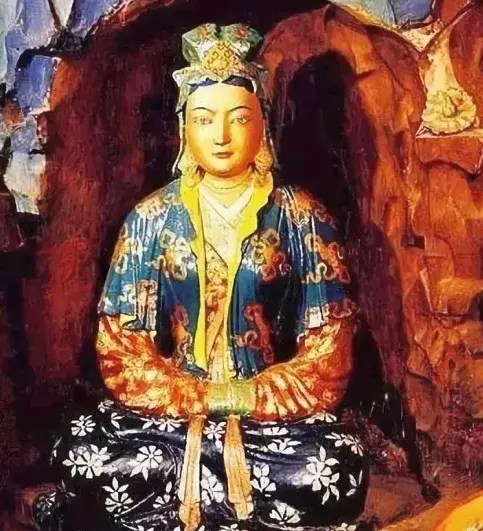
Princess Wencheng's Journey to Tibet (文成公主入藏), designating the landmark marriage alliance in 641 CE (the fifteenth year of the Zhenguan era) between Princess Wencheng, a daughter of the Tang imperial clan, and King Songtsen Gampo, the unifier of the Tibetan Empire, represents one of the most celebrated turning points in the history of Sino-Tibetan cultural exchange and ethnic integration. In the early seventh century, Songtsen Gampo unified the fragmented tribes of the Tibetan Plateau, established the Tibetan Empire, and petitioned the Tang court in Chang'an for an imperial marital alliance. Following military friction at Songzhou and a diplomatic embassy led by Prime Minister Gar Tongtsen bearing substantial gold tribute, Emperor Taizong consented to wed Princess Wencheng to the Tibetan monarch. In 641 CE, Li Daozong, Prince of Jiangxia, escorted the princess to Tibet. The cortege transported an invaluable cultural dowry, including a life-sized gilded statue of the young Shakyamuni Buddha, hundreds of medical, astrological, and agricultural manuals, sericultural materials, and diverse artisans. Songtsen Gampo greeted the princess at Lake Baihai and erected the initial palace chambers on Marpori Hill that preceded the Potala Palace. The entry of Princess Wencheng stimulated agricultural transformation, literacy, and craft production across the plateau, forging the legendary uncle-and-nephew alliance between the Han and Tibetan peoples.
Songtsen Gampo sends emissaries to Chang'an requesting an imperial princess, initiating diplomatic relations.
Songtsen Gampo attacks Tuyuhun and besieges Songzhou; General Niu Jinda routes the Tibetan vanguard in a night raid.
Gar Tongtsen presents 5,000 taels of gold in Chang'an and solves imperial riddles, securing Emperor Taizong's betrothal of Princess Wencheng.
Armed with sacred Buddhist statues, classics, and artisans, Prince Li Daozong leads the imperial escort along the Tang-Tibet road.
Songtsen Gampo welcomes the bridal caravan at Lake Baihai with son-in-law etiquette, accompanying the princess to Lhasa.
Princess Wencheng is crowned queen; Songtsen Gampo constructs palace halls on Marpori Hill and bans facial painting.
Following the Goguryeo campaign, Songtsen Gampo sends Gar Tongtsen to Chang'an with a seven-foot golden goose to celebrate the victory.
Songtsen Gampo dispatches 1,200 cavalry to assist envoy Wang Xuance in crushing the Magadha usurpation.
Songtsen Gampo dies; Emperor Gaozong awards him posthumous honors, while Princess Wencheng remains in Tibet to advise the court.
Princess Wencheng dies after forty years in Tibet; the Tibetan populace accords her a state funeral and preserves her shrines.
Across the vast expanse of the Tibetan Plateau, ancient pastoral and agrarian clans long existed in fragmented tribal confederations characterized by endemic feuds. In the late sixth and early seventh centuries, Namri Songtsen, chieftain of the Yarlung Valley clan, expanded his authority over neighboring tribes, laying the groundwork for a unified state.
His son, Songtsen Gampo, ascended the throne as a monarch of exceptional vision and martial vigor. Relocating the capital to Lhasa, he enacted sweeping institutional reforms: codifying sixteen statutory laws, creating a thirty-character Tibetan script, and dividing the realm into five military-administrative horns. Songtsen Gampo annexed the kingdoms of Supi and Zhangzhung, subjugated the Dangxiang and Bailan tribes, and unified the Tibetan Plateau into a formidable empire. With the plateau unified, the young monarch sought foreign technologies and cultural models from surrounding civilizations to consolidate his realm.
Concurrently, the Central Plains entered the flourishing era of Emperor Taizong's Zhenguan reign. Implementing prudent economic policies and meritocratic administration, Emperor Taizong subjugated the Eastern Turkic Khaganate, pacified Tuyuhun, and brought Gaochang into the imperial domain. Sovereign monarchs throughout eastern Eurasia proclaimed Emperor Taizong their Heavenly Khagan, and foreign embassies crowded the boulevards of Chang'an.
Tang achievements in agriculture, silk manufacturing, medicine, classical philosophy, and architectural engineering exerted immense gravitational pull upon neighboring states. Deeply impressed by Tang power and civil refinement, Songtsen Gampo sought an imperial marital alliance modeled upon earlier marriages contracted by Tuyuhun and Turkic rulers, aiming to introduce Chinese civilization to reform Tibetan customs.
In 634 CE (the eighth year of the Zhenguan era), Songtsen Gampo dispatched his first diplomatic mission to Chang'an, accompanied by Tang envoy Feng Dexia. The Tibetan monarch petitioned for a royal marriage, but Emperor Taizong demurred, considering the Tibetan realm distant and unfamiliar. Upon returning to Lhasa, Tibetan envoys claimed that King Murong Nuohebo of Tuyuhun had slandered Tibet at the Tang court, causing the proposal to be declined.
Enraged by this report, Songtsen Gampo mobilized over two hundred thousand warriors in 638 CE, crushing Tuyuhun forces before advancing eastward to besiege the Tang border city of Songzhou (modern Songpan, Sichuan). Emperor Taizong appointed Minister of Personnel Hou Junji as Supreme Campaign Commander, deploying General Niu Jinda with vanguard cavalry. Niu Jinda executed a surprise night assault against the Tibetan perimeter, routing the forward lines and killing over a thousand soldiers. Awed by Tang military discipline and facing discontent among allied chieftains, Songtsen Gampo withdrew to the plateau and sent envoys bearing apologies.
In 640 CE, Songtsen Gampo dispatched his trusted Prime Minister, Gar Tongtsen (Lu Dongzan), to Chang'an with five thousand taels of gold and hundreds of precious gems to formally apologize and renew the marriage petition. Gar Tongtsen's refined diplomacy and sharp intellect impressed Emperor Taizong. Recognizing the strategic value of long-term northwestern peace, Emperor Taizong formally betrothed the imperial clan maiden, Princess Wencheng, to the Tibetan sovereign.
Following the consolidation of the Tibetan Plateau, Songtsen Gampo expanded his influence along the northeastern fringes of the Himalayas. Observing that neighboring rulers in Tuyuhun and Turkic lands maintained marital alliances with the Tang, the Tibetan monarch recognized that an imperial bride would bestow supreme regional legitimacy while granting direct access to Tang administrative and technological expertise.
In 634 CE, Tibetan envoys accompanied Tang emissary Feng Dexia to Chang'an, presenting golden tribute and petitioning for an imperial princess. Emperor Taizong welcomed the mission hospitably but refrained from approving the union. Returning to Lhasa, the envoys concealed their diplomatic shortcomings, reporting that Tuyuhun interference had derailed the match. Incensed by the perceived slight, Songtsen Gampo prepared a massive military offensive to compel imperial acquiescence.
In 638 CE, Songtsen Gampo mobilized his elite cavalry alongside allied tribal forces, numbering over two hundred thousand. The Tibetan columns overran Tuyuhun, forcing its royal house north of Qinghai Lake, before subduing the Dangxiang and advancing directly upon Songzhou. Songtsen Gampo declared outside the fortress walls that refusal of the marriage petition would result in an invasion of the Central Plains.
When Songzhou Area Commander Han Wei suffered an initial tactical defeat, Emperor Taizong acted decisively. He appointed Minister of Personnel Hou Junji as Campaign Commander, deploying Prince of Jiangxia Li Daozong and General Niu Jinda with fifty thousand elite infantry and cavalry to relieve the frontier.
Vanguard General Niu Jinda led several thousand light horsemen through night marches, exploiting lax security around the forward Tibetan camps to launch a devastating night raid. The Tang cavalry broke through the defensive barricades, setting fire to tents and killing more than a thousand Tibetan warriors. Awed by the discipline and ferocity of the Tang regular army, and facing remonstrance from his own chieftains who grew weary of prolonged mountain campaigning, Songtsen Gampo prudently ordered a total withdrawal and dispatched emissaries to submit formal apologies.
The military encounter at Songzhou clarified political realities: Songtsen Gampo understood that coercive measures could not bend the Tang court, and that only profound diplomatic respect and submissive protocol could secure imperial favor.
In 640 CE, Songtsen Gampo dispatched Prime Minister Gar Tongtsen on a grand mission to Chang'an, bearing five thousand taels of refined gold and hundreds of exquisite treasures. In the capital, Gar Tongtsen displayed polished diplomatic poise and brilliant eloquence, winning the admiration of the court.
Historical lore and Tibetan chronicles preserve the celebrated narrative of the Trials of Wit, wherein Emperor Taizong tested the suitors of various foreign kingdoms through six difficult riddles at the Taiji Palace: The first trial required threading a silk strand through a convoluted jade jewel containing nine winding internal channels. While other envoys faltered, Gar Tongtsen tied the silk to a slender ant, placed it at the entrance, smeared honey at the opposite exit, and blew gently into the opening. Drawn by the fragrance, the ant traversed the winding turns, successfully pulling the thread through.
The second trial tasked envoys with matching one hundred mixed mares with their corresponding foals. While others guessed by coat patterns, Gar Tongtsen separated the foals in a stable overnight without fodder. When released the next morning, the starving foals rushed straight to their respective mothers to suckle, naturally clarifying every maternal pairing. The third trial, involving one hundred hens and broods of chicks, was resolved through the same principle by scattering grain and observing protective maternal clucking. Subsequently, when asked to determine the root and top of a uniform round timber, Gar Tongtsen floated it in water, identifying the heavier submerged end as the root.
The fourth trial required finding the path out of a vast palace banquet labyrinth after an evening of drinking. Anticipating the challenge, Gar Tongtsen had secretly marked palace corridors with charcoal during his arrival, navigating the dark compound without error.
The final trial presented hundreds of maidens dressed in identical silk robes and veils, challenging the envoys to identify the genuine Princess Wencheng. Having consulted an elderly palace attendant, Gar Tongtsen learned that the princess wore a unique floral incense and possessed an innate noble posture. Observing that fluttering butterflies circled around a single maiden, Gar Tongtsen bowed before her, identifying Princess Wencheng. Delighted by his brilliance, Emperor Taizong confirmed the betrothal.
In the first month of spring in 641 CE, the bridal cortege departed Chang'an amid court ceremonial music. Emperor Taizong viewed the marriage as a grand strategic opportunity to transmit Tang civilization to the southwestern plateau.
The imperial court prepared a magnificent dowry that functioned as a portable storehouse of Chinese culture. Chief among the treasures was a life-sized gilded bronze statue of the twelve-year-old Shakyamuni Buddha, blessed in the presence of the Buddha. The caravan carried three hundred and sixty volumes of Buddhist scriptures, one hundred medical treatises, historical annals, sixty astrological and calendrical works, and illustrated agricultural and sericultural handbooks.
The baggage trains included grains, turnip, and vegetable seeds, alongside silkworm cocoons and spinning gear. Emperor Taizong selected hundreds of master craftsmen skilled in irrigation, metallurgy, weaving, papermaking, ceramics, masonry, and fermentation to accompany the princess. Emperor Taizong appointed his cousin, Prince of Jiangxia Li Daozong, to serve as imperial escort, guarding the princess with imperial guards along the Tang-Tibet ancient road.
The cortege journeyed past Xianyang and Fengxiang, traversed the Qinling passes, crossed the Yellow River into Xining, and entered Tuyuhun territory, where King Murong Nuohebo erected pavilions for the princess. Ascending Mount Chiling (modern Sun and Moon Mountain), the princess looked back toward Chang'an, breaking her longing mirror in tears that legend holds formed the westward-flowing Daotang River, before pressing across the snowy plateau.
In the second month of 641 CE, the caravan reached Lake Baihai (the modern Zhaling and Eling lakes at the source of the Yellow River in Qinghai), where Songtsen Gampo waited with tens of thousands of elite cavalry.
Upon sighting Prince Li Daozong holding the imperial talismans, Songtsen Gampo advanced on foot to render deep filial respect as a son-in-law. Awed by the ceremonial dignity, shimmering armor, and cultural treasures of the Tang cortege, the Tibetan monarch proclaimed to his ministers that his ancestors had never contracted an alliance with the Heavenly Empire, and that receiving an imperial princess was the supreme fortune of his reign. He pledged to construct a magnificent palace city to commemorate her honor for generations.
Prince Li Daozong conducted the formal transfer rituals before returning eastward, while Songtsen Gampo personally escorted Princess Wencheng along the Yarlung Tsangpo Valley toward Lhasa. As the princess entered the capital, the populace celebrated with joyous dances. Ascending the throne on Marpori Hill, Songtsen Gampo crowned Princess Wencheng as Queen (Gyasa or Zanmeng). To provide an appropriate residence, he erected a grand palace complex on the red hill that formed the historical core of the modern Potala Palace.
Princess Wencheng's arrival catalyzed a cultural and economic renaissance across the Tibetan Plateau:
First, social customs were refined. Tibetan pastoralists traditionally smeared their faces with red pigment to fend off freezing winds, producing an intimidating appearance. Princess Wencheng disliked this practice, prompting Songtsen Gampo to issue an edict banning facial painting. The king discarded his heavy sheepskins for Tang silk robes and wide sashes, a fashion quickly embraced by the nobility.
Second, agricultural and industrial practices modernized. Tang craftsmen introduced iron plows, terraced irrigation, and watermills along the Yarlung Tsangpo Valley, transforming subsistence farming and multiplying grain yields. Turnip and vegetable crops flourished in the Lhasa Valley, while female artisans introduced sericulture, spinning, and embroidery. Papermaking workshops replaced wood and bark records, while improved brewing techniques refined barley wine production.
Third, literacy, science, and medicine flourished. Songtsen Gampo selected bright aristocratic youths to study the Confucian classics at the Guozijian in Chang'an, producing accomplished scholars who returned to staff the Tibetan administration. Tang scholars were retained in Lhasa to draft diplomatic correspondence. Chinese treatises on the four hundred and four ailments, pulse diagnosis, and surgical tools merged with local practices, while the sixty-year sexagenary calendar and the twelve-animal zodiac replaced ancient knot-tying records. Furthermore, Princess Wencheng used geomantic principles to design the Jokhang and Ramoche temples, enshrining the Shakyamuni Buddha statue and combining Chinese timber bracketing with Tibetan masonry.
The marital alliance established by Princess Wencheng underpinned decades of diplomatic and military cooperation:
In 645 CE, following Emperor Taizong's victorious return from the Liaodong campaign against Goguryeo, Songtsen Gampo dispatched Gar Tongtsen to Chang'an with congratulatory memorials and a seven-foot-tall golden goose filled with wine to honor the victory.
In 648 CE, Tang envoy Wang Xuance was ambushed by the usurper King Aluonashun during a mission to Magadha in central India. Escaping to the Tibetan border, Wang Xuance invoked the imperial alliance. With Princess Wencheng's support, Songtsen Gampo deployed twelve hundred elite Tibetan warriors alongside seven thousand Nepalese cavalry. Wang Xuance led this coalition across the Himalayas, capturing the fortress of Cha-bo-ho-lo, routing the usurper's forces, and capturing Aluonashun, who was escorted to Chang'an as a prisoner of war.
Upon Emperor Taizong's death in 649 CE, newly enthroned Emperor Gaozong conferred the titles of Prince of Xihai and Commandant of the Imperial Son-in-Law on Songtsen Gampo. When Songtsen Gampo died in 650 CE, Princess Wencheng remained in Tibet for thirty years, continuing to nurture peaceful relations until her death in 680 CE.
The journey of Princess Wencheng to Tibet marked a historic triumph for Tang foreign diplomacy and Tibetan cultural modernization.
The alliance replaced armed confrontation with lasting fraternal relations. Princess Wencheng lived in Tibet for four decades, revered as the Queen and an emanation of the White Tara, serving as the central figure behind the plateau's cultural transformation.
Chinese scientific literature, agricultural implements, silk handicrafts, and medical systems took root across Tibet. The construction of the Jokhang and Ramoche temples established Lhasa as a spiritual capital, while the Potala Palace rose on the red hill. Tibetan youths studied in Chang'an, and frontier markets flourished under peaceful trade.
Princess Wencheng's entry into Tibet produced profound, enduring ramifications for Chinese civilization and Tibetan history:
First, historical acceleration of Tibetan socioeconomic development. The introduction of iron plows, irrigation canals, and milling technologies revolutionized agriculture. Classical Chinese medical works laid the foundation for Tibetan traditional medicine, while papermaking and weights and measures regularized administrative governance, accelerating Tibet's transition from clan serfdom to institutionalized feudalism.
Second, eternal consecration of Tibetan Buddhist heritage. The twelve-year-old Shakyamuni Buddha statue enshrined in the Jokhang Temple became the most sacred spiritual relic on the plateau. The architecture of the Jokhang and Ramoche temples integrated Chinese timber bracketing with Tibetan masonry, defining the aesthetic paradigm of Himalayan religious architecture.
Third, consolidation of the multi-ethnic Chinese national identity. The marriage permanently dissolved the geographical isolation of the Tibetan Plateau, creating an unbreakable cultural and genetic bond between the Han and Tibetan peoples. It provided the indisputable historical foundation for the enduring political relationship between Tibet and the Chinese central government, demonstrating the ancient origins of a unified multi-ethnic state.