First Mission
Songtsen Gampo sends envoys to pay tribute and requests marriage alliance; Emperor Taizong initially declines.
Tang Dynasty (唐朝) · HISTORICAL EVENT
文成公主和亲
The Marriage Alliance of Princess Wencheng (文成公主和亲) was a landmark historical event of strategic alliance and cultural exchange between the Tang Dynasty and the Tubo Empire in 641 (the 15th year of the Zhenguan reign). Following the unification of the Tibetan Plateau, Songtsen Gampo sought diplomatic alliance through imperial marriage. After a military skirmish at Songzhou demonstrated Central Plains strength, he dispatched his prime minister Gar Tongtsen…
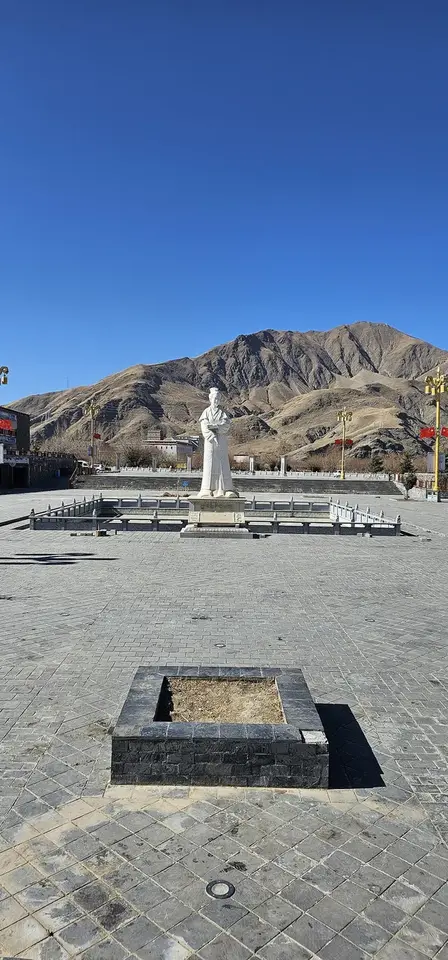
The Marriage Alliance of Princess Wencheng (文成公主和亲) was a landmark historical event of strategic alliance and cultural exchange between the Tang Dynasty and the Tubo Empire in 641 (the 15th year of the Zhenguan reign). Following the unification of the Tibetan Plateau, Songtsen Gampo sought diplomatic alliance through imperial marriage. After a military skirmish at Songzhou demonstrated Central Plains strength, he dispatched his prime minister Gar Tongtsen with grand tributes to Chang'an to apologize and formally request marriage. Emperor Taizong evaluated the strategic landscape and bestowed an imperial clanswoman as Princess Wencheng, ordering Prince of Jiangxia Li Daozong to escort her. Songtsen Gampo personally greeted the imperial envoy at Baihai with deep respect, consolidating political mutual trust. This marriage alliance inaugurated decades of peaceful contact, introducing advanced agricultural skills, medical texts, calendrical knowledge, and Buddhist artifacts to Tibet, and serving as an enduring historical symbol of friendly ties between the Han and Tibetan nations.
Songtsen Gampo sends envoys to pay tribute and requests marriage alliance; Emperor Taizong initially declines.
Tubo troops advance toward Songzhou; Tang vanguard Niu Jinda carries out an effective night raid, prompting Songtsen Gampo to withdraw.
Tubo minister Gar Tongtsen presents gold to Chang'an to apologize, and Emperor Taizong approves the imperial wedding.
Li Daozong escorts Princess Wencheng to Baihai, where Songtsen Gampo welcomes her with royal courtesies and proceeds to Lhasa.
When Tang envoy Wang Xuance is attacked in India, Songtsen Gampo provides cavalry troops to assist Tang forces in victory.
Princess Wencheng passes away in Lhasa; Tubo holds a state mourning ceremony, and the Tang emperor dispatches imperial envoys to sacrifice.
During the early Zhenguan era, Emperor Taizong eradicated the Eastern Turkic Khaganate and pacified the Western Regions, bringing Tang imperial authority to its peak. Simultaneously, across the Qinghai-Tibet Plateau, the thirty-second Tubo Tsangpo, Songtsen Gampo, eliminated rival tribal factions and moved his capital to Rasa (Lhasa), achieving unprecedented plateau unification. Songtsen Gampo deeply admired Central Plains institutions and culture and recognized that neighboring polities like the Turks and Tuyuhun had formed marital ties with Tang. He resolved to pursue a royal marriage alliance to elevate Tubo's diplomatic stature.
In 634 (Zhenguan 8), Songtsen Gampo sent envoys to Chang'an seeking an imperial bride, but due to friction and Tuyuhun obstruction, Emperor Taizong declined. In 638 (Zhenguan 12), using Tuyuhun interference as a pretext, Songtsen Gampo led forces against Tuyuhun and advanced toward the Tang border fortress at Songzhou (modern Songpan, Sichuan). Emperor Taizong deployed Minister of Personnel Hou Junji and vanguard commander Niu Jinda to stage a counteroffensive. Niu Jinda led a night cavalry raid against the Tubo camp, slaying over a thousand troops. Realizing the prowess of the Tang army, Songtsen Gampo withdrew and sent Gar Tongtsen with five thousand taels of gold and precious treasures to Chang'an to beg pardon and reaffirm the marriage petition. Considering long-term western border peace, Emperor Taizong granted the imperial match.
In 640 (Zhenguan 14), Emperor Taizong formally invested a noble clanswoman as Princess Wencheng to undertake this historic mission. The Tang court prepared an elaborate dowry, encompassing exquisite silks, classical Confucian literature, medical compendia, agricultural treatises, technical blueprints, crop and vegetable seeds, alongside a sacred statue of Gautama Buddha and liturgical paraphernalia. In the spring of 641 (Zhenguan 15), Emperor Taizong appointed Li Daozong, the Prince of Jiangxia and Minister of Rites, to hold the imperial tally and command the royal guard escorting the princess westward.
Escorted through treacherous terrain and frozen plateau marshes, the royal entourage arrived at Baihai (near Lake Gyaring and Lake Ngoring in modern Qinghai). Overjoyed, Songtsen Gampo led his elite cavalry from Lhasa across hundreds of miles to meet them. Meeting Li Daozong, the Tsangpo strictly observed Han ceremonial customs, bowing with son-in-law courtesies toward the imperial envoy. After the formal diplomatic transfer, Li Daozong returned to Chang'an while Songtsen Gampo escorted Princess Wencheng back to Rasa to celebrate their royal wedding. Songtsen Gampo had palaces built in the Han architectural style and ordered his subjects to abandon the ancient custom of painting their faces with red clay.
After arriving in Tibet, Princess Wencheng dedicated herself to civil and cultural development. She introduced Central Plains silkworm breeding, textile weaving, and fermentation techniques. Central Plains artisans accompanying her instructed Tibetan locals in excavating irrigation canals, constructing hydraulic flour mills, and refining ceramics and metal smelting. A devout Buddhist, she used geomantic principles to map out local topography, assisting Songtsen Gampo in founding the Ramoche Temple (Xiao Zhaosi) to enshrine the Buddha statue brought from Chang'an. Tubo nobles adopted Han silk apparel, and royal sons were dispatched to the Imperial Academy in Chang'an to study classical texts.
Songtsen Gampo utilized the alliance to maintain peace with the Tang court. In 648 (Zhenguan 22), when Tang envoy Wang Xuance was ambushed in Tianzhu (India), Songtsen Gampo dispatched crack cavalry to assist him in subduing the rebelling forces, upholding Tang imperial authority. Following Emperor Gaozong's accession, Songtsen Gampo was granted titles including Prince of Xihai. After Songtsen Gampo passed away in 650, Princess Wencheng lived in Rasa for thirty more years, fostering commercial and cultural exchanges until her death in 680 (Yonglong 1). Tubo conducted state funeral ceremonies, and the Tang court sent envoys to offer condolences.
Princess Wencheng safely reached Lhasa and wedded Songtsen Gampo, who adopted Tang palace protocols and respected imperial ranks. Hostilities ceased along the southwest border, formalizing an egalitarian kinship alliance between the two powers.
The marriage alliance initiated extensive technological and cultural exchanges between the Han and Tibetan peoples. Central Plains agriculture, medicine, metallurgy, and architectural craftsmanship took root in Tibet, accelerating socio-economic evolution. The maternal-nephew diplomatic bond maintained decades of border tranquility and established profound fraternal ties across generations.
Modern historians regard the marriage alliance of Princess Wencheng as a milestone in Chinese ethnic relations. Far beyond a temporary diplomatic compromise, it represented a profound integration process within the unified multi-ethnic Chinese nation, forging inseparable historical and cultural ties between Tibet and the Central Plains.