Ming Taizu Promulgates the Weisuo System
Zhu Yuanzhang establishes the Ming Dynasty, codifies the guard-battalion garrison framework, and initiates hereditary military households.
Ming Dynasty (明朝) · HISTORICAL EVENT
卫所兵制
The Weisuo Military System (卫所兵制, Weisuo Bingzhi), or the Guard and Battalion System, was the foundational military organization and standing defense framework of the Ming Dynasty, created by Emperor Taizu (Zhu Yuanzhang) during the early Hongwu era. Synthesizing the Tang Dynasty fubing militia model with the Yuan Dynasty decimal chiliarchy structure, the system organized standing imperial forces into hierarchical garrison echelons: a Guard (wei)…
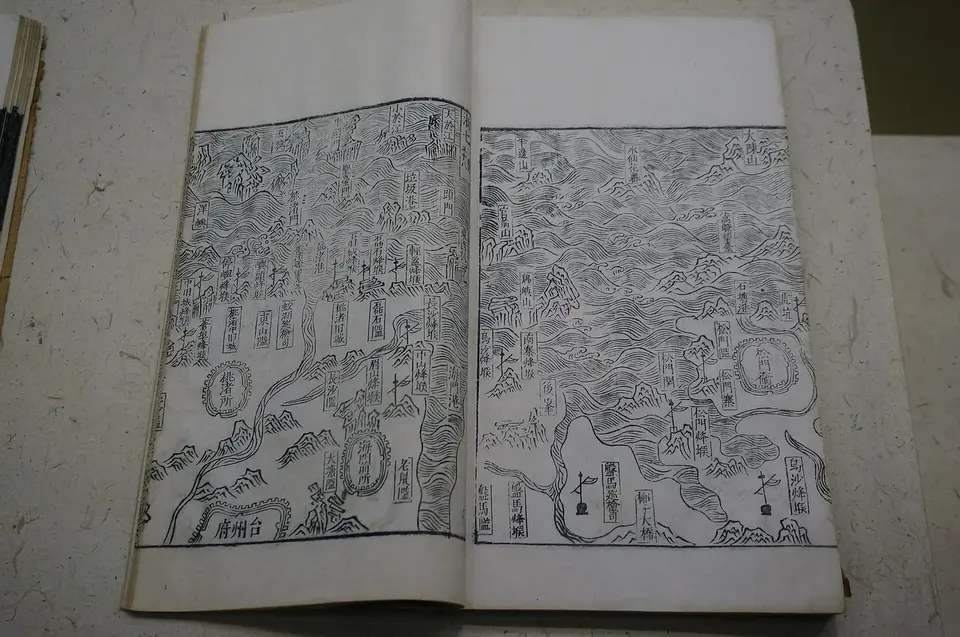
The Weisuo Military System (卫所兵制, Weisuo Bingzhi), or the Guard and Battalion System, was the foundational military organization and standing defense framework of the Ming Dynasty, created by Emperor Taizu (Zhu Yuanzhang) during the early Hongwu era. Synthesizing the Tang Dynasty fubing militia model with the Yuan Dynasty decimal chiliarchy structure, the system organized standing imperial forces into hierarchical garrison echelons: a Guard (wei) comprised approximately 5,600 soldiers under a Commander; each Guard supervised five Thousand-Household Battalions (qianhusuo, 1,120 men); each Battalion was subdivided into ten Hundred-Household Battalions (baihusuo, 112 men). At court, military power was bifurcated between the Five Chief Military Commissions, which held administrative command, and the Ministry of War, which controlled troop deployments. Operating under hereditary military households (junhu), troops rotated between border defense (30 percent) and agricultural reclamation (70 percent), aiming to achieve absolute logistical self-sufficiency. While the system underpinned Ming military supremacy in the 14th and 15th centuries, progressive elite land usurpations and severe desertions led to systemic breakdown by the mid-Ming, compelling transition toward paid recruitment and professional field commands.
Zhu Yuanzhang establishes the Ming Dynasty, codifies the guard-battalion garrison framework, and initiates hereditary military households.
Following the execution of Hu Weiyong, the court splits the Chief Military Commission into five bodies, institutionalizing separation from the Ministry of War.
Imperial armies pacify the southwest, establishing permanent garrisons that introduce large-scale agricultural colonization.
Garrison colonies encompass 800,000 qing of reclaimed land, producing 23 million shi of grain and fulfilling the founder's fiscal vision.
Emperor Yongle creates the Three Capital Battalions in Beijing, institutionalizing rotational training for provincial garrison troops.
Emperor Zhengtong is captured at Tumu as elite guard forces are destroyed, compelling Minister Yu Qian to reorganize defenses around mercenary recruits.
Altan Khan raids Beijing's suburbs as garrison troops fail to resist; rampant piracy forces the court to transition completely toward mercenary forces.
Qi Jiguang recruits volunteer forces in Yiwu and develops innovative tactical formations, cementing the predominance of mercenary commands.
The Ming Dynasty falls; surviving garrisons are gradually converted into regular civil counties and prefectures under the Qing Dynasty.
The military infrastructure of the Yuan Dynasty relied on hereditary Mongol chiliarchies, the keshik imperial guard, and diverse regional Han and Tamachi armies under the oversight of the Bureau of Military Affairs (Shumiyuan). By the mid-14th century, systemic ethnic oppression and administrative corruption crippled state authority.
In 1351 CE, the Red Turban Rebellion erupted across the Huai and Yangtze river basins. In the ensuing civil wars, the regular Mongol garrisons disintegrated, forcing the imperial court to rely on regional warlords such as Chaghan Temür and Köke Temür.
These warlords operated private feudatory armies that pillaged local communities and feuded among themselves, devastating northern and central China. Rising from humble origins in Haozhou, Zhu Yuanzhang recognized that enduring dynastic survival required eradicating warlordism and preventing military privatization.
In engineering a replacement military order, Zhu Yuanzhang and key strategists such as Liu Ji analyzed the historical evolution of Chinese armed forces. The Han conscription model proved incapable of sustaining protracted frontier warfare, while the Tang fubing system successfully combined agriculture with martial duty but collapsed when private landlords encroached upon peasant militia allotments.
Conversely, the Song Dynasty's reliance on mercenary enlistment drained upwards of eighty percent of state revenues into troop stipends, leaving the state chronically impoverished and militarily fragile. The Yuan Dynasty's hereditary military households ensured a stable troop pool but lacked domestic administrative cohesion.
Zhu Yuanzhang sought to synthesize the virtues of these past systems: adopting the Tang ideal of "housing soldiers within agriculture" while incorporating the rigid decimal garrison hierarchy inherited from the Mongol-Yuan administration.
In 1368 CE (the first year of Hongwu), Zhu Yuanzhang established the Ming Dynasty and captured the Mongol capital of Dadu. However, Northern Yuan remnants retreated to the Eurasian steppe, maintaining dangerous border pressure; pirate fleets raided the southeastern coastline; and non-Han tribal chieftains (tusi) controlled the southwestern highlands.
The nascent empire was compelled to maintain an unprecedented standing army of over one million soldiers. Yet decades of civil war had decimated agricultural production and exhausted imperial treasuries.
Adopting the mercenary model would impose catastrophic taxation upon the war-weary populace. Zhu Yuanzhang resolved to institute an autonomous, self-feeding defense network, proudly proclaiming: "I have established a method of maintaining troops where rotational frontier defense is balanced by self-sufficient agricultural colonies, drawing no expenses from the populace; thus an army of a million is sustained without costing the common people a single grain of rice!"
During the early Hongwu years, Zhu Yuanzhang formalized the Weisuo system across the empire. The national military was organized into a standardized hierarchy of garrisons.
The basic operational unit was the Guard (wei), nominally consisting of 5,600 soldiers led by a Commander (Zhihuishi, Rank 3a). Each Guard commanded five Thousand-Household Battalions (qianhusuo, 1,120 men), headed by a Chiliarch (Qianhu, Rank 5a) and two Vice-Chiliarchs. Each Battalion directed ten Hundred-Household Battalions (baihusuo, 112 men) commanded by a Centurion (Baihu, Rank 6a). Below the centurion were two Platoon Commanders (Zongqi, 50 men each) and ten Squad Leaders (Xiaoqi, 10 men each), ensuring seamless tactical control.
To eliminate warlordism, Zhu Yuanzhang abolished the central Prime Ministership and the all-powerful Grand Chief Military Commission in 1380 CE, dividing command into Five Chief Military Commissions: Middle, Left, Right, Front, and Rear. These commissions supervised daily drills, military registrations, and officer promotions, but held zero authority to mobilize forces.
The authority to order troop movements and manage logistical supply resided exclusively within the civilian Ministry of War (Bingbu). In wartime, the Emperor appointed ad-hoc Generals (Zongbingguan) who received temporary imperial seal rings; the Ministry of War issued tallies, and the Five Commissions assigned troops to the general's temporary command. When hostilities concluded, commanders surrendered their seals and soldiers returned to their respective garrisons, institutionalizing the doctrine that "soldiers knew not their generals, generals knew not their soldiers, and no commander possessed private troops."
In the provinces, local garrisons were supervised by Regional Military Commissions (Dusi). These commissions operated alongside Provincial Administration Commissions (civil administration) and Provincial Surveillance Commissions (judiciary and censorship) as equal administrative pillars directly accountable to the central court.
To secure unbroken generational replacements for millions of garrison slots, the Ming government established the hereditary military household (junhu) caste. Every family in the empire was cataloged in the Yellow Registers as civilian, military, artisan, or salt-producing households.
Military households originated from four primary channels: original insurgent followers of Zhu Yuanzhang ("conquest contingents"); captured rival armies from Chen Youliang, Zhang Shicheng, and the Yuan Dynasty ("submitted contingents"); households drafted due to abundant adult males ("levied contingents"); and judicial convicts condemned to frontier military service ("penal contingents").
Once classified, military status was hereditary and immutable. Each military family was registered in special Military Registers, providing one prime adult male (zhengjun) for active garrison duty. Remaining male relatives (yuding) cultivated family plots or performed auxiliary duties, obligated by law to replace the prime soldier upon his death or incapacitation.
To prevent desertion, the state enforced draconian mutual guarantee laws. If an active soldier fled, local magistrates detained his kinship group until a substitute relative was surrendered to complete military obligations.
Agricultural colonies (tuntian) constituted the fundamental economic pillar of the Weisuo system. The Ming throne allocated vast tracts of uncultivated lands, confiscated estates, and frontier wastes to local garrisons as permanent military fields.
Depending on strategic requirements, the court decreed precise labor ratios: frontier garrisons operated under an eighty percent farming to twenty percent guarding ratio (or seventy-thirty), while interior garrisons maintained a sixty percent farming to forty percent guarding ratio.
Each farming soldier was provided with fifty mu of arable land, an ox, basic farming tools, and seed grain. Officers supervised irrigation canals and dike construction. Harvested grains (tunliang) fed garrison dependents, while surpluses were stored in garrison granaries to provision imperial campaigns, shielding the civilian tax base from military levies.
At the peak of this agrarian mobilization in 1392 CE (the 25th year of Hongwu), military colonies spanned over 800,000 qing nationwide, yielding over 23 million shi of grain annually—exceeding total civilian grain revenues for that year.
Through the Weisuo apparatus, the early Ming executed sweeping defensive and developmental colonization across remote frontiers. In the northeast, the Liaodong Regional Military Commission directed twenty-five Guards, settling hundreds of thousands of military households along the Liao River valley and transforming Liaodong into a heavily fortified agricultural base against Mongol and Jurchen raids.
In the southwest, the court instituted a dual system of tribal chieftains alongside regular military garrisons. Following the conquest of Yunnan by Fu Youde and Mu Ying, Ming authorities established dozens of garrisons across Yunnan, Guizhou, and Sichuan, transferring hundreds of thousands of military families from central China in a campaign known as "Transferring the North to Subdue the South."
These garrison settlements (tunbao) cleared wilderness, built defensive citadels, constructed roads, and introduced northern agrarian technologies, integrating the multi-ethnic highlands of the southwest into direct imperial governance.
By the mid-15th century, prolonged peacetime and rampant administrative corruption undermined the viability of the Weisuo system.
First, garrison commanders systematically annexed public colony tracts for private profit. High-ranking officers treated regular soldiers as personal serfs, forcing them to cultivate private estates and perform domestic menial chores without pay, a pervasive abuse decried as "treating soldiers like slaves and stealing colony land like bandits."
Second, severe economic deprivation sparked catastrophic desertion waves. Deprived of rations and subjected to brutality, hundreds of thousands of soldiers fled into banditry or wage labor. By the time of the Tumu Crisis in 1449 CE, garrison rosters were riddled with phantom names, with remaining effectives consisting primarily of elderly or infirm conscripts.
Confronted by Mongol incursions by Altan Khan and devastating raids by wokou pirates along the southern coasts, the decayed Weisuo garrisons proved militarily useless. The imperial government was forced to pivot toward paid volunteer mercenaries (mubing). Celebrated commanders Qi Jiguang and Yu Dayou recruited miners and fishermen, organizing them into tactical field commands (yingbing) using specialized formations such as the Mandarin Duck Array, reducing the traditional Weisuo to nominal administrative shells.
In 1644 CE (the 17th year of Chongzhen), rebel armies under Li Zicheng seized Beijing, and the Ming Dynasty collapsed, formally dissolving the imperial Weisuo network.
Following their entry into the Central Plains, the Qing Dynasty instituted its own dual military structure centered upon the Eight Banners and the Han Green Standard Army. For surviving Ming garrisons, the Qing enacted gradual administrative integration: military functions were severed, and colony lands were converted into ordinary taxable civilian fields. Between the Shunzhi and Yongzheng reigns, the Qing formally abolished all remaining guards, merging their populations and territories into regular county and prefectural jurisdictions.
During the first century of the Ming Dynasty, the Weisuo system provided unmatched logistical endurance and operational strength. Hundreds of garrisons guarded the Great Wall frontiers, maritime routes, and strategic waterways.
The system enabled the young dynasty to repel northern nomadic counter-offensives, secure the multi-ethnic southwestern frontier, and establish military authority over Manchuria and the southern oceans, all while avoiding the crushing taxation that had doomed earlier dynasties.
The agricultural colonies attached to the Weisuo system catalyzed profound transformations across peripheral regions. In Liaodong and the fertile river valleys of the northeast, hundreds of thousands of military colonists established stable agrarian societies.
In the southwestern provinces of Yunnan and Guizhou, the descendants of Ming military families brought advanced wet-rice cultivation, draft-animal plowing, and classical Chinese literacy into remote mountain regions. These fortified garrison communities permanently integrated the southwestern frontiers into the enduring cultural and administrative fabric of China.
As a rigid, caste-based institution reliant upon state compulsion, the Weisuo system bound millions of military households to hereditary military service and localized agricultural plots, denying them geographic mobility and career autonomy.
When officer corruption eroded the economic foundation of the colonies, the system's structural inflexibility produced mass desertion and military impotence. This internal decay forced the imperial state to transition to monetized mercenary enlistment, foreshadowing the professional army structures that characterized the late imperial and early modern eras in China.