Usurpation and Imperial Enthronement
Wang Mang receives the abdication of Ruzi Ying, establishes the Xin Dynasty with the Shijianguo era, and designates Chang'an as the capital.
Xin Dynasty (新朝) · HISTORICAL EVENT
托古改制
Tuogu Gaizhi (托古改制, institutional reform under the guise of antiquity; also known as Wang Mang's Reforms) was a sweeping top-down socio-economic and political reorganization launched from 9 to 23 CE by Emperor Wang Mang of the Xin Dynasty, using the Confucian classic Rites of Zhou (Zhouli) as its ideological blueprint. In the late Western Han period, monopolistic land enclosure by powerful clans had dispossessed millions of smallholders, creating a…
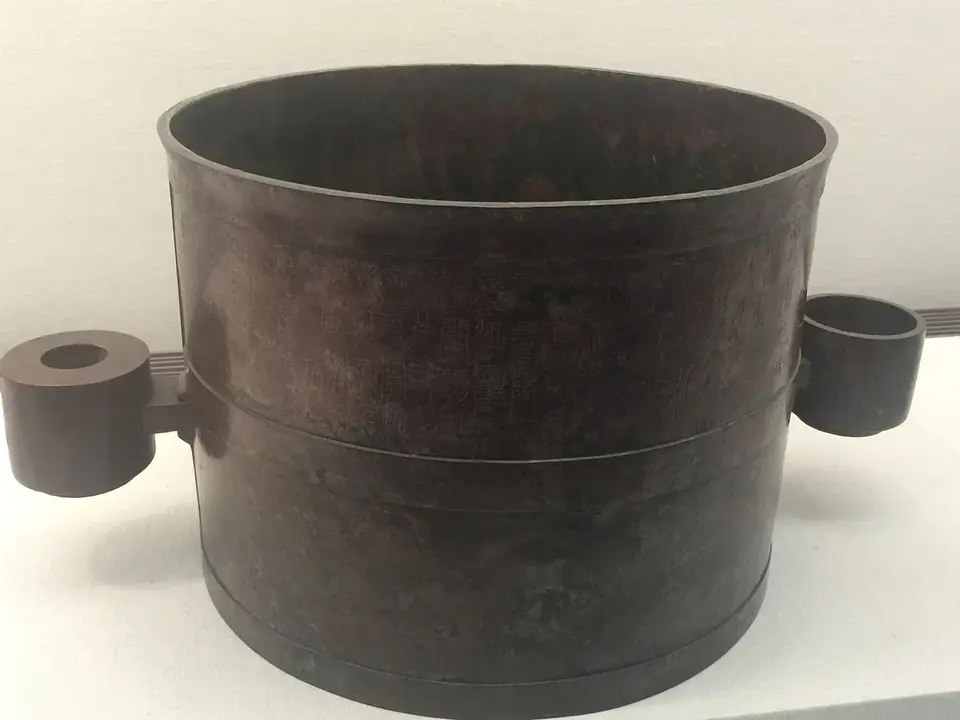
Tuogu Gaizhi (托古改制, institutional reform under the guise of antiquity; also known as Wang Mang's Reforms) was a sweeping top-down socio-economic and political reorganization launched from 9 to 23 CE by Emperor Wang Mang of the Xin Dynasty, using the Confucian classic Rites of Zhou (Zhouli) as its ideological blueprint. In the late Western Han period, monopolistic land enclosure by powerful clans had dispossessed millions of smallholders, creating a severe crisis of landlessness, debt slavery, and peasant revolts. After seizing the imperial throne through apocalyptic prophecy and abdication rituals, Wang Mang sought to eradicate systemic ills by thoroughly restoring the idealized institutional order of the Western Zhou. The reform enacted the "King's Field System" (Wangtian), nationalizing all agricultural land and prohibiting land sales, while converting private slaves into non-tradable "private dependents" (sisu). Wang Mang also created the "Five Equalizations" to stabilize commodity prices, instituted the "Six Controls" to monopolize profitable industries such as salt, iron, alcohol, and minting, and restructured the monetary system four times within eight years. However, these rigid measures alienated powerful landed magnates, impoverished commoners through predatory currency devaluation, and paralyzed imperial administration with incessant renaming of official titles and geographical jurisdictions. In 23 CE, insurgent armies stormed Chang'an and killed Wang Mang, bringing the revivalist experiment to a disastrous conclusion.
Wang Mang receives the abdication of Ruzi Ying, establishes the Xin Dynasty with the Shijianguo era, and designates Chang'an as the capital.
Wang Mang nationalizes all agricultural land as King's Fields and bans private slavery, ordering large estates redistributed according to the well-field system.
The Han five-shu coin is abolished in favor of Large Spring Fifty and Small Spring One; private holders of old coinage face penal slavery.
Wang Mang promulgates the twenty-eight denominations of the Baohuo system and establishes state monopolies over salt, iron, liquor, and credit.
The court degrades the Xiongnu Chanyu's title and attempts to partition the confederacy, precipitating massive nomadic invasions along the northern frontier.
Confronted by resistance from regional magnates and economic breakdown, Wang Mang repeals the prohibition on private land and slave transactions.
The collapse of previous currency systems forces the issuance of Huoquan and Huobu, eroding monetary stability and wiping out private savings.
Severe droughts and famine lead Wang Kuang to raise the Lulin Army in Jingzhou, while Fan Chong organizes the Chimei Army in Shandong.
Liu Xiu leads a small insurgent force to annihilate Wang Mang's central army of over 400,000 men under Wang Yi and Wang Xun at Kunyang.
Lulin forces storm the Weiyang Palace; Wang Mang is slain, terminating the Xin Dynasty and his antiquarian reforms.
During the mid-to-late Western Han Dynasty, court politics degenerated into factional intrigue, allowing imperial consorts and powerful regional gentry clans to aggressively enclose agricultural land. The social divide widened to an unprecedented extreme: aristocratic families owned vast contiguous estates stretching over thousands of acres and maintained large retinues of private slaves, while the bulk of smallholder peasants buckled under onerous grain taxes, poll taxes, corvee labor, and military conscription. Millions of bankrupt farmers lost their land, descending into tenantry or selling themselves and their children into hereditary slavery.
By the end of the 1st century BCE, the proliferation of private slaves had deprived the imperial state of crucial tax revenue and military conscripts. Although Emperor Ai of Han attempted to introduce the "Land and Slave Limitation" decree to cap the real estate and human holdings of nobles, the proposal was blocked by entrenched consort clans led by Grand Empress Dowager Wang Zhengjun's family. Meanwhile, catastrophic floods along the Yellow River, coupled with cyclical droughts, locust infestations, and epidemics, created millions of wandering refugees across the Central Plains, fostering popular yearning for a Confucian sage-king capable of restoring order.
Wang Mang hailed from the most powerful consort lineage of the late Western Han, but distinguished himself from his decadent relatives through rigorous Confucian study, personal frugality, and lavish patronage of scholars. Having studied the Classic of Rites and the Classic of History under the master Chen Can, Wang Mang diagnosed the regime's decay through the lens of Old Text Confucianism, promoted by imperial librarian Liu Xin, which revered the Rites of Zhou as an infallible administrative model.
Amid the fervent millenarian climate of the late Han, Wang Mang exploited cosmological theories of dynastic rotation and manufactured numerous auspicious portents and stone tablet prophecies confirming his celestial mandate. Advancing through prestigious offices as Duke of Anhan, Grand Tutor, and Acting Emperor, Wang Mang formally deposed the infant emperor Ruzi Ying in 9 CE, proclaiming the founding of the Xin ("New") Dynasty with Chang'an (renamed Chang'an, "Everlasting Peace") as his capital. Presenting himself as a reincarnation of the Duke of Zhou, Wang Mang embarked upon an ambitious campaign to reconstruct state and society according to the sacred precedents of high antiquity.
In the fourth month of 9 CE (the 1st year of Shijianguo), Wang Mang promulgated a revolutionary imperial edict addressing the empire's land and labor crises. Blaming Qin Dynasty legalism for destroying the ancient well-field system and giving rise to unchecked land monopoly, Wang Mang decreed that all agricultural land across the realm be redesignated as "King's Fields" (Wangtian) and declared state property, strictly forbidding private sale and purchase.
Under the Wangtian system, any family with fewer than eight male members whose holdings exceeded one "well" (approximately 900 mou) was legally required to distribute the surplus acreage among kin and poor neighbors. Peasant families with no land were promised equitable allotments according to ancient standards. Simultaneously, all slaves were redesignated as "private dependents" (sisu), and their commercial sale was banned. Wang Mang decreed harsh penalties: "Anyone who dares to criticize the sacred well-field system or mislead the public with unlawful talk shall be exiled to the remote frontiers to confront demonic wilderness!"
In practice, the decree threatened the vital interests of the regional gentry. Powerful clans armed their retainers, defied imperial administrators, and stirred popular unrest. At the same time, landless peasants received no actual land distributions, while ordinary households suffered from the freeze on property transfers. Over several years, tens of thousands of gentry members and commoners were exiled or executed for violating the agrarian decrees, but clandestine land transactions continued unabated. Facing uncontrollable social instability, Wang Mang surrendered to reality in 12 CE, issuing an edict permitting the unconditional resumption of land and slave trading, which marked the complete collapse of his land nationalization policy.
Concurrently with his agrarian measures, Wang Mang enacted four radical currency reforms between 7 and 14 CE, replacing the reliable Han five-shu (wushu) coin with an array of fiduciary tokens designed to expropriate private wealth:
The first reform (7 CE) introduced large nominal-value coins alongside the wushu: the Large Spring Fifty (worth 50 wushu despite weighing only 12 shu), the Inscribed Knife Five Hundred (worth 500 wushu), and the Gilded Inscribed Knife (inlaid with gold characters and priced at 5,000 wushu). This represented blatant state-sponsored monetary confiscation.
The second reform (9 CE) abolished the wushu entirely, alongside the knife coins, because the ideogram shu contained the gold radical and the character liu, which was the surname of the deposed Han imperial house. In their place, the court circulated Small Spring One and Large Spring Fifty. However, commoners recognized the intrinsic value of five-shu copper coins and secretly continued to transact in Han currency. Enraged, Wang Mang decreed that any civilian harboring wushu coins be sentenced to penal servitude along with five neighboring households, resulting in the enslavement of over a hundred thousand citizens.
The third reform (10 CE) introduced the bewildering "Precious Currency" (Baohuo) system, consisting of five materials (gold, silver, copper, turtle shell, cowrie shell), six currency categories, and twenty-eight distinct denominations, including ten varieties of spade coins and six varieties of round coins. The complex, non-decimal conversion ratios made everyday commerce impossible. Markets collapsed, merchants shuttered their shops, and economic transactions ground to a complete halt.
The fourth reform (14 CE) scrapped the twenty-eight denominations in favor of the Spade Currency (Huobu, worth 25 units) and Coin Currency (Huoquan, weighing 5 shu). This chronic devaluation impoverished the merchant and peasant classes, wiping out commercial capital and completely destroying public trust in the imperial government.
To replenish an exhausted imperial treasury and curb merchant profiteering, Wang Mang established Market Stabilization Directors in six major metropolitan centers (Chang'an, Luoyang, Handan, Linzi, Wan, and Chengdu) in 10 CE, formally launching the "Five Equalizations" (Wujun) and the "Six Controls" (Liuguan).
The Five Equalizations functioned as an imperial price-fixing mechanism: market magistrates determined official commodity prices each mid-season month, purchasing goods with treasury reserves when prices fell below average and releasing grain and cloth during inflationary spikes. The government also operated a credit system providing interest-free loans for ancestral sacrifices and funeral expenses, alongside agricultural and commercial development loans carrying a 10 percent annual interest rate.
The Six Controls nationalized six lucrative economic sectors: monopolies over salt, iron, and liquor production; exclusive state minting of coinage; the levying of natural resource taxes on hunters, fishermen, and gatherers; and state management of credit loans. However, Wang Mang appointed corrupt private merchants to administer these bureaus. Rather than protecting the poor, these newly empowered bureaucrats exploited their monopoly privileges to manipulate market prices, extort bribes, and seize private enterprises. Common peasants were taxed merely for gathering firewood in the hills or casting nets in rivers, turning the welfare-oriented institutions into instruments of extortion.
Driven by pedantic antiquarianism, Wang Mang engaged in the compulsive restructuring of imperial bureaucracies and regional place names. At the central level, the Grand Minister of Agriculture was renamed Xihe and subsequently Nayan; the Commandant of Justice became Zuoshi, the Privy Purse became Gonggong, and the Commander of the Capital Guards became Fenwu. Wang Mang also recreated archaic Zhou noble ranks, ennobling 796 hereditary lords and 1,511 minor vassals. Lacking territorial revenue to support them, the court was forced to disburse meager cash stipends, reducing many titular aristocrats to doing manual wage labor to avoid starvation.
At the provincial level, commandery governors were renamed Dayin, Lianlv, or Zuzheng, and county magistrates became Zai. Furthermore, half of all commanderies and counties across the empire were renamed, with some jurisdictions undergoing multiple name changes in a single year. Mountain ranges, river systems, and official frontier passes were similarly re-titled. This caused systemic administrative chaos: courier post stations could not decipher delivery destinations, official decrees were hopelessly delayed, and local magistrates ceased executing administrative tasks, plunging imperial governance into paralysis.
To assert the universal supremacy of his new dynasty, Wang Mang systematically degraded the diplomatic titles of neighboring tributary states. He revoked the gold "Seal of the Xiongnu Chanyu" granted by the Han and replaced it with a lower-ranking "Badge of the Xin Xiongnu Chanyu". Subsequently, he officially degraded the Xiongnu ruler to "Submissive Slave Chanyu" (Jiangnu Chanyu) and attempted to divide the confederacy into fifteen competing polities.
Infuriated by this humiliation, Chanyu Wuzhuliu severed relations and dispatched horsemen across the northern borders, devastating frontier settlements along the Great Wall. In response, Wang Mang conscripted hundreds of thousands of inland peasants to garrison northern frontiers, ordering Goguryeo troops to join the campaign. When Goguryeo resisted conscription, Wang Mang executed their chieftain, triggering widespread northeastern rebellion. In 16 CE, a Xin punitive expedition into the Western Regions was ambushed and annihilated by allied oasis states, culminating in the loss of imperial control over the Tarim Basin.
By 20 CE, military mobilization, disastrous floods along the Yellow River, and severe droughts triggered massive peasant insurrections. Impoverished refugees coalesced into the Lulin ("Greenwood") Army in the south and the Chimei ("Red Eyebrows") Army in the north. In May 23 CE, Liu Xiu decisively routed Wang Mang's primary army of 420,000 men at the Battle of Kunyang. Four months later, Lulin forces breached the gates of Chang'an. As soldiers and armed citizens stormed the Weiyang Palace, Wang Mang was killed at the Terrace of Declining Light on October 6, 23 CE. The Xin Dynasty collapsed, and the antiquarian reform program perished in flames.
The Tuogu Gaizhi reform culminated in the complete destruction of the Xin Dynasty and the violent death of Wang Mang. Far from constructing an egalitarian golden age, the revival of the Rites of Zhou catalyzed hyperinflation, administrative paralysis, and destructive civil warfare. The attempted nationalization of land alienated landed magnates, the monetary experiments robbed commoners of their livelihoods, and gratuitous border warfare exhausted the empire's remaining resources. Millions perished in the subsequent peasant uprisings, leaving the capital city of Chang'an in ashes.
The failure of Wang Mang's reforms left an enduring imprint on Chinese political philosophy and institutional governance. First, it decisively discredited dogmatic antiquarianism, demonstrating to subsequent dynastic rulers that ancient utopian models could not be forcibly imposed upon complex agrarian societies. Second, the widespread devastation purged many entrenched Western Han consort lineages, allowing the ascendance of regional landed clans that supported the Eastern Han restoration. In response, Emperor Guangwu (Liu Xiu) adopted a pragmatic, non-interventionist governance strategy, abandoning ambitious land nationalization schemes in favor of tax relief, targeted cadastral surveys (dutian), and the gradual legal emancipation of bonded slaves. Finally, Wang Mang's coins, celebrated for their exquisite hanging-needle seal script (xuanzhenzhuan), became monumental artifacts in Chinese numismatic history.