The Chanyuan Covenant
Song and Liao conclude an armistice at Chanzhou; Zhenzong accepts annual subsidies, planting seeds of humiliation.
Northern Song Dynasty (北宋) · HISTORICAL EVENT
天书封禅
The Heavenly Book and Fengshan Sacrifices (天书封禅) was an elaborate political deception and religious spectacle orchestrated by Emperor Zhenzong of Song and court sycophants during the Dazhong Xiangfu era (1007–1014). Following the conclusion of the Chanyuan Covenant with the Khitan Liao in 1004, Emperor Zhenzong was troubled by accusations that the treaty was a humiliating compromise under duress. Exploiting royal insecurity, Chancellor Wang Qinruo…
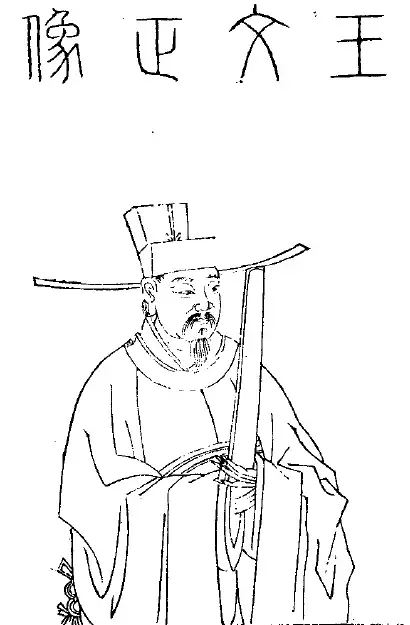
The Heavenly Book and Fengshan Sacrifices (天书封禅) was an elaborate political deception and religious spectacle orchestrated by Emperor Zhenzong of Song and court sycophants during the Dazhong Xiangfu era (1007–1014). Following the conclusion of the Chanyuan Covenant with the Khitan Liao in 1004, Emperor Zhenzong was troubled by accusations that the treaty was a humiliating compromise under duress. Exploiting royal insecurity, Chancellor Wang Qinruo persuaded the sovereign to restore dynastic majesty by enacting the ancient Fengshan sacrifices atop Mount Tai, an honor traditionally reserved for sage rulers possessing undeniable heavenly omens. To engineer the necessary divine sanction, the emperor and his ministers conspired to fabricate a heavenly book purported to descend from the Jade Emperor onto palace rooftops in early 1008. The court adopted the auspicious era name Dazhong Xiangfu, journeyed to Mount Tai in an opulent procession of over one hundred thousand soldiers to conduct the Fengshan rituals, performed sacrifices to Earth at Fenyin, and spent vast sums erecting the Yuqing Zhaoying Palace. The decade-long extravaganza drained imperial reserves, corrupted bureaucratic morals, and discredited the ancient rite so thoroughly that later Ming and Qing emperors refused to perform it, making Emperor Zhenzong the final sovereign in Chinese history to ascend Mount Tai for the Fengshan sacrifice.
Song and Liao conclude an armistice at Chanzhou; Zhenzong accepts annual subsidies, planting seeds of humiliation.
Wang Qinruo derides the peace as shameful and urges the emperor to perform the Fengshan rituals to reassert royal majesty.
Emperor Zhenzong gifts a jar filled with pearls to Senior Grand Councilor Wang Dan, purchasing ministerial silence.
A fabricated yellow silk scroll is discovered on Chengtian Gate; the emperor greets it with prayers and renames the era.
Zhenzong marches to Mount Tai with over 100,000 troops, performing sacrifices to Heaven and Earth in lavish ceremonies.
The emperor travels west to Fenyin to sacrifice to Earth Mother, escalating auspicious reporting across the provinces.
Zhenzong designates the Daoist immortal Zhao Xuanlang as the ancestral progenitor of the Song imperial house.
The colossal 2,610-hall palace opens to house the heavenly book, depleting the accumulated wealth of the treasury.
Emperor Zhenzong dies; the fraudulent scroll is sealed within his tomb, terminating the Fengshan tradition forever.
In the winter of 1004, the Khitan Liao launched a massive invasion that pushed to Chanzhou, within striking distance of the Northern Song capital Kaifeng. Persuaded by Chancellor Kou Zhun, Emperor Zhenzong reluctantly commanded the army in person, culminating in the historic Chanyuan Covenant. The treaty secured lasting frontier peace, but it required the Northern Song to pay annual subsidies of 200,000 bolts of silk and 100,000 ounces of silver to the Liao, with both rulers recognizing each other as sovereign equals.
While the emperor initially celebrated the cessation of hostilities, peace advocates and court rivals turned against Kou Zhun. Chancellor Wang Qinruo, envious of Kou Zhun's martial reputation, poisoned the emperor's mind by characterizing the treaty as an ignominious peace concluded under enemy duress. Wang argued that even minor ancient kingdoms considered an armistice made under the city walls shameful, questioning how an imperial son of heaven could take pride in paying tribute to barbarians. Deeply wounded by this critique, Zhenzong became obsessed with finding a dramatic means to wash away the humiliation and reassert imperial prestige.
Recognizing that the Northern Song lacked the military capability to conquer the Sixteen Prefectures of Yanyun, Wang Qinruo proposed an ideological spectacle: governance through religious sanctification. Wang advised the emperor that nothing could overwhelm domestic and foreign skepticism more effectively than performing the Fengshan sacrifices atop Mount Tai, the supreme ceremonial rite symbolizing heavenly approval.
Under classical Confucian ritual canon, imperial sacrifices atop Mount Tai required two absolute conditions: universal peace across the empire and the appearance of miraculous auspicious omens bestowed by Heaven. When Emperor Zhenzong lamented that the realm lacked auspicious portents like dragons or miraculous herbs, Wang Qinruo cynically remarked that ancient portents were merely human fabrications designed for political ends. Together with Vice Chancellor Ding Wei, Wang Qinruo devised a secret scheme to produce a fabricated heavenly mandate.
The primary obstacle to the ritual scheme was Senior Grand Councilor Wang Dan, an upright statesman whose moral gravitas commanded universal respect. To neutralize potential opposition, Emperor Zhenzong summoned Wang Dan to a private banquet in late 1007. At the end of the evening, the emperor presented Wang Dan with a sealed jar of choice imperial wine, instructing him to enjoy it privately with his family. Upon opening the vessel at home, Wang Dan was astonished to find it filled to the brim with lustrous pearls. Conscious that he had accepted an imperial bribe, Wang Dan was gripped with shame and refrained from voicing further objections.
With ministerial silence secured, the palace staged the divine miracle. On the morning of January 17, 1008, Emperor Zhenzong announced to his ministers that a celestial spirit in feathered garments had visited his bedchamber the previous night, announcing that a divine text would be delivered to the palace. Within hours, eunuch attendants reported that a yellow silk scroll had been discovered caught on the roof ornament of Chengtian Gate, the southern entrance to the imperial precinct.
Emperor Zhenzong led Wang Dan, Wang Qinruo, and the entire civil and military bureaucracy on foot to Chengtian Gate. Kneeling in reverent adoration, the emperor unsealed the scroll, which contained archaic seal script praising the virtue of the Zhao imperial house and promising eternal dynastic longevity. The emperor proclaimed a general amnesty, ordered the text enshrined in the Hall of Chaoyuan, and adopted the new reign title Dazhong Xiangfu (Great Central Auspicious Talisman).
Having procured the prerequisite heavenly omen, Emperor Zhenzong mobilized the resources of the empire to conduct the Fengshan sacrifices. In October 1008, accompanied by over 100,000 imperial guards, thousands of civil officials, foreign emissaries, and Daoist priests, the sovereign set forth on a grand imperial progress toward Mount Tai in Shandong.
Arriving at the sacred peak, the emperor ascended the summit to erect a circular altar, sealing jade tablets in stone caskets to report his accomplishments to Heaven. Descending to Mount Sheshou, he sacrificed to Earth and bestowed lavish banquets and monetary bonuses upon courtiers and troops. The astronomical expenditures of the expedition consumed immense quantities of regional grain and treasury silver, turning state governance into an ostentatious liturgical display.
The apparent success of the Mount Tai ceremonies escalated court superstition into uncontrolled megalomania. In February 1011, claiming that an earth spirit had appeared to him in a dream, Emperor Zhenzong conducted a second lavish imperial progress west to Fenyin in Shanxi to perform state sacrifices to the Earth Mother, showering regional officials with honors.
In 1012, orchestrated by Ding Wei, the emperor proclaimed that the Daoist deity Zhao Xuanlang—the Nine Heavens Controller of Destiny—was the divine primordial ancestor of the Song royal house. Zhenzong conferred the title of Holy Ancestor upon this mythical figure, ordering every prefecture and county in the empire to construct state Daoist shrines (Tianqing Temples) and shrines dedicated to the divine ancestor, absorbing government administration into religious mysticism.
To permanently house the fabricated heavenly book, Emperor Zhenzong decreed the construction of the Yuqing Zhaoying Palace in the capital Kaifeng, appointing Ding Wei as director of works. Ding Wei conscripted over ten thousand soldiers and civilian craftsmen, running construction continuously day and night under torchlight. The palace complex encompassed 2,610 pavilions and halls adorned with gold leaf, pearls, and coral, requiring seven years to complete and consuming the accumulated state reserves of three decades.
Throughout this period, power was monopolized by a corrupt cabal of flatterers known colloquially as the Five Ghosts: Wang Qinruo, Ding Wei, Chen Pengnian, Lin Te, and the palace eunuch Liu Chenggui. They orchestrated a relentless competition among regional magistrates to submit fabricated reports of miraculous fungus, white deer, and sweet springs, while upright officials who dared question the omens were purged from the bureaucracy.
In February 1022, Emperor Zhenzong died after years of declining health induced by Daoist alchemical elixirs. His twelve-year-old son, Emperor Renzong, ascended the throne under the regency of Empress Dowager Liu. Responding to the widespread revulsion of Confucian scholars, the court fulfilled Zhenzong's dying request by placing the fabricated heavenly scroll directly into his coffin. The scroll was buried inside the subterranean vaults of the Yongding Mausoleum in Gongxian, bringing the nationwide deception to a definitive conclusion.
The farcical spectacle had permanently stripped the Mount Tai Fengshan sacrifices of moral authority. Recognizing that Zhenzong had degraded an ancient rite of sage kings into a pathetic charade to mask diplomatic anxiety, subsequent rulers of the Ming and Qing dynasties categorically refused to perform the sacrifice. Mount Tai was never again ascended by an emperor for the Fengshan ritual, concluding two millennia of state sacral tradition.
The financial consequences of the Heavenly Book and Fengshan Sacrifices were catastrophic for the Northern Song. The continuous mobilization of hundreds of thousands of troops for imperial progresses, paired with the construction of the colossal Yuqing Zhaoying Palace and regional shrines, evaporated the vast surpluses accumulated during the reigns of Emperors Taizu and Taizong. The state treasury collapsed into structural deficits that severely constrained subsequent military and administrative initiatives.
Morally, the episode poisoned Northern Song officialdom. The elevation of the Five Ghosts demonstrated that imperial favor could be secured through sycophancy, encouraging magistrates to neglect administrative duties in favor of presenting fraudulent omens. Upright scholars were marginalized, and the prestige of the civil service suffered deep degradation that required decades of reformist effort to heal.
In the broader arc of Chinese imperial liturgy, Emperor Zhenzong's antics irrevocably shattered the ideological credibility of the Mount Tai Fengshan sacrifices. Originating in pre-imperial antiquity and enacted by powerful sovereigns like Qin Shi Huang, Han Wudi, and Tang Taizong, the ceremony had functioned as the supreme spiritual confirmation of dynastic supremacy.
By staging an unsubtle theatrical fabrication to compensate for diplomatic insecurity, Emperor Zhenzong exposed the rite as a manipulative political fiction. Future dynasties—including the powerful rulers of the Ming and Qing—viewed Mount Tai sacrifices with embarrassment, declining to emulate Zhenzong's theatricality. The burial of the heavenly book inside the Yongding Mausoleum in 1022 marked the permanent conclusion of the Fengshan sacrifices in imperial Chinese history.
In the History of Song, chief compiler Tuotuo condemned the episode with biting irony, observing that while Zhenzong preserved the realm through the Chanyuan peace, his gullibility regarding the heavenly book and his pursuit of Mount Tai sacrifices depleted the treasury and corrupted the scholar-elite. Tuotuo concluded that among all failures of Zhenzong's reign, none was greater than this superstitious deception.
In his Rongzhai Essays, Southern Song scholar Hong Mai denounced the spectacle, noting that Wang Qinruo and Ding Wei deluded their ruler into national madness, while even the respected Chancellor Wang Dan bowed his head after accepting a jar of pearls. Hong Mai lamented that a great sovereign and his entire court could engage in such a disgraceful performance to deceive Heaven and mankind.
The historian Qian Mu observed in his Outline of National History that the Chanyuan settlement had offered the Northern Song an opportunity to rebuild state strength, yet the court chose to retreat from reality into religious mysticism. He reflected that the national pursuit of fraudulent omens signaled a tragic descent from martial vigor into self-deceiving complacency, marking the onset of institutional fragility in the Song dynasty.