Pardoning Wei Zheng and Opening Speech
Emperor Taizong ascended the throne, pardoned former rival Wei Zheng, appointed him Remonstrance Official, and commanded all officials to critique state affairs openly.
Tang Dynasty (唐朝) · HISTORICAL EVENT
唐太宗纳谏与《贞观政要》
Emperor Taizong's Acceptance of Remonstrance and the Essentials of Governance (627–730, from Zhenguan Year 1 of Emperor Taizong to Kaiyuan Year 18 of Emperor Xuanzong) represents the highest pinnacle of remonstrance politics and statecraft theory in ancient Chinese imperial history. After experiencing the collapse of the Sui Dynasty and the Xuanwu Gate Incident, Emperor Taizong Li Shimin profoundly reflected on the catastrophic downfall of Emperor Yang of…
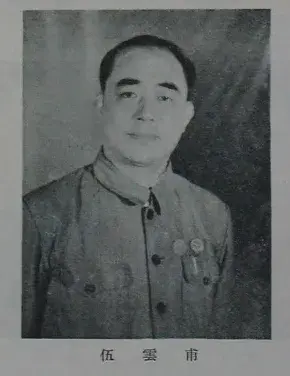
Emperor Taizong's Acceptance of Remonstrance and the Essentials of Governance (627–730, from Zhenguan Year 1 of Emperor Taizong to Kaiyuan Year 18 of Emperor Xuanzong) represents the highest pinnacle of remonstrance politics and statecraft theory in ancient Chinese imperial history. After experiencing the collapse of the Sui Dynasty and the Xuanwu Gate Incident, Emperor Taizong Li Shimin profoundly reflected on the catastrophic downfall of Emperor Yang of Sui, who rejected counsel and concealed his errors. Emperor Taizong firmly established the ruling tenets that listening to all sides makes one enlightened, whereas hearing only one side leaves one in the dark, and that the foundation of the state rests entirely upon the well-being of the common populace. Throughout the twenty-three years of the Zhenguan reign, outspoken ministers such as Wei Zheng, Wang Gui, and Fang Xuanling offered hundreds of candid critiques. Emperor Taizong subdued his personal pride, welcomed their admonitions, and rectified state policies, establishing an extraordinary political climate of mutual trust between sovereign and officials. In the mid-Kaiyuan era, court historian and remonstrator Wu Jing compiled the authentic dialogues, memorials, and edicts between Emperor Taizong and his ministers into the ten-volume, forty-chapter masterpiece Essentials of Governance (Zhenguan Zhengyao). This text not only preserved the essential core of the Zhenguan model but also profoundly influenced monarchical education and administrative philosophy throughout East Asia.
Emperor Taizong ascended the throne, pardoned former rival Wei Zheng, appointed him Remonstrance Official, and commanded all officials to critique state affairs openly.
Taizong discussed monarchical wisdom with Wei Zheng, concluding that broad hearing yields enlightenment while biased hearing breeds darkness, and permitted remonstrators to attend secret councils.
Wei Zheng remonstrated against excessive construction in Luoyang following the victory over Eastern Tujue; Taizong immediately accepted his advice and suspended labor projects.
Wei Zheng opposed holding the imperial Fengshan ceremonies on six practical grounds; Taizong overcame personal ambition to prioritize the economic recovery of the people.
Wei Zheng presented his famous critique outlining ten areas where Taizong risked succumbing to arrogance; Taizong inscribed the memorial on palace screens for daily self-reflection.
Wei Zheng died of illness; Taizong mourned him deeply, suspended court audiences, and proclaimed that Wei Zheng was his essential human mirror for rectifying errors.
Returning from the costly military campaign against Goguryeo, Taizong lamented that had Wei Zheng been alive, he would have prevented the undertaking.
Court historian Wu Jing reviewed archival court records and memorials to organize the dialogues of the Zhenguan reign into a structured textbook of governance.
Wu Jing submitted the forty-chapter Essentials of Governance to Emperor Xuanzong, seeking to revive Zhenguan administrative virtues and warn against complacency.
The Sui Dynasty had initially commanded immense wealth and military might, yet Emperor Yang grew obstinately proud, punished those who pointed out state errors, and executed or exiled anyone offering candid counsel. Consequently, the sovereign and his ministers became estranged, court administration disintegrated, and the dynasty collapsed within thirty-eight years. As the supreme commander during the transitional civil wars, Emperor Taizong personally witnessed lands devastated by famine and battlefields littered with unburied bones. Upon ascending the throne, Taizong maintained an intense sense of existential crisis, recognizing that the ruler relies on the state and the state relies on the people, and exploiting the people to sustain the ruler is akin to cutting off one's own flesh to fill one's belly. He deemed it imperative to build an institutional mechanism capable of identifying and correcting executive errors at the highest level.
Guided by Confucian benevolent statecraft and people-oriented philosophies, Emperor Taizong developed a rational understanding of royal authority and ministerial duties. He frequently engaged his court in deep discussions regarding the rise and fall of past dynasties, recognizing that emperors were ordinary mortals susceptible to the illusions woven by sycophancy. Early in his reign, Taizong asked Wei Zheng what made a monarch enlightened and what made him blind. Wei Zheng famously answered that listening to all sides makes one enlightened, while biased trust leaves one in darkness. Convinced of this truth, Taizong realized that ensuring the enduring stability of an enormous empire required tearing down the emperor's cognitive echo chamber by encouraging officials to voice differing opinions, even when their words were harsh and unpalatable.
The maturing Three Departments and Six Ministries system provided statutory procedural backing for imperial openness. In Tang administrative workflow, the Secretariat drafted imperial decrees, the Chancellery scrutinized and possessed the legal authority to reject or seal back improper edicts, and the Department of State Affairs executed approved policies. Within this framework, Policy Advisors and Remonstrance Officials stationed in the Chancellery possessed the legal prerogative to participate in supreme policy deliberations. Taizong specifically ordered remonstrance officials to enter the council chambers alongside Grand Chancellors, granting them full license to speak without fear. This institutional integration ensured that remonstrance was not a mere moral gesture, but a binding administrative safeguard.
In the first year of the Zhenguan reign (627), as Emperor Taizong ascended the throne amid imperial tension, he exhibited extraordinary statesmanship. Wei Zheng, formerly an advisor to Crown Prince Li Jiancheng, had repeatedly urged Jiancheng to strike down Li Shimin before the Xuanwu Gate Incident. Following his ascension, Taizong confronted Wei Zheng, asking why he had sowed discord between imperial brothers. Wei Zheng replied fearlessly that had the late Crown Prince followed his advice, he would not have perished. Impressed by his integrity, Taizong not only pardoned Wei Zheng but promoted him to Remonstrance Official, later elevating him to Director of the Chancellery and Duke of Zheng.
The appointment of Wei Zheng sent shockwaves through the empire. Taizong issued an imperial edict declaring that while ancient rulers disliked candid criticism, he sought to hear his own faults to achieve supreme governance. All civil and military officials were commanded to speak openly without concealment. Taizong permitted officials of the fifth rank and above to take turns serving overnight watch at the central secretariats, enabling him to summon them at any hour to inquire about public grievances. Ordinary subjects were also permitted to forward memorials via imperial relay stations. The Zhenguan court was thus transformed into a forum where officials spoke fearlessly without fear of retribution.
During his more than a decade of service as a premier remonstrator, Wei Zheng submitted hundreds of memorials totaling hundreds of thousands of words. His critiques spanned every sphere of governance, including succession policies, military campaigns, taxation, palace construction, imperial hunting expeditions, and judicial sentencing. His fierce rhetoric and unyielding integrity remained unmatched in ancient Chinese history.
In 630 (Zhenguan Year 4), after Tang armies crushed the Eastern Tujue and captured Jieli Qaghan, triumphant court officials urged imperial tours and the expansion of palaces in Luoyang. Wei Zheng forcefully intervened in court, recounting how Emperor Yang's lavish imperial tours led to the collapse of the Sui Dynasty. He stressed that the realm had only recently emerged from war and that squandering public resources on palaces was fatal. Moved by his admonition, Taizong halted construction immediately. In 632 (Zhenguan Year 6), when court ministers petitioned Taizong to perform the sacred Fengshan sacrifices at Mount Tai, Wei Zheng stood alone in opposition, pointing out that granaries were not yet full and the populace had not fully recovered. Taizong again yielded to reason and postponed the grand ceremony.
Crucially, Wei Zheng dared to debate the emperor even during moments of sovereign fury. On one occasion, Taizong stormed into the inner quarters after court, furiously remarking to Empress Zhangsun that he would kill that obstinate peasant. Sensing danger, Empress Zhangsun withdrew, put on formal ceremonial robes, and bowed before him in congratulations. When the puzzled emperor asked why, she explained that an enlightened ruler fosters honest ministers, and Wei Zheng's candor proved that Taizong was an enlightened sage. Taizong's anger dissolved, and his respect for Wei Zheng deepened. In 639 (Zhenguan Year 13), Wei Zheng submitted the renowned Memorial on Ten Gradual Failings, warning Taizong against creeping complacency and extravagance. Instead of taking offense, Taizong had the memorial inscribed upon screens inside the Liangyi Hall to inspect his own conduct day and night.
The remonstrance culture of the Zhenguan era was not a solo performance by Wei Zheng, but a concerted effort by an exceptional ministerial corps. Left Grand Chancellor Fang Xuanling was master of grand planning, while Right Grand Chancellor Du Ruhui excelled at decisive execution. Together, they constituted the legendary pair known as Fang's Planning and Du's Decision. Whenever Taizong acted impulsively, both men gently yet firmly guided imperial judgment using historical precedent.
Director of the Chancellery Wang Gui was renowned for his strict adherence to propriety, regularly correcting unlawful imperial gifts and protocol deviations. Secretariat Drafter Ma Zhou, who rose from humble origins after presenting an insightful ten-thousand-character memorial, was entrusted with reforming equal-field distribution, militia forces, and bureaucratic integrity. General Li Jing, Wen Yanbo, and Dai Zhou also voiced independent opinions on judicial verdicts and frontier minority policies. Whenever policy disputes arose, Taizong convened open debates in the palace hall to choose the superior argument, demonstrating an unprecedented approach toward collective institutional governance.
In the first month of 643 (Zhenguan Year 17), Wei Zheng passed away due to illness. Emperor Taizong visited the funeral in profound grief, suspended court audiences for five days, granted him an imperial burial, and personally composed and carved his funerary stele. Returning from the funeral, Taizong mounted the imperial palace hall and delivered the timeless Three Mirrors reflection before his attendants:
"With copper as a mirror, one can adjust one's garments; with history as a mirror, one can understand the rise and fall of dynasties; with human beings as a mirror, one can recognize one's own gains and losses. I have constantly maintained these three mirrors to guard against personal error. Now that Wei Zheng has passed away, I have lost one of my mirrors!"
This reflection elevated ministerial remonstrance from a subordinate moral duty to supreme epistemology for sustaining dynastic longevity. Even during his later campaign against Goguryeo in 645, when logistics faltered, Taizong lamented that had Wei Zheng been alive, he would never have permitted the expedition to proceed.
The political lessons of Emperor Taizong and his ministers did not vanish with time; rather, they were systematically distilled into a classic of governance during the High Tang era. Historian and court remonstrator Wu Jing served in the Imperial History Bureau for over thirty years from the reign of Emperor Zhongzong through the Kaiyuan era of Emperor Xuanzong. Witnessing political instability under Empress Wei and later observing the emergence of monarchical complacency and the rise of sycophants such as Li Linfu under Emperor Xuanzong, Wu Jing felt profound concern.
Guided by his historiographical conscience, Wu Jing examined daily court records, authentic imperial chronicles, and archival memorials. He systematically gathered and edited the authentic dialogues and memorials between Emperor Taizong and his key ministers. Breaking away from traditional chronological or biographical structures, Wu Jing organized the material thematically. After years of dedicated refinement around 730 (Kaiyuan Year 18), he completed the ten-volume, forty-chapter political treatise titled Essentials of Governance (Zhenguan Zhengyao) and presented it to Emperor Xuanzong.
The work opens with chapters on the Way of the Ruler and the Body of Governance, followed by sections on Employing the Worthy, Seeking Remonstrance, Accepting Counsel, Restraining Desires, Feoffment, Princes, Military Campaigns, Frontier Pacification, Prudence in Penal Law, and Rewards and Punishments. By placing Seeking Remonstrance and Accepting Counsel at the core of the work, Wu Jing established an operable textbook of Confucian statecraft that guided generations of emperors in bureaucratic oversight, humble self-restraint, and lawful governance.
The open acceptance of counsel by Emperor Taizong and the fearless advice of ministers such as Wei Zheng prevented catastrophic miscalculations in military, fiscal, and civil governance. Throughout two decades of rule, the Tang state avoided destructive palace projects, ruinous taxation, and endless wars of conquest. Administrative integrity flourished, judicial sentencing remained lenient and fair, and border relations stabilized. These policies enabled the rapid recovery of agricultural production and laid an enduring institutional foundation for the High Tang Golden Age.
Across more than two millennia of imperial Chinese autocracy, monarchical authority was typically absolute and unchecked. The interactions between Emperor Taizong and his ministers forged a functional model of enlightened monarchy, ministerial consultation, and open channels of communication. This framework endowed Confucian scholar-officials with unprecedented political dignity and statutory remonstrance rights, realizing the Confucian ideal of ministers assisting sovereign governance and serving as a political standard for later generations.
Wu Jing's Essentials of Governance quickly became required reading for succeeding Chinese dynasties. Emperors such as Renzong of Song, Taizu of Ming, Chengzu of Ming, and Kangxi and Qianlong of Qing repeatedly studied the text in imperial seminars. Internationally, Japanese envoys brought the work to Japan during the Tang Dynasty, where it was studied by Heian emperors and later adopted by Kamakura and Edo shoguns, including Minamoto no Yoritomo and Tokugawa Ieyasu, as a guide for warrior governance. In Korea and Vietnam, the text served as a staple for royal education and civil examination candidates, standing as a monument of Chinese governance wisdom.
Historians and scholars across centuries have praised Emperor Taizong's acceptance of remonstrance and the insights of Zhenguan Zhengyao. The appraisal in the Old Book of Tang notes: "He employed men with discernment, chose ministers carefully, listened unweariedly, and followed good advice like flowing water. Though he occasionally revealed flaws, he was quick to acknowledge fault. Across a thousand years, how could he not be deemed a sage emperor?"
In the New Book of Tang, Northern Song scholar Ouyang Xiu wrote of Wei Zheng: "In Taizong's time, Wei Zheng stood foremost under heaven for his direct counsel. Though he died, Taizong's virtue shone all the brighter." Song master Su Shi remarked: "The virtue of Zhenguan lay in tolerating direct words; the merit of Wei Zheng lay in bringing out Taizong's excellence." In his preface to Zhenguan Zhengyao, the Qing Kangxi Emperor observed: "Reading the Zhenguan Zhengyao, one witnesses sovereign and ministers seeking governance with untiring diligence and complete candor. If monarchs model themselves on this, restraining self and welcoming advice, how could the realm ever fall into disorder?" Modern administrative scholars likewise recognize that the emphasis on information symmetry, critical thinking, self-correction, and collaborative decision-making in the Zhenguan dialogues holds enduring management value.